
Substack elicits a (self-imposed) pressure to put together a gorgeous, concise essay on a singular topic with a tweetable title that can earn likes in and of itself. (I am also guilty of liking ‘the Hannah Horvathication of Clavicular’ before reading the full article.)
But not today! Instead, you get the bits and stats from my notes files that I find interesting but probably will never make it to a full-fledged piece. Hope you find them interesting nonetheless.
At the end of last year, I made a prediction that people will take on messiness in their make-up routines, fashion choices, and content strategies in order to prove their humanity. And in a way, our AI anxiety is already having us act out in interesting ways — working hard to prove our intellect, our value, our taste, and our humanness. (i.e., I swear I made this myself! Look I can prove it! Something about this is imperfect and therefore it can’t be AI!)
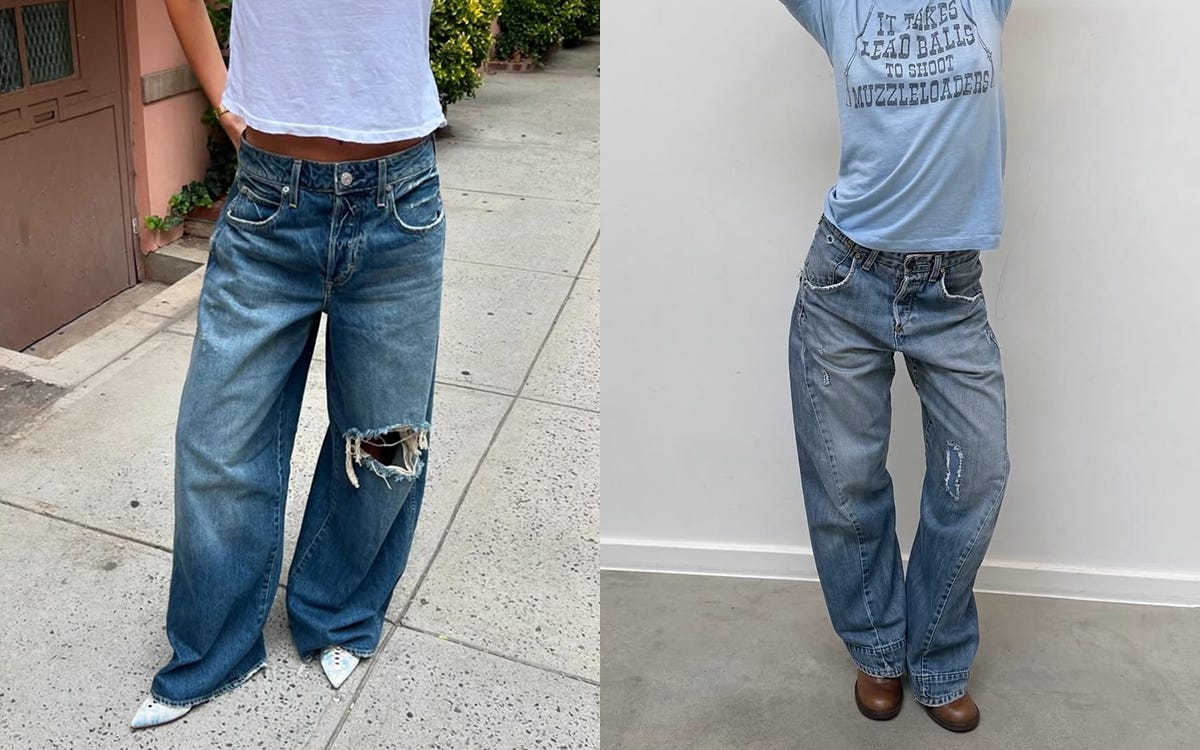
One of the first places I noticed the messiness ‘trend’ was in the revival of distressed jeans and the new addition of crinkled fabrics. People searching for ‘ripped baggy jeans’ increased 250% between May 2026 and May 2025, and ‘low rise ripped jeans’ increased by 300% over the same time period. While volume on these terms is still low (10k and 9k searches per month respectively) we can see this as an early indication of the upcoming trend.
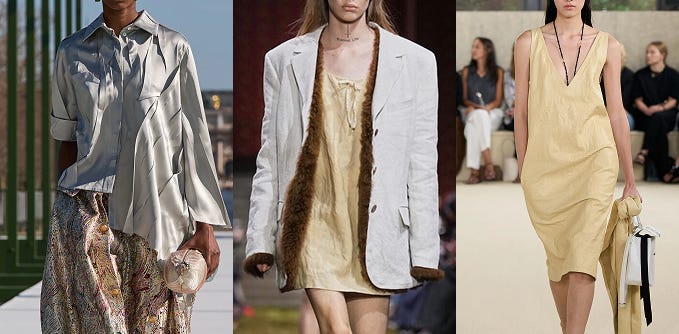
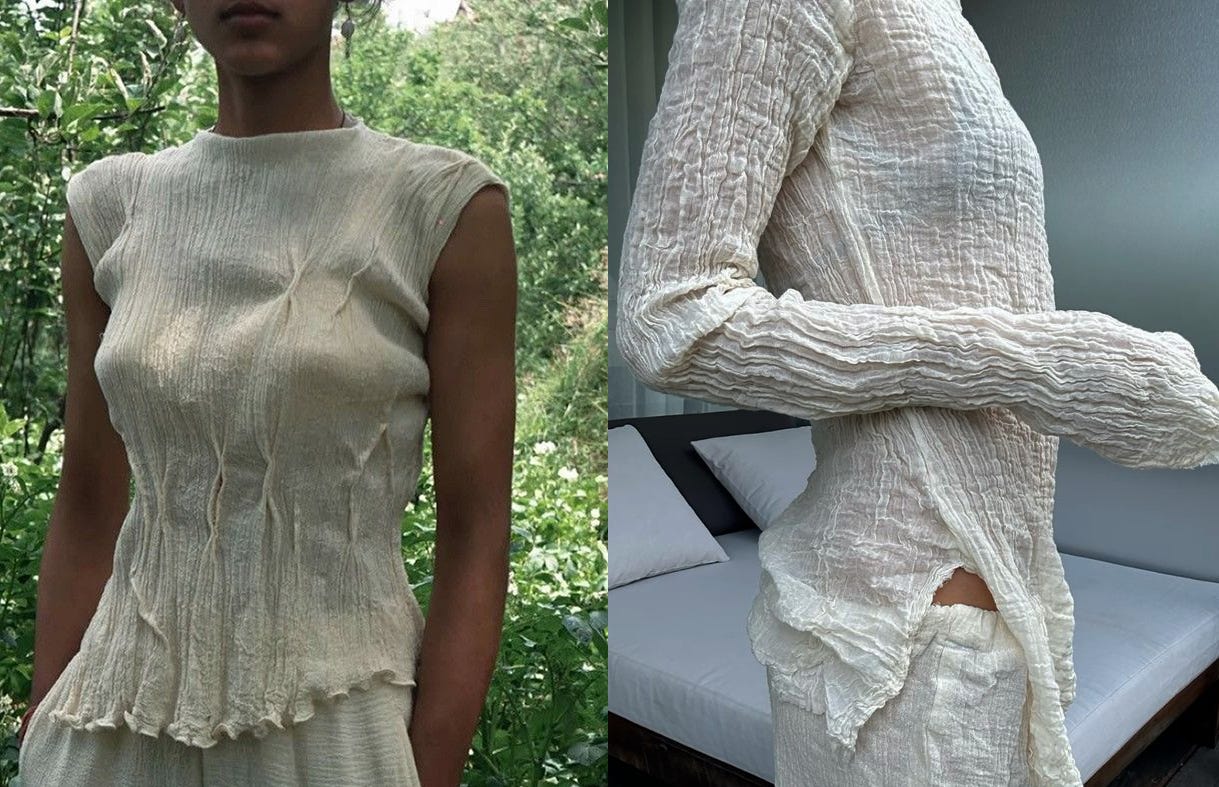
In the extended messiness universe, a recent report from EDITED showed us that retailers are majorly upping their stock of wrinkled and creased fabrics.
We had originally seen this a ton on the Fall 2026 runways, at brands as prolific as Miu Miu and Dior (plus Toteme a season earlier). (This is also a case study on just how quickly retailers are able to react to runway trends.)
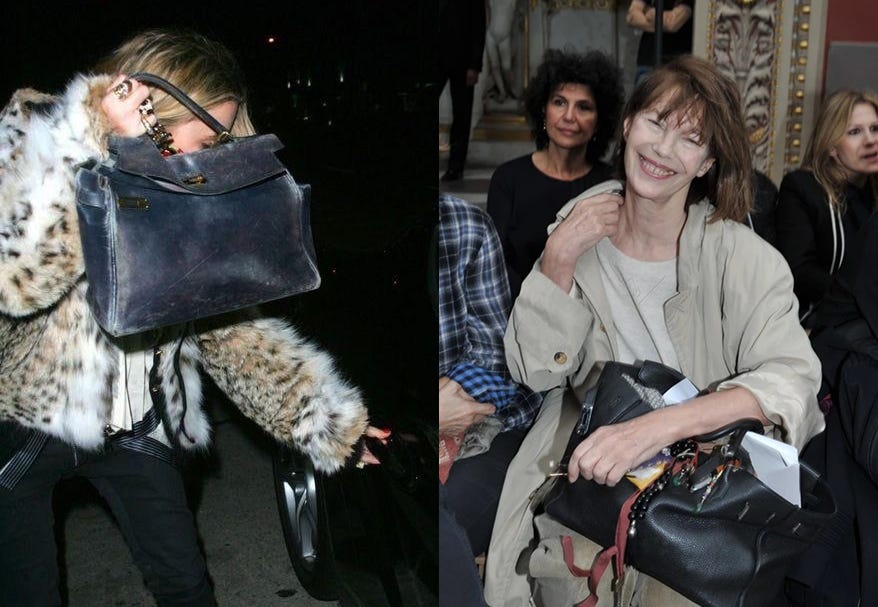
It could also be noted that this distressed or lived-in effect can be extended to bags. While this has been a conversation since our collective obsession with Jane Birkin’s Birkin, or the collection of Balenciaga City Bags and (also) beat up Birkins owned by the Olsen twins.
Now: does this actually relate to AI? Good question.
Sprout Social reported that 56% of Gen-Z are more likely to trust a brand that is committed to human-made content. Further, 48% are uncomfortable with brands using AI influencers (seems a little low, but alas).
And it does seem like brands are catching on to this. Hermes is ever-committed to their artist collaborations, consistently demonstrating that they value humanness and artistry. Plus, they have been doubling down on textures in their social content that read as analogue, such as these collage-like visuals.
I wrote an article for PUCK last month where I analysed the last 5-years of Instagram content from 20 top luxury brands to track how their engagement is changing over time and which topics they are investing their time and money in.
Margiela and Schiaperelli were the two brands that had increased their engagement over time, and the majority of their content tends to focus on craft and process — a way to demonstrate that something has value because of the effort that went into making it.
Audiences love this. In my analysis of Paris Fashion Week FW26 content, some of the best performing posts were McQueen and Schiaparelli showing the process of creating certain garments.
Some brands attempt to do this in ways that jujst don’t land, like the highly over-organized moodboard at Jacquemus. In a funny way, the messiness of creation is what most brands have landed on as their method of showing the value of the garment via the creation process. And this example missed the mark by being an overly organised and (perhaps) dishonest.
I would argue that all of these things, from moodbords to distressed denim are a reflection of AI anxiety. Here, we try to prove our humanness via imperfections in our clothing, prove the value of our output by showing the painstaking process behind it, and prove our commitment to humanity through our collaborations with others. Of course, these are all already being utilised and (in the case of the Jacquemus moodboard) butchered.
So! I will continue to keep an eye on new strategies being used to quell those anxieties (and keep you updated).
Thanks for reading! I would love to know if you spotted any other examples of trends, content, or strategies that may be linked.
No posts
Comments
Nothing yet. Say the first thing.
Sign in to join the conversation.