
Thank you for sticking with me through this summer and the entire Substack Series on Cultural Trust. The question some of you may be asking is why Cultural Trust, and how did you get here? That is an extremely long story, but it begins and ends with two main things; my mom, and my upbringing in Chicago. Shortly before my first child was born, I was having a conversation with my mom about her raising me as a single-parent, and how I felt lucky to be able to have a co-parent to help raise him. I then asked her for any wisdom, or specifics that she did when she was raising me. One of the things she said that stuck out to me, and something that I’ve carried with me beyond parenting and into the classroom is her pointing out that one of the greatest, but most frustrating things she ever did was to teach me to think, and to question things. That meant I never took “because I said so” as an answer.
She also confided in adult me that some of the rest of the family was frustrated with her actions and whenever I “talked back,” they perceived it as disrespect. While I, for the most part, never meant any disrespect, just like growing up in a single-parent household, I didn’t know any different than to have discussions whenever there was disagreement. Finding common ground or being able to state your case was something that was always encouraged.
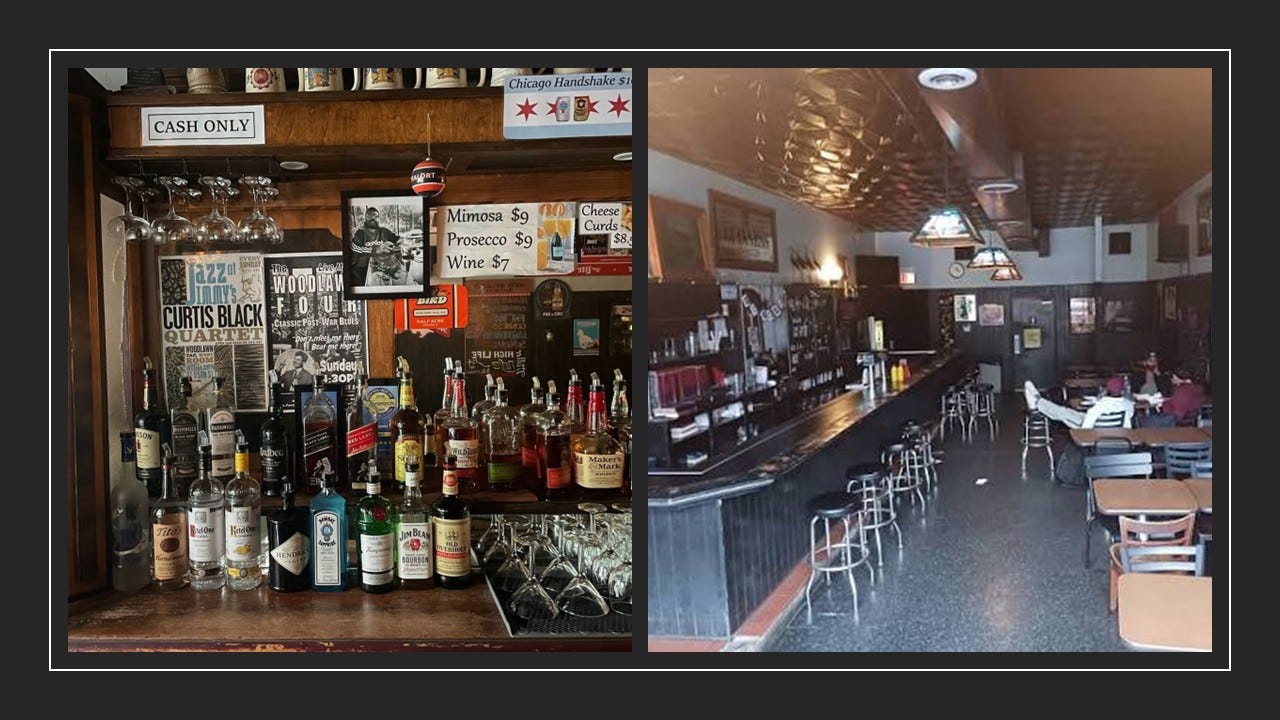
My third space for learning not to accept “because I said so” was Hyde Park, particularly Jimmy’s Woodlawn Tap, a place where knowing your stuff before opening your mouth was something of a neighborhood expectation. Arguing while playing baseball, or tennis and then later sitting at Jimmy’s as adults at the dawn of social media, we didn’t use our phones to Google who won the 1973 World Series, or how many years did the first Mayor Daley serve in office. We discussed. We went back and forth. We disagreed, sometimes strongly. And it wasn’t just about the “facts,” but what those facts meant, how they influenced our lives, and the impact they had beyond us.
While I was still working toward becoming a teacher and serving as a community learning program coordinator, I spent years volunteering with a Summer Youth Program through Habitat for Humanity. That experience taught me what could happen when young people from radically different places and backgrounds were given shared work, time, space and permission to truly learn and get to know one another. By the time I entered the classroom as a classroom teacher in South Central LA, I had already begun learning that lesson in different places. At both Locke and Temple I learned how many people took offense to someone questioning and challenging what they were saying. Yes, I understood hierarchy and knowing your place, so I probably asked fewer questions than I otherwise would have. However, it took a minute, and actually meeting my mom, for my department chair at Locke to understand where I got my teaching ability and questioning from.
At Temple, as someone who was “older” than many of my colleagues, and someone who had taught both at the independent school and public school level, there were things I knew that ran in conflict with the theories and practices they were teaching. Respectfully, or so I thought, I spoke up. Not to be braggadocious but to highlight the variance between theory and practice, between what was going on in the present and what others perceived was going on. As someone who is more…seasoned now, I can see how both my department chair and professors could perceive my actions as disrespectful and offensive.
But I did have a point.
While I was at Locke, what some called the “school of last resort,” I saw so many misconceptions about the neighborhood, school, students and teachers. I may have been new, but I wasn’t new to the game. I saw the students who traveled through 2-3 different ‘street organizations’ territories to get to school, making sure what colors they could and couldn’t wear. I saw the students who struggled with English, were in the AVID (Advancement Via Individual Determination) program and were beginning to believe in themselves. I too, as many teachers are currently lamenting online, had students who could not read on grade level, but I also had students who, with just the right push, could be the first person in their family to graduate from college. There were too many seeing the situation as half-empty rather than half-full. My questions, my pushing students to want more, and their understanding that while I recognized their lived experiences, I still expected more for them, helped me see you can motivate without judgement, love without resorting to “tough love,” and scaffold without dehumanizing.
One student in particular told me he wanted to be a teacher just like me. And sure enough a few years later when we reconnected on social, he is not only a teacher, he works in a program for students who have struggled in high school and are working towards achieving their GED, and, if I may add, is an excellent parent. Another student attended three former Pac-12 schools for her undergraduate, masters and PhD programs and now works at a top university in the Los Angeles area. Lastly, there were students who took my AP US History or Government/Economics course who never obtained college credit from the AP exam, but majored in sociology, law or social work and are thriving today. While I could not offer them college credit, what I could offer them was belief in their abilities, including moments when they may not have believed as strongly in themselves.
During my time, I watched noted authors, graduate researchers and consultants come to Locke because they were fascinated by what they believed to be what was “wrong” with it. I understood the interest, but I saw too many roses to believe the concrete was the whole story. When I eventually left Locke, I carried a promise with me: I would tell the stories of what those young people could do, not simply what happened to them. I wanted to humanize them, not just pathologize them. As I traveled across the country to Philadelphia, I started graduate school knowing those stories and wanting to tell the world about, as Tupac said, the “roses that grew from concrete.” I just didn’t yet know how to tell them, or how deep the questions would go. After I graduated and began to reflect on not just my classroom practices, but how I arrived at them, unfortunately I no longer had my mom to ask. And even if she were around, she might not have been fully understood how I had put it all together. That was something I had to do on my own. My essential question became something like this: What allows people whom institutions and society have already reached conclusions about to become more than those conclusions?
Cultural Trust begins to answer that question.
I have spent much of, not just my adult life, but even teen years and younger, around people who taught me that knowledge carries an obligation. If you see something others aren’t seeing, seeing isn’t enough. Knowledge carries an obligation to decide what you’re going to do with what you know. My best friend’s dad, one of the people who helped shape how I understand service, would ask a simple question that I’m paraphrasing: ‘What have you done to make a difference?’ It’s a question I still ask myself today.
I don’t pretend to know all the answers, but to borrow from Ted Lasso, I try to remain curious rather than judgmental, willing to ask, to inquire, and probe. Agreement isn’t always possible, nor should it be. Understanding usually is. Premature certainty may be one of the greatest barriers to Cultural Trust. Once we’ve decided who someone is, curiosity becomes unnecessary. And without curiosity, there is little opportunity to genuinely know one another.
So this series begins where much of my thinking began: with questions. Who have we already reached conclusions about? What might we see if we become curious enough to look again? And once we see something in another person that others may have missed, what are we willing to do with what we know? Cultural Trust began for me as an attempt to name something I had witnessed most of my life. It has become something more: a commitment to keep asking, keep seeing, and, when necessary, challenge the verdict. This ends the series. The questioning and work continues.
I’ll continue writing about Cultural Trust, education, leadership, parenting, and becoming here on this page. My second book, which explores Cultural Trust and other conditions for learning in greater depth, is scheduled for publication in 2027.
No posts
Comments
Nothing yet. Say the first thing.
Sign in to join the conversation.