
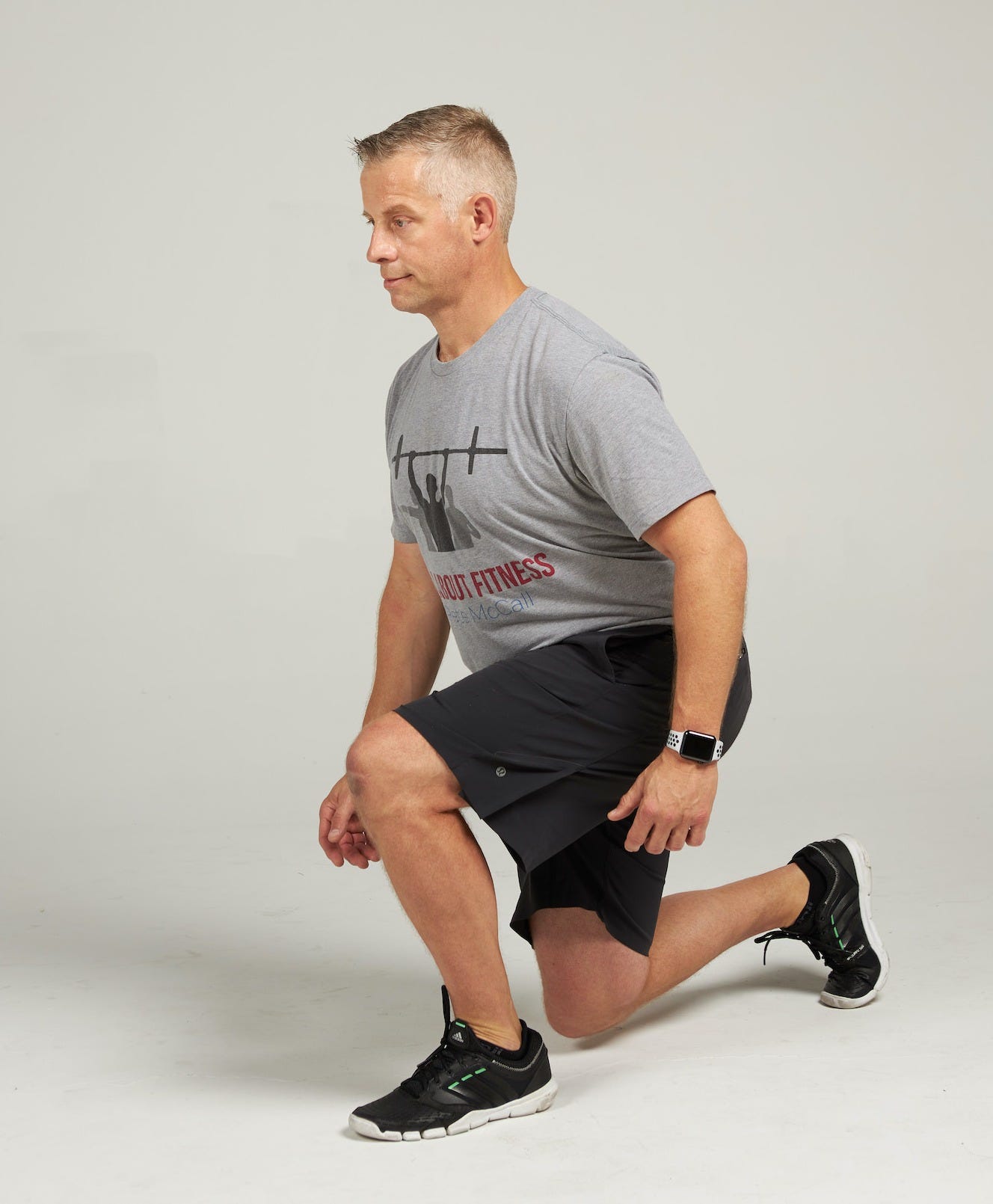
I identify as a strength coach; my pronouns are, ‘coach,’ and ‘sir.’
That’s a lame joke that I often use when teaching fitness classes at The Ranch because I am a Certified Strength and Conditioning Specialist (CSCS), the credential for strength and conditioning coaches. When designing and delivering fitness programs, I lean into the role of a strength coach, as opposed to that of a personal trainer or fitness instructor, because one function of a strength coach is to improve an athlete’s level of conditioning in an effort to reduce the risk of injury. A secondary role is to design a movement-based exercise program to improve sport-specific performance.
Personal trainers and fitness instructors often focus on goals related to health or changing appearance. Strength coaches focus on enhancing performance. There’s a difference.
By coaching workouts that simultaneously enhance coordination, dynamic balance and movement skill, strengthen muscle tissue and improve the body’s ability to metabolize energy, my goal is to help others improve these skills in an effort to boost performance in activities of daily living, while reducing the risk of a fall, the most common form of injury for those of us over 50.
Single-leg strength training exercises are essential for achieving these outcomes and, when the goal is longevity, should be in every lower-body strength training program. We walk and run on one leg at a time, therefore movements that focus on using one leg at a time should play an integral role in how we strengthen our bodies.
Walking is the process of transferring our weight from one leg to the other to generate the forward momentum to move the body to our destination. When we walk, the ground reaction forces of the foot hitting the ground send an upwards force into the leg that could be up to 2-3 times your bodyweight. When running, those forces could be up to 6 times your body’s weight; moving upwards into your leg.
Think about that, we need to walk or run to get food, pursue or flee an enemy, avoid danger or find a mate. And when we walk, we are standing upright with our shoulders and hips counter-rotating to create forward motion with the result being that almost every muscle in the entire body is involved - some muscles are contracting to produce force, some are contracting to keep a segment of the body, like the spine, stable while other muscles are lengthening to store mechanical energy for the next phase of the gait cycle.
After the hinge or squat pattern, a single-leg movement is often the next lower-body exercise in a strength training program.
Now, it’s important to note that there is an argument for doing single-leg exercises first because balancing requires more neural control, so having a fresh, well-rested nervous system could improve performance. I agree. There is also an argument that fatiguing leg muscles in a bilateral exercise like a deadlift could ultimately result in a greater number of muscle fibers being recruited during a single-leg movement. Again, I agree. The point is there are many ways to organize strength training routines; in general, I will alternate starting programs with bilateral and unilateral lower body movements; sometimes a workout will start with a RDL or squat, other times, a reverse lunge or split-squat.
The one common denominator for both the hinge and single-leg patterns is that the feet are on the ground, generating force downward into the ground. This action creates what is referred to as a ‘closed kinetic chain’ because the leg is generating force against the ground. Both the hinge and single-leg patterns are closed-chain patterns that train the muscles of the ankle, knee and hip joints to generate force at the same time, essential for developing the timing for an efficient gait cycle.
When you load a squat or deadlift, your body distributes force across both legs and has the support of a wide, stable base. However, when we walk, we transfer weight from one leg to the other, which means that each leg needs to be capable of supporting the entire weight of our body. A leg that can’t support the body’s own weight is one that is at a much greater risk of injury at some point during the aging process. Performing single-leg strength training exercises could significantly reduce that risk.
While there are a number of options, the following movements are the ones that I tend to use most often. I’m a huge fan of step-ups, especially to a standing-balance position, but they tend to take longer than other exercises, so in the interest of a time-efficient workout, I omit them. And when it comes to pistol squats - at the bottom of the movement, both femurs are in a flexed position, not a natural movement or position for improving efficiency of the gait cycle; great for strengthening and balance, not necessarily for movement efficiency.
Considered the gold standard of single-leg training; the RFESS asks the front leg to do the vast majority of the work while the rear leg provides light stabilization. Because the range of motion is deep and the focus is on the muscles of the front leg, this exercise builds serious quad and glute strength, without anywhere near the same forces on the spine generated by barbell back squats.
That last point matters more than it might seem; as time passes, we need a way to do heavy strength training for our legs without having to stack a barbell across the shoulders. The RFESS delivers a high training effect with a fraction of the spinal compression, making it a killer tool for safely building leg strength.
It also exposes and corrects side-to-side strength imbalances. Almost everyone has a stronger leg, whether from old injuries, sport history, or simple handedness. Bilateral squats let the stronger leg quietly compensate for the weaker one. Single-leg work doesn’t allow that, each leg has to earn its own strength, which closes the gap over time and reduces the risk of compensation-driven injuries.
Want strong legs? Add the RFESS to your program
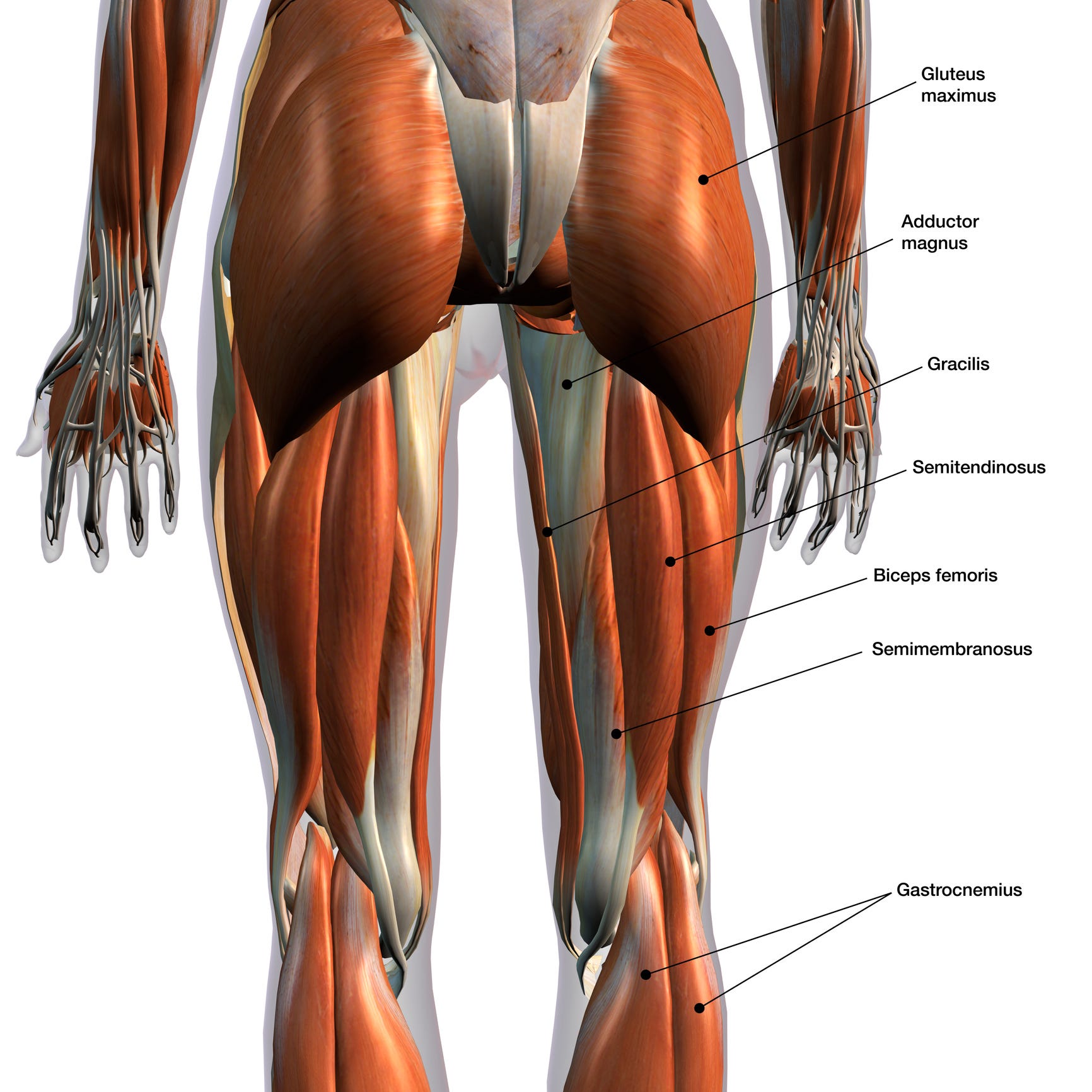
When we walk, the adductor muscles of our thighs are responsible for flexing and extending the hip joints (look it up, the adductor muscles are among the most active during the gait cycle); therefore, exercises to strengthen these muscles should focus on hip flexion and extension. The 1-leg RDL teaches hip flexion and extension with the foot in a closed-chain position - this is a great way to recruit and strengthen the large adductor magnus muscles of the inner thigh, as well as the entire gluteal complex. Want great looking inner thighs? Get to know this exercise really well.
The reverse lunge trains the unilateral pattern through a dynamic movement that could improve overall hip range-of-motion. When doing a forward lunge, your femur often moves forward into your patella (your thigh bone bumps against your knee cap), causing discomfort. Stepping backward into a lunge takes the force away from the knee and places it into the large gluteal muscles that extend the hip. In addition, driving down through the front leg to return to standing builds strength through closed-chain knee and hip extension, extremely important for improving stability while on a single leg.
Because the reverse lunge requires you to find your balance with each rep, it also builds proprioception: your body’s sense of where it is in space. This carries over directly to everyday movement quality, athletic performance, and fall prevention, particularly as training programs are built for the long term and account for aging.
Obviously there are other single-leg exercises, but the common denominator in these is that they teach how to generate and control force into the ground; specifically, being able to press the foot into the ground to activate deep core muscles. The pressure into the sensory nerve endings in the joint capsules of the foot will cause muscles responsible for stabilizing the spine to contract - you are using your foot to activate your core.
Bilateral lifts like squats and deadlifts are excellent for building maximum strength and total-body force production; however, workouts featuring only bilateral exercises miss three things that unilateral training provides:
Single-leg exercises force each side of the body to develop independently, correcting the asymmetries that bilateral lifts tend to mask. Staying upright on one leg under load recruits the hips, obliques, and deep spinal stabilizers in ways bilateral lifts simply can’t. Over time, this builds a level of full-body control and resilience that supports every other pattern in a program: hinging, squatting, pushing, pulling, and carrying.
Exercises like the RFESS deliver a heavy training stimulus to the legs without requiring the loads that create vertical compression on the spine, which is especially valuable for longevity and for lifters managing back sensitivity. A RFESS is hard enough, holding 45 lbs. dumbbells in each hand makes it infinitely harder without having to manage the discomfort of a barbell resting on the shoulders.
Walking, running, climbing, and changing direction are all unilateral actions. Training the lunge pattern builds strength and stability that translates directly to how the body moves and muscles actually function when we are walking and running.
Training on a single-leg prepares the body to be more stable when transitioning from one leg to the other during the gait cycle. Single-leg strength training is one way to ensure functional independence well into the later years.
Including RFESS and reverse lunges in strength training workouts is NOT to replace squats or deadlifts, but to use a strategy that can build total-body strength. A program that trains both bilateral and unilateral lower body strength could result in a body that’s strong, balanced, and prepared for the demands of life at any age.
Thank you for reading!
To support the Strength Training for Longevity substack:
Subscribe (for free)
Provide a gratuity (very greatly appreciated - if the info you read here is helping you to optimize your health, this is a great way to say thank you).
The purpose of this substack is to help you learn how to use exercise to extend your lifespan, your support is GREATLY appreciated!
Become a paying supporter (only $8/month - same as a magazine), or
Or, just keep reading, apply what you learn and share with your community - let’s make the world a healthier place together!
Plan a trip to recharge and reboot your health and fitness program at the world famous Rancho La Puerta resort and spa in Tecate, Baja California, Mexico. You can take fitness classes, learn valuable mindset skills and enjoy a week of reconnecting with yourself.
As a reader of Strength Training for Longevity, use code RLP-PMC for a 20% discount!
(first time guests; or those who have not been to The Ranch in 5+ years are the only ones eligible for the discount)
Comments
Nothing yet. Say the first thing.
Sign in to join the conversation.