
There’s a specific kind of exhaustion that comes from watching a piece of hardware fail for the third time.
You designed the board months ago. You waited for manufacturing, waited again for assembly, and finally flashed the firmware, hoping six weeks of work would simply turn on and behave.
It doesn’t. So you go back, change something, and wait again.
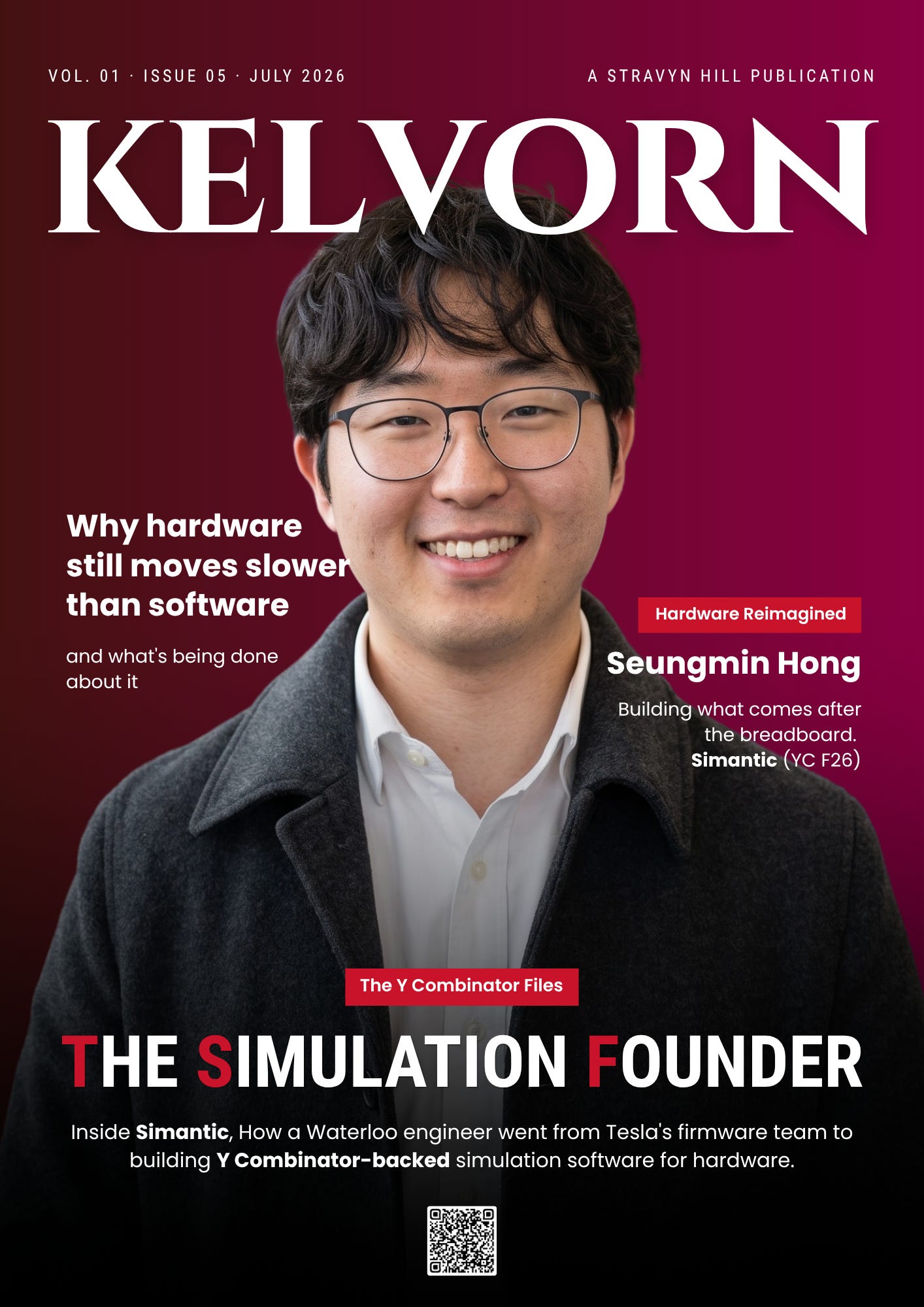
Hong has lived that loop enough times to want to end it. Before founding a company, he was a firmware engineer moving through some of the more demanding hardware environments in the industry a stint on Tesla’s keys and authentication team, embedded systems work at Simbe, and time at Rapyuta Robotics in Tokyo.
Thanks for reading! This post is public so feel free to share it.
Each stop reinforced the same frustration: the tools used to validate hardware hadn’t meaningfully changed in decades, even as the systems built on top of them grew far more complex.
That frustration became Simantic, a Y Combinator-backed startup Hong co-founded with fellow Waterloo engineer Ahnaf Shahriar.
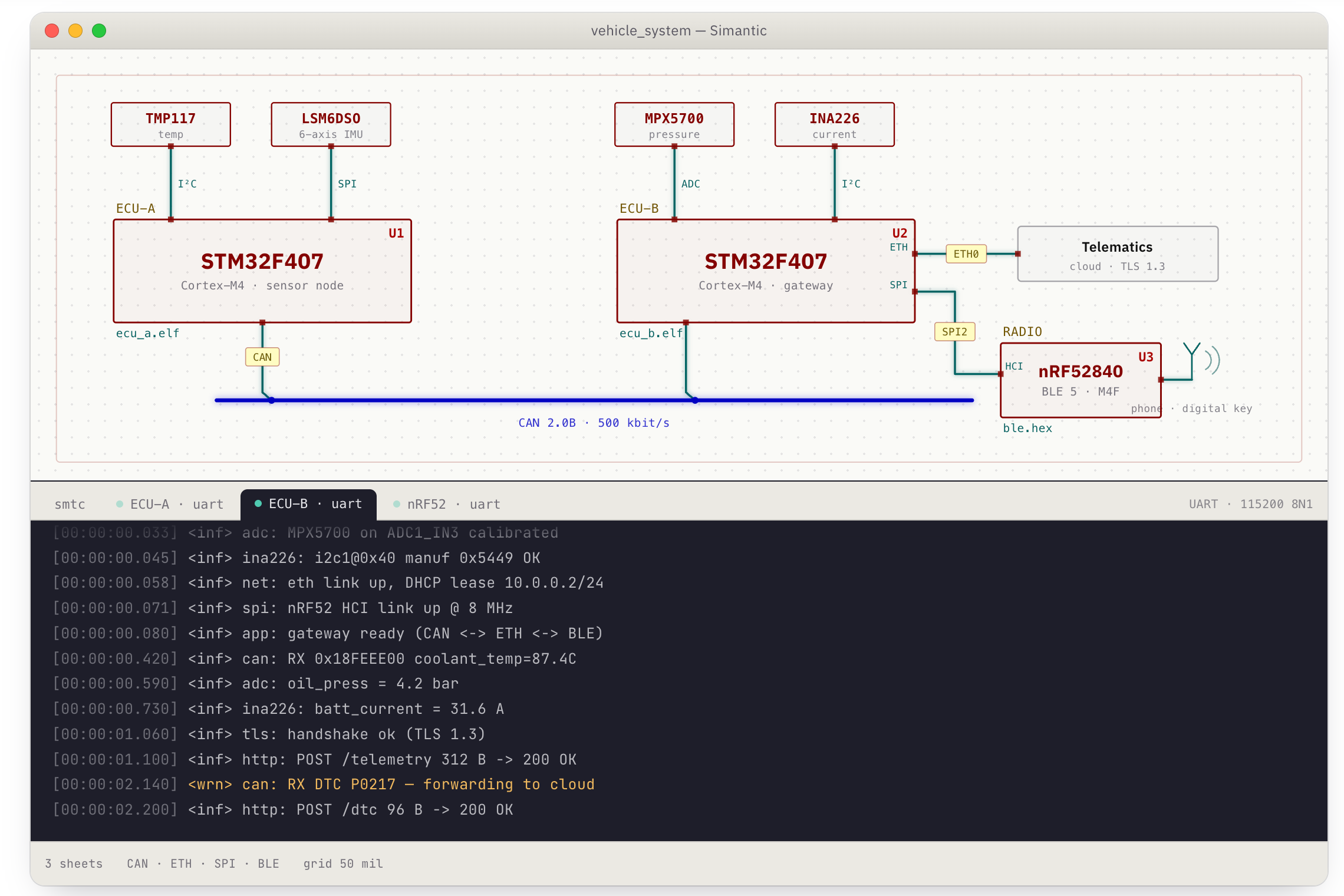
The company builds simulation software that lets engineers test firmware against a virtual model of their processor and circuit board, rather than waiting on a physical prototype to exist first.
In practice, that means catching a design flaw in an afternoon instead of a fiscal quarter.
Software spent the last decade getting faster feedback loops. Code gets written, tested, and deployed in minutes, often automatically. Hardware never got that upgrade.
A single iteration on a printed circuit board can still take weeks: design, manufacture, ship, assemble, flash, test and only then find out what needs to change.
Hong describes this as one of the most expensive and least examined bottlenecks in the hardware industry one that costs both money and, more quietly, engineers’ willingness to experiment.
When every test costs weeks and real dollars, teams stop testing edge cases. They ship the version that mostly works.
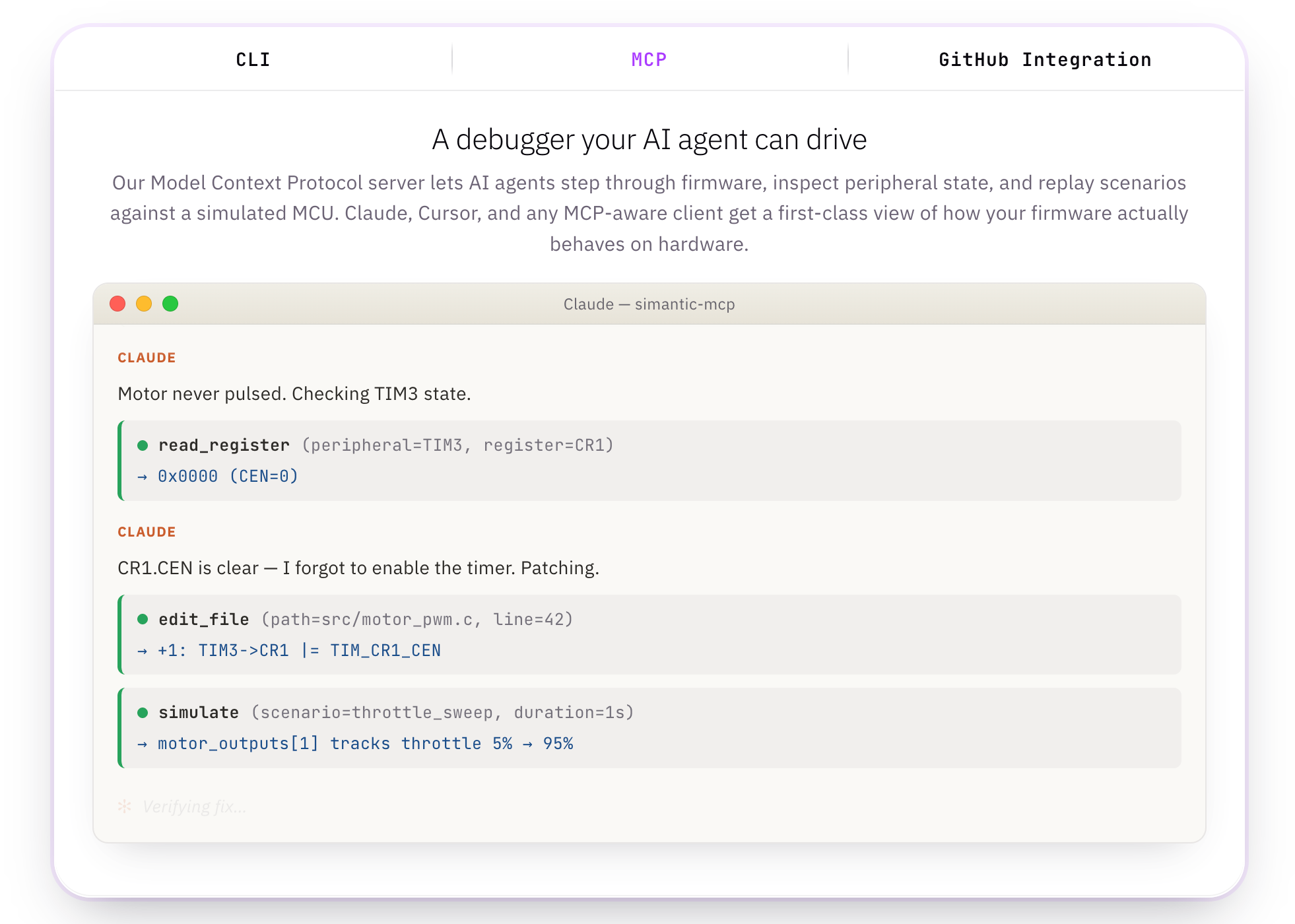
Simantic’s pitch is that AI-assisted hardware design is only as good as the feedback loop underneath it. An AI system, or a human engineer, can propose a hundred design changes in an hour.
It can’t validate any of them without a working test environment. That’s the gap Simantic is building into: full-board simulation, from signal integrity down to firmware behavior, so both machines and humans can iterate at software speed on hardware problems.
Simantic’s early support came from Waterloo’s Velocity incubator and Builders Club, before the company caught the attention of LeapYear, a fund built specifically to back student and early-career founders before they have revenue or, in many cases, a finished product.
LeapYear’s most recent cohort drew more than a thousand applicants for five spots. Simantic was one of them.
From there, the company moved into Y Combinator’s Fall 2026 batch, a step that tends to compress a startup’s timeline in ways that are hard to plan for.
Hong has been candid that the goal now is straightforward and unglamorous: hire the right early engineers, ship the product that’s been in development, and prove the simulation approach holds up against real hardware teams under real deadlines.
The bigger story isn’t one founder or one company. It’s a pattern showing up across hardware, robotics, and embedded systems: AI can already write firmware and propose circuit designs at a level that would have taken a team of engineers a decade ago.
What it still can’t do is verify any of that work without a physical device sitting on a bench. Simantic is one of a small number of companies trying to close that gap a bet on a simple premise: the next unlock in hardware isn’t a smarter chip, it’s a faster way to know if the chip works.
For Hong, that premise is personal. Six years of firmware work taught him exactly where the process breaks. Building Simantic is his attempt to fix it for everyone still stuck in that loop.
Learn more about Simantic at simantic.dev, or follow Hong’s work on LinkedIn.
Kelvorn © 2026 Stravyn Hill Publication. All rights reserved. Reproduction inSeungmin Hong whole or in part without written permission is prohibited.
We're now accepting applications for founder features. If you're building something real, apply before someone else tells your story first.
No posts
Comments
Nothing yet. Say the first thing.
Sign in to join the conversation.