
This is the fourth and last post in a series of bonus content that accompanies the documentary Overshoot: Navigating a world beyond 1.5°C
We have a huge number of people to thank. Like any documentary, Overshoot involved months of reading, researching, interviewing, and producing. In this final bonus post, I’ll share some of the materials that inspired us and helped us make the series.
We partly made the series because we noticed a gap in the discourse around climate change. We were surprised to find there was no documentary on overshooting the 1.5°C target, even though for years there has been growing agreement that this is underway. For example, it was in November 2022 that the Economist magazine had warned its readers that “the world is going to miss the totemic 1.5°C climate target.” Saying this was controversial at the time. That’s not the case anymore.
But any story about overshoot of 1.5°C had to include a huge array of subjects, some of which we explored in the series. There were many others that we had to make the difficult decision to not include in one of our four episodes. Throughout, we were grateful for a slew of recent books and papers that helped us understand the current climate moment, including:
Achieving net zero greenhouse gas emissions critical to limit climate tipping risks - Möller et al, 2024
The overshoot myth: you can’t keep burning fossil fuels and expect scientists of the future to get us back to 1.5°C - Dyke, Watson, and Knorr, 2024
The Deluge - Stephen Markley (Simon & Schuster, 2023)
Five Times Faster - Simon Sharpe (Cambridge, 2023)
The Global Tipping Points Report 2023 - Lenton et al (2023)
The Language of Climate Politics: Fossil-fuel propaganda and how to fight it - Genevieve Guenther (Oxford, 2024)
Navigating the Polycrisis: Mapping the Futures of Capitalism and the Earth - Michael J. Albert (MIT, 2024)
Overconfidence in climate overshoot - Schleussner et al, 2024
Overshoot: A Conceptual Review of Exceeding and Returning to Global Warming of 1.5 °C - Reisinger et al, 2025
Overshoot: How the world surrendered to climate breakdown - Andreas Malm and Wim Carton (Verso, 2024)
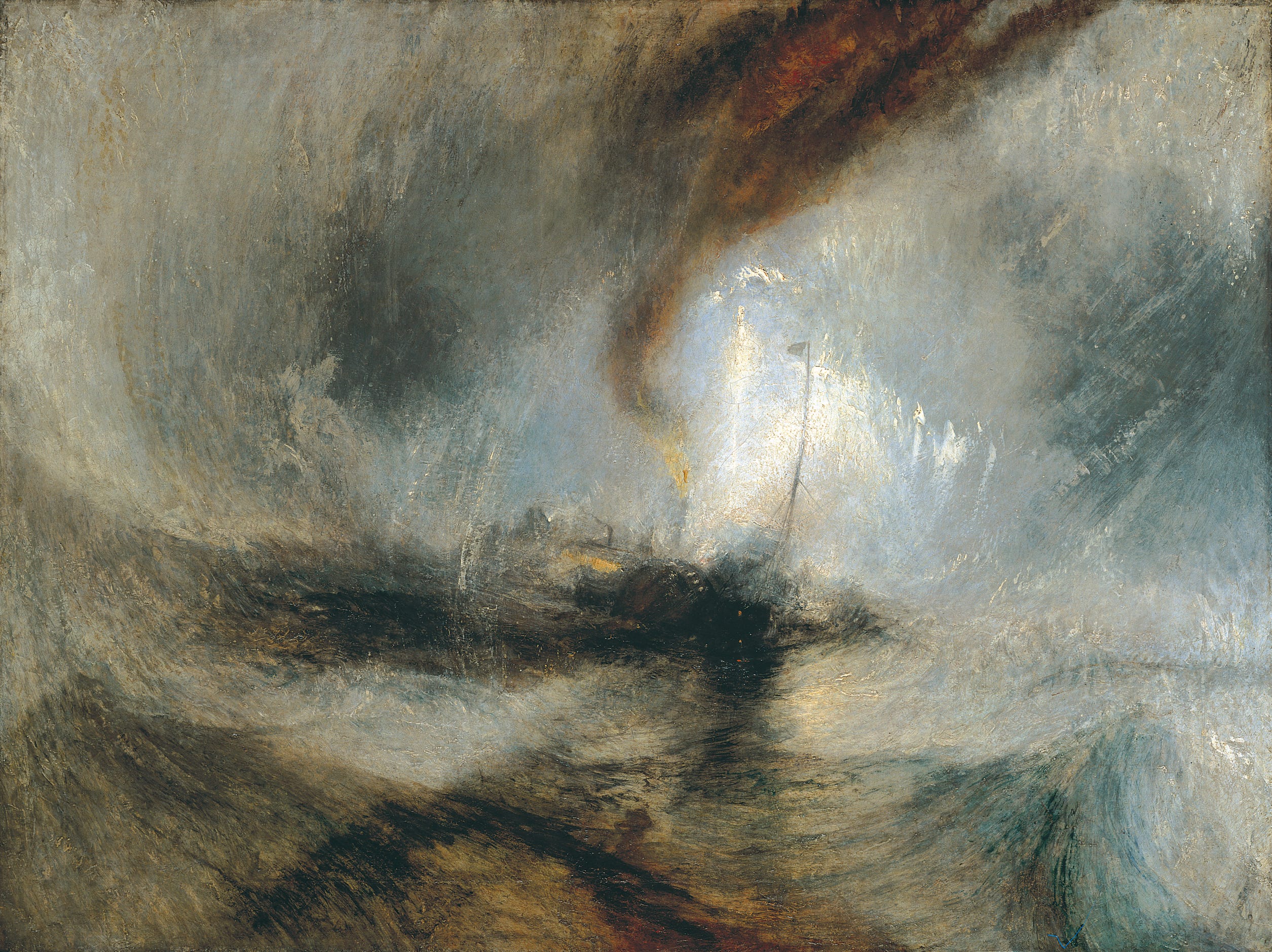
For episode 1, we’re grateful to Climate Change News and Carbon Brief for their histories of climate goal setting and their reporting and analysis more generally. Profiles in Paris is a great resource to explore the remarkable story of the events leading up to and during that chilly Parisian December in 2015. Papers co-written by Farhana Yamin in 2013 and in 2021 were invaluable, as was Todd Stern’s book. The NGO RMI was our source for keeping track of the astonishing shifts in clean technology. Glen Peters’ Bluesky account did the same for the latest temperature and emissions data. Carl Lipo’s book about Rapa Nui was one of several that informed the segment about the island, a story which built on the one I told in the first chapter of a book co-authored with Mathew Lawrence. I first played around with the analogy of a storm and a ship back in 2020.
For episode 2, we’re grateful to Drilled for their coverage of fossil fuel companies, Carbon Brief’s timeline of BECCS, and Michael Obersteiner’s retrospective. The State of Carbon Dioxide Removal report gave us the figures for the amount of carbon sucking now needed to have a chance of staying below 1.5°C. David Ho’s timeline analogy comes from this paper. Michael Obersteiner is doing research on how to realise a ‘net-negative’ economy, and Kenneth Möllersten is now leading a project on how to mobilise funding for carbon capture. Other references can be found in this bonus essay.
For episode 3, we are indebted to the report from Dr Steve Keen, published by Carbon Tracker, on pension fund risk assessments. A footnote alerted me to Sue Owen. We had the pleasure of engaging with campaigners in and around Derbyshire: make sure to check out Divest Derbyshire, Transition Chesterfield, and Derbyshire Pensioners Action Group. The UK Institute and Faculty of Actuaries, along with the University of Exeter, have published a series of important reports on the inadequacy of climate risk assessment in the financial sector. Joseph Stiglitz wrote a paper on poor economics, and the UK government-related figures can be found here. The paper written by World Bank economists about Pakistan can be found here, and the subsequent assessment of the floods by the government is here. Seemab Gul produced a series of films for Greenpeace on the tragedy.
Episode 4 was inspired by the research led by the Strategic Climate Risks Initiative on derailment risk. The UN keeps track of the global ‘adaptation gap’ and in the UK, the Climate Change Committee has long warned of a lack of preparedness. Here is an English version of France’s adaptation plan for 4°C. The US Postal Service story comes from Professor Lee Clarke’s Mission Improbable book. You can read the transcript of this extraordinary congressional session. Also useful were Robert Scheer’s With Enough Shovels, Leaning and Keyes’ The Counterfeit Ark, and a slew of brilliant BBC films: On the Eight Day, If the Bomb Drops, and Threads. More on the passivhaus story can be found here. Rupert Read’s output on ‘thrutopia’ can be found on his website. Hetereki Huke’s work on Rapa Nui is well worth looking up. More references can be found in the bonus essay accompanying this episode.
We are indebted to everyone we spoke with across the development and production of the series. As with any documentary, we interviewed more people than we were able to include. Thank you to the following for the time and ideas they shared with us and for letting us into their lives and - in some cases - their homes and workplaces: Dr Nick Booth, Roger Bolton, Baroness Brown, Kathryn Brown, Mark Campanale, Jenny Chase, Professor Lee Clarke, HE Ambassador Janine Felson, Dr James Fletcher, Dr Jean-Baptiste Fressoz, HE Ambassador Carlos Fuller, Seemab Gul, Nikki Henderson, Professor David Ho, Lisa Hopkinson, Hetereki Huke, Ketan Joshi, Professor Steve Keen, Professor Tim Lenton, Professor Carl Lipo, Stephen Markley, Miranda Merron, Dr Kenneth Möllersten, Dr Kathrin Nägele, Professor Michael Obersteiner, Sue Owen, Dr Glen Peters, Professor Stefan Rahmstorf, Rupet Read, Professor Lisa Schipper, Guy Singh Watson, Professor Joseph Stiglitz, Todd Stern, Iain Tolhurst, Professor Richard Turco, Professor Diána Ürge-Vorsatz, Professor Detlef van Vuuren, Professor Sir Bob Watson, Amy Westervelt, and Dr Farhana Yamin.
Thank you to all those who provided invaluable help throughout: Ren Balogun, Bianca Beddoe and the media team at AOSIS, Joel Benjamin, Darius Cuplinskas, the Devon and Exeter Institution, Brian Eno, Clare Farrell, the team at Freuds Group, Javier Trescoli García, Stephanie Gounaris-Shannon, Haniell Langton-Laybourn, Sophia Lennon, Caroline Lucas, George Monbiot, Sarah Watson and the Ironbridge Gorge Museum Trust, Melissa Wilson - and Arlo Brady, Harj Narulla, Clover Hogan, Olivia Lazard, and everyone else who joined us for the live episode.
Particular thanks go to our brilliant reviewers: Dr Aaron Thierry, Henry Throp, Dr James Dyke, Mirte Boot, and Dr Stephen Backhouse. The Planet B Productions team were a pleasure to work with and produced a gorgeous product. Thank you to Daniel Norman, Daniel Trilling, Ben Heyderman, James Fox, and Freddie Stuart. Please look up Haniell, who produced the original music featured in the series. Ben Shread-Hewitt’s research and general support was critical - thank you. Thank you to the Open Society Foundations, whose generous support made this series possible.
And thank you for listening, reading, and engaging.
No posts
Comments
Nothing yet. Say the first thing.
Sign in to join the conversation.