
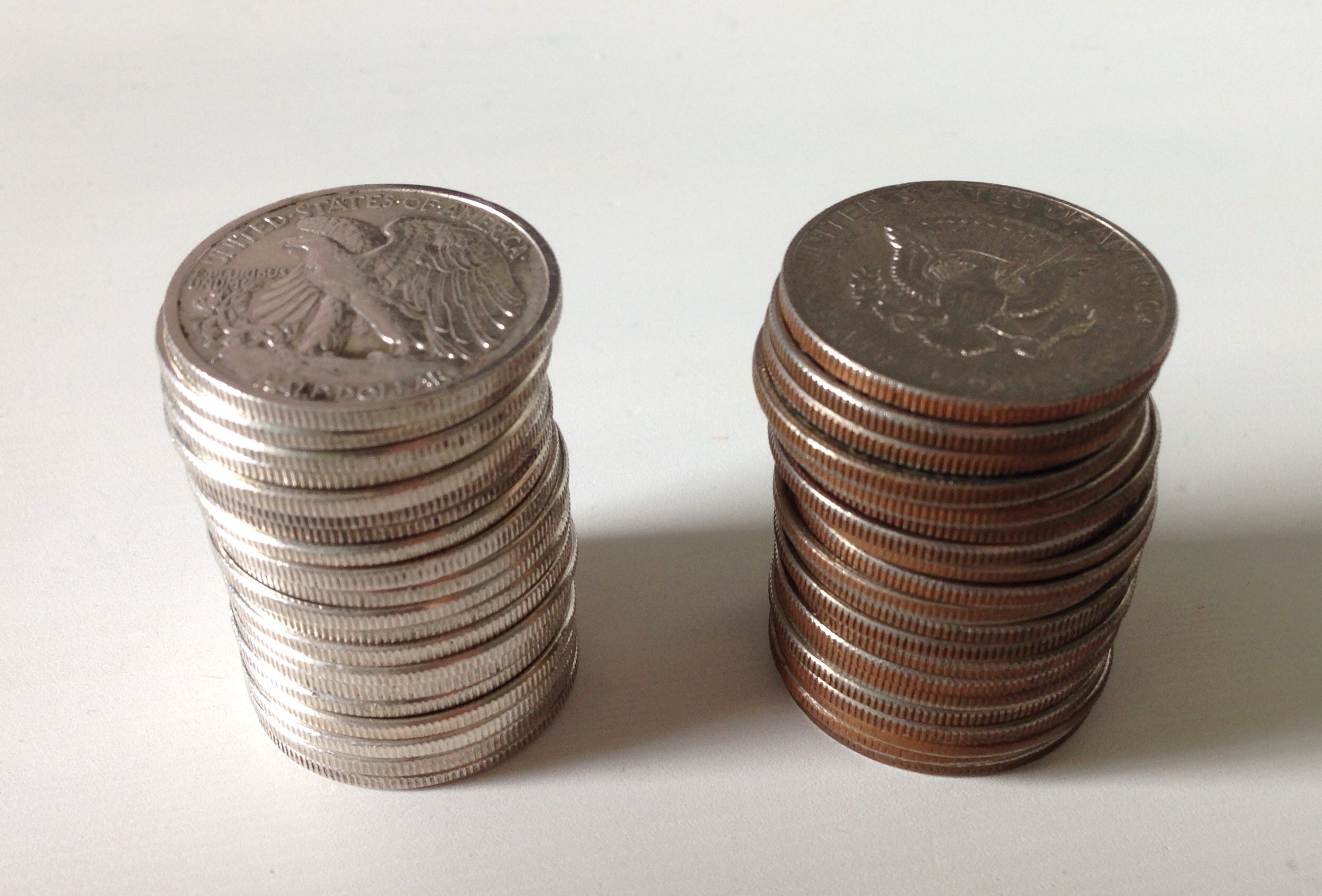
Gresham’s Law is one of those economic principles that turns out to explain far more than economics. It states that “Bad money drives out good”. This means that when both gold and silver circulate, people may perceive gold to be stronger and more trustworthy than silver, so they will hoard the gold and spend the cheaper silver. The good stuff disappears from circulation in the form of savings. The cheap stuff floods everything.
The same thing happens in public spaces. Only the thing being hoarded isn’t a strong currency. It’s safety and perception.
When behavioral norms erode in public space, good faith users quietly disappear. Open access is one of the great virtues of public space, and it should stay that way. But when access becomes the only operating principle, low-effort behavior fills the vacuum: the speaker phone at the picnic table, the trash left for someone else, the general posture of I'll do what I want and you'll adjust. The high-effort behavior, consideration, restraint, basic stewardship of shared space, gets pulled out of circulation entirely.
Nobody argues. They just leave. The polite crowd ghosts first. And they take their purchasing power with them. This hurts the bottom line of local businesses enclosing the spaces, and may lead to downward adjustments of business model and quality of service, and even premature closure.
The tipping point is almost always mundane. Even without dramatic breaches, the slow accumulation of small ones alone changes users’ perception of safety and habitability.
One overflowing trash can. One guy who decided the ambient noise of forty people is his personal soundtrack backdrop. Each one is a small signal that the good stuff is no longer protected. So the people for whom that signal matters protect themselves the only way available: by exiting.
They retreat to the private version. The backyard patio, the members-only gym, the curated coffee shop in the better zip code. We’ve built an entire lifestyle around this quiet withdrawal. We're not antisocial by nature. But when absorbing other people's indifference becomes the price of public space, the private alternative starts to pencil out.
In the vast majority of cases, what drives peaceful users out is antisocial behaviors, not specific people. The person who stays is not the problem. The person who leaves is not better. What we’re observing is simply a preference: some people have a higher tolerance for incivility, and some don’t. Those who don’t, leave. Their condition, their income, their background are irrelevant to the mechanism.
Classical third places, the pub, barbershop, plaza, or diner, had low barriers of entry by design. That was the whole point. Oldenburg was explicit: the third place filters for commonality, not for wealth. You didn’t need money to belong. You needed to share, roughly, the unspoken norms of the place. The fishermen’s bar and the country club both had standards that members respected and valued, despite the different price points.
You self-selected out if you didn’t share the values of the room, not because anyone removed you, but because everyone understood that different places are for different people. The door was open. The norms were the filter.
Places with zero entry barriers are not necessarily inclusive by design. It is inclusion by attrition, where whoever tolerates disorder the longest inherits the space by default. And the people least able to retreat to a private substitute are the ones most damaged when that happens. The argument for letting the third place degrade its values system in the name of openness is not an equity argument. It is an argument for handing the commons to whoever is most indifferent to it.
Spanish philosopher Jose Ortega y Gasset saw the institutional failure that follows. Societies that fail to address abuses early don’t simply tolerate them. They eventually confuse the abuse with the use. By the time the political will to act finally breaks, the only tool left is a sledgehammer. The park gets locked at sundown. The plaza gets hostile architecture. The corner café posts a No Loitering sign, the retail shop installs bars on the windows, and the restaurant stops outdoor cafe service.
The rule meant to stop the behavior ends up stopping the place, and creates a lose-lose situation.
This is how third places die of good intentions. The response arrives too late, too broad, and catches everyone: the person who trashed it and the person who loved it.
The silver keeps circulating. The gold keeps disappearing. The public square gets quieter, not because it’s peaceful, but because the people who valued peace left. If we look hard enough, those same interactions that were once present in places that used strong common values as filters despite the low barriers of entry are alive and well in private spaces, where exclusion by price is the norm.
Rules of behavior, respect for person, property, and space, and committed stewardship of shared spaces (i.e. sweeping the sidewalk, cleaning the glass, zero tolerance for nuisance), which may qualify as an early, specific response to broken behavioral norms, are the elements that make hostile design unnecessary, and may even allow to have open third spaces again.
If we long to bring back the spaces of conviviality that enabled building the American Dream, that inspired many to find value in shared activities and create businesses to provide needed solutions, what we need to look at is the mechanisms that kept them alive for centuries until their decline in the late twentieth century.
Translating Gresham’s Law from economics to placemaking helps make sense of how we lost them, and rebuild the foundation so we begin enabling them once more.
The next time you walk past a degrading public space, try to figure out who isn’t there. That’s where the gold went.
No posts
Comments
Nothing yet. Say the first thing.
Sign in to join the conversation.