
Late last May, Muslims around the world celebrated Eid-al-Adha, a major Islamic festival commemorating Abraham’s obedience to God. In 2025 there were widespread reports from Pakistan of Ahmadi Muslims facing increasing persecution during Eid-al-Adha, with prohibitions against the Ahmadiyya Muslim Community from partaking in the sacrifice of Eid an obligation on all Muslims where meat is distributed to the poor and needy. This was reported on and condemned at the time by Amnesty International, whose Deputy Regional Director for South Asia Isabelle Lassée said that “violence against Ahmadis has become routine, often reaching fever pitch around religious occasions such as Eid”.
At what ought to be a time of joy, Ahmadi Muslims have once again unfortunately faced similar persecution during Eid-al-Adha 2026 - facing arrest merely for carrying out their religious obligations. For instance, Mr Sarwar from Gujranwala in Punjab was arrested for carrying out the sacrifice on behalf of a fellow Ahmadi Muslim who had passed away. Upon this, the matter was reported to the police “complaint cell” who promptly arrested Mr Sarwar alongside three butchers under Section 298C of the Pakistan Penal Code which makes it illegal for an Ahmadi Muslim who ‘poses’ as a Muslim.
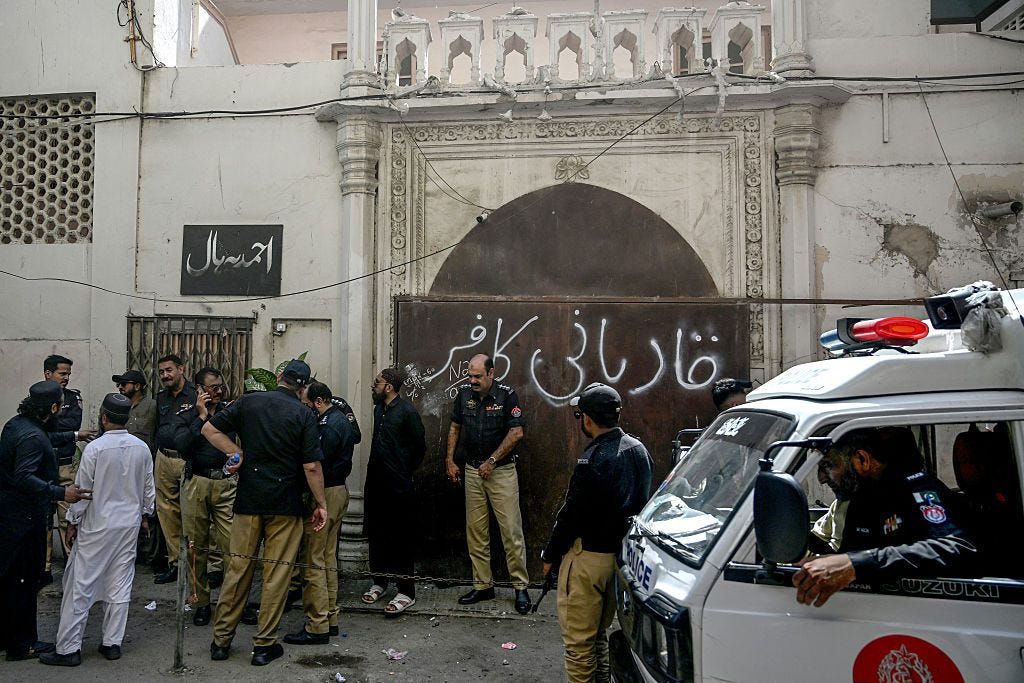
Similarly, on a separate occasion later that week on May 30th, a separate incident took place during the funeral prayer of an Ahmadi Muslim in Township, Lahore. Having seen Ahmadi Muslims praying, an individual made a call to the police and reported the 15-20 individuals who were offering their prayers privately. Following such complaints, the authorities approached members of the Ahmadiyya Muslim Community in the area, highlighting that those targeting the community had become more active, and hoped to lodge a case against them. In light of this, the authorities suggested that the local Ahmadiyya Muslim Community should close their mosque during core Friday Prayer hours, as well as changing their hours for prayers more broadly in order to keep a ‘low profile’ - a request which was impossible for the Ahmadi Muslims to enact given that prayer timings are set by religious law, and cannot be altered. This case underlines how Ahmadi Muslims are being increasingly pushed to invisibility in their own country: one that once championed religious diversity and saw an Ahmadi Muslim among the founding fathers of the nation.
Unfortunately, these cases alongside several others demonstrates how the authorities merely accept or even encourage increasing levels of discrimination against Ahmadi Muslims and are doing little to counter the extremist elements of society that seek to prevent even private acts of worship and religious expression. If Pakistan is to prosper then it must change course and inculcate a society where diversity of thoughts and belief is valued.
Comments
Nothing yet. Say the first thing.
Sign in to join the conversation.