
Sir Chaudhry Zafrullah Khan, architect of international human rights law, forgotten by the nation he helped build.
Thanks for reading! This post is public so feel free to share it.
Freedom of Religion or Belief Pakistan Ahmadiyya Muslim Community
In some cases countries celebrate the founding fathers of their nations while in other cases they seek to wipe out the contributions of the very individuals who built them - especially when such esteemed individuals no longer fit the prevailing political or religious narrative. Sir Chaudhry Muhammad Zafrullah Khan is one such figure, a foundational architect of international human rights law, a statesman of global standing, yet a man whose legacy has been systematically sidelined by his homeland simply because of his faith.
Sir Zafrullah Khan was instrumental in the creation of Pakistan, and he represented the country on the world stage at its most fragile moment.[1] He became Pakistan’s first Foreign Minister,[2] served as President of the United Nations General Assembly,[3] and later made history as the first and only Pakistani President of the International Court of Justice.[4] Few figures from the Muslim world, or anywhere, have reached such heights in international law and diplomacy.
Yet his most enduring contribution lies in something that quietly shapes the lives of billions today: Article 18 of the Universal Declaration of Human Rights.[5]
SIR MUHAMMAD ZAFRULLA KHAN: 1948
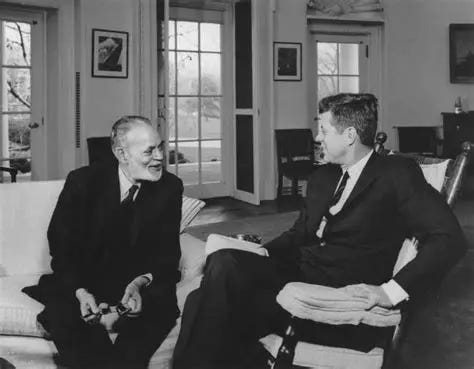
Sir Muhammad Zafrullah Khan in conversation with U.S. President John F. Kennedy. (Credit: Encyclopædia Britannica / Wikimedia Commons)
An Inspirational Understanding of Freedom of Belief
Article 18 guarantees the right to freedom of thought, conscience, and religion, including the freedom to change one’s religion and to manifest belief individually or collectively.[6] While this may seem self-evident today, it was deeply controversial in the aftermath of World War II, particularly among states - across the political spectrum- that prioritised ideological, national, or religious conformity over individual freedom of belief.
In this regard Sir Zafrullah Khan’s contribution was uniquely balanced and visionary. Drawing from Islamic jurisprudence and the principles of absolute justice, he articulated a legal framework that was stubbornly equal - for it did not privilege belief over disbelief, nor one faith over another.[5] Instead, he argued for freedom of belief as an inherent human right and not a concession to be granted by the state.
Crucially, his approach upheld:
Freedom of religion
Freedom of expression
Freedom to change one’s religion
Protection for minorities against coercion
This was not abstract theory. As an Ahmadi Muslim, Sir Zafrullah Khan was personally aware of the risks faced by religious communities, which informed his principled approach to legal and constitutional questions.[7] His legal reasoning was shaped not by power, but by principle.
His intervention was vital because it countered arguably the most influential Muslim nation - Saudi Arabia- and its opposition to including the right to change one’s religion in Article 18., demonstrating that the freedom to change religion was not only compatible with Islam but fundamental to it.
Forgotten by the Nation He Helped Build
Despite his unparalleled service, Sir Zafrullah Khan’s legacy in Pakistan is often omitted altogether.[8] School textbooks make no mention of him while his role in shaping Pakistan’s early diplomacy and international standing is quietly downplayed.
Why?
Because he was an Ahmadi Muslim.
Pakistan, the state he helped establish, later codified discrimination against Ahmadi Muslims, declaring them non-Muslims by law[9] and has subjected them to systemic persecution.[10] In this environment, acknowledging Sir ZafrullaH Khan’s achievements would require confronting an inconvenient truth: that one of Pakistan’s greatest legal minds and its international representative belonged to the very community the state now marginalises.
This selective amnesia is not accidental. It reflects how persecution operates not only through violence or law, but also through the erasure of its history.
Sir Chaudhry Muhammad Zafrullah Khan
6 February 1893 — 1 September 1985
Pakistan’s first Foreign Minister (1947–1954), President of the UN General Assembly (1962–63), and President of the International Court of Justice (ICJ) (1970–73).[2] The first and only person to have served as President of both the UN General Assembly and the ICJ.
Selected personally by Muhammad Ali Jinnah to represent the Muslim League before the Radcliffe Boundary Commission in 1947, he is widely credited as one of the architects of Pakistan’s early international standing.

Why His Legacy Matters Today
Sir Chaudhry Zafrullah Khan’s vision of freedom of religion or belief remains of profound relevance to contemporary human rights discourse.[11] At a time marked by the resurgence of religious nationalism, the politicisation of belief and the erosion of minority protections, his work offered a principled legal framework grounded in universality rather than cultural or theological hierarchy.
His role has often been overlooked in mainstream accounts of the development of Article 18, reflecting the enduring impact of political exclusion and religious discrimination on historical memory. The marginalisation of Ahmadi Muslims within Pakistan, through laws such as the Second Constitutional Amendment of 1974[9] and Ordinance XX of 1984[10], has directly shaped which figures are commemorated and which are removed from national and international narratives.
As global institutions confront renewed challenges to freedom of religion or belief,[12] the legal reasoning advanced by Sir Chaudhry Zafrullah Khan offers enduring guidance and inspiration from one of Pakistan most distinguished figures.
Amjad Mahmood Khan, “A Courageous Muslim Voice: How Sir Muhammad Zafrullah Khan Saved Article 18 of the UDHR,”The Review of Faith & International Affairs, 21(4), 2023.Taylor & Francis Online →
United Nations General Assembly, “President of the 17th Session — Sir Muhammad Zafrullah Khan (Pakistan).”United Nations →
Encyclopædia Britannica, “Sir Muhammad Zafrullah Khan,” updated February 2026.Britannica →
Wikipedia, “Muhammad Zafarullah Khan.”Wikipedia →
Oxford Human Rights Hub, “The Ahmadiyya in Pakistan: Religious Persecution, Human Rights, and Islam.”OHRH →
Universal Declaration of Human Rights, Article 18 (1948).United Nations →
Yasser Latif Hamdani, “Sir Zafarullah Khan — Forgotten Hero,”Pakistaniat, 2007.Archive →
Chaudhry Muhammad Zafrullah Khan’s Services to Pakistan and The Muslim World, Ahmadiyya Muslim Community.Al Islam →
Wikipedia, “Persecution of Ahmadis” — 1974 Second Constitutional Amendment.Wikipedia →
Wikipedia, “Ordinance XX” — Pakistan Penal Code Sections 298-B and 298-C (1984).Wikipedia →
UK Home Office, “Country Policy and Information Note: Ahmadis, Pakistan,” March 2025.GOV.UK →
CAP Liberté de Conscience, “Pakistan: High Court Bar Condemnation Against the Ahmadiyya Community and Its Incompatibility with International Human Rights Law,” March 2026
Comments
Nothing yet. Say the first thing.
Sign in to join the conversation.