
There’s been a lot happening lately demanding our attention: An unnecessary war most of us never wanted, the cost of living skyrocketing, a cruel immigrant purge destined to bite us in the ass, a president whose main priority is enriching himself… I could go on.
All of these problems have diverted our attention from the slow-moving crisis that’s been hounding us for decades and threatens to make much of our world unlivable — climate change.
Despite the alarm bells going off this summer — massive and deadly wildfires, killer heat waves, devastating floods — politicians have essentially ignored the source of the problem: our reliance on fossil fuels, the burning of which is rapidly heating up our planet.
You might be saying, “What’s the point? Trump, the fossil fuel-friendly president, will veto any legislation to reduce carbon emissions, and the Republicans in charge of Congress appear to have little interest in solving climate change.”
You may be surprised, however, to learn there is viable legislation with a chance of being enacted that will dramatically increase America’s ability to reduce emissions in the coming decades. Permitting reform can speed the transition to clean energy, particularly by updating and building infrastructure for electricity transmission to move solar and wind power from places where it’s generated to places where it’s needed. Unless the nation’s power grid is updated, wind energy from the plains states won’t find its way to urban centers in coastal states where there’s still a heavy reliance on coal and gas to generate electricity.
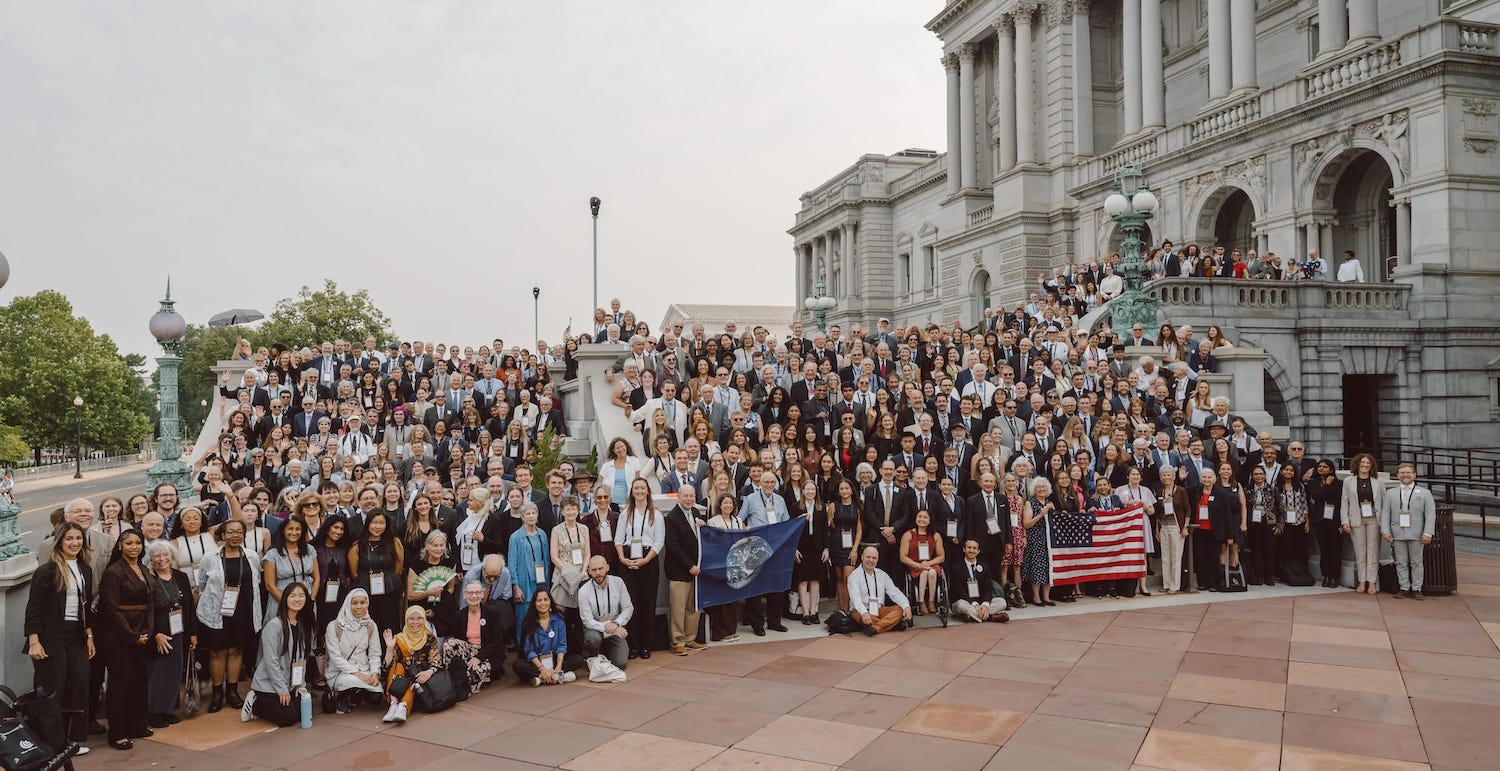
The grassroots advocacy organization Citizens’ Climate Lobby, known for its lobbying on legislation to price carbon, has expanded its policy portfolio beyond carbon pricing, which has little chance of moving forward in the current political environment. One area where CCL sees opportunity is permitting reform.
As CCL Research Manager Dana Nuccitelli explains, “Insufficient electrical transmission line capacity has been a key bottleneck slowing down the deployment of clean power sources. That’s why an analysis of the 2024 Energy Permitting Reform Act estimated that its transmission reform provisions could have resulted in more total climate pollution reductions than the Inflation Reduction Act. Building more electrical transmission lines faster is a critical climate solution in allowing more clean electricity onto the grid.”
Permitting reform enjoys support on both sides of the aisle — one of the few policy issues that does these days — making passage in this Congress a possibility. One of CCL’s strong suits is bipartisanship, and its volunteer advocates are adept and persuasive when it comes to talking to both Democrats and Republicans.
Efforts to slow and reverse climate change suffered a setback last year when the Republican-controlled Congress passed the One Big Beautiful Bill Act, which gutted provisions in the Inflation Reduction Act that incentivized clean energy. Those provisions were estimated to cut U.S. carbon emissions 7 billion tons by mid-century. Taking away those incentives reduced those anticipated reductions to 1 billion tons. Transmission permitting reform, however, would add 6.5 billion tons of carbon reductions, essentially restoring the emissions reductions of the IRA.
Permitting reform came very close to being enacted in the previous Congress. A bipartisan bill from senators Joe Manchin (D-WV) and John Barrasso (R-WY), the Energy Permitting Reform Act, was introduced in July of 2024. There was an effort to include the bill’s provisions in a spending bill passed at the end of the year, but that effort fell short.
Those provisions included…
Revising the judicial review process for energy and mining projects, setting a 150-day deadline for filing civil actions seeking review decisions to grant or deny authorization of projects. The current deadline to file for review of decisions is six years.
Requiring the Department of the Interior to hold at least one offshore wind lease sale and at least one offshore oil and gas lease sale per year. The Bipartisan Policy Center offers a detailed assessment on the bill’s effect on federal land leasing for both fossil fuel and clean energy projects.
Tightening up the timeline for approving construction of interstate transmission lines, which can take more than 10 years. This is done by granting greater authority to the Federal Energy Regulatory Commission to approve projects when negotiations among state and local governments become contentious and protracted. More about the transmission provisions here.
While there is bipartisan support for permitting reform, there is also opposition on both sides of the aisle. Some Democrats fear it will help fossil fuel projects, and some Republicans don’t want the federal government to override state and local authority. Regarding fears that permitting reform will speed up fossil fuel project, it’s true that approval for ALL energy projects will move faster. However, 90% of the energy projects waiting to be added to the grid are for clean energy. Most Republicans appear willing to sacrifice some local autonomy in order to cut government red tape.

The assignment for the 800-plus volunteers who recently traveled to Washington for CCL’s conference and lobby day was to convince enough members of Congress from both parties to move permitting reform legislation forward and get it across the finish line before the 119th Congress ends on Jan. 3.
That’s a pretty tall order. The House and Senate have adjourned for the August recess, with the Senate not scheduled to return until Sept. 14. At that point, Congress will be in session for only three weeks before lawmakers head home for nearly the entire month of October to run for re-election. After the election, there will be a lame-duck session of four weeks to finish up essential business before time runs out.
As in the previous Congress, the lame-duck session will likely be the best opportunity to get permitting reform passed. Before they left Washington, the House and the Senate both passed stop-gap funding bills to avoid a government shutdown before the election. The two bills, however, don’t currently agree on how long funding will be extended, and the House, when it returns Aug. 31, will need to pass a bill that matches the Senate version. Assuming that works out, the government will run out of money on Dec. 11.
Wanting to avoid a shutdown before the holiday season, Congress will scramble to pass an omnibus spending bill, at which point lawmakers will look for ways to have other bills hitch a ride on this must-pass legislation. Political will, of course, will determine which bills get to hop on, and that’s something CCL excels at generating. They laid the groundwork with their lobby day in D.C. last month, and volunteers throughout the country will build on that support in the coming months with letters and phone calls to Congress as well as letters to the editor and op-eds in their local newspapers.
With climate change, time is not our ally. The longer we delay the transition off fossil fuels, the worse things will get. All the more reason we can’t afford to squander opportunities like permitting reform.
No posts
Comments
Nothing yet. Say the first thing.
Sign in to join the conversation.