
Thank you for reading (and listening to) Evil Speakers. This is part three of this month’s series on ’90s Neil Young. Look for my weekly column on Thursday, which will include reviews of several upcoming albums by Weezer, Brandon Flowers, Interpol, and more. To all my paying subscribers — thank you for making this newsletter viable.
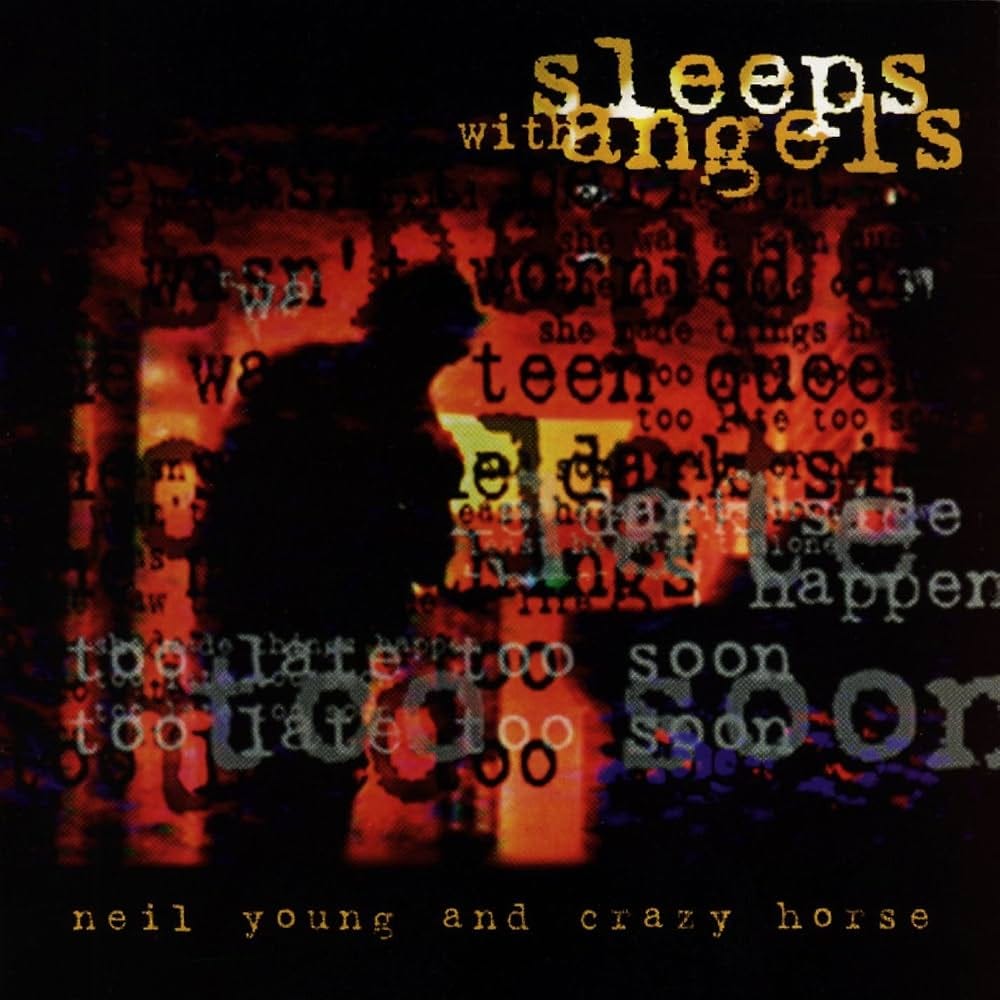
“It’s better to burn out than to fade away” not only is the most famous lyric ever written by Neil Young, it’s one of the most iconic lines in rock history. And it’s haunted the author ever since it appeared on 1979’s Rust Never Sleeps. Fifteen years after that album, Neil was confronted with the implications of the lyric when Kurt Cobain put it at the end of his suicide note, a development that haunts the album we’re talking about today, Sleeps With Angels. In some ways this record continues Neil’s reimagining of his classic work in the ’90s — similar to how Ragged Glory expounds on Everybody Knows This Is Nowhere and Harvest Moon revisits Harvest, Sleeps With Angels evokes the underbelly grime of his “ditch” period, though it’s even darker this time around. A difficult and painful record, Sleeps With Angels ranks with Neil’s bleakest musical statements.
Upcoming schedule for Catalog Club: Neil Young (1990-1996)
August 24: Mirror Ball (1995)
August 31: Broken Arrow (1996), also touching on Dead Man and Year Of The Horse (live album and film)
Catalog Club for September 2026: ???
Hint No. 1: This is one of the greatest English rock groups of all time.
Hint No. 2: They broke up, famously.
Hint No. 3: It’s a quartet (most of the time).
Comments
Nothing yet. Say the first thing.
Sign in to join the conversation.