
This essay was originally published in January 2025 over on SteveKamb.com.
I keep track of all the video games, books, shows, and movies I experience.
(It’s a long list. I’m a bookworm-cinephile-prestigeTV-loving-gamer-nerd.)
I don’t just watch a show, I find three podcasts analyzing it. I don’t just play a video game, I watch YouTube deep dives into its lore and development. If there’s a movie with a book adaptation, I’m going to first read the book, then convince a friend to join me at the Belcourt (Nashville’s independent theater), and ask them to nerd out about it with me. I’m in group chats for each of the different media above.
Which brings me today, my dear friend.
As I was looking back over my last few months of things I’ve read or watched or played, I found a pattern:
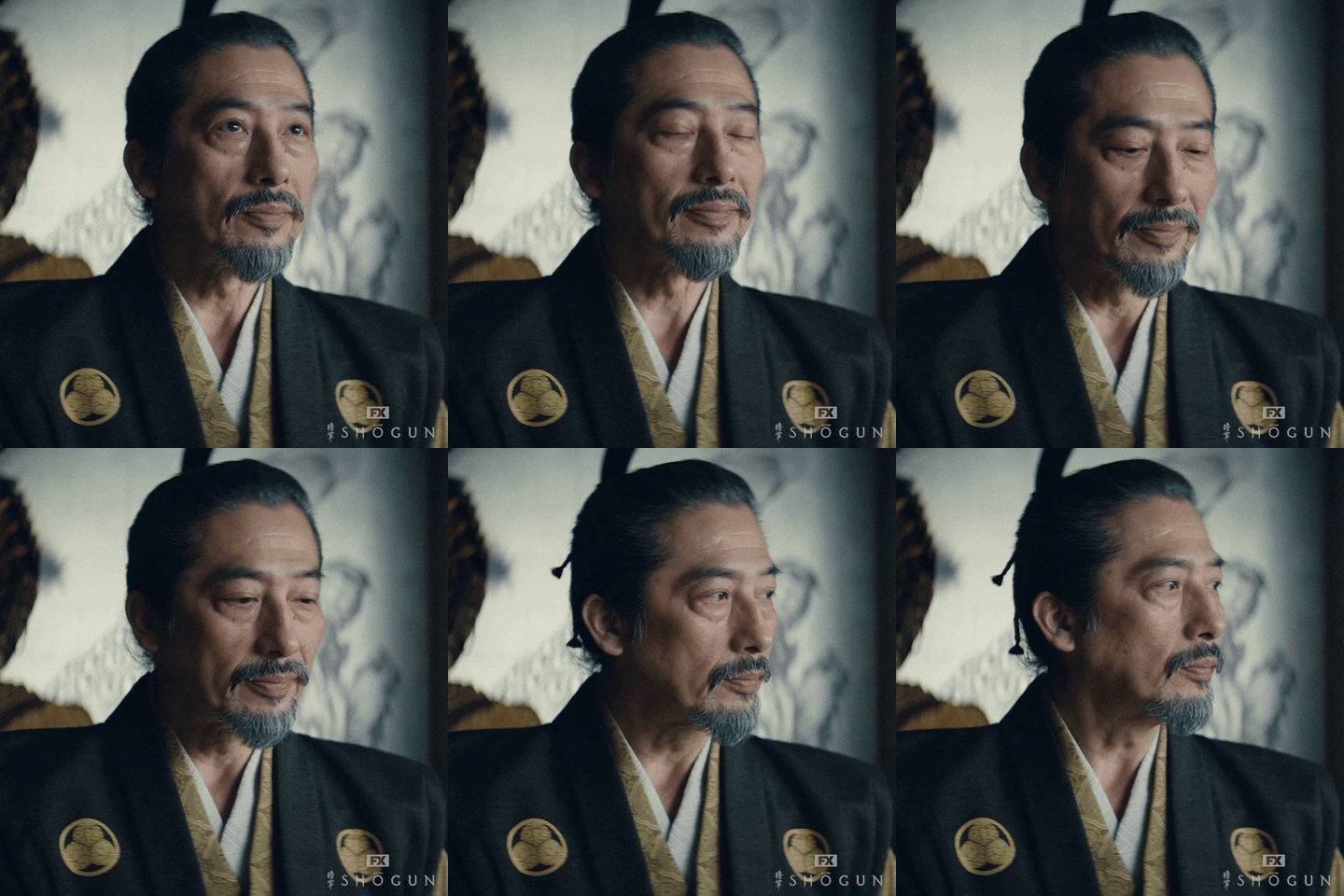
I started rereading Shogun and finished watching Shogun on FX/Hulu (incredible!).
I listened to a 4-hour episode of the Acquired podcast on the origins of Nintendo (stretching back to the 1800s!).
I played through and loved Sucker Punch Productions’s Ghost of Tsushima
I went through the entirety of Studio Ghibli’s animated film collection.
I just watched Wim Wender’s Perfect Days. Waterworks.
I rewatched Sophia Coppola’s Lost in Translation.
Here are the only two LEGO sets I own currently:
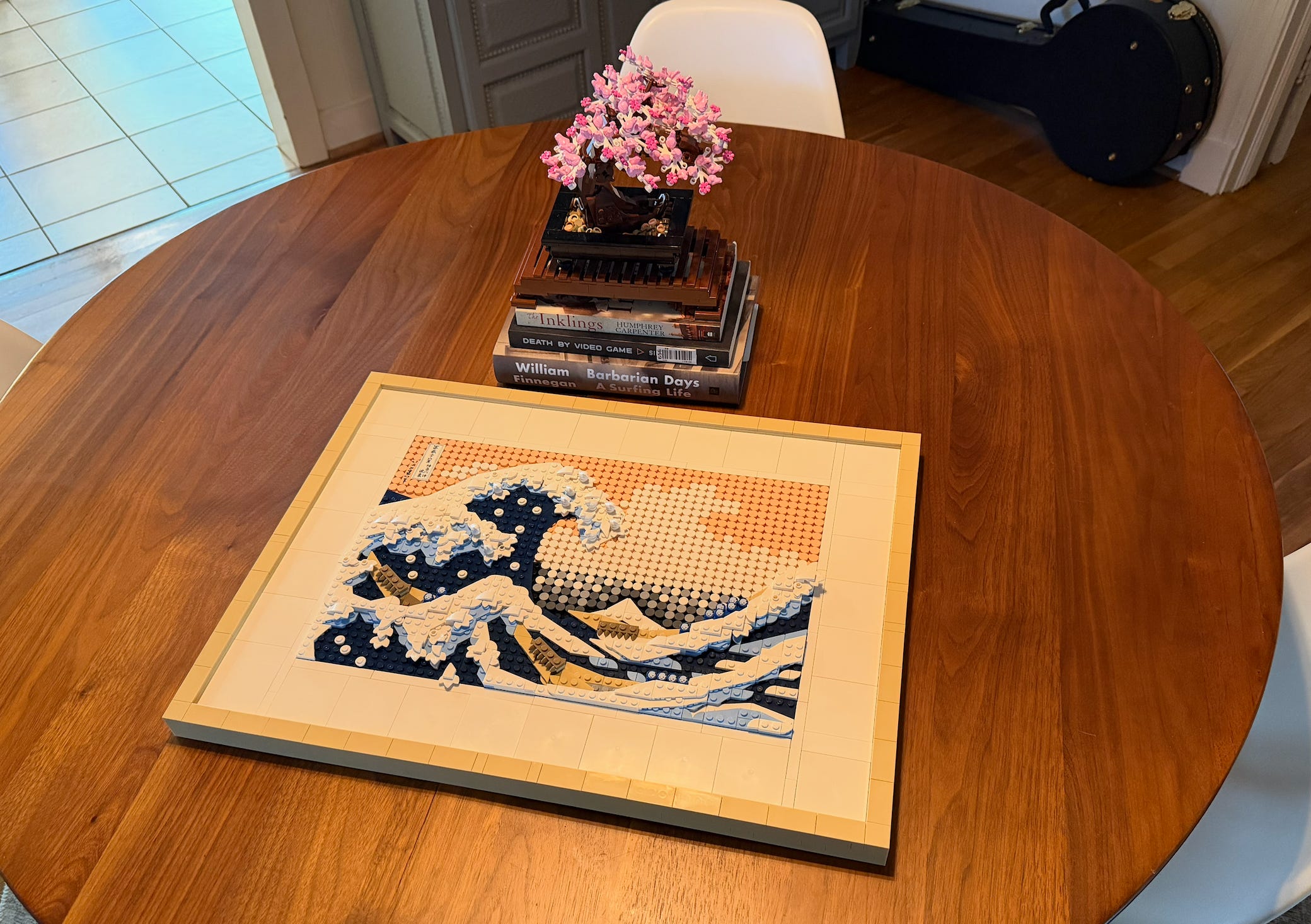
Looking back over this time, there was one common theme: Japan!
I know, I know: “Middle-aged white dude has crappy few years and finds wisdom in Japanese culture and eastern philosophy” is so cliche it’s embarrassing.
But it’s my newsletter, so let me cook.

This infatuation became all too clear when I stumbled a philosophy that (im)perfectly describes the updates I’ve made to my life and how I’ve changed over the past few years.
If you’re a perfectionist, or struggle with “but after x, then I can do y” thinking, it might help you too.
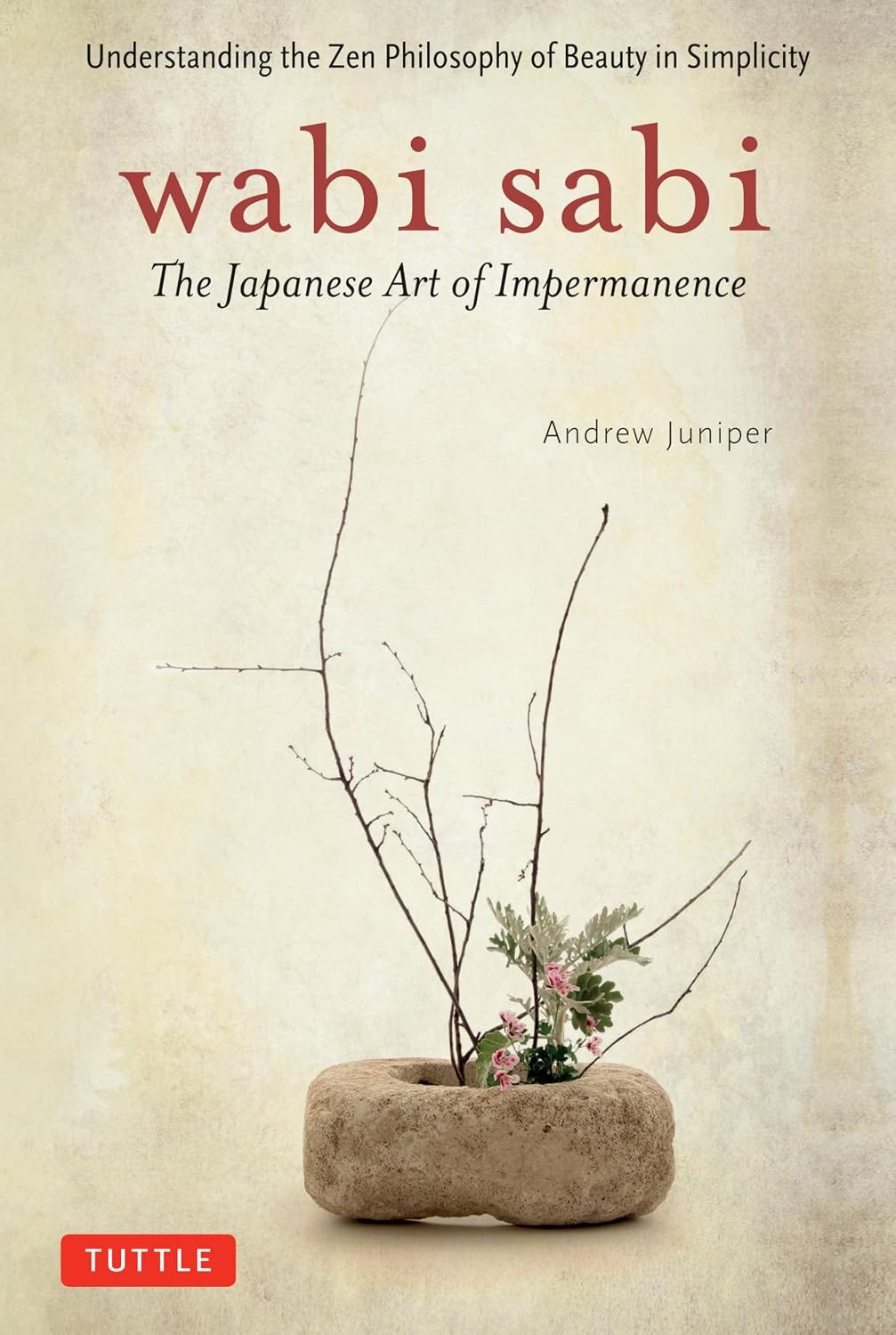
In his book Wabi-sabi: The Japanese Art of Impermanence, Andrew Juniper describes Wabi-sabi as “serene melancholy.”
I can’t think of two words I’ve ever felt more connected to.
(Okay, maybe “insecure overachiever” fits me even better.)
But as an elder millennial whose head is full of 2000s emo song lyrics, “serene melancholy” hit me right in the heart.
Wabi-sabi is an aesthetic Japanese Zen art philosophy that finds beauty in the understanding that everything is imperfect, impermanent, and incomplete.
To embrace Wabi-sabi requires the ability to reflect on the fact that change is the only constant, nothing lasts forever, and perfection is unattainable. We can find its influence in nearly every aspect of Japanese culture: tea ceremonies, bonsai, rock gardens, haiku poetry, flower arrangement, ceramics and more.
The most common example of Wabi-sabi is “kintsugi”:
When a piece of pottery is cracked, it is repaired with gold-infused lacquer, highlighting the crack and its imperfections rather than hiding them. It shows the bowl has been well used.
The cracks tell a story, and it actually makes the bowl more valuable.
I have more to say about Kintsugi, but let’s get to Wabi-sabi as a guiding principle.
Reflecting on my 20s and early 30s, I realized I lived a life the opposite of Wabi-sabi:
I spent years creating a perfectly optimized schedule. I wanted to find the perfect workout and share the perfect diet. I tried to optimize my work schedule, but I also tried to optimize my free time and even my sleep.
Everything needed to be optimized.
Professionally, I ran myself ragged growing and scaling Nerd Fitness, putting much of my life on hold “until I was done.” I told myself “I just have to reach [arbitrary metric], then I can slow down.”
Unsurprisingly, the closer I got to optimized perfection, the more life would push back.
No matter how hard I tried to control everything, no matter how high I set my expectations, life kept happening. I responded with surprise, indignation, and frustration…and then went back to work doing the same thing!
It took years of running into a brick wall to finally realize the “optimized carefree life” I sought didn’t exist. I was never going to “get there”, because my brain just kept moving the goalposts. That I would never have time to get it all done, because there were simply too many things to do. It was literally impossible.
This is when I finally found the thing I desperately needed: Acceptance.
Once I stopped expecting “normal” to be normal, I learned to operate in the chaos.
Once I stopped trying to do everything, I could make progress on something.
Once I stopped trying to optimize life, I could start living it.
It hasn’t solved all my problems, because nothing can. But it gave me permission to stop hiding from my flaws, to embrace imperfection, and to accept that life will always change.
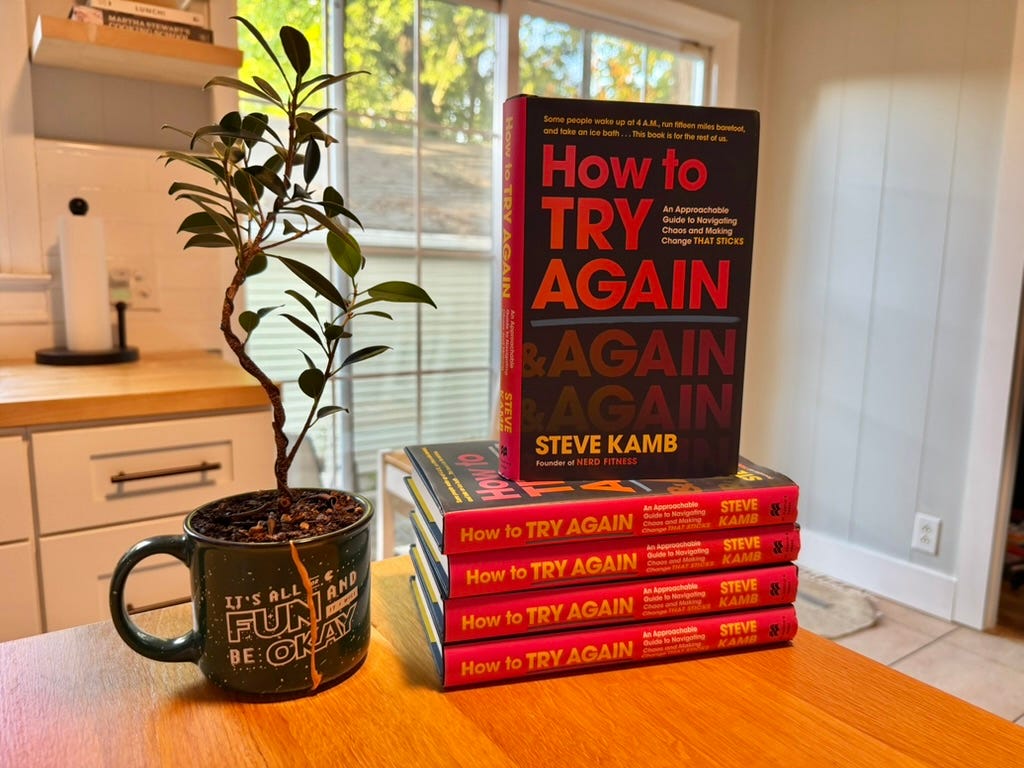
It also gave me permission to try my own attempt at Kintsugi, where I made something beautiful out of something broken:
Life is full of random events, and we humans must do our best to navigate the chaos.
This is where Wabi-Sabi can help.
Although Wabi-sabi is usually associated with art and nature…I’ll be damned if it’s not an incredible life philosophy too.
I wrote essays and articles over at Nerd Fitness for 15 years. In that time, I tried my best to help nerds get healthy while also surviving the chaos of modern life.
Helping people understand what’s going on in their minds instead of just what goes in their workouts or on their plates is what brings me unbelievable amounts of joy and fulfillment.
This is why Wabi-sabi has connected with me so deeply, and why it serves as the guiding foundation underneath How to Try Again.
It celebrates the fact that life is imperfect, impermanent, and incomplete.
Wait a second… so are humans!
Our flaws and bumps and bruises and scars make us who we are. They show we’ve lived a life. We can celebrate the fact that we are imperfect humans.
Nothing lasts forever, including ourselves. It’s on us to develop awareness and acceptance of this reality. And then act accoridng.
We are always changing. Rather than holding tightly onto an expectation of an unchanging future, or an unchanging body, or an unchanging career, we’re better off preparing for chaos.
This is why I think we should become Wayfinders instead of chasing warp speed.
So, how does one embrace Wabi-sabi in our daily lives?
We can stop chasing cleanses and “30-day detoxes.” Temporary changes create temporary results. If we never get to be “done,” if we’re always changing, then we need to adjust how we think about diets or sprints. It probably means small daily changes we can stick with, most of the time.
We can stop expecting perfect adherence to a plan, and instead expect our plan to not go according to plan. Perfectionism is procrastination in disguise. Rather than getting disappointed that we can’t be perfect, we can build imperfection into our expectations. Eating McDonalds with our kids does not ruin our week; it’s simply a choice we made for one meal. Who cares if we “break the chain?”
We can appreciate that we never “arrive” and we never get to be “done.” Our only option is to enjoy each season, and each step of the journey. We can stop saying “I can be enough once I lose the weight” or “I’ll be happy once I reach XYZ goal,” because we never get there. Our brains will just move the goalposts. We’re already enough. Don’t forget this!
There’s beauty in imperfection, so let’s stop chasing perfection.
The only constant is change, so let’s stop trying to hold back the tide.
The only guarantee is that none of us get out alive, so let’s enjoy today.
-Steve (imperfect, incomplete, impermanent human)
Comments
Nothing yet. Say the first thing.
Sign in to join the conversation.