
It seems there’s a little public debate about taxation going on in Washington state. Democrats in charge of every lever of government, believe that the “wealthy” need to pay more, or more charitably, “their fair share.” And by implementing a constitutionally questionable income tax, they’re asserting that amount starts at 9.9% on adjusted gross worldwide income, with a one million dollar deductible. Those targeted in this latest revenue grab (and a whole bunch who aren’t currently on that list) are answering, “Not So Fast.”
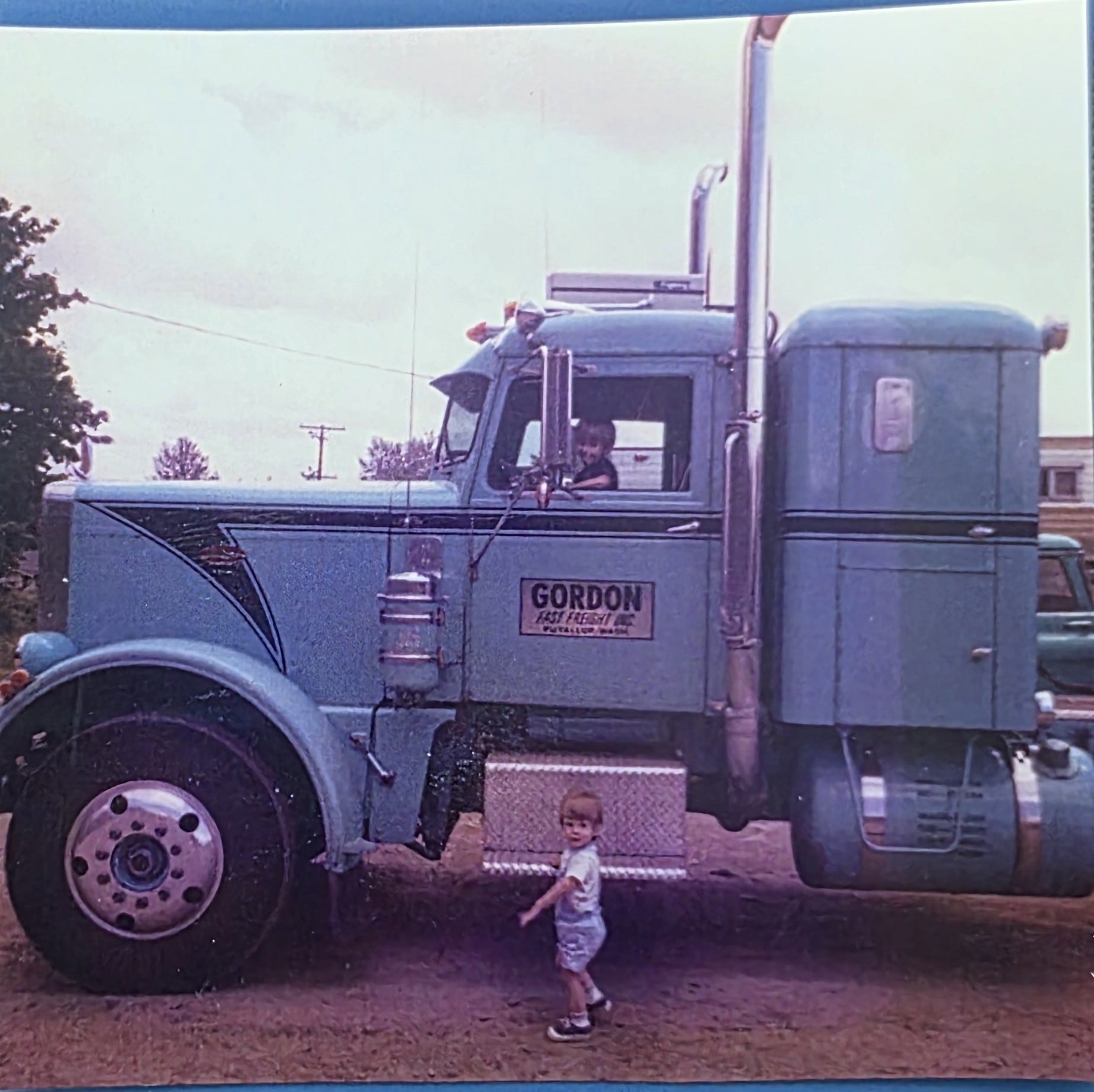
It’s worth touching briefly on my own experience and how that’s shaped my thinking. Some of you know about our family’s background in the trucking industry through Gordon Trucking (a national truckload carrier) and Gordon Truck Centers (a Freightliner & Western Star truck dealer throughout the West). Most people’s familiarity with that background begins about the time we had 2,000 trucks and subsequently sold the trucking operation to a public competitor, Heartland Express, in 2013. But the “how we got there” shapes my faith in free market economics and private property. (Note to the Marxists who will say we made money off the backs of our employees and cutting safety corners; GTI consistently ranked in the Top 20 nationally for overall driver compensation, and was recognized as the safest carrier in the US by the Truckload Carriers Association multiple times.)
My grandfather started the business in 1946 at the age of 21 after returning from service in WWII. Gordon Fast Freight was started not really as a business with a grand design, but a simple way to make a living. After 20 years, it consisted of only a handful of trucks. At that point, my parents got involved and started growing the business. But even the initial growth was pretty modest up until deregulation in 1979. My dad made a big bet in 1980, starting his own company, Gordon Trucking, alongside GFF and that bet paid off. Having the federal government through the Interstate Commerce Commission decide who could haul what for what price was a terrible way to run a nation’s supply chain, and unleashing enterprising entrepreneurs in transportation helped the economy boom for the next 20 years.
I of course got a front row seat for this. It was fascinating to see the growth of the business, and the challenges along the way as I grew up. My childhood started out as the very humble son of a truck driver and transformed into that of working in the family business (pushing a broom and changing tires to start btw) by the end of high school. I lived the American dream.
My own 25 years in the business allowed me to be involved and make some of those same decisions that grew the operation during my childhood. Some worked and some failed miserably. And believe me, if you make a policy decision affecting drivers, facing 250 angry ones is a great test of your moral fortitude. And as we grew I was able to interact at a high level with the country’s largest businesses. We were a “core-carrier” for companies like Wal-Mart, Costco, Anheuser-Busch, Amazon, Georgia Pacific, Procter & Gamble, Home Depot, Lowes and two of my favorites, General Mills & Kellogg’s. And I spent a LOT of time on loading docks talking to drivers, forklift operators, and warehouse managers from Usk, WA to Temple, TX.
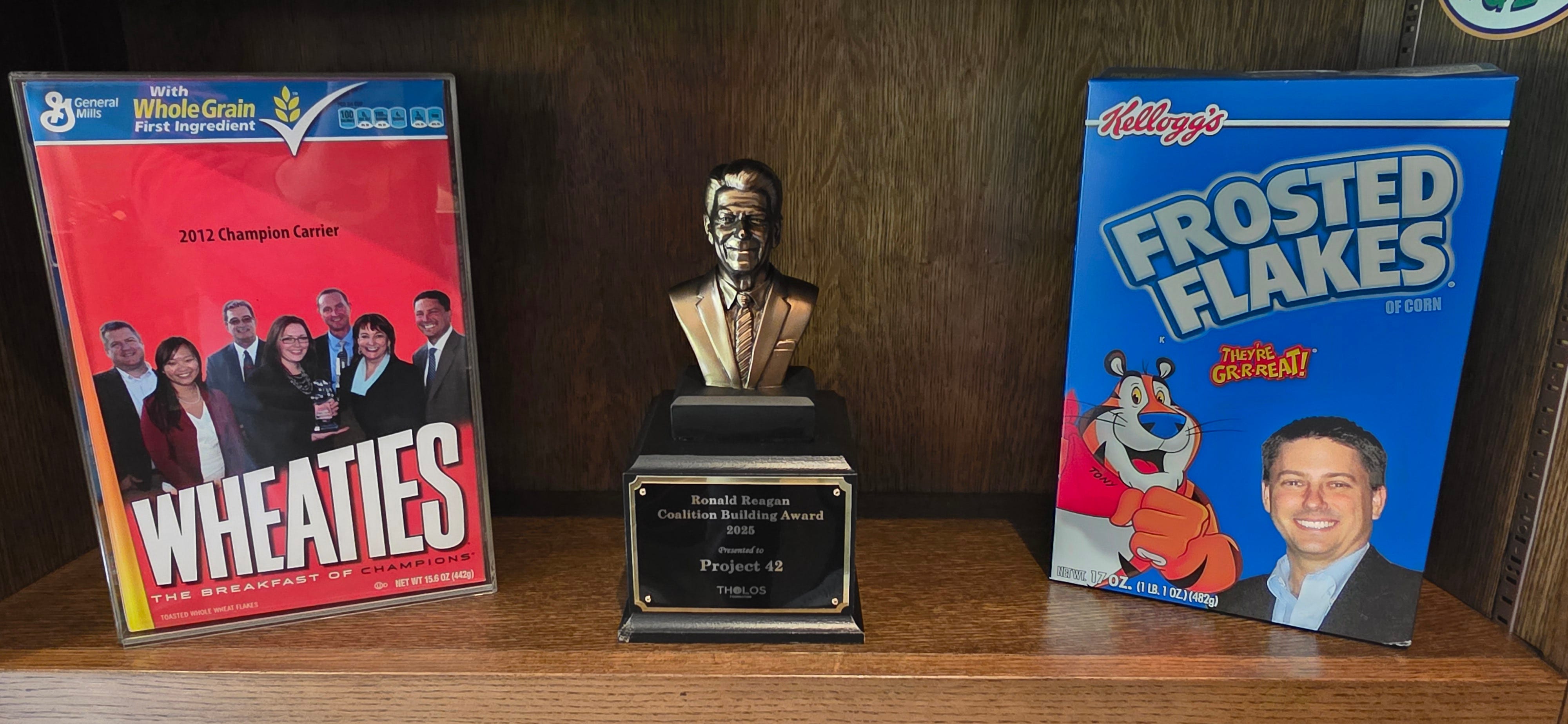
I got to know A LOT of folks in the corporate world and my fellow compatriots in trucking. It’s a great business that does important work for America, delivering 70+% of everything on your store shelves. Add to that my time with truck and component manufacturing, industry associations, purchasing $100 million of diesel fuel annually and lobbying on behalf of the industry, and I’ve been fortunate to get a read on a big slice of America’s economic engine, especially in the tangible goods economy.
So, how the hell does this relate to tax policy in Washington state? Well, I might suggest that I have a slightly better finger on the pulse of the business community than some of our elected officials, like Bob Ferguson, Jamie Pedersen, Laurie Jinkins, Noel Frame and April Berg. And that community is saying, ENOUGH!
Governor Ferguson released a letter from the Office of Financial Management yesterday, that in essence showed that even with the income tax (if it withstands both a ballot measure and legal challenge), they still need more taxpayer money. Just last year, the legislature, with the Governor’s approval, passed the largest tax increase in state history. And now with that in their pocket and counting on a potential additional revenue stream from the income tax, it’s still not enough (and no, it’s not because of inflation and population growth).
That can lead to two likely conclusions about taxes: they’ll apply the income tax much more broadly, and they’ll be layering on other new taxes. I’d say the most likely are the statewide “head-tax” as proposed by Democratic Socialist Shaun Scott, and the Wealth Tax that passed the Senate in 2025.
Businesses certainly favor lower taxes, especially at a state level where higher costs impact the ability to compete in a national market. If you’re a local restaurant, it may be less impactful if all the other restaurants face the exact same tax burden. But if you’re competing with low tax competition from Idaho or Utah for national customers, you’re at an immediate disadvantage. It’s a problem we faced every day, and partly why we sold to an Iowa based, lower cost competitor.
Aside from the overall tax burden, businesses need consistency. Capital decisions aren’t made on this year’s tax bill—they’re made on a bet about the next ten or fifteen.
When we’d put several million into a new terminal, the payback ran a decade or more. You underwrite it against assumptions about volume, wages, fuel—and the cost of operating in that jurisdiction. In Washington, those assumptions don’t hold. The B&O changes, a compliance fee appears, a “temporary” assessment gets extended, the CCA hits fuel—and now 9.9% on top. None of it was in the model when the shovel went in the ground. Every session, the legislature reaches back and rewrites a calculation the business already committed to.
That’s not a tax level problem—it’s a tax uncertainty problem, and it’s worse. A high but stable burden you can price and bid into your rates. What you can’t price is a government that treats long-lived capital as a renewable revenue source, revisited every January. The algebra isn’t just expensive—it’s unknowable. And unknowable is the one thing capital won’t sit still for. So it leaves: the expansion that goes to Idaho, the facility that never gets built. The 91% of employers responding in the latest AWB survey who won’t invest here aren’t making a political statement—they’re running the same arithmetic we did and getting the same answer.
The income tax is specifically designed to capture pass-through business income, but leaves out C-corps like the state’s largest public companies. There’s a reason they and the WA Roundtable are silent; it’s in their own self-interest to sit this fight out. But those impacted have seen enough. We are ranked 45th by the Tax Foundation on competitiveness already. While proponents of the income tax center their case on “regressivity,” the business community makes decisions based on the competitiveness assessment and their own impression of “fair share.” And they’re voting, with their feet.
Policy leaders and their friends with little connectivity to the business community can continue to ignore the evidence, but do so at the peril of Washington’s economic vitality. The residents who stay will be left with the tab. And their collective bank account is just about overdrawn…
No posts
Comments
Nothing yet. Say the first thing.
Sign in to join the conversation.