

The tracks were finished, and we had a bit of time off to let things marinate. Van Prince kept our spirits up with plenty of pep talks and drunken tirades. He loved telling stories about Black artists sabotaging their own success. He had worked with them all and knew their stories inside out. Because of him, we sat with giants who either lived in Europe or were passing through—Johnny Griffin, Art Taylor, Art Blakey, Freddie Hubbard, so many others. To casually sit, eat lunch, and hang out with someone who had actually played with Trane and Miles, listening to their stories, was priceless.
We got word that the album mix and artwork were finished and that we needed to make the trip up to Blaricum for a listening party and to see the album cover that had been designed especially for us. Phonogram, our record company at the time was rumored to have spent more on this album than any other recording in recent years. It wasn’t that obvious to us as we never got an advance or anything else other than the minimum publishing deal. When Van asked about the cover artwork he was told it was an original painting that everyone at the record company from the head of A&R to the label manager was dying for us to see. This was going to be the icing on the cake.
We had survived an ocean crossing from Los Angeles to Sitges, Spain, a long stint in Amsterdam at the Ponderosa, playing four and five sets a night for a year straight. Then we relentlessly pressed on to Aachen, Germany, before finally landing in Maastricht. We were more than ready to see the fruits of our labour and hear the final mixed and mastered versions of our songs. Most of all, we were excited to hear our own originals songs. When we arrived at the record company, they ushered us in and looked at us expectantly before unveiling the cover. The original painting was displayed with our new logo, which was destined to appear on all the records and merchandise. The executives were positively giddy with anticipation, eager to see our reaction to what they believed was a masterpiece.
When they finally pulled back the cloth covering the painting, we all gasped—and for all the wrong reasons.
It’s hard to describe what I felt, and I’m sure what everyone else in the band felt, when we saw it for the first time. Were they making fools out of us, or did they genuinely think this was the flattering image that we would proudly promote?
We were speechless.
I’m sure someone in the room sensed that we were outraged, but the real problem was that not one person there had the slightest clue why.
All of our heads had been painted onto crudely drawn animal bodies.
It was shocking.
We were trapped in that office with people who had absolutely no understanding of the long history of Black artists being misrepresented on record covers. For decades, record companies had deliberately used softer, less threatening imagery to market Black artists to white audiences, believing it would make them more commercially acceptable. In R&B, groups like the Ohio Players were breaking every visual rule in the book. Album covers were becoming bold, unapologetic, sensual, sophisticated, and unmistakably Black.
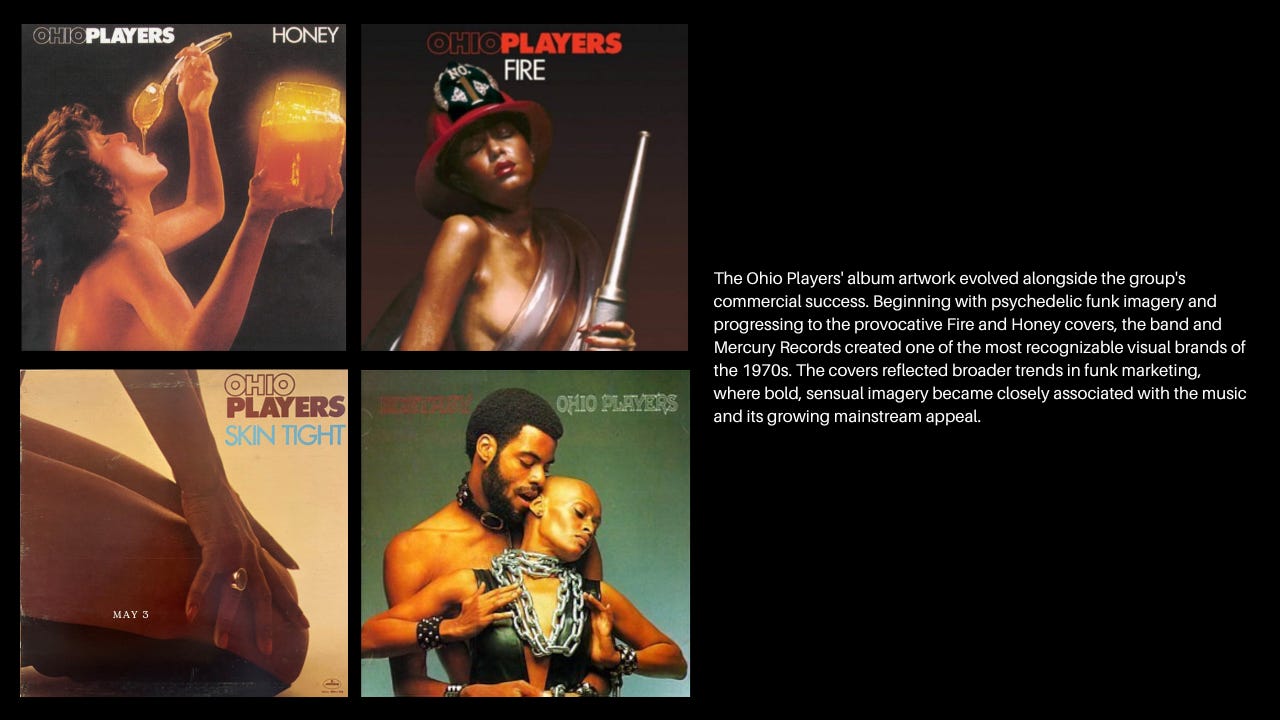
Ironically, this was happening at precisely the moment that America was beginning to move in the opposite direction.
By the early 1970s, a design revolution was underway. Creed Taylor and his CTI label were producing groundbreaking album artwork for artists such as Grover Washington Jr., Herbie Hancock, Stanley Turrentine, George Benson, Lenny White, and many others.
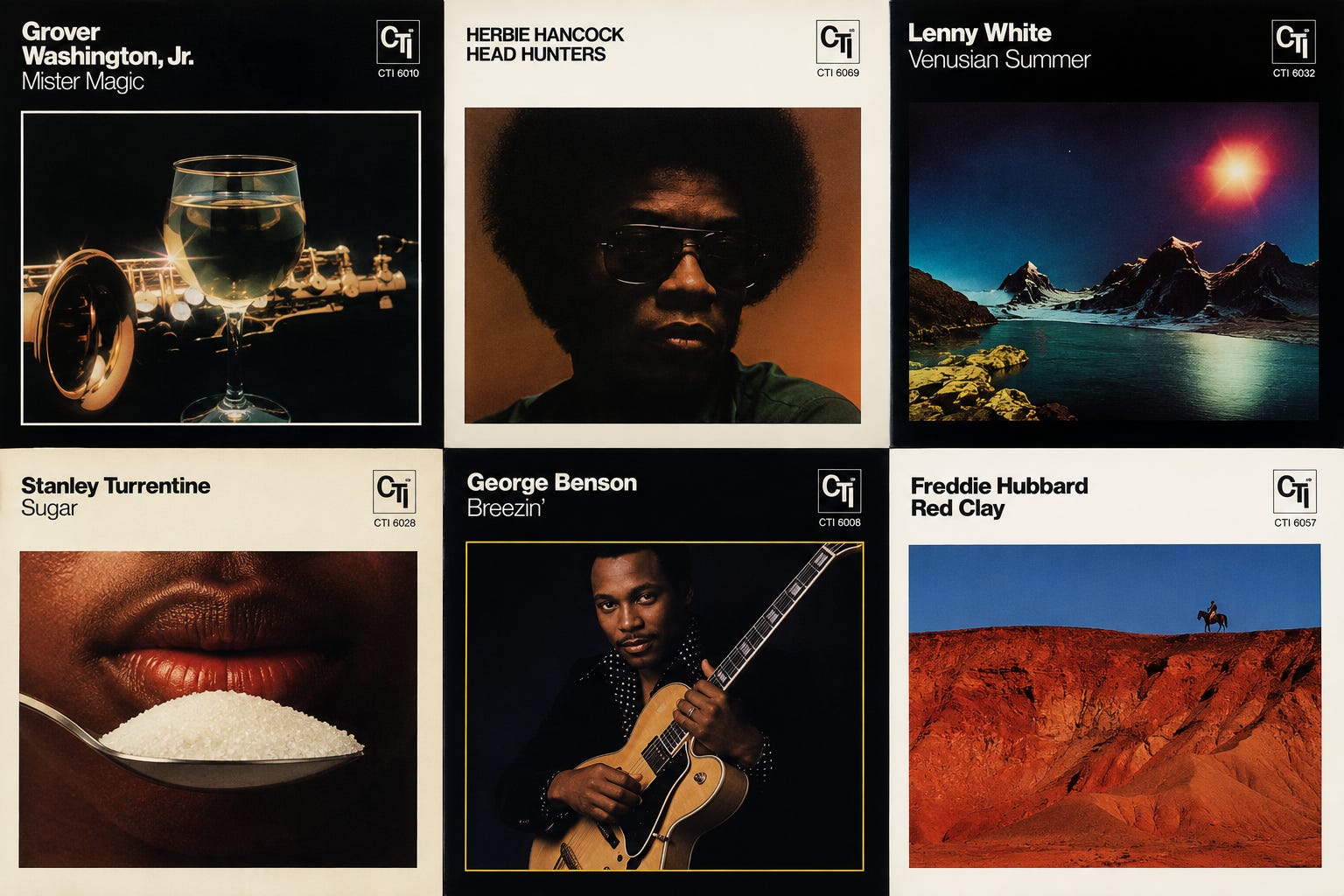
Barriers were finally beginning to fall.
Yet here we were.
It was heartbreaking, and it left us in an incredibly awkward position. Once again, we were about to take one for the team. The band members with wives and kids.
The aftermath of that encounter did not bode well for our next stop, the studio, where we were about to hear what they had done to our music.
During the recording sessions, we used to bring albums by the artists we loved to give them a roadmap, a crash course in American Black music. Pete, to his credit as an arranger, went crazy writing his own versions of Norman Whitfield’s marathon orchestral introductions. He was undoubtedly inspired by Papa Was a Rollin’ Stone and other Whitfield productions.
Hans, meanwhile, was determined to get me to sing somewhere between Sly Stone and Isaac Hayes.
They genuinely loved this music, but they filtered it through a Eurovision mindset, without truly appreciating the DNA from which it came: the blues, gospel, and the deep roots of Black American music.
To them, everything was viewed through the lens of European classical tradition. Melody came first, and everything else followed. Rhythm was secondary. Whether the lyrics actually meant anything was almost irrelevant. It was often more about how the words sounded than what they were trying to say.
Our attempts to enlighten them seemed to fail at every turn.
This was where we regretted introducing Hans to Sly Stone, the Temptations, and Curtis Mayfield. They faithfully borrowed ideas from those records for our song Inside Out.
Then came the string arrangements on Golden Ring and, more generally, what felt like the Metropole Orchestra taking over much of the album.
Oddly enough, that same orchestra has since become one of the world’s leading orchestras for soul, jazz, and R&B, collaborating with everyone from Gregory Porter and Laura Mvula to D’Angelo tribute projects. Please take the trouble to check out a few short clips here. You can find the full performance on Youtube, it’s worth it.
When watching some of these videos back the irony is not lost on me that this was the venue that we played in so many times. It’s was the spot I heard Prince for the first time when he came out to promote his Dirty Mind album. It was truly like a second home.
The silver lining for this album is the US release was handled by our soon to be new management agency who managed to get the American release artwork changed. The final song I had hastily written at the last minute, Golden Ring, was ultimately going to be the saving grace for many reasons.
I’d like to think we helped start that trend with the Metropole back in the day, who knows. In so many ways, we didn’t realise it at the time, but we were pioneers. Looking back, I have no regrets.
Angel Eyes reached the Top Ten in Holland and Belgium and also received airplay in Germany. Lady Eleanor charted and stayed there for weeks, although I still refused to sing those lyrics to Angel Eyes live, much to Van Prince’s annoyance.
Coming up next.: London
A new record deal, new management, new country. This was what we thought was the big time!
Thanks for spending some time with me here. I would LOVE to hear from you in the comments and start a conversation. I’m here to share my story, what’s yours?
Stay peaceful🙏🏾
No posts
Comments
Nothing yet. Say the first thing.
Sign in to join the conversation.