
Some weeks had passed before we finally drove up to Sound Push Studios in Blaricum. Maastricht was two and a half hours from Amsterdam, and Blaricum was a little closer. Hilversum was the media hub of Holland. All the television stations and production companies were located there or nearby. Blaricum was just a few minutes drive from there.
It was one of those places you passed through on that huge fold-out map we lived by, and we eventually travelled that road a thousand times. Anyone who lives in Holland knows the route: Amsterdam, Utrecht, ‘s-Hertogenbosch, Eindhoven, Heerlen, Maastricht. Sometimes we drove it day in and day out once we started touring. North of that was Friesland, and all the way to the north was Groningen, a cool university town at the very top of the country.
SOUNDPUSH STUDIOS
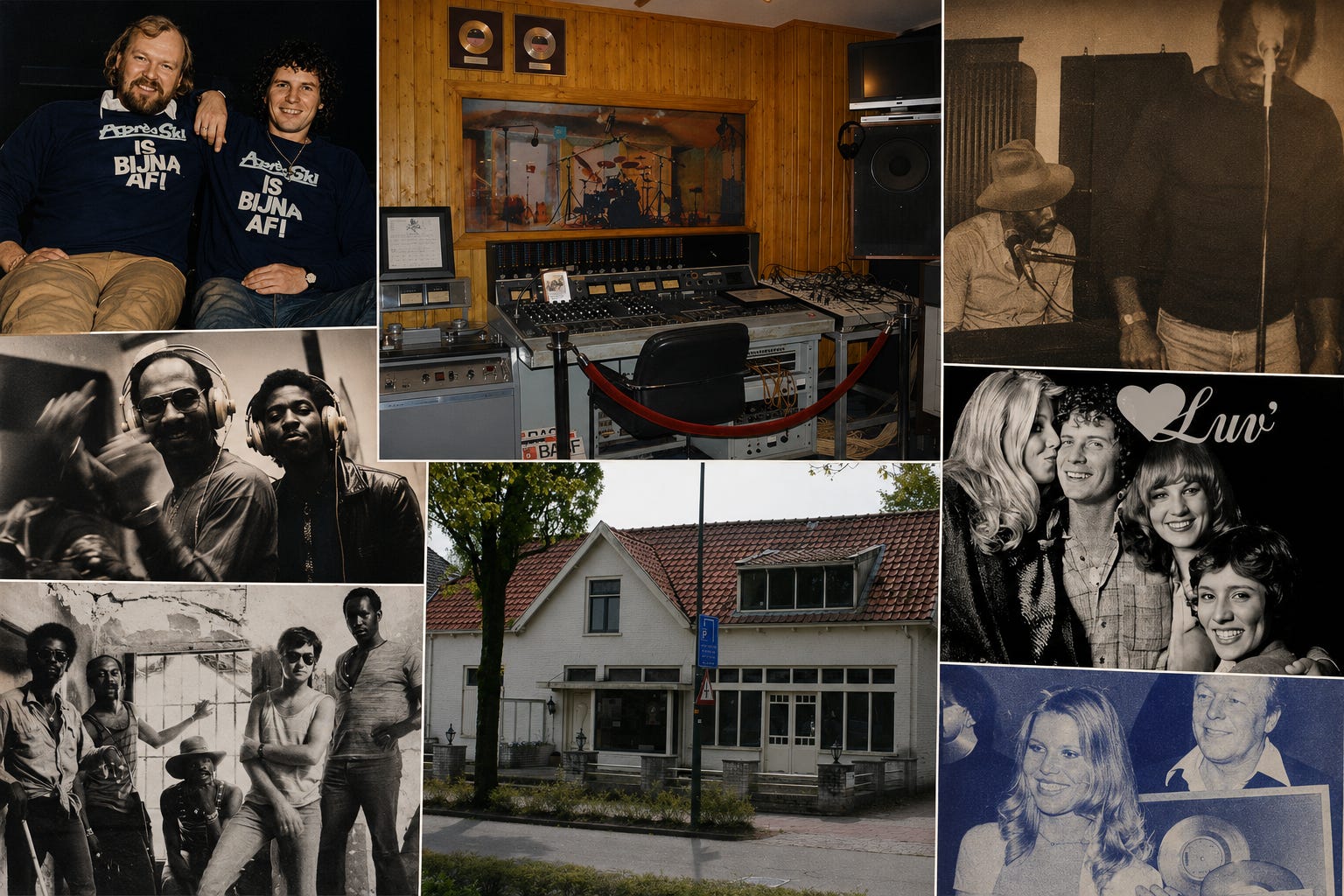
Once we parked we didn’t quite know what to expect. We would be meeting our producers for the first time, while at the same time knowing these were the guys that sent us those strange tapes. They both spoke English fluently, but we still didn’t quite know what to make of the strange lyrics. They seemed genuinely interested in our music, as well as what we’d done to the tracks they’d sent us. We played some of the arrangements we’d come up with, and they seemed genuinely excited and encouraged by our input. This was looking hopeful.
At one point during a break, Hans was trying to get everyone settled and back on track.
“Come on, boys,” he kept saying.
We all started looking at each other with a knowing look, silently negotiating which one of us was going to be the first to straighten this dude out.
For me, it went back further than the turn of phrase or the stereotype that goes along with it.
I was around thirteen when Burton, a good friend of my mother’s, volunteered to take me off her hands for a few hours and spend some time together. Burton was like a father figure to me after my dad died. I’d help him do whatever job he had going on, handyman work, cleaning up someone’s yard. Burton knew I was obsessed with cars and racing and desperately wanted a go-kart. When I told him he volunteered to take me down to the local department store and have a look. I was beside myself with excitement, and as fate would have it, but again, I had been born in the wrong body to be a race driver. At that point, it was the story of my life. I fit into nothing.
I chuckle when I see Lewis Hamilton now and think of me in a Formula One car.
Burton was built like a bodybuilder. Not tall, but you noticed his arms, his broad chest and the way he carried himself. After my dad died, he became a role model, someone I looked up to.
We went to a local department store that sold everything from sports equipment to clothes and sophisticated electronics, and to my delight there was a whole section dedicated to go-karts. I was trying to choose carefully. This was a big day, and I wanted to pick the right one. Burton was over in another area talking to a salesman.
Then, without any warning, I heard Burton shout, “Come on, Stevie!” He grabbed me and rushed me out of the store.
My heart sank. I had no idea what had just happened and was too scared to ask. What could have possibly happened that I missed that was that bad?
When we got to the parking lot, Burton was still moving fast.
“Never let a white man call you boy.”
I was thinking, what does that have to do with my go-kart?
I didn’t ask another question. I just sat there disappointed, wondering what it all meant, how it all fit together, something I would have to work out for myself over the coming years.
This was Europe, and Hans had no way of knowing what a cultural landmine he was standing on. Just as we were learning that many of the Black people we knew in Amsterdam called Dutch people “potatoes,” we gave him some slack and finally tried to explain the problem. He listened, apologized and work went on.
A few studio days later he said it again.
“Come on, boys.” As though that conversation had never happened.
We called that tone deaf. not getting it, a respect thing.
There are a few ways to handle that kind of ignorance. You can become hostile and repeat the same explanation as you would to a kid who wasn’t paying attention. You can ignore it and internalize it, letting your inner dialogue repeat how disrespectful this person is until the resentment overflows and explodes.
Or you can choose compassion, tell a more carefully crafted version of the same story, and hope it lands the second time.
In this case, like so many other people of color before and since, we chose to look at his ignorance and his sense of privilege and let it go, to keep the family together. A metaphor for survival, calculated compromise seemed to be the answer, but little did we know there was more to come. Much more.
We had many spirited discussions about it back at the hotel, two generations of Black men from completely different backgrounds debating how to handle it.
Van was certainly no pushover, but his position was clear.
“Forget the cultural bullshit and politics and get the money. That’s the common denominator. Stop worrying and start focusing on the music.” In the short term, he was right.
The night we came in to sing Angel Eyes was a big night for the recording. We had finished almost all the backing tracks and were ready to start on the vocals.
Pete, the arranger, had sung a few guide vocals as references, and it was Lorenzo’s turn to deliver.
Aside from our original songs, Inside Out, Golden Ring, and Ten Thousand Miles, there was one song they had given us that we turned into what we considered a soul version of a track by an English band, Lindisfarne, called Lady Eleanor.
LADY ELENOR THE ORIGINAL
The lyrics were strange, but the metaphors made a different kind of sense to us. We heard it with an Isaac Hayes vibe and pushed it in that direction.
They loved it.
Since I had the deepest voice, I ended up singing the whole thing. Hans was out of his mind. “That’s the voice we’ve been looking for!”
I immediately started promoting Lorenzo as the best voice for the rest of the album. I had no ambition to stand up front and sing. I was pathologically shy.
When I was a kid, I had buck teeth, lips that were too big and big flat feet. I never said a word to a girl until my cousin forced me to smoke a cigarette and inhale. I’d smoked before, but like the famous quote from Bill Clinton, I’d never inhaled. Well, this time I did, and life changed from that point on.
The nicotine rush was the first time my shyness disappeared in seconds. Suddenly I became cool. My conversation slowed down, and I instinctively realised that asking questions was a great way to keep a conversation going. You could actually listen instead of feeling under pressure to be funny or whatever other bullshit personality trait you thought you needed in order to be interesting.
That cigarette was my gateway drug. Then I started growing. Six foot one. Six two. Six three. Within a couple of years I was six foot five.
I grew into my lips and my teeth, but never out of my shyness. Never out of that longing to go unnoticed. If you saw me in the band, I was always under a hat, sitting at the back behind the piano. I AM NOT AN EXTROVERT.
Now the moment of truth was upon me. Hans insisted and would not let up. Van Prince was relentless, and he had no patience for Lorenzo or his voice. The rest of the band started in with the guilt trip, I would be the “savior of the project” routine, and it was affecting everything, the dynamic of the band and my relationship with Lorenzo. What was true was that he should have come up with lyrics that made Angel Eyes make some kind of sense. He didn’t.
He played tambourine but he didn’t play any other instruments on the record. He sang lead and harmony on a few more tracks including some of our original songs, and that was the sum of it.
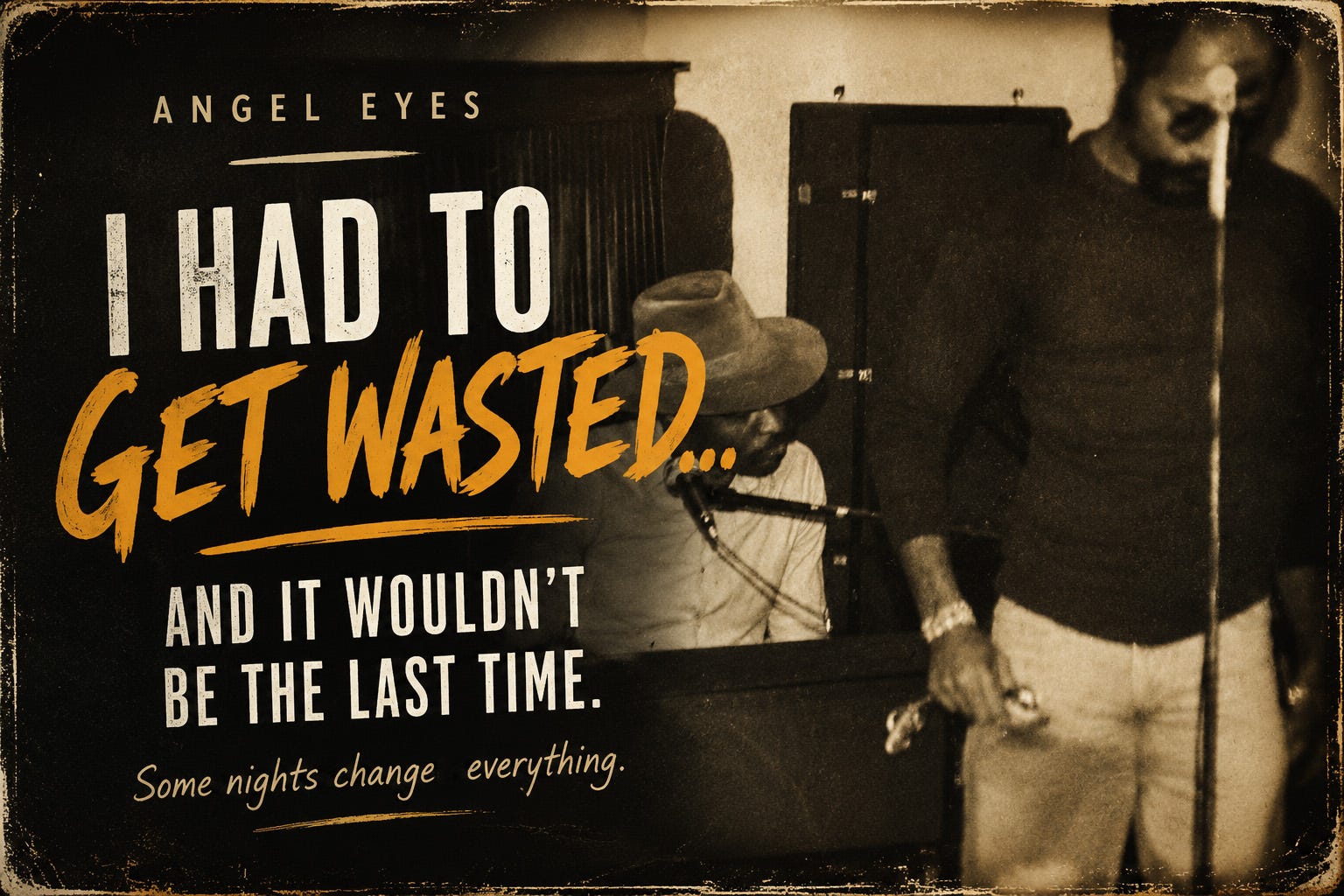
They literally had to force me into the vocal booth. For all my vices, there was one I had never been drawn to, and that was alcohol. The night of the Angel Eyes session I drank half a bottle of really old Dutch cognac. I remember having the bottle next to me in the booth, and every shot felt like another resignation, another indignity as far as I could see.
It was one of those nights where you go out, drink like a fish, black out, wake up the next morning with a splitting headache, and have to make the walk of shame back to wherever it was you came from and find out what damage you’d done. I honestly didn’t know what to think.
And to be real, fifty years later... I still don’t.
Hey music fam, I thought I’d drop a little bonus track for you to check out and see where I landed. LEAVE ME DREAMING nite nite🙏🏾
Next week: the full album playback, our introduction to the Metropole Orchestra, and the big album cover reveal. Shocking. I have the receipts.
No posts
Comments
Nothing yet. Say the first thing.
Sign in to join the conversation.