
Laughing sets it off. Not a polite laugh, a real one. The huge, involuntary kind that erupts from somewhere low and takes the whole body with it. That’s when the coughing fit arrives.
I can’t fully inhale without triggering one. Two laps in the pool and I need to stop and catch my breath.
When the diagnosis came, radiation pneumonitis, it was a relief to finally have a name for what was happening. Not new tumor growth, but another revision to a body I keep having to relearn.
The radiation targeted my mediastinal and pericardial lymph nodes. Without it, the tumors might have closed in on my lungs and heart. What it left behind was inflammation, partial atelectasis (a collapse in the lung) and hazy new opacities across the right lower lobe. That’s what the scans show.
From the inside, it feels like a disturbance deep in the chest. The cough never clears it. Nothing does.
No one tells you, when you survive longer than expected, that the repairs accumulate. Decisions made for a shorter life become the architecture of one that keeps going. Form follows the function of survival. The bump-outs change the house until you find yourself living in one you no longer recognize.
A friend, when cholangiocarcinoma spread to her bones, had a steel rod placed in her femur. The surgery was brutal. The recovery was brutal. It was not the kind of procedure they perform outside oncology. The calculus changes when the anticipated future is catastrophic. You reinforce the structure before collapse comes.
Two years ago I fractured my T12 vertebra on uneven pavement in Yangon. A surgeon repaired it with kyphoplasty, injecting cement into the bone to stabilize it. It worked. The pain improved. I moved on.
Earlier this year, I fractured the one below it, the L1, when moving a carpet. I was in pain. I called the doctor who had helped me before.
He recommended another kyphoplasty. I agreed quickly.
Only later did I learn what I hadn't understood in the moment: cementing adjacent vertebrae dramatically changes the mechanics of the spine. The lower vertebra now absorbs forces it was never designed to carry alone. I am at greater risk for another fracture. What had felt like a straightforward repair was, in effect, a partial immobilization of my lower spine.
For months I thought physical therapy was leading somewhere. That eventually I would regain more flexibility, more rotation, more capacity to bend and move normally again. Then last week a physiatrist explained, gently, that this was the endpoint. Not a temporary phase. The new structure.
She also told me this: the second fracture had not necessarily required intervention. It was less severe than the first fracture and could have healed conservatively with time and pain management. I didn’t know that was an option. I was in pain. I trusted the physician who had helped me before.
I have always been willing to trade something for quality of life. What I’m still reckoning with is that sometimes the trade runs the other direction. The intervention meant to shore you up becomes the thing you’re living around.
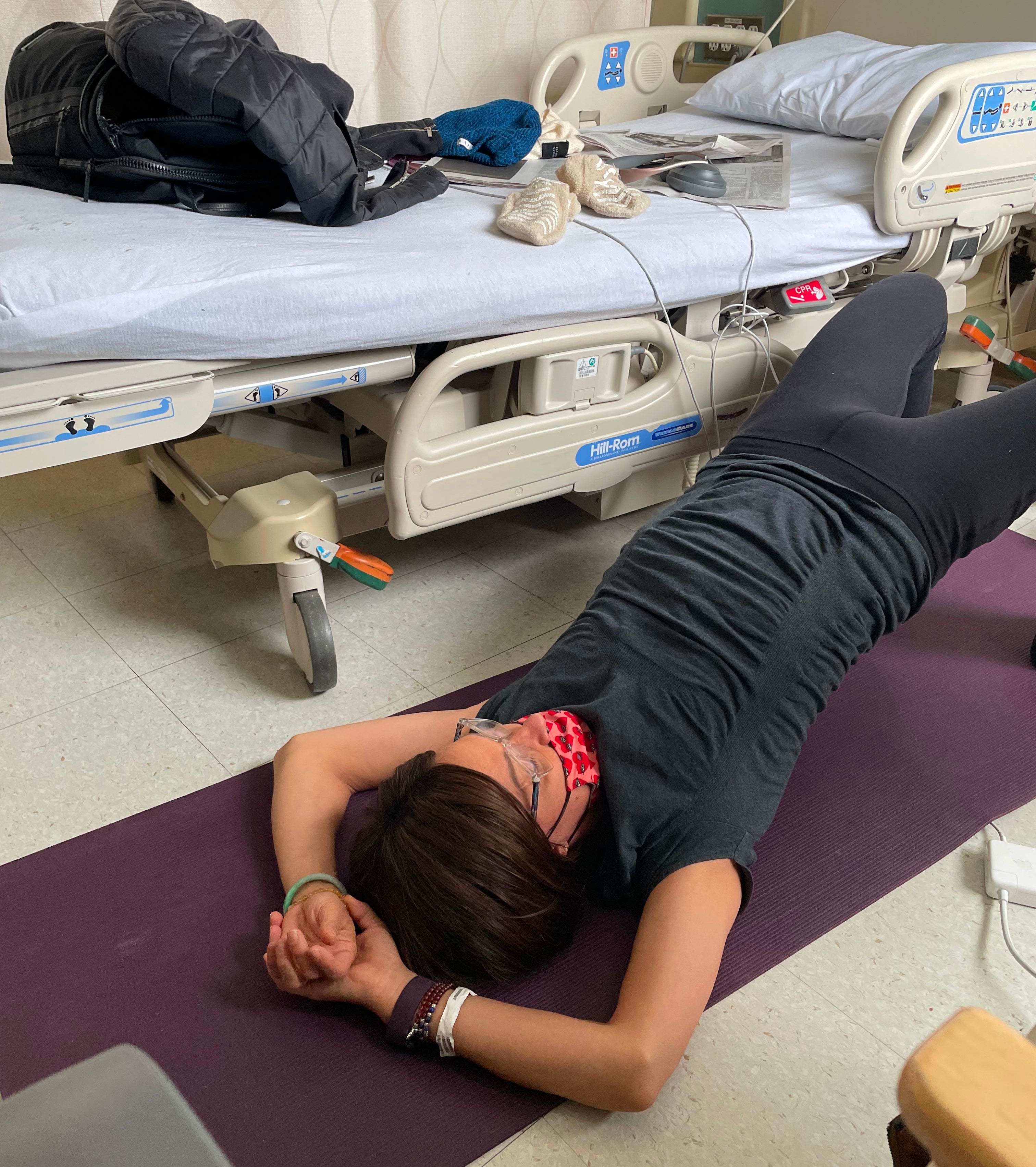
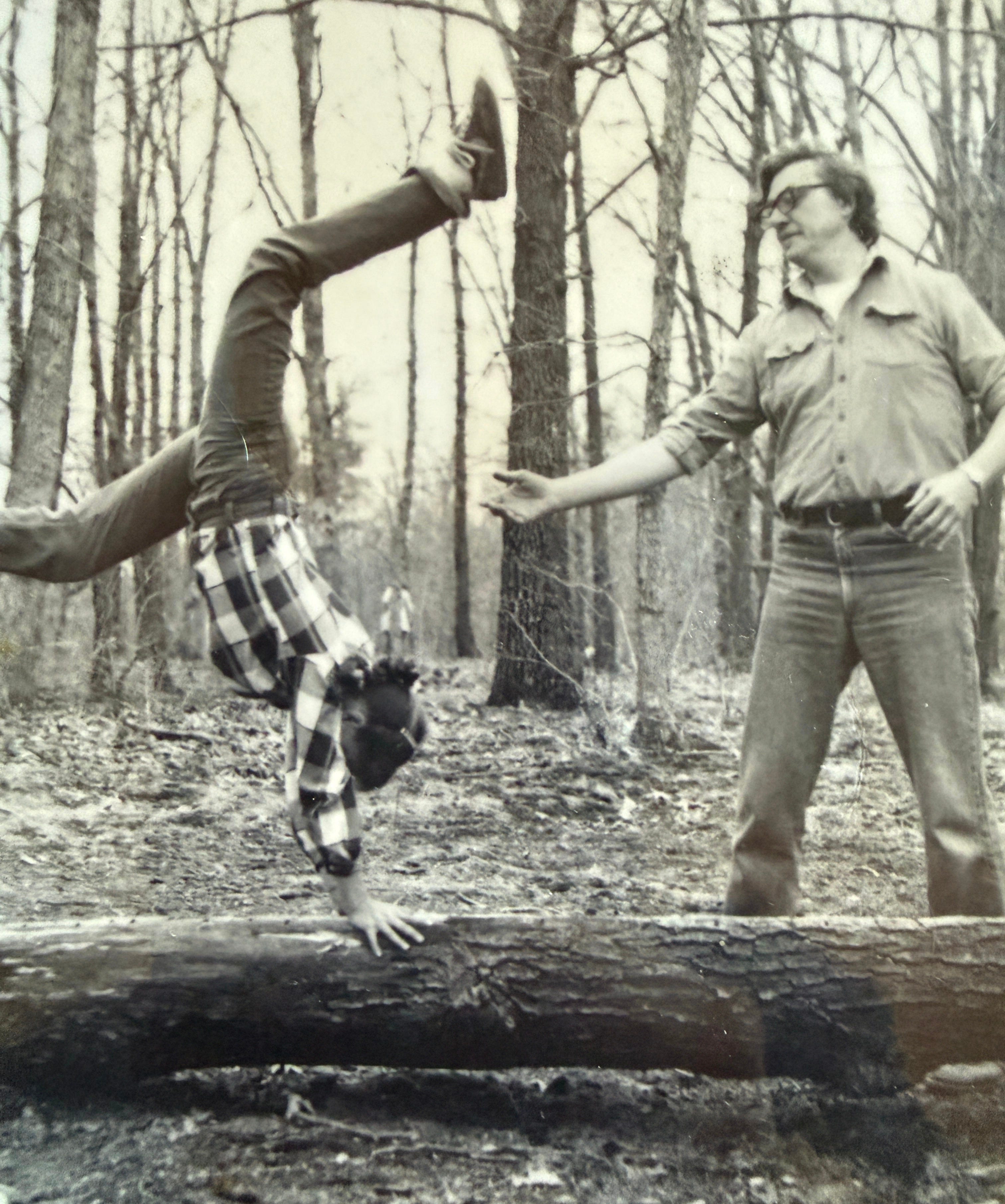
I played many sports as a child, but gymnastics was the one that felt like a language I already knew. I loved the certainty of it: knowing exactly where my body was in space, trusting it completely. Even during cancer, yoga and swimming kept that language alive.
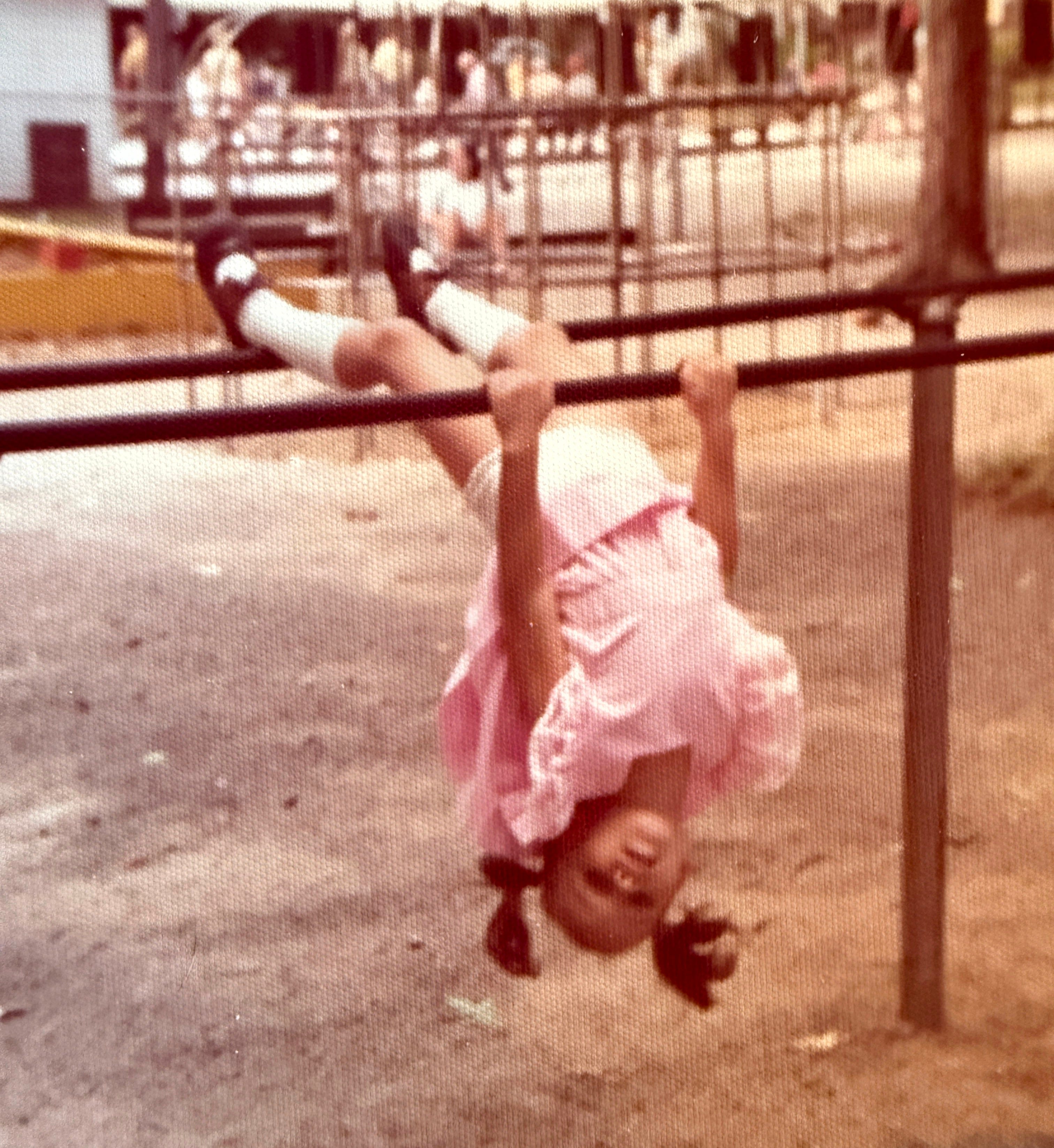
The stiffness is not just physical. I feel it in the way I move through a room now, the new carefulness, the constant negotiation with gravity. I grew up on a balance beam. Now even flat ground can feel unstable.
The change announces itself most in ordinary movements. Getting out of a chair. Turning in bed. Reaching for something on a shelf. The whole back has rebuilt itself around what was done to it.
I have been living with stage IV cholangiocarcinoma for five years. By most measures, I’m doing remarkably well. But longevity creates its own complications. The emergency measures, the interventions--they make perfect sense under conditions of shortened survival. They accumulate differently when survival stretches outward.
Long-term survivorship requires a different relationship to time. Not just “will this help me now?” but “what body will I be living in years from now, if I’m still here?”
The cough comes when I laugh. My back aches when I wake up. My toes have been numb from chemo, permanently, the doctors think. In yoga I do what I can without bending or twisting. About ten percent of my usual practice.
I do it anyway.
Survival is not a return to the old house of myself. It is learning to live in the altered structure that remains.
Thank you for being here. Today’s essay is free for everyone. If it stays with you, consider becoming a paid subscriber. A click of the ♡ button helps, as does sharing with anyone you think might need this. Paid subscriptions keep the work alive.
Comments
Nothing yet. Say the first thing.
Sign in to join the conversation.