
Nunalleq, “Old Village,” is an archaeological site near Quinhagak, Alaska, possibly inhabited from around 1300 to 1650 C.E. It is the world’s largest pre-contact Yu’pik site. There are at least 34,000 Yup’ik people in Alaska, many living in villages like Quinhagak. They have thrived for thousands of years in a huge, watery landscape, a demanding environment which is also bountiful for those who understand it. But their cultural heritage is at risk from sea level rise and melting permafrost.
According to Rick Knecht, lead archeologist at Nunalleq, every Yup’ik person alive today probably has an ancestor from Nunalleq. Knecht says, “Almost everything we know about pre-contact Yup’ik culture comes from that site . . . it is basically the library of the past.”
Over the past 17 years, the site has yielded more than 150,000 artifacts, many of exceptional quality. However, in October 2025, when the remnants of Typhoon Halong battered Western Alaska, 60 feet of the ocean-front site washed into the ocean.
Moreover, what had been a high grass bluff became sloping, dissected sand — which now runs onto the beach where villagers travel, gather wood, and set fish nets.
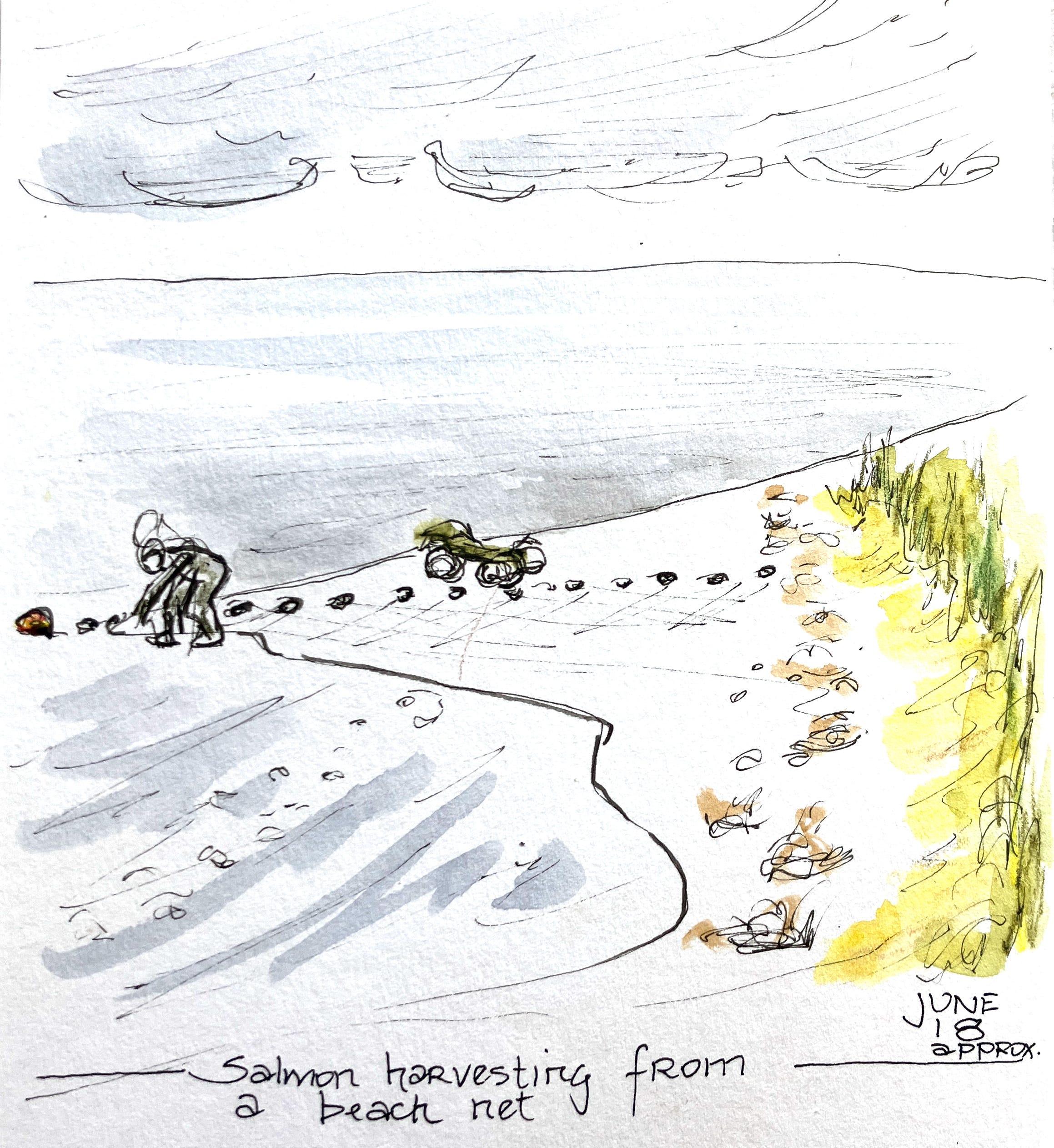
This spring, I was invited to join a small group of experienced volunteers to immediately rescue still-buried artifacts from the new shoreline edge of the site.
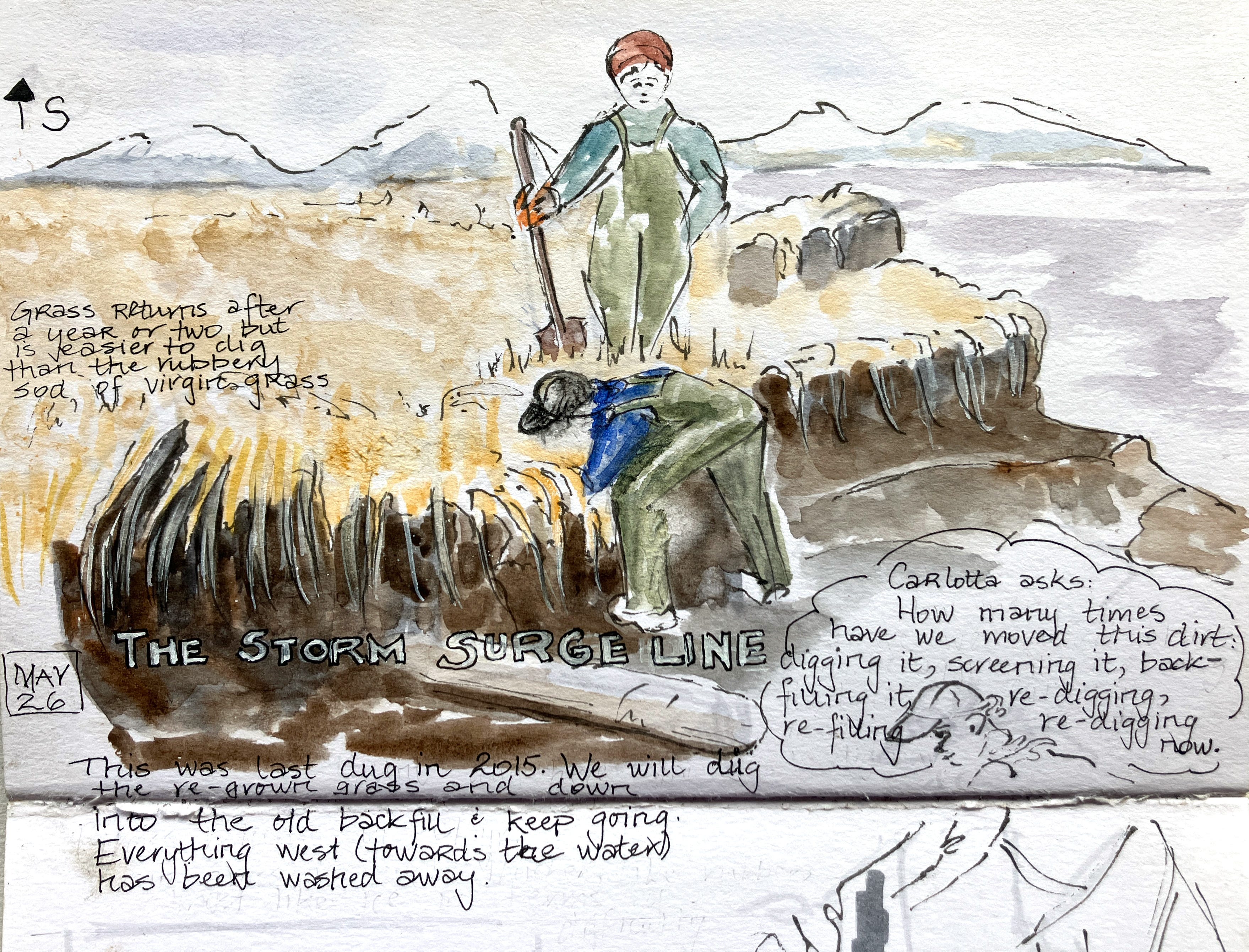
But how did I get that invitation? In July 2024, I did a self-funded artist’s residency there, in effect becoming a self-appointed artist-in-residence in the style of Amy Stewart and Maria Coryell-Martin.
Through a family friend, I had learned that the project was recruiting volunteers. I applied to Nalaquq, the entity in Quinhagak then managing the project. I wanted to be a digger and asked if I could do a little documentary sketching on the side. I described my experience in these Substack posts:
Six months later, I sent Nalaquq a poster-sized print of my work as a thank-you gift.
Following Typhoon Halong, the Pacific Northwest Archaeological Society, started a GoFundMe to raise money for supplies to preserve artifacts washed out during the storm. I offered Rick Knecht copies of the print as incentives for big donations. And that led to the invitation to join the emergency crew. Rick also suggested that I create artwork that could be used in future for project fundraising and education, including during an upcoming five-month show about the site in the Anchorage Museum in fall 2026.
Here’s the final print, now for sale as a print-on-demand at Alaska Litho.
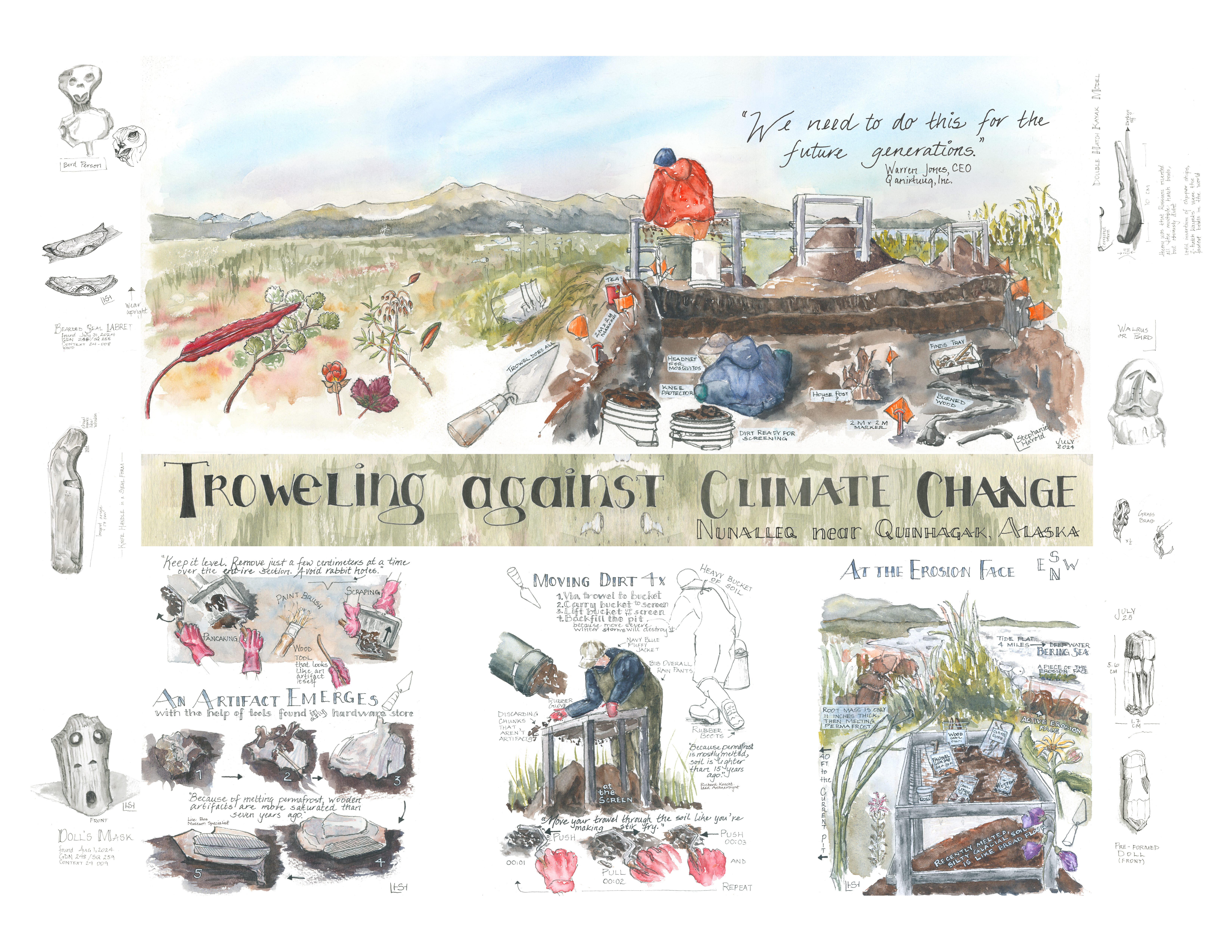
I’m so excited to be partnering on this with Quinhagak Heritage, Inc. Alaska Litho in Juneau is providing the Print-on-Demand service. My art has the opportunity to work for a larger goal, to support a project that has become embedded in my heart. Each sale contributes $30 directly to supporting the rescue and conservation of priceless artifacts as well as maintaining a village museum so that the artifacts remain accessible to the community.
My next post will tell the story of digging this spring — with hints about my new piece for the project. In the meantime, learn more about Nunalleq at the Digital Museum of Nunalleq.org.
Comments
Nothing yet. Say the first thing.
Sign in to join the conversation.