
Spring swept across the ocean-side tundra at Nunalleq, a 400-year-old archaeological site just outside Alaska’s Yup’ik-speaking village of Quinhagak. In three lightning-fast weeks, the ochre-colored landscape passed through pale flecks of green and into emerald. The first week was still patched with snow, the second bubbled with pink louseworts.
The third week, the white returned: flowers of cloudberry and Labrador Tea. The air echoed with the calls of nesting birds: the rattling sounds of Wilson’s Snipes, the swooshes of Arctic Terns and Jaegers, and the chirps of violet-tinged Tree Swallows.
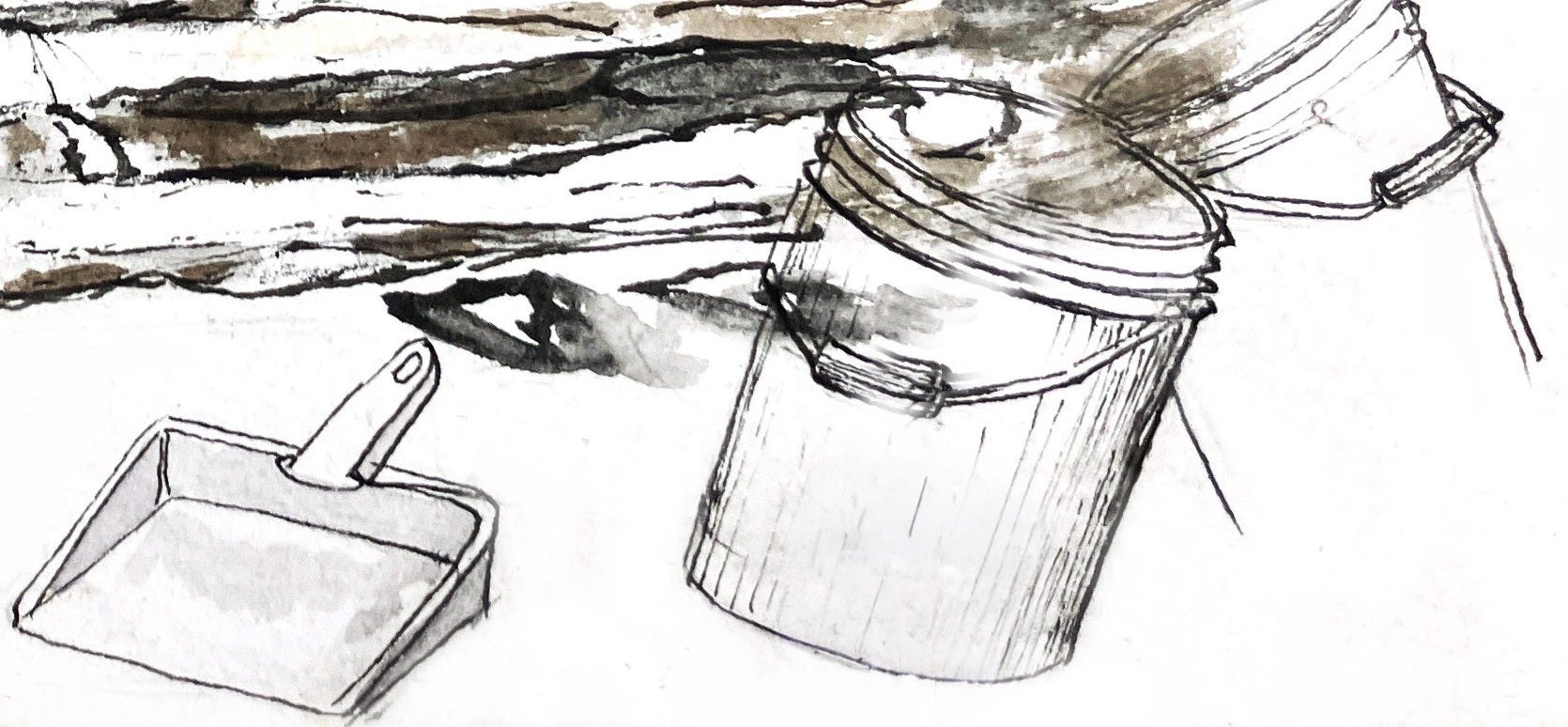
Meanwhile, my fellow diggers and I troweled on our knees — using a stirring-scraping-pancake-flipping motion to transfer the 450-year-old soil into kitchen dustpans. In three weeks, ten people moved at least 120 cubic meters of barely defrosted ground. Our most sophisticated technology? trowels and the dustpans, plastic five-gallon buckets, and shovels.
Just over our shoulders, the Bering Sea lapped placidly. I couldn’t fathom the force of the coastal erosion that had been threatening the site for years — and last winter washed away 60 feet.
Elizabeth Church, Director of Quinhagak Heritage, Inc. says that Nunalleq represents the shared lineage of the Yup’ik people, Alaska’s largest indigenous group. Rick Knecht, lead archaeologist, says it’s “a museum on fire,” the Yup’ik culture’s “library of the past.”
I had been invited to be part of the “museum’s” emergency rescue crew. Due to the destructiveness of the 2025-26 winter storms, areas that used to be safely beyond the expected storm surge were now right on the edge, fodder for the next winter’s hungry waves. But I also hoped to make art which could be used for education, project promotion, and fundraising. This opportunity resulted from artwork I created during my first season in 2024, when I became a self-appointed artist-in-residence in the style of Amy Stewart and Maria Coryell-Martin.
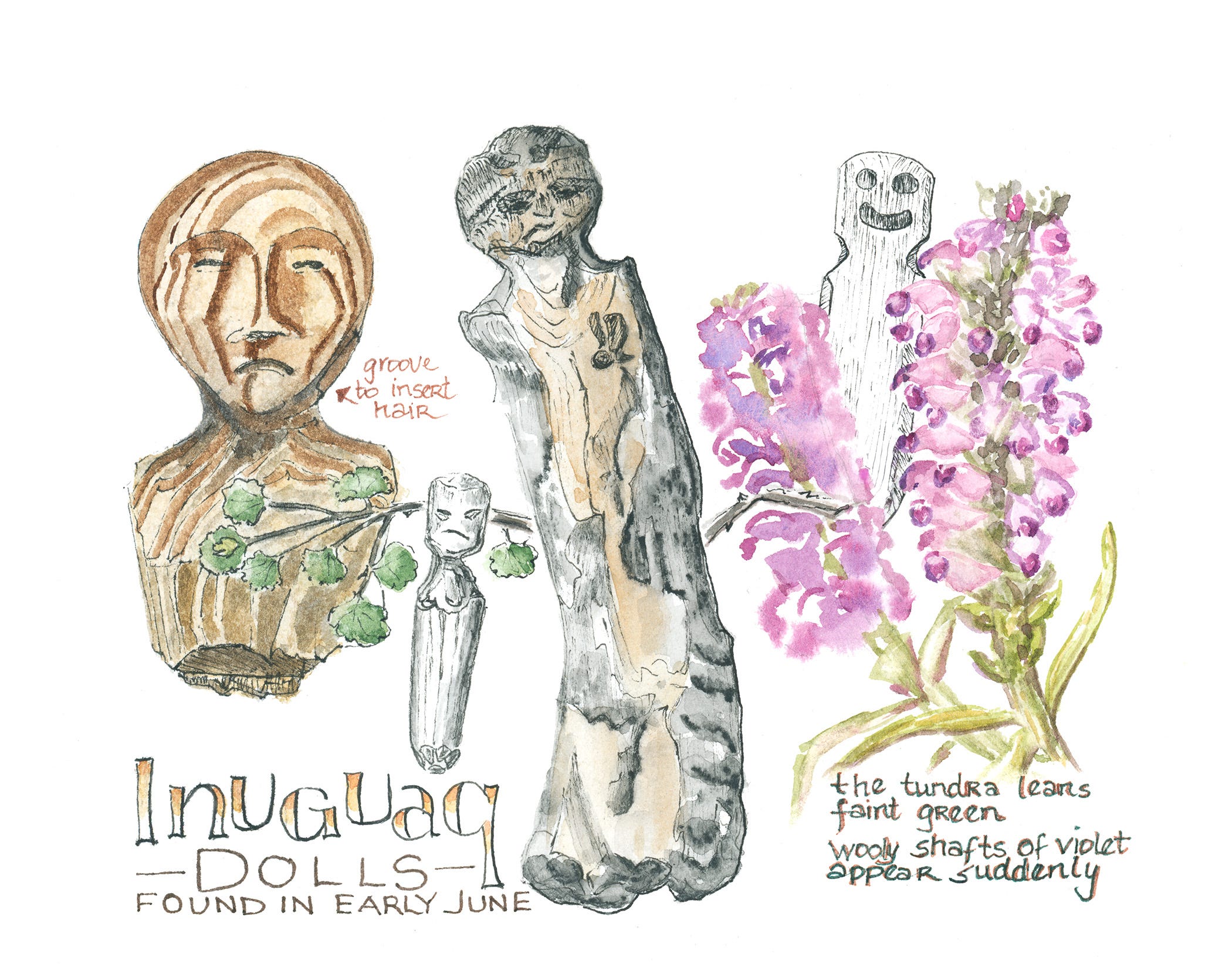
I sketched during our lunch and afternoon breaks — amidst peanut butter and jelly sandwiches, ramen, and shared junk food. My goal was to document the artifacts emerging from the ground — spoons, bowls, ivory figurines, and much more. But surging spring also worked its way onto my pages. Just in the first week, dry grass on Monday parted for red-leaved early sourdock on Wednesday.
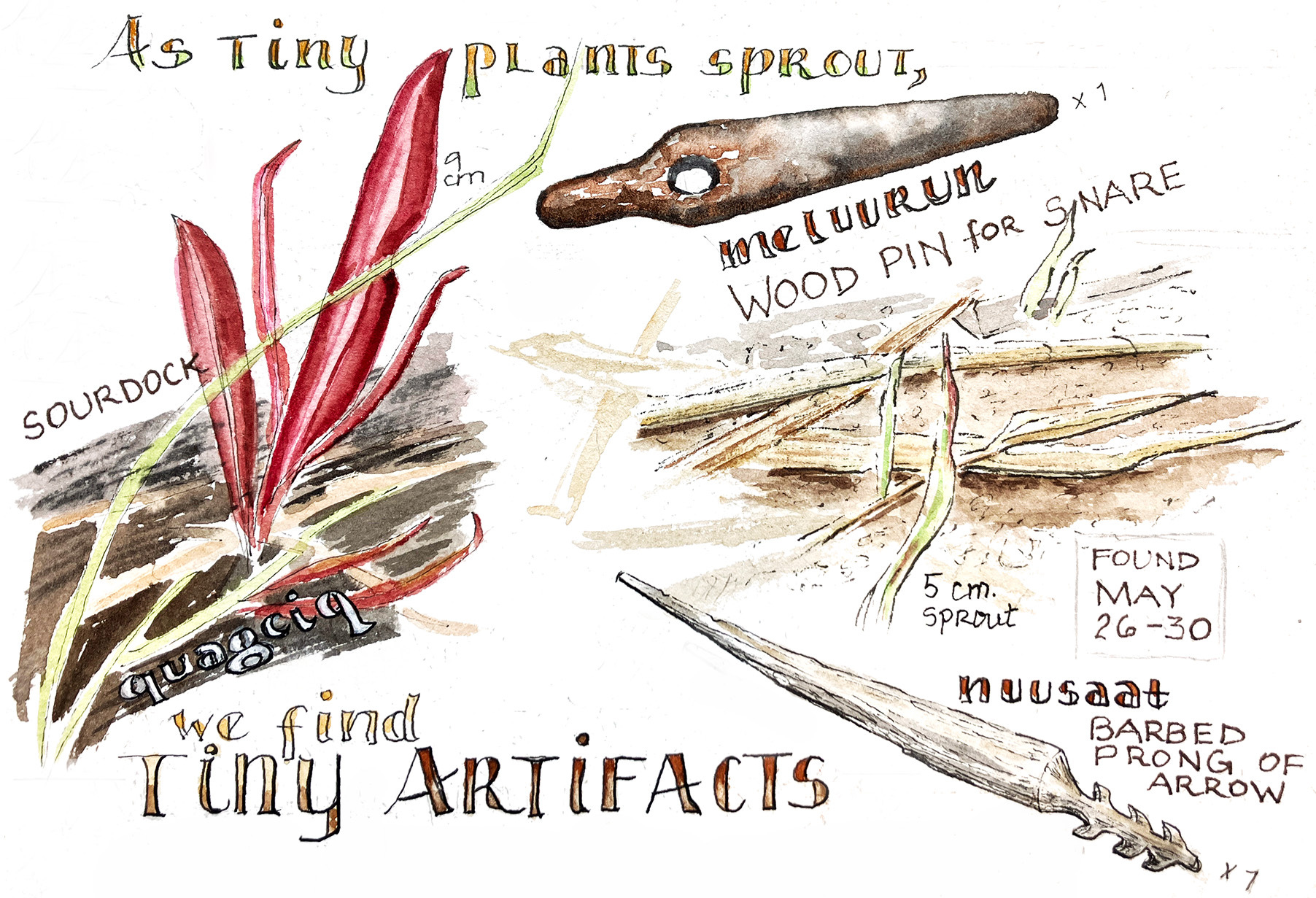
On Friday, we noticed a different 15-centimeter plant. Had it even been there the night before? This was time-lapse in real time.
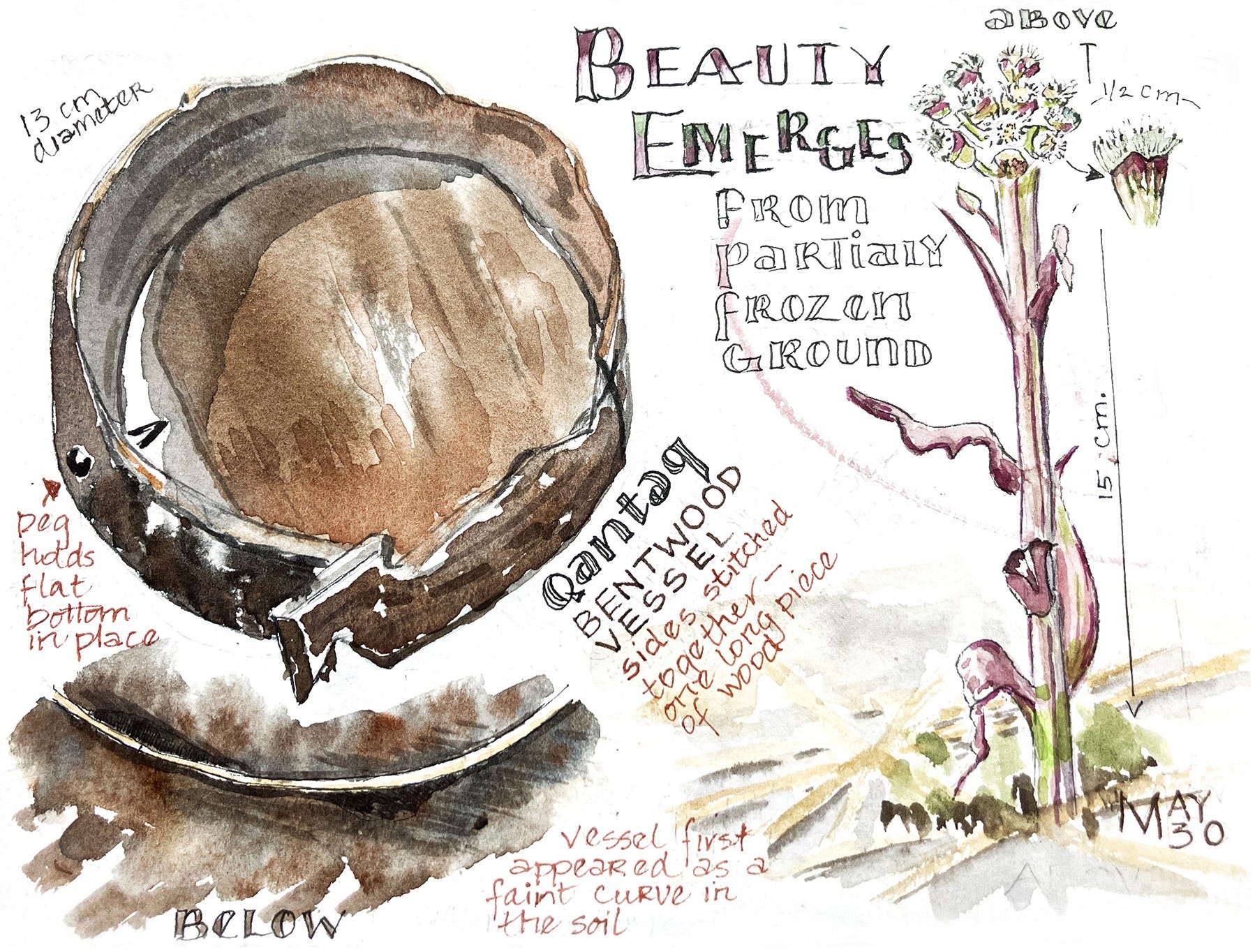
Every evening, we hauled our gear along a trail to a pickup that brought us back to the village. In the community hall, I inhaled the dinners prepared by the project cook — along with two cups of coffee. I spent most evenings in the conservation lab/museum.
A corner of the lab — an old building retrofitted in 2018 to house the artifacts — became my evening work area. I wedged my increasingly dirty watercolor paper amongst the freshly unearthed artifacts and plant samples.
I tried to focus on capturing angles, texture, and proportion.
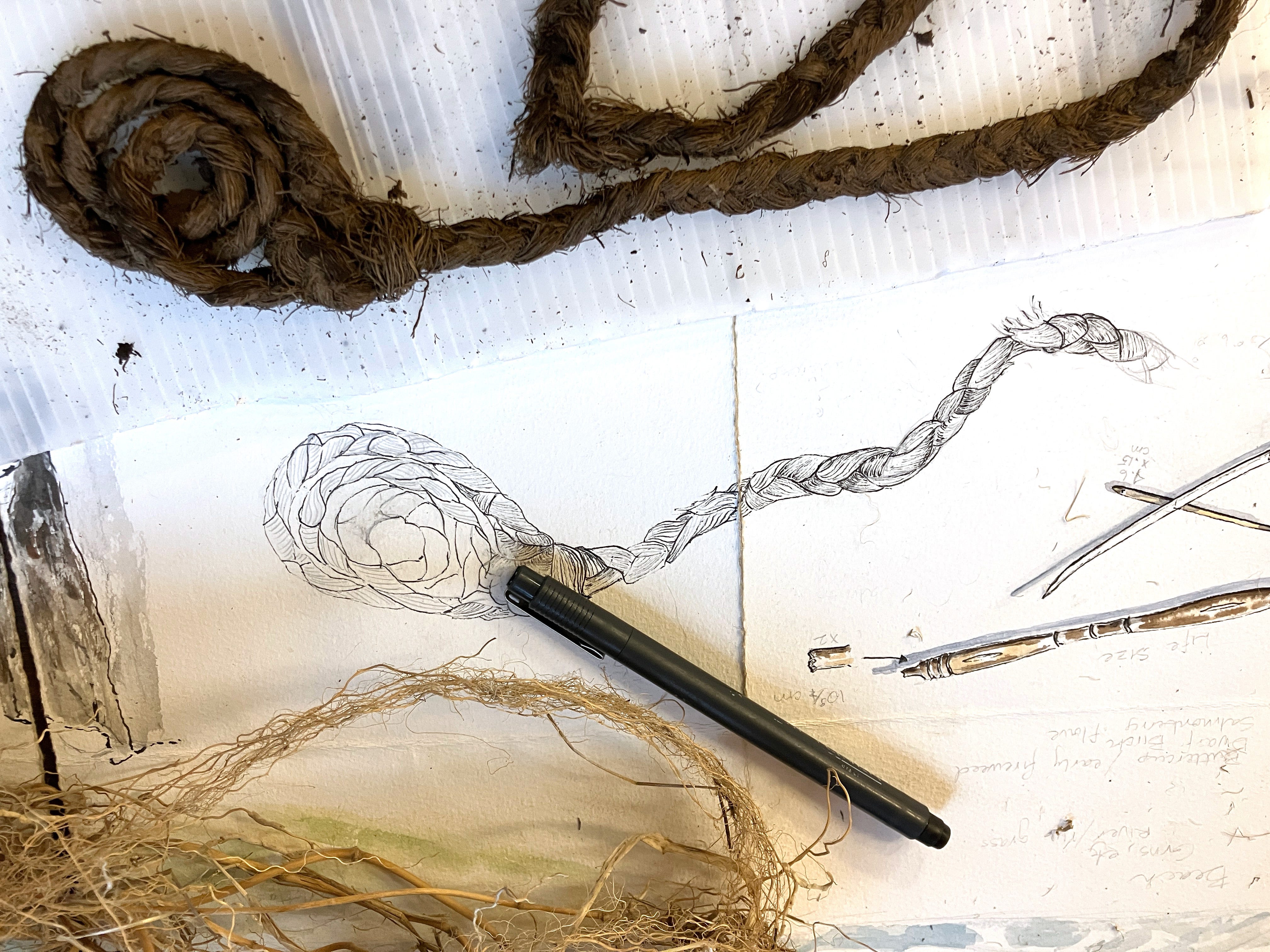
I noticed the symmetry those long-ago artisans achieved without rulers and calipers — yet I needed to avoid adding the modern symmetry that my brain expected.
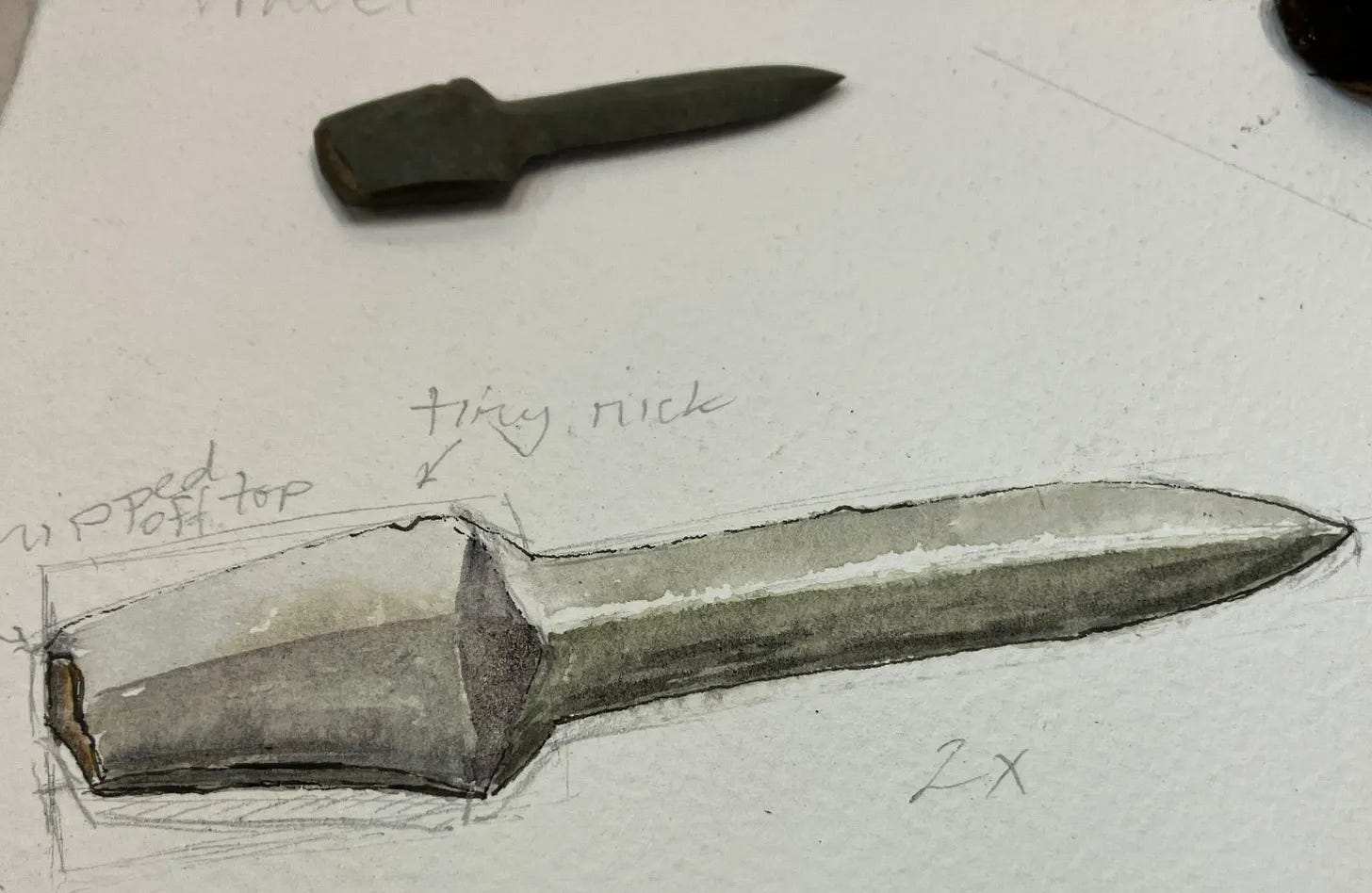
I struggled to draw and paint accurately these items crafted with such simple tools in the low light of smokey, sod houses. Rick marveled at the finger dexterity of the artisans, none of whom wore reading glasses. Whenever I stopped to think, I wrangled with the emotional overwhelm of holding these objects in such an informal setting — and how incredibly lucky I was to have this opportunity.
The project, which has been going on since 2009, has an addictive intensity — camaraderie among diggers vies with exhaustion alleviated by humor. It all competes with the sheer awe of watching your trowel discover that a faint undulation in the mud will, within a mere five minutes, become a 400-year-old artifact. This is why I had been obsessively trying to figure out how to return ever since 2024.
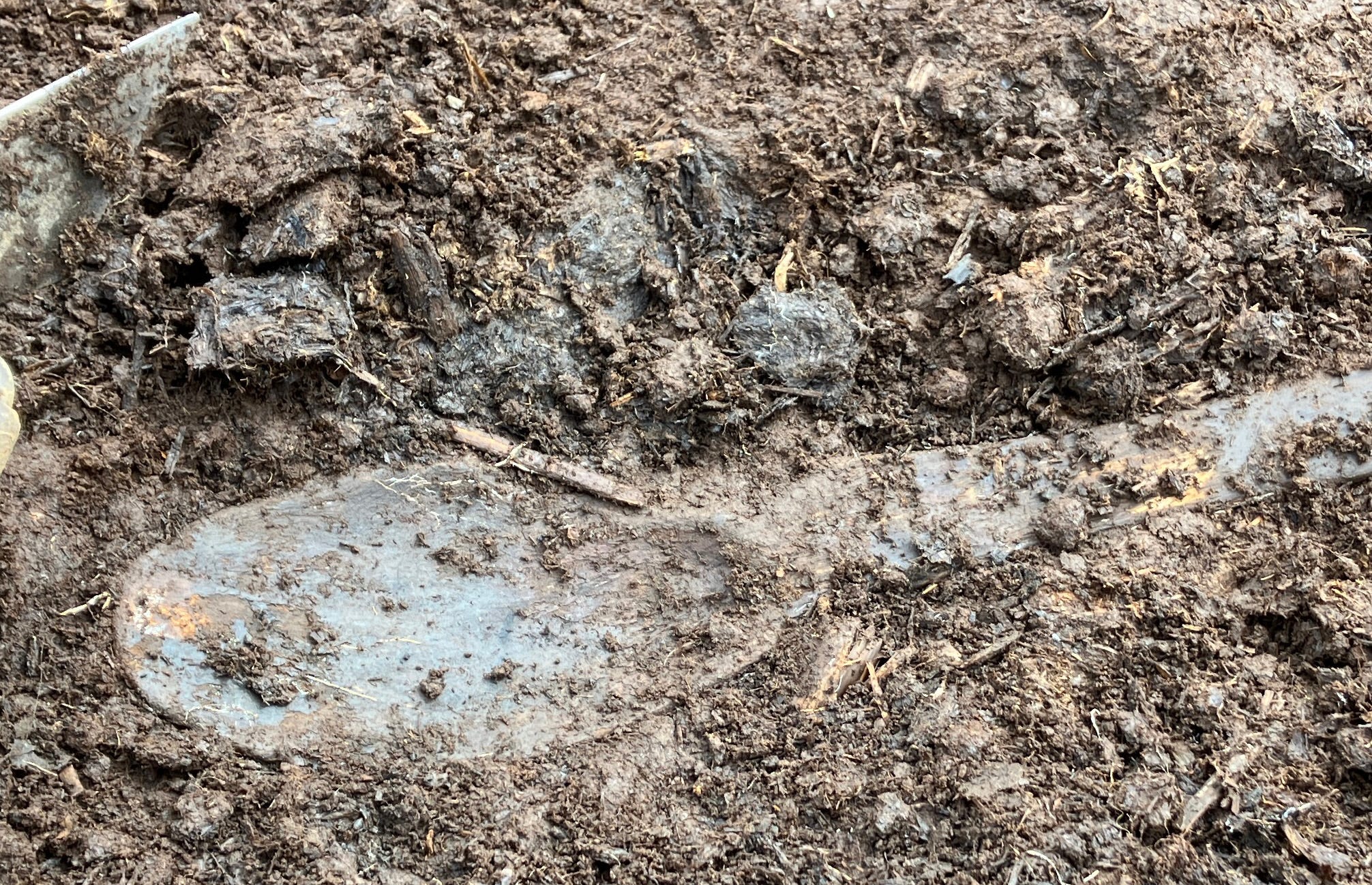
However, that intensity is also visual and emotional — sometimes uncomfortably so.
The flat, waterlogged landscape — hundreds of ponds and lakes and river channels all drifting down from mountains 25 miles away — reflects into a cloudy sky.
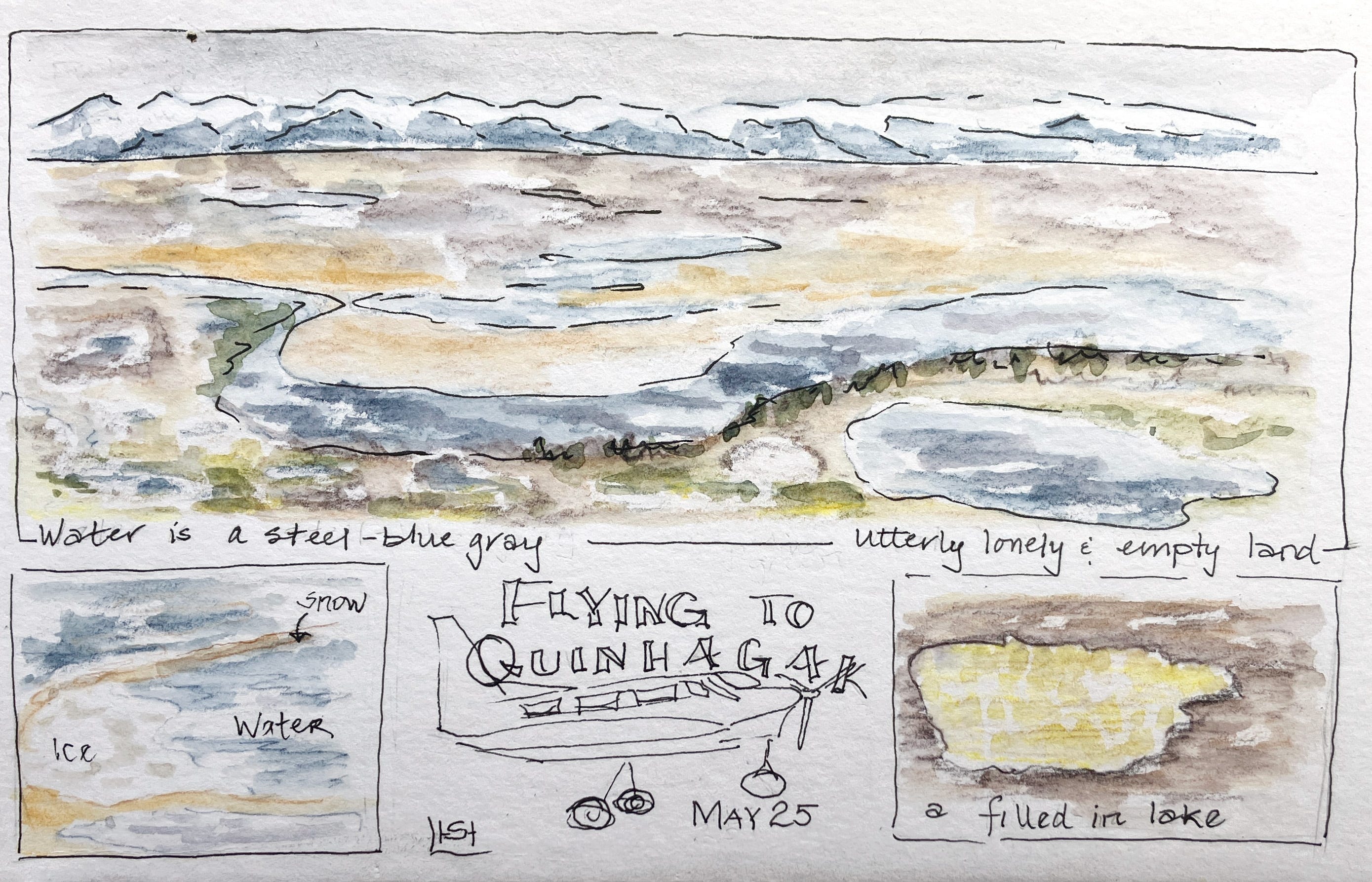
The light bounces off the nearby Bering Sea so that, visually, freshwater, tundra, and saltwater all merge. Distances blur. Occasional features (village buildings or tundra hillocks) magnify. Now add 24-hour daylight.
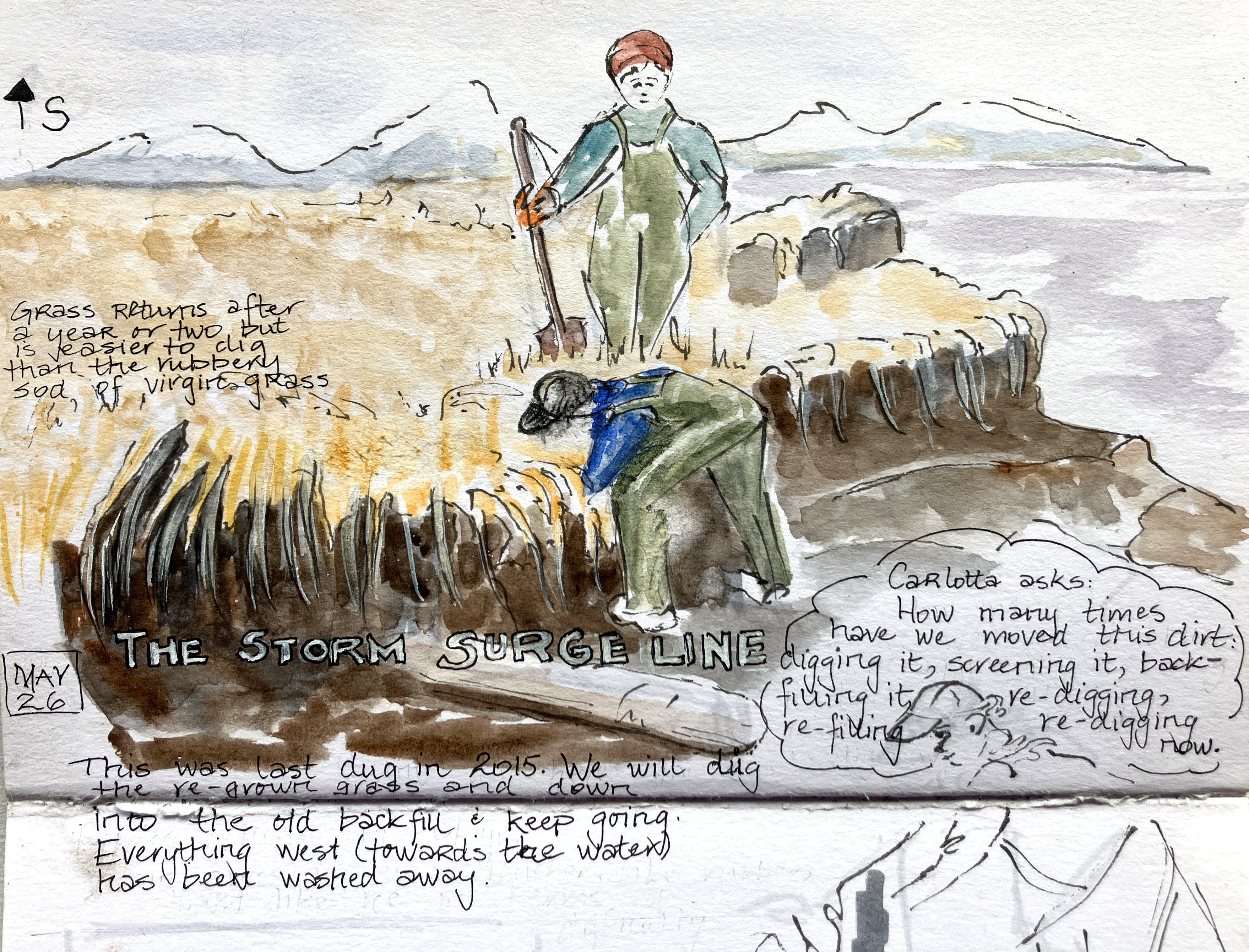
I felt a constant, jittery energy. My excitement battled my frustration: I wanted to dig more and draw more. Simultaneously, I longed to explore this expansive, track-less landscape. Yet I lacked the lifetime of experience required for safe travel. And the priority, of course, was right there in pit, getting as much out of the ground as possible. The reality is that next winter’s storms will remove anything from this part of the site we leave behind. In fact, the entire site is now so near to the edge of the winter wave line that it could all be washed away.
That archaeological pressure seeped into my consciousness. I felt an entirely self-imposed weight of expectation — that my work had to make a difference. When I found myself distracted by art thoughts, I felt guilty for mistakes I might be making in how I dug. When I took photos instead of drawing, I felt guilty because working from photos later wouldn’t yield my best work. How could I document the treasures in a way that captured the mind-blowing experience of finding them? When I stayed an extra week to continue the artwork, I then worried that the work wouldn’t sell. Was it even worth the exorbitant cost of having me there? Afterall, in this remote location, gas approaches $10 a gallon, and a quick trip to the grocery store adds up to $100. Here, people cannot afford to live without subsistence hunting and gathering.
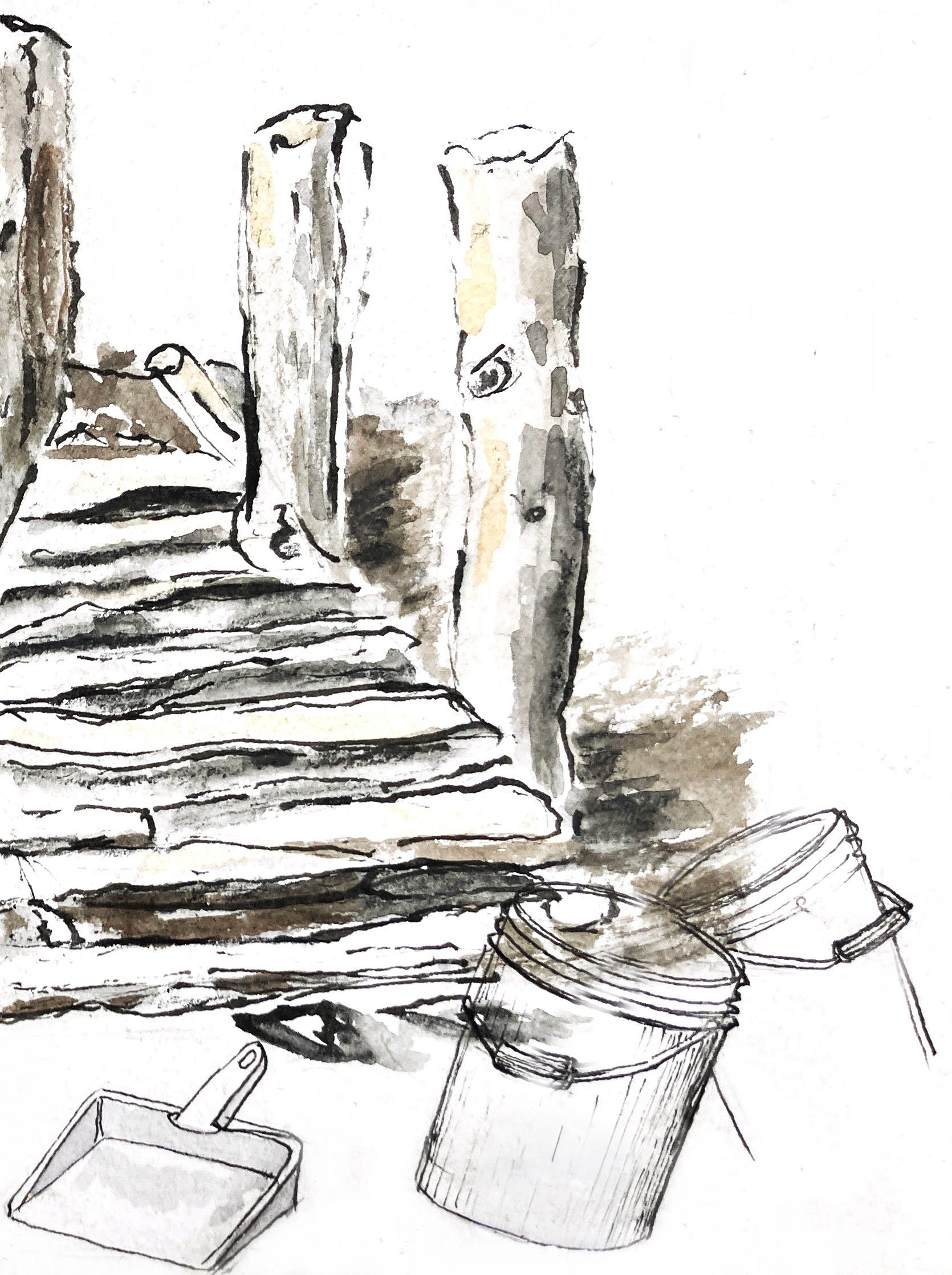
By the end of the three weeks of digging, the site had exceeded Rick’s statement that “it never stays quiet for long.” Specifically, the final days had revealed a boardwalk behind houseposts, the most complex architectural feature ever found at the site.
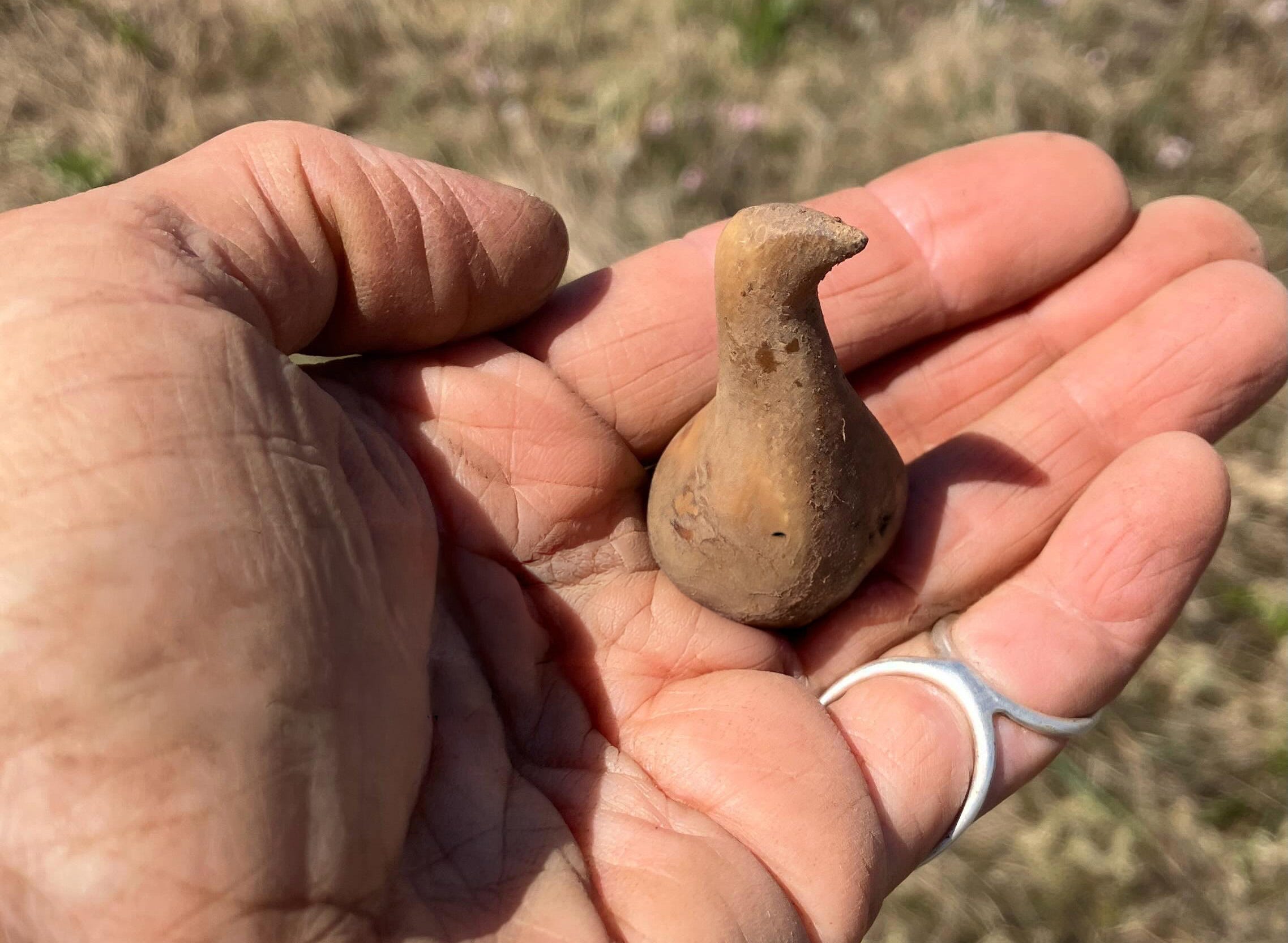
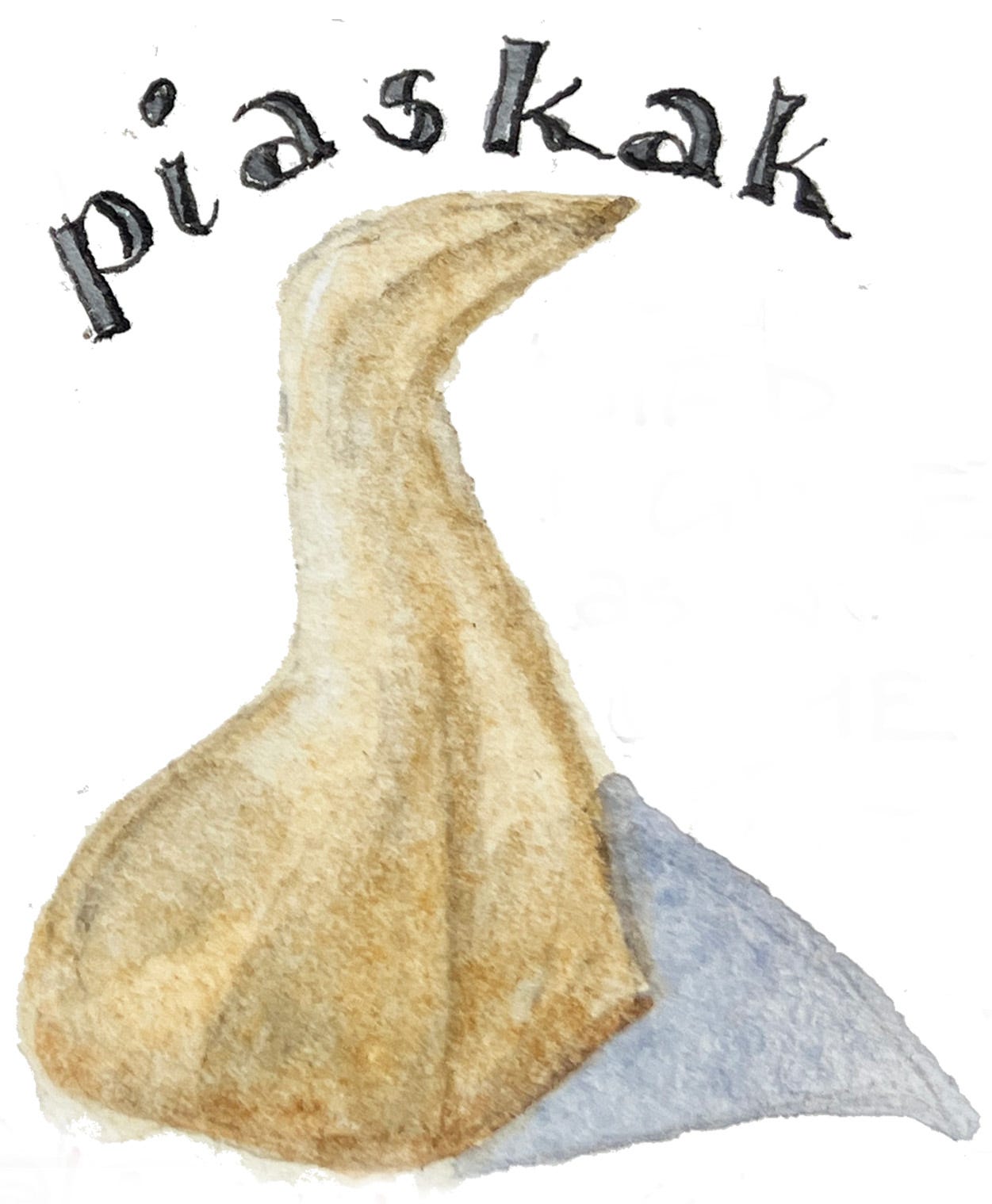
Meanwhile, I was assigned to an area just inches from where the winter waves will be. “You’re digging on the edge of Never Never Land,” Rick said. And there I knocked against a tiny walrus ivory bird, carved as though sitting on a nest — just like the birds all around us.
Want to support the work at Nunalleq? My 16”x20” print Troweling Against Climate Change is also available as Print on Demand from Alaska Litho in Juneau, Alaska. Each sale contributes $30 directly to supporting the rescue and conservation of priceless artifacts as well as maintaining a village museum so that the artifacts remain accessible to the community.
Contribute to a GoFundMe hosted by the Pacific Northwest Archaeological Society.
Learn more about Nunalleq at www.kyuk.org/in-the-rush-to-recover-an-archaeological-site-a-shifting-climate-links-quinhagaks-past-and-present. Read my earlier Substack posts about the project:
Comments
Nothing yet. Say the first thing.
Sign in to join the conversation.