
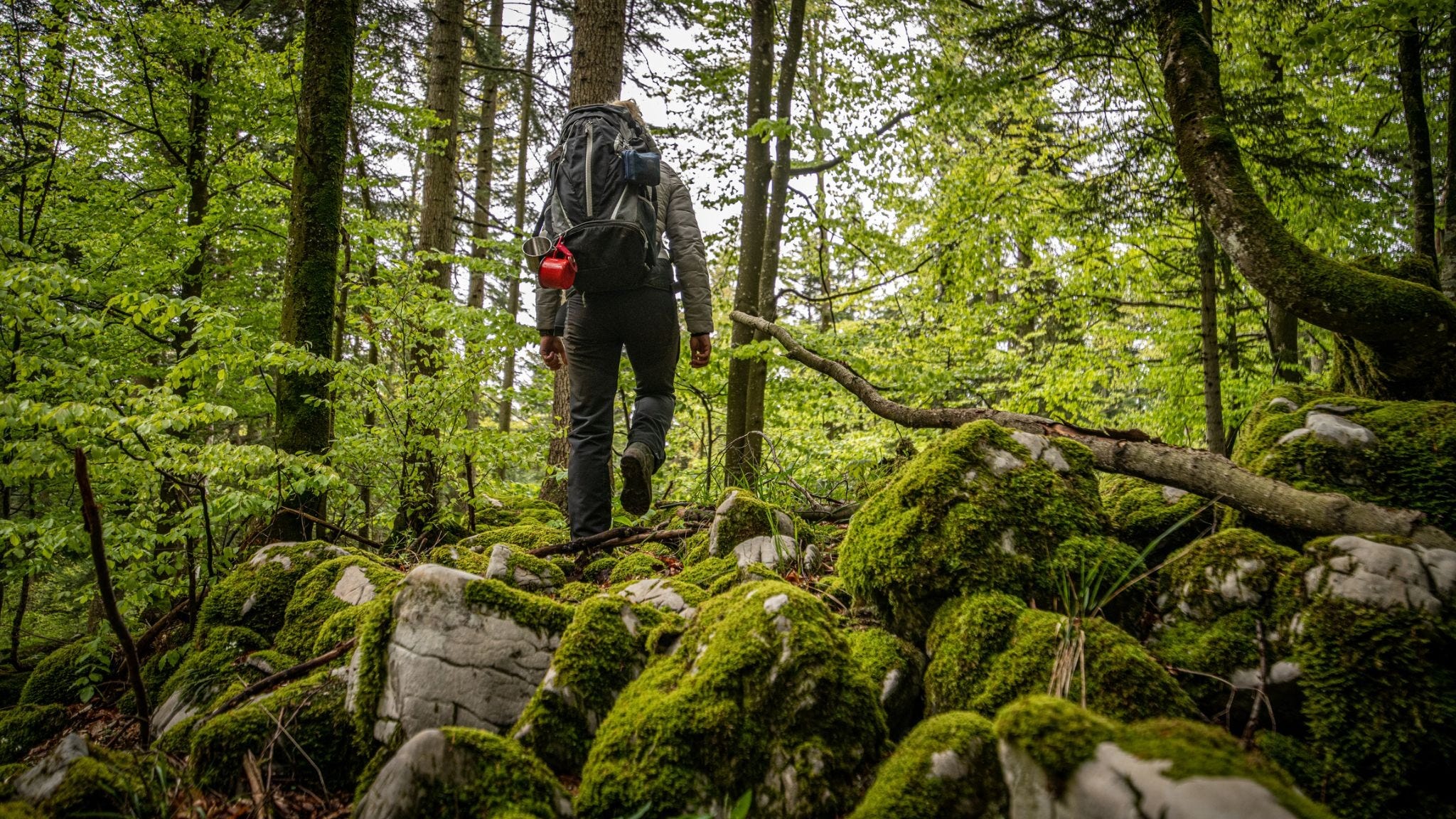
To earn the Wilderness Survival Merit Badge as a Boy Scout, I spent two days and nights in the wilds of the Ocala National Forest, north of Orlando, equipped with what I could carry in my backpack. We were allowed a sleeping bag, twine, fire starter, first aid kit, hatchet, pocketknife, and minimal provisions. Grouped in patrols of six boys, ranging from 12 to 16 years old, we had to work together to build a shelter, chop firewood, start a fire, and cook our meals. Tired, very dirty, yet confident - I remember leaving that Sunday feeling like I could survive anything.
Throughout my Scouting journey, I earned merit badges, precursors to modern micro-credentials, that demonstrated competencies in specific areas of practical life skills, including first aid, communication, cooking, personal finance, and citizenship. It wasn’t until later in adulthood that I fully appreciated what Scouting had provided for me. The intentional design, including merit badges, rank advancement, adult and peer mentorship, and community service projects, built in me a sense of purpose, self-confidence, curiosity, problem-solving ability, critical thinking, collaboration, and determination. Today we call these durable skills, and they’re what employers are searching for as key employability attributes, especially with the advent of AI. I wholeheartedly credit my career success not with what I learned in a classroom, necessary as it was for literacy, but to the durable skills I built through Scouting.
“Durable skills are broad, transferable human competencies that remain valuable across all roles, industry, and time. They are cultivated over time through diverse experiences and reflection.”
Architecting a Kindergarten-to-Workforce (K-W) Talent Pipeline: A Framework for Developing Skills for the Future (Pepin, 2025)
Later in my career, when I moved into nonprofit leadership as Director of Strategic Initiatives with the BSA Foundation, my responsibilities focused on building national and major market program partnerships, sponsorships, and major gifts from foundation and philanthropists to develop and support its newly formed STEM programs. It was in this role where I learned about STEMCONNECTOR, and was able to leverage its resources and relationships to advance and align our work with leading programs, and build sustainable partnerships with corporations. The power of BSA was evidenced by the extraordinary leaders of industry, academia, and government that credited their time in Scouting as a driver of their success, and who as a result volunteered their time to lead or lend support to the mission.
They included Rex Tillerson, former CEO of Exxon Mobil, Randall Stephenson, former CEO of AT&T, former Secretary of Defense Robert Gates, former CNA Insurance CEO and Chairman Dennis Chookaszian, and National Geographic Explorer Robert Ballard - all Eagle Scouts. BSA had a powerful narrative for prospective partners and funders for which its culture of skill building and mastery was clearly responsible.
Later, as CEO of the Boys and Girls Clubs of the Northwest Suburbs, I was again able to partner with Ted Wells and STEMCONNECTOR as an invaluable guide to my strategy. I drew from my experiences to develop the Impact Center concept: a high school program that worked in partnership with the local school district designed to build awareness, interest, and readiness for technical careers in our community. As a trusted out-of-school provider, we strived to identify and fill the gaps our under-resourced, immigrant families often couldn’t afford on their own: one-on-one math tutoring, project-based learning opportunities, exposure and assistance with post-secondary pathways, individual career plan mapping, and speakers and tours that connected our kids directly to local job opportunities.
We pioneered a pre-apprenticeship credential with our local community college for technical apprenticeships that focused on building confidence in our students’ ability to work with their hands and understand the value and application of math skills. The approach proved successful, as local employers gained greater access to the talent that had eluded them. Another measure of success was the surge in support from our philanthropic community who recognized the important gaps our work was striving to address.
As I thought about my personal and professional experiences building and mastering skills, and then developing and supporting programs that provided the same for others, I came to an important realization: It’s rarely technical knowledge that’s hardest to find in young talent. It’s the human skills: critical thinking, collaboration, creativity, persistence, and the ability to take an ambiguous problem and move it forward. There are school districts who are compelling innovators in K-12 education, but many schools are still stretched thin covering mandated, and some would argue outdated academic standards and models, leaving little room to build these skills intentionally and effectively.
“85% of employers say durable skills are developed through life and work experience, not formal instruction. This perception calls for continued evaluation of how colleges and universities prepare students, and how employers must take some responsibility for creating immersive, real-world learning experiences for those entering the workforce.”
Durable Skills, Strong Starts: What Employers Really Want from Early- Career Talent (The Aspen Institute 2025)
I was reminded of just how outdated during a recent workshop Ted and I attended with the Charles A. Dana Center at the University of Texas at Austin, which focused on connecting math instruction to career relevance so students can land “good jobs.” Our conversation highlighted a hard truth: the academic core we’re trying to evolve today was developed in 1893, under the Committee of Ten report. It’s a framework that is cited often in workforce development and STEM education circles as the root of a rigid, subject-siloed, time-based model of education, one that could never have anticipated today’s labor market, nor meet the need for human, skills-based learning employers require.
Given our challenges to evolve and adapt our in-school model, and based upon my personal and professional experiences, I believe after-school programs offer a significant opportunity for us to develop these skills at scale.
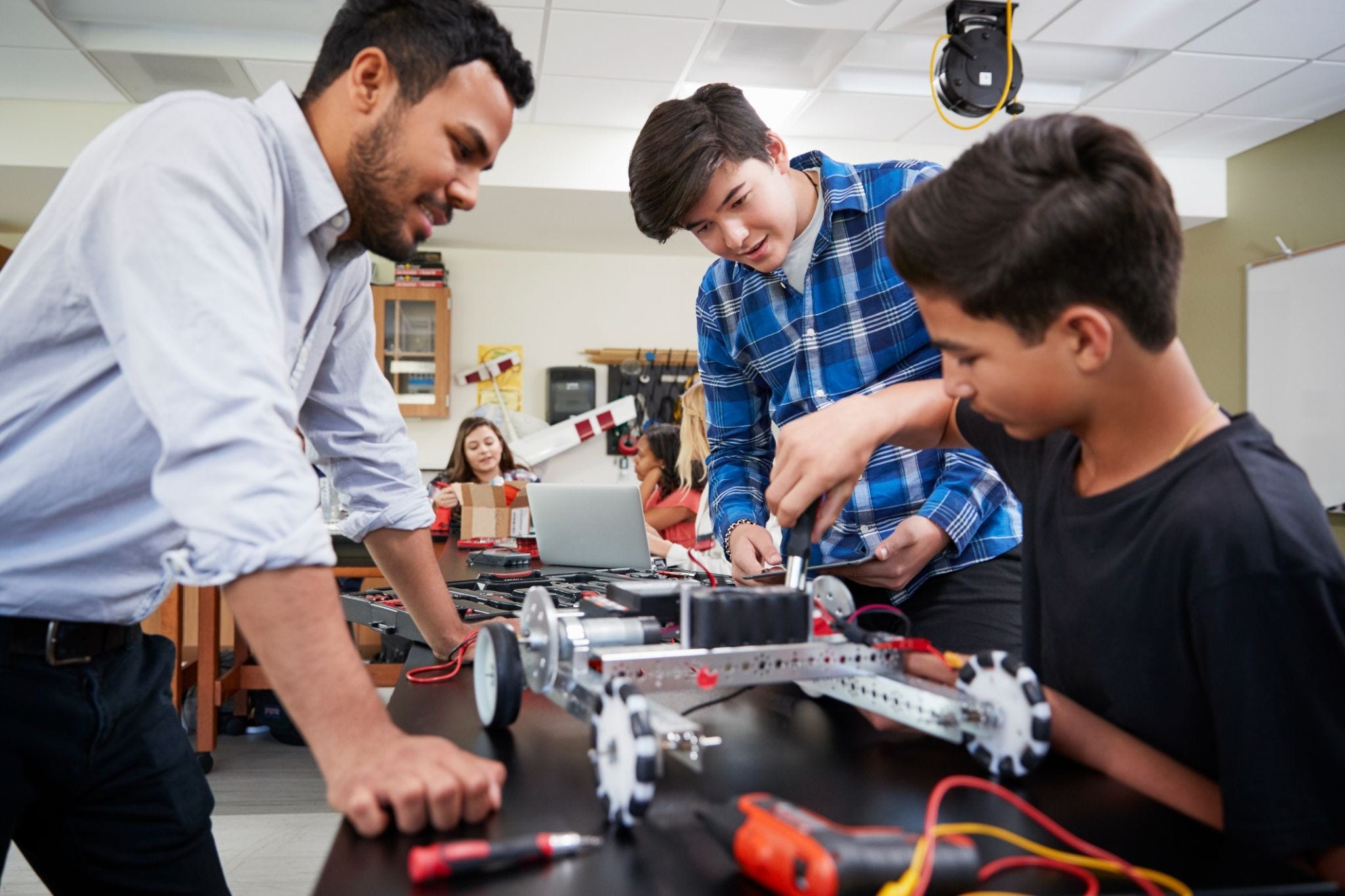
After-school and out-of-school programs are uniquely positioned to build durable skills at scale because they offer:
Flexibility classrooms don’t have. After-school time isn’t bound by standardized testing calendars or a fixed curricular scope, which makes it a nimble lab for project-based, career-connected experiences.
Existing relationships with industry and community. Many after-school providers already have informal ties to local employers, makerspaces, and museums, the regional ecosystem partnerships needed to inform impact and support scale.
Reach into underserved communities. Quality project-based learning is often concentrated in well-resourced schools or private programs. After-school networks, especially those serving Title I communities, offer one of the most direct paths to making experiential learning accessible rather than exclusive.
Built-in flexibility for AI and digital integration. As project-based learning evolves to include AI- and digitally integrated activities, after-school programs can pilot and adapt these formats far faster than systems bound by procurement cycles and instructional mandates.
We recently participated in the STEM Next Opportunity Fund’s Inspire Momentum conference that was held June 15–17 in Orlando, Florida. The event brought together youth leaders from the STEM Next Flight Crew, a national youth ambassador program created by STEM Next to elevate the voices of accomplished students from across the country who overcame challenges and are passionate about STEM, as well as state and intermediary leaders, afterschool and summer program innovators, and corporate and philanthropic partners as key stakeholders across out-of-school STEM learning.
What stood out to me wasn’t just the scale of the gathering, but the substance. It opened with a keynote from youth AI leader Neha Shukla on the power of youth voice and the role afterschool and summer learning play in shaping STEM pathways, followed the next morning by a panel exploring how to build AI literacy specifically within afterschool settings. Executive Director Ron Ottinger shared his core beliefs in the opportunities available and value of out-of-school programs, as he reflected on his over thirty-year career dedicated to this work.
“I have always believed in after school programs because they are flexible, committed and connected to families and communities.”
(Ron Ottinger, STEMNext Executive Director, 2026 Inspire Momentum)
The breakout track at the conference focused on career-connected learning our work at STEMCONNECTOR and STEMCATALYST help advance: embedding career awareness into hands-on STEM experiences, translating career-connected learning into practice through partnerships and scalable tools, building employer partnerships that strengthen career pathways, and using data to tell the story of program impact and drive continuous improvement. A field trip to NASA’s Kennedy Space Center provided compelling case studies, including conversations with Artemis Launch Director Charlie Blackwell-Thompson, who shared a powerful reflection of her career journey as a girl from a small rural town to a highly accomplished national leadership role, and Dr. Bernard A. Harris Jr., the first African-American astronaut to walk in space, who offered a compelling, heartfelt reminder of how real STEM careers connect back to the curiosity and possibility afterschool programs can instill.
Durable skills are what employers consistently say they struggle to find in young potential technical and professional employees. Unfortunately, our K-12 system, constrained by an outdated framework, finds itself challenged to commit more time to balance core subjects with project-based learning as a proven model to develop them. I believe after-school and out-of-school programs are uniquely positioned to fill this gap. They're flexible, many are already connected to industry and community partners, reach underserved populations who lack access to quality project-based learning, and can adapt quickly to new tools, including AI.
Out-of-school time programs enable students to explore and move out of their comfort zones and, we hope, to fail in ways that make them stronger and more resilient. Additionally, unlike in-school programming, there are countless ways to engage industry and support career-connected learning. STEM Next's Inspire Momentum conference showcased its investments in this work and its impact, It highlighted the benefits of career-connected learning, youth agency, and AI literacy as compelling opportunities for afterschool STEM programming, aligning with industry’s needs and STEMCONNECTOR and STEMCATALYST’s mission to help engage, inform and help build an industry-led STEM education ecosystem to develop a future-ready workforce.
The evidence is clear, the models exist and the infrastructure is already reaching millions of young people, especially those who have no other access to the types of career-connected, hands-on learning that builds durable skills. If you are an employer, consider what it would mean to your talent pipeline to partner with an after-school or summer program in your region, not as a charitable gesture, but as a meaningful workforce strategy. Mentor a cohort. Open your doors for a site visit. Co-design a project that gives students real problems to solve and gives your team an opportunity to engage with and inspire emerging talent.
If you are a philanthropist or foundation leader, I invite you to consider where your investment could most likely produce a return on human capital. I believe after-school programs that are intentionally designed around durable skills development, with strong community ties, industry partnerships, and the flexibility to evolve, represent some of the highest-leverage opportunities in the education and workforce landscape.
If you are a policymaker or system leader, I invite you to join those who recognize and fund out-of-school time as workforce infrastructure. They aren’t supplemental, they fill essential skills gaps the school day cannot. They need and deserve to be treated, and resourced, accordingly.
And if you lead an after-school or summer program, know that the field is aware and watching, the research validates your efforts, and organizations like STEMCONNECTOR, STEMCATALYST, and STEM Next are ready to help you make the case, build the partnerships, and scale your impact.
To learn more about STEMCONNECTOR and STEMCATALYST’s work building career-connected STEM learning ecosystems, visit stemconnector.com. To explore STEM Next’s out-of-school time initiatives, visit stemnext.org.
No posts
Comments
Nothing yet. Say the first thing.
Sign in to join the conversation.