
NATO “Defends” Its Airspace — In Poland
This is the central, main section of this review. In it, I charge Polish and NATO leadership with negligence for this week’s fiasco over the Russian cruise missile that flew into Poland, yes, also this week.
I also argue that the most compelling facts buttressing that charge of negligence, is that the Ukrainian air defense networks were aware of and tracking the Russian cruise missile that eventually hit Poland for more than an hour, that that information didn’t need defense attaches and military cooperation for NATO to take action, in a timely manner, because it was available online to the general public. Which includes NATO air defense staff.
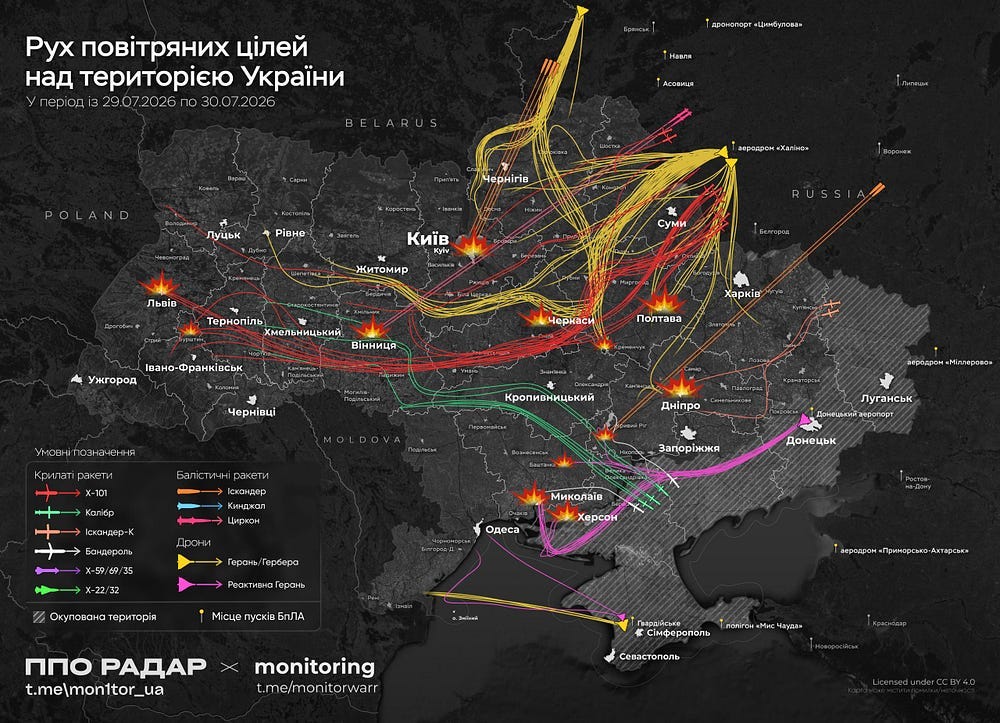
All evidence points to Polish and NATO authorities ignoring the giant air battle being fought over Ukraine against attacking Russian weapons and the freely-available data about that battle. The information was there, it was clearly ignored.
The NATO security stance, looking at it from the outside, is visibly assuming that that air battle could no pose no threat to NATO and NATO air space until a Russian weapon moving at subsonic speeds flew to within a few miles of the Ukraine-Polish border. For that way of thinking, information about potential threats spotted well inside Ukraine are irrelevant.
This can be written with confidence because by the time the Polish air defense system managed to react and get aircraft into the air — fighter jets, AWACS, a fueler and even an attack helicopter — the odds are almost total that the Russian missile had already flown dozens of miles into Polish/NATO air space and exploded.
The reaction that NATO managed not only failed to stop that threat — and to be clear, this is a Russian cruise missile with a live warhead weighing about a half ton — NATO failed even to take action to respond to that threat until it was far too late, even though the information needed to generate that response in a timely manner was obvious and available. That’s negligence by people whose salaries are paid for by taxpayers.
What happened was this: On Thursday the Poles announced a Russian Kh-101 cruise missile had flown into Poland from air space north of Lviv and blown a 10-meter wide crater in a farm field about 100 km. inside Poland. Police and security swarmed the location.
There was some speculation that maybe it had been one of those scary Russian hypersonic missiles, but by mid-morning the Ukraine Foreign Ministry weighed in, it was a bog-standard bomber-dropped Kh-101 cruise missile exactly like the some 3–4,000 or so Russia has launched at Ukraine over the past five years.
By afternoon, we received a more detailed version of what happened: Polish/NATO radar detected the object around 3:40 A.M. and it disappeared from NATO radars at about 3:46 A.M. Poland scrambled F-16s, or more exactly the order went out to Polish F-16 pilots to scramble, at 3:42 A.M. These times are all Central European/Polish time.
Later on, the Polish government made a statement: NATO air defenses detected the missile at 3:29–30 in the morning, two F-16s were launched to intercept the missile a “few minutes later”, and a AWACS plane (one of these Swedish SAAB 340 twin prop planes, which Ukraine also operates) and a A330 refueler plane was launched as well. There are slight discrepancies about reported times but it was 3 in the morning and probably everybody’s first real-life alert, and NATO has a lot of layers of command, so a few minutes reported here or there is no big deal.
Reports agree the Russian missile flew about six minutes inside NATO before it hit the farm field.
I think it’s safe to say the AWACS and the refueler only got into the air after the missile had already crashed, those planes never get into the air six minutes or less from warning.
It is only if the Polish helicopter crew and fighter pilots had been absolutely, full-on ready for the scramble order that the the F-16s and Mi-24 could have even been airborne before the Russian missile crashed. I think in this scenario, that’s laughable. This is not to denigrate Polish pilots, they’re excellent, but above them they have how many layers of NATO commanders and lawyers and safety officers for whom, mostly, this probably was the first-ever real life scramble.
That entire chain of command would have had to have been confident in what it was doing top to bottom, and ready to take responsibility for it without out any cross-messaging and checking and responsibility -establishing for those Polish pilots to have got their aircraft into the air in four minutes, to deal with an absolutely unfamiliar threat. Remember, this was the very first time a Russian cruise missile had violated NATO air space.
If anyone believes the NATO decision-making apparatus went from learning about the threat to deciding to green light launching fighters, and the order got to the pilots and the pilots spun up their engines and got airborne, in four minutes, then sure. If it’s faith-based reaction time were talking about, then obviously NATO had fighter jets in the air and in position to intercept the cruise missile, because the tooth fairy and some unicorns were managing the intercept.
Otherwise, NATO in the form of the Polish leadership was engaging in double talk: The Russian missile flew dozens of kilometers into Poland and then blew up, well before a single NATO aircraft got off the ground, never mind to a useful intercept position.
Was this satisfactory performance?
As we know and as they demonstrated yet again this week, twice, the Ukrainians are world-class experts at shooting down cruise missiles. The trick is to make a good guess of its target and then, roughly speaking, hit it with an interceptor missile or get something into the air that can crash into it or hit it with an air-to-air missile. The key bit is early-warning and time and space between the detection and the target. The further away you spot the missile, the more time and space you have to maneuver things to shoot it down. None of this is new, but the key thing is the Ukrainians have about four years of real-life, wartime practice.
For early warning against air threats like cruise missiles, NATO, which is not at war, uses really good radars which work excellently as long as a cruise missile flies high enough for the radars to see it.
For actually shooting things down, NATO prefers expensive fighters jets flown by skilled and expensively-trained pilots, firing outrageously expensive missiles. This is not exaggeration, again, 48 hours before the Russian cruise missile hit Poland, we saw the Romanian Air Force launch F-16s flown by excellent pilots who fired half-million dollar missiles to shoot down $50,000 drones flying into Romania. The backup NATO plan is using a ground-based system firing a missile that, I’m absolutely serious here, can cost millions of dollars.
As Ukraine is constantly told, Ukraine isn’t a part of NATO. However, they have been in an actual war against a peer opponent for some time and they are quick learners. The Ukrainians have fighter jets, among them primitive versions of the state-of-the-art F-16s flown by the Polish and Romanian Air Forces.
But also, to defend their air space, the Ukrainians use interceptor drones, ground-to-air missiles fired by infantrymen, ground to air missiles fired by standard air defense systems, vehicle-mounted autocannon, ground-based autocannon, helicopter gunships and even crop dusters with a dude in the back seat with a shotgun to shoot at flying things invading Ukrainian air space. There are rumors that just won’t ever go away about the M2 gunner who took out a Russian cruise missile with his .50.
During the night of that strike, Russia launched 61 cruise missiles. The Ukrainians shot down 54, using a mixed air defense system mostly not NATO standard, and that’s pretty much standard performance against cruise missiles for them. How did they do it? In simple terms, with digitalization.
In mid-to-late 2023 the ZSU and especially the Ukrainian Air Force figured out all air defense data can be fused on a single screen and updated in real time and, provided generals at the top could be convinced not to control every engagement, that set-up gave local air defense bosses the ability to see the entire air battle as it proceeded and to react to their part of it much faster and more flexibly than a top-down, pure military air defense network like NATO operates.
On the night of that strike, anyone with an internet connection, in or out of Ukraine, could monitor the Ukrainian civil defense reports about where them missiles were heading and which places they had overflown to go somewhere else. This is not real time like the actual air defenders, usually it’s updates in text or images every five to fifteen minutes. I was one of them until I went to sleep and woke up to learn about the strike and that Vladimir Putin had just attacked NATO with a cruise missile.
Going through the threads, for that night’s attacks, those air watch networks first reported Russian Shahed drones around Kyiv at about 2 A.M. Thursday. So 1 A.M. Poland time. This is civilian access, information about the status and location of hostile aircraft is available to air defense people real time on their smart phones.
Although in NATO people aren’t really aware of it, really big air battles get fought pretty regularly in the skies over Ukraine, and the early hours of Thursday was one of them. Hundreds of drones, dozens of missiles, a good ten clearly indicated targets. A lot of stuff flying around, lots to look at, flying objects disappearing when shot down or hitting something. Significant portions of this information visible on open source platforms. You want details, two sections previous.
Those same networks, at about 3:36 A.M. Ukraine time/2:26 Poland time reported five cruise missiles crossing into Ukrainian air space from Russia, more or less near the city Sumy. They then flew West.
The general opinion of the network was that they would try and blow something up in Kyiv. But instead they passed north of the capital and headed onwards, eventually passing north of Zhytomyr. The general opinion inside Ukraine was that probably the Russians were going after energy infrastructure around Lviv.
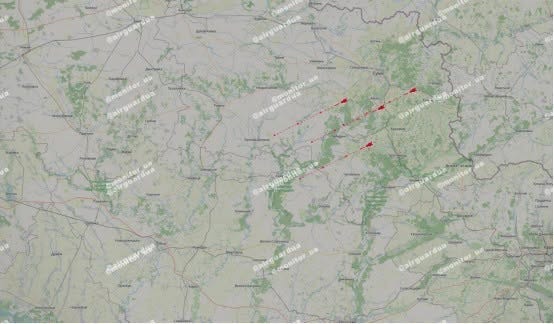
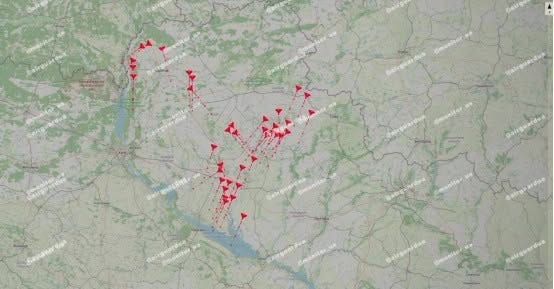
Outside Ukraine, a Polish air watch guy could have been curious, or just bored enough to scroll reports on civilian Ukrainian air watch networks, at 2:26 A.M. that morning, Poland time, he could have been aware of the potential cruise missile threat to Poland, better than an hour before the missile actually breached NATO air space from the East. After all, no one knows where a Russia cruise missile flying West might go and NATO’s job is to defend NATO citizens from Russian stuff flying West.
To be clear, it is not absolutely proved that this five missile covey contained the missile that wound up hitting Poland. But the flight time matches: it is about 750 km. from Sumy to Lviv and the flight time for an Kh-101 at normal cruise speed would be — wait for it — about fat hour.
A bit over an hour later, at 4:34 A.M. Ukrainian air watch networks reported one cruise missile seemed to have turned north from the Lviv region and appeared bound for Poland with a probable violation of NATO air space near the city Chelm. At 4:41 a screenshot appeared documenting the same thing, along with a text message that the Polish Air Force was scrambling two fighters. I am informed this bit of information almost certainly was thanks to civilian aviation enthusiasts who listen to air traffic chatter for fun, and heard comms about the two planes preparing to launch. To keep things clear, this is all about 3:30 A.M. Poland time.
The official Warsaw account of events delivered by President Nawroki matches the Ukrainian time stamps almost exactly: incoming missile detected at 3:30, order to launch fighters at 3:42 (or so), and retroactively missile impact at about 3:46.
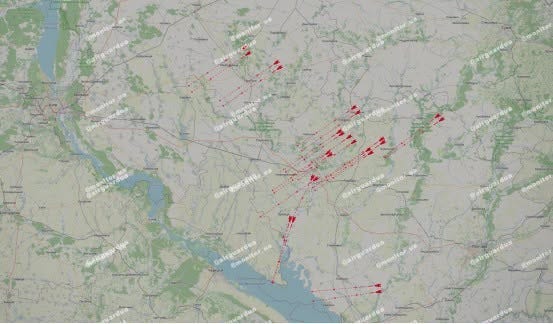
All of which begsthe repeated question: With a cuise missile taking more than an hour to fly from the swamplands north of Kyiv to the rolling hills north of Lviv, next to Poland, how is it that super expensive state-of-the-art top-of-the-line best-in-the-world NATO air defense sensors, only managed to inform the Polish air defense network a Russian cruise missile armed with a half-ton warhead was potentially en route to start World War Three, about two or three minutes, only, before the breach happened?
Could it really be Poland and NATO aren’t even looking at open source Ukrainian air watch information? Because if that were the case it would be pretty embarrassing, it would mean NATO ‘s eastern frontier air defense network is less capable of handling data, in actual war conditions, than volunteer networks set up on Telegram by bunch of civilian Ukrainians. If Nawroki was telling the truth that conclusion is pretty inescapable.
I’m here to tell you, that would be close to professional negligence if that were the case, because it’s pretty obvious the Ukrainians are pretty skilled at air defense and their wartime experience is orders of magnitude superior to NATO’s. It would be pretty stupid and unprofessional for soldiers responsible for the security of NATO air space, to pretend what the Ukrainians see in their skies is irrelevant to NATO. I’ve attached several screen shots from one of the air watch platforms so you can see it graphically and judge for yourself.
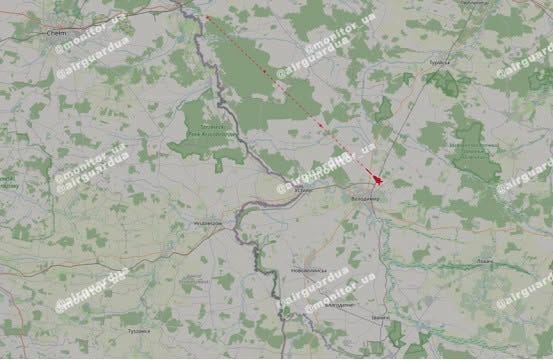
As I see it, the bottom line is simple. A Russian cruise missile bound for Polish air space and detonation in Polish territory flew for more than an hour in Ukrainian air space, was tracked by Ukrainian civlian and military air watch networks, and yet Polish air defenses — based on the President of Poland’s timeline — only reacted when the missile was about two or three minutes’ flight from the Polish border.
This is of course appeasement in the sense that if you deploy your national defenses in a not particularly professional way, you invite aggression from an adversary who believes he is the more professional fighter.
But this equally is, almost certainly, simple incompetence. It can’t be said definitively that no Polish/NATO official or operator had any access to the air watch information tracked by the Ukrainians. But what can be said definitively is that, by the Polish President’s own words, nothing was in the air to meet the oncoming missile when it crossed into NATO air space.
More than an hour is a very long time not to react to an approaching cruise missile. Failure to intercept, with more than an hour’s warning time, is nothing less than a provable failure of NATO’s air defenses in their most basic mission. The job is protect NATO territory from Russian military action that could kill or harm NATO citizens or damage or destroy NATO nation property. The warning information was there, it was either unknown or known, but either way not acted on.
Speculating, I think that probably a big reason we have seen a crystal-clear demonstration of NATO failing to coordinate its air defenses with Ukraine, is that at the upper echelons of the alliance there are officials who think that closer Ukraine-NATO cooperation, first and foremost in air defense, would provoke Russia and make NATO less, not more, secure.
Those officials are appeasers and should be sacked, it’s thinking like that that gets people in democratic countries killed by an aggressor state.
Ukraine Long-Range Strikes
Plenty of developments here. Attacks against Wildberries logistics centers in Russia continued this week usually with dire consequences because the warehouses, apparently were stuffed full of carboard boxes stuffed full of Russian lady products like lotions, underwear, soap, facial masks, beachwear, baby’s clothes, shoes and handbags, and all of it easy to set fire and once burning is difficult to extinguish.
According to the Russian pub Kommersant, Wildberries is considering renting about 100 thousand square meters of warehouse space in Kazakhstan out of the reach of the Ukrainian drones, however, this plan is possibly complicated because Kazakh Wildberries traders already have filled the warehouses with their own goods. There is talk of Russian national bank intervention to keep Wildberries afloat.
So far, since the first attack July 18th, the Ukrainians have hit and set fire to Wildberries warehouses in Moscow, Krasnodar, Stavropol, St. Petersburg (2), Crimea, Udmurtia, Ryazan, Penza and most recently in Kazan Tartarstan and in the Hero City Volgograd, the last two on Friday. Also the Yekaterinburg Wildberries was hit, this is close on 3,000 km., no fire, probably because of the relatively small warhead. That’s ambitious if you are sitting in Ukraine and you make a plan to blow something up in west Siberia. Funny Ukrainian graphic artists have created a Russia-Wildberries Bingo Card for tracking the warehouses that are still intact.

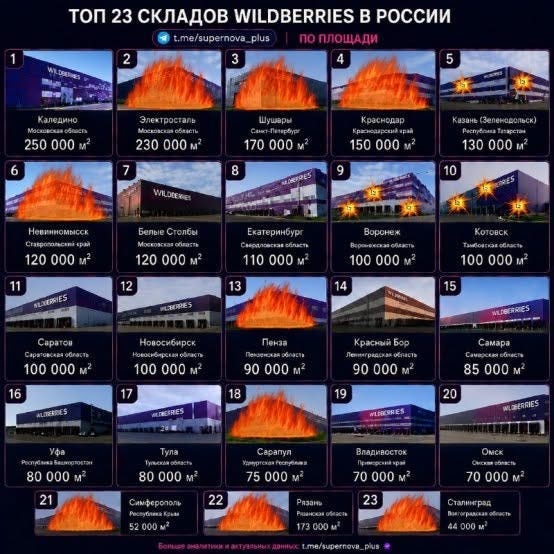
The Russian internet has for another week been awash with stressed Russian entrepreneurs, many in tears, because Ukrainian drones flew to the warehouse where their product had been stored and burnt the warehouse to the ground. Corporate management has responded by pointing out traders signed an agreement that goods kept in the warehouse is at own risk and the warehouser is not responsible if drones or lightning or cattle stampedes or anything else destroy it, small business has to suck it up.
Subsequently, traders have complained the company is preventing them from pulling goods out of still-intact warehouse, effectively forcing them to work for Wildberries against their will. A very few have reported the company has compensated them about two to five rubles for every 100 rubles value of product lost, but that’s isolated reports. Still others are complaining that even if sales are made, the company instead of paying the trader his/her cut immediately, is making payouts only once a week.
Another clever corporate move has been this: on all Wildberries sites the former quite popular products sections “Everything for Military Equipment” and “Everything for the SMO” (SMO is the politically-correct term in Russia for the Russo-Ukraine War) have been eliminated, no longer there.
Instead, all the stuff and paraphernalia a budding Russian warfighter might want to acquire on his own nickel, is still on sale at Wildberries, but concealed in more civilian shopping categories. For instance bulletproof vests are now sold in the “Sports” section. Chinese FPV drones are sold in “TV, Audio, Photo, Video Equipment” section. According to the Moscow Times, this was a migration of more than 200,000 merchandise item types.
On Saturday in the Caspian Sea, SBU drones hit a Project 12418 missile ship Molniya, an oil platform at the Filanovsky field, and the cargo ships Port Olya 2 and Begey, which are used to transport military cargo between Iran and Russia. The Iranians were indignant and threatened to shoot ballistic missiles at Ukraine. The Ukrainian internet quickly rejoined that every square meter of Iran is within the range of Fire Point missiles which might get through Iranian air defenses, and about 2/3 of Iran is in the range of An-195 and FP-1 drones that Russian air defenses right now are mostly unable to stop.
Then officials in Kyiv and Iran said OK, but actually we are also fighting a nuclear-armed major state right now so a second isn’t what we need at the moment. So by Tuesday, both sides had made tacit peace and agreed to demand compensation from each other. Still, it was a pretty impressive display of Ukrainian reach. It’s curious to guess where the Ukrainians got their targeting intelligence, the Americans? The Israelis? The Azerbaijanis? The Turkmen?
continued…
No posts
Comments
Nothing yet. Say the first thing.
Sign in to join the conversation.