
I learned about Bryan Johnson just yesterday watching Kara Swisher’s CNN series Kara Swisher Wants to Live Forever. I’d heard the name before but didn’t know much about him. In short, he spends an enormous portion of his life trying to stop aging — adopting a “Don’t Die” philosophy that involves taking dozens of medications and supplements daily and eating only meticulously selected food.
I recognized something in him immediately. Because I’ve teetered on that edge myself.
During my triathlon years, I quantified everything. We didn’t have sleep trackers back then, but if we had, I’d have been obsessed with my readiness scores. I logged every workout, scanning for improvements in pace and heart rate.
I chased the right macronutrient ratios after hard sessions to maximize recovery. And I wasn’t even the most extreme — some supplement companies will analyze your sweat and formulate a personalized electrolyte blend for your body.
Bodybuilding took it further. The week before a competition is a full-on science experiment. You overhydrate while cutting carbs completely — fish and broccoli for breakfast, lunch, and dinner, four days straight.
Then you strategically reintroduce carbs while pulling back on water. The logic: one gram of carbohydrate requires four grams of water to store in muscle tissue. Any water left in your body gets driven into your muscles, making them visibly pop on stage. It works. It’s also brutal.
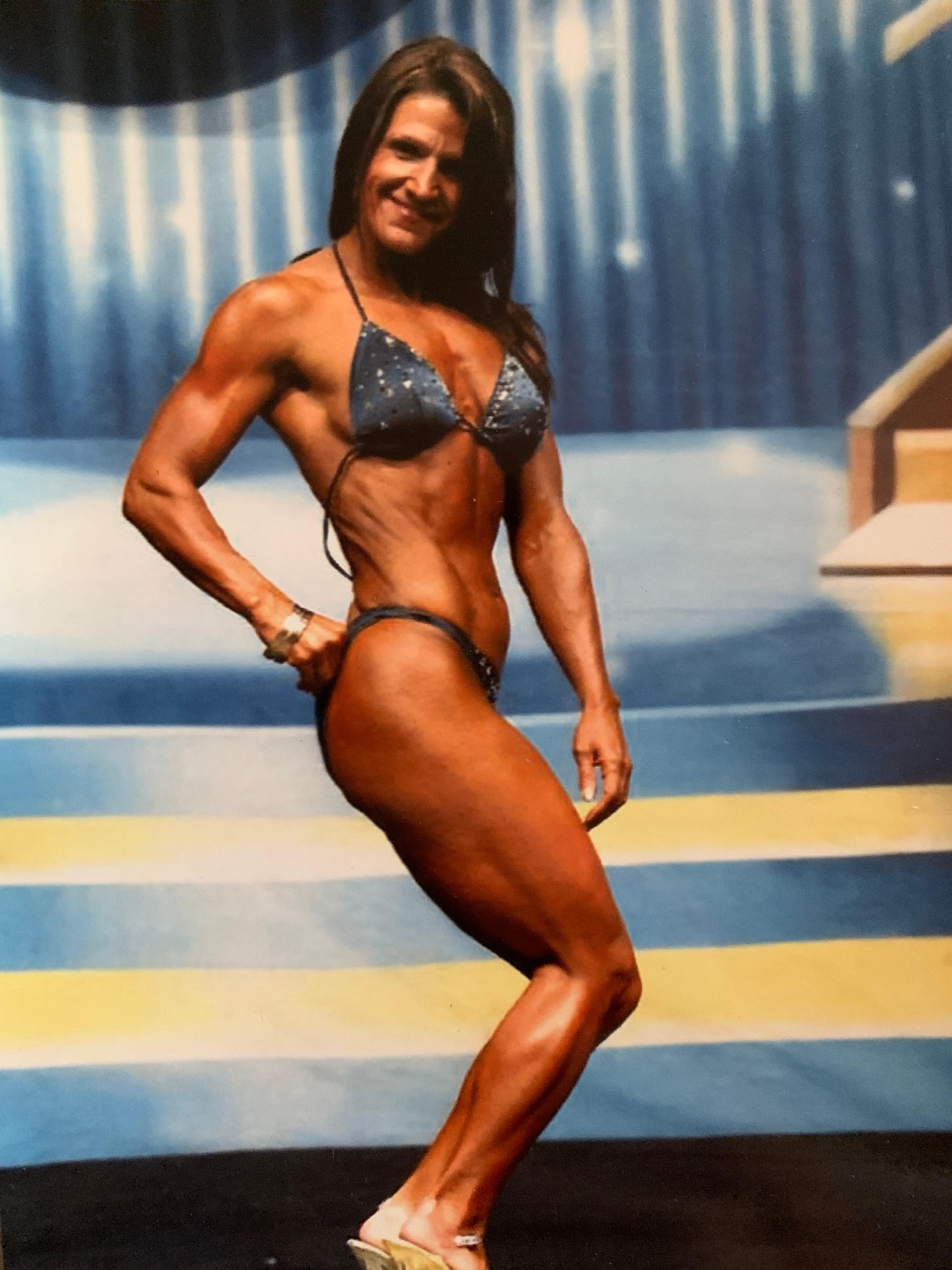
But here’s what kept me sane through all of it: I knew those were seasons.
When the show was over, I got a beer and a pizza. I let my body refuel on what it wanted — mostly water. Triathlon offseason meant prioritizing strength training and sleeping in. I came to love those Saturday mornings when I didn’t have to ride for five hours and then run for 40 minutes.
Johnson doesn’t seem to have an offseason. This is simply his life. And that distinction matters more than it might first appear.
Many monks throughout history adopted similarly austere lifestyles — eating only bread and water, with manual labor as their primary physical activity. But their asceticism had a clear purpose: to quiet the ego and its appetites so they could live more fully for God. The discipline was never the point. It pointed beyond itself.
Johnson’s regimen has the same form as monastic asceticism — the rigid schedule, the elimination of pleasure foods, the resistance to what he calls his “rascal mind.” But the aim is inverted.
Where the monks practiced self-emptying, Johnson is practicing self-preservation. Longevity has become his god. And from his interview, it seems that fear is at least part of the fuel — anything associated with aging or disease, even sunlight, registers as a threat.
Yoga philosophy offers a useful lens here. According to the ancient teaching of the koshas — often translated as “sheaths” or “bodies” — we are not simply physical creatures. We exist on five interwoven layers simultaneously:
The annamaya kosha is the physical body — the body made of food (anna means food in Sanskrit). It’s the layer Johnson is almost entirely focused on: what he eats, how he moves, what he supplements, how his organs are aging. It’s the most visible layer, and the most measurable.
The pranamaya kosha is the energy body — the layer of breath, vitality, and life force. Johnson may be tending this layer through his food choices, though likely without that framing.
The manomaya kosha is the mental and emotional body — the layer of thought, feeling, and perception. Johnson does meditate, which is a genuine nod to this layer. But in his framework, meditation appears to be another optimization tool rather than a practice of inner listening.
The vijnanamaya kosha is the wisdom body — the layer of discernment, intuition, and deeper knowing. This is where we begin to ask not just how to live, but why.
The anandamaya kosha is the bliss body — the layer closest to pure awareness, to the sacred, to what some traditions would call the soul.
A truly healthy life, in this framework, isn’t just about maintaining the physical sheath. It’s about recognizing that the body is the outermost layer — a good starting point, but not the destination.
Johnson argues that he’s serving humanity — that by becoming his own prototype, he’s advancing science for everyone. That’s a generous framing, and perhaps genuinely felt. But I find myself asking a simpler question: what is all this discipline in service of?
We all have a god we worship. For some people it’s a celebrity, a political figure, money, or status. For Johnson, it appears to be the body itself — specifically, the indefinite continuation of it. There’s a certain irony in that: in trying to transcend the limitations of the body, he has become entirely enslaved to it.

And practically speaking — how do you make meaningful human connection when you can’t share a meal, can’t stay out past your 8:30 p.m. bedtime, can’t sit in the sun? The immune system, it turns out, also grows stronger through exposure — to imperfection, to the elements, to the unpredictable texture of ordinary life.
I don’t want to “Don’t Die” if it means returning to the strict patterns of my triathlon and bodybuilding seasons — permanently, with no offseason in sight.
A healthy lifespan doesn’t require optimization at every margin. Plenty of people live long, vital lives through something far simpler: balance. Avoiding extremes. Tending all the layers of who they are, not just the most measurable one.

The body is a gift worth caring for. But it is one sheath of a life — the outermost one. What animates it, what guides it, what it’s ultimately in service of — that’s where the real work happens.
No posts
Comments
Nothing yet. Say the first thing.
Sign in to join the conversation.