
You have been told the enemy is muscle mass.
Lift, eat protein, hold onto the mass, stay strong. That is the whole message, and it is on every fitness feed you have scrolled.
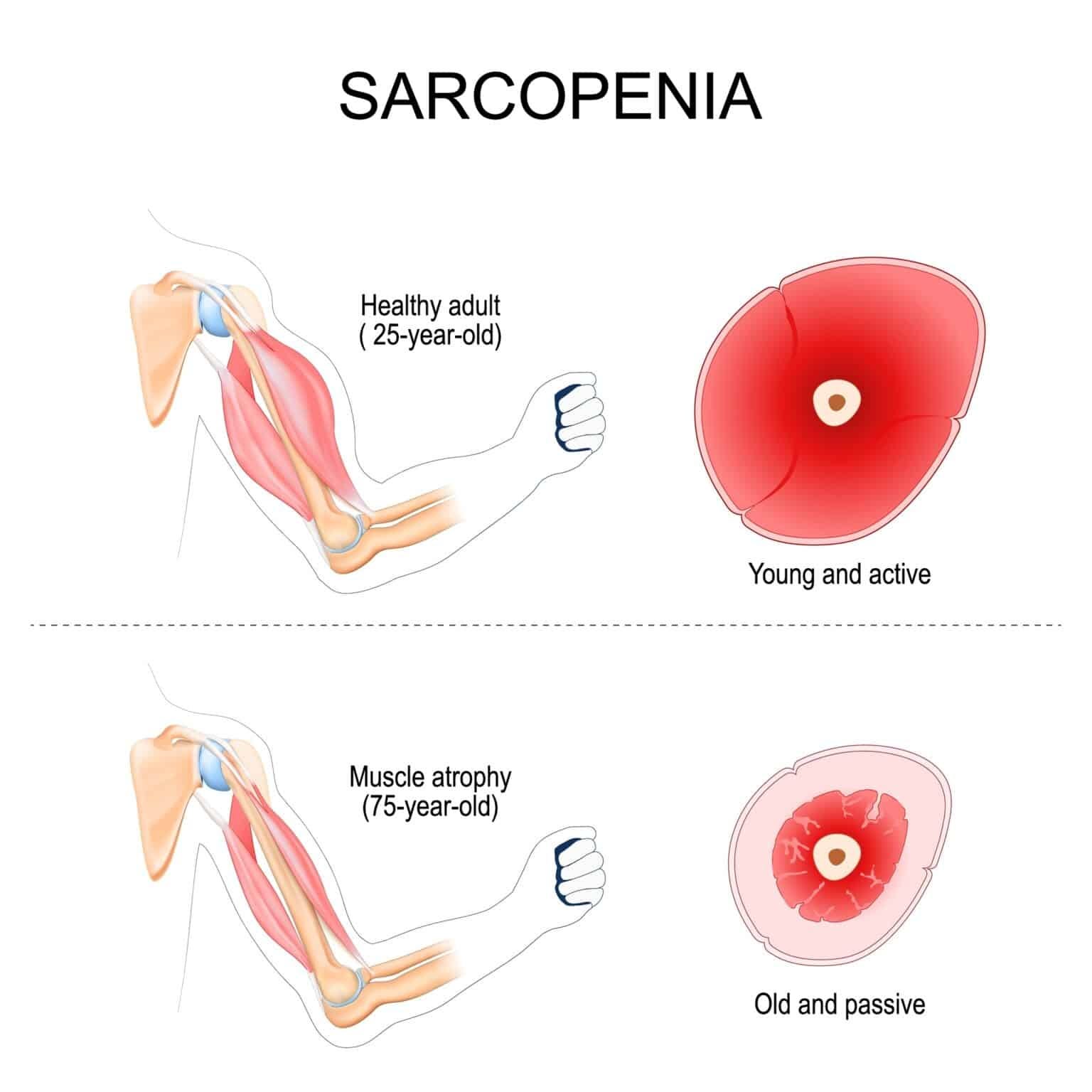
The mass is not the first thing to go. Your strength is.
And it does not leave at the same speed. Across the studies tracking this, muscle mass falls at roughly 1% a year after 70. Strength falls at more than 3%. Some cohorts hit 5% a year at 80 and over 10% by 90.
Read those two numbers side by side. Strength drains two to three times faster than the tissue everyone tells you to protect.
Which means you can be doing everything right, keeping the mass, watching the scale and the mirror hold steady, and still lose the thing that decides whether you can get off the floor at 80.
Nobody is measuring the part that fails first.
What your body is actually doing
Muscle has two separate problems after 50, and they run on different clocks.
The first is the one you know. The tissue itself shrinks and gets slower to rebuild. Your muscle has gone slightly deaf to protein, so the same meal that built muscle at 30 gets a quieter response now. That is real, and protein and lifting are the right answers to it.
The second problem is the wiring, and almost nobody talks about it.
Your muscles do not act alone. Every muscle fibre is switched on by a nerve, and that connection point — where the nerve meets the muscle — is called the neuromuscular junction. Think of it as the plug. With age, some of those plugs loosen. The signal getting from your brain to your muscle becomes less reliable.
When a nerve dies off, the muscle fibres it used to control are not automatically lost. A neighbouring nerve can reach over and adopt them. But the reach is clumsy. The rewired unit is bigger, slower, and worse at fine control.
So you can keep the muscle and still lose the command over it. The tissue is there. The wiring to drive it, fast and precisely, is fraying.
This is why strength outruns mass on the way down. Strength is not just how much muscle you have. It is how well you can switch it on.
Where this hits first, and why it is worse than it sounds
Power goes before strength, and power is the one that keeps you upright.
Power is force delivered fast — the thing you use to catch yourself when you trip, to stand up before you overbalance, to get a foot out in time. The paper tracked this and found power declines start earlier than strength declines, showing up in people in their forties, and in the over-70s power fell about twice as fast as strength.
Notice the order. Power fails first. Strength fails next. Mass fails slowest of all.
The fitness world has it exactly upside down. It sells you the slowest-moving problem, mass, and stays quiet about the fastest-moving one, the speed and wiring that stop a fall becoming a fracture.
There is a female-specific wrinkle here worth stating plainly. In one ten-year study, meaningful strength loss showed up in women around 50, but not in men until 70. If you are a woman, the wiring and strength problem arrives roughly two decades earlier than it does for the men writing most of the training advice. If you are a man, it comes later but it comes, and the power decline is running quietly in your forties either way.
The part where inactivity is faster than aging
Here is the number that should stop you.
Ten days of bed rest, in healthy older adults, cost about 13% of leg strength and 14% of stair-climbing power. Ten days.
Not ten years. Ten days flat on your back takes a bigger bite out of your strength than a decade of ordinary aging does. And older bodies lose it three to six times faster than young ones during disuse, then rebuild it slower and less completely afterward.
This reframes what a hospital stay actually is. A fall, a hip, a bad chest infection, two weeks in a bed — that is not a pause. For a body over 50 it is a cliff, and some people never climb all the way back up.
The gut plays into this too, in ways that are only now being mapped — how the bacteria in your gut may influence muscle maintenance, energy and recovery is a genuine and separate subject. Coach Dylan covered the gut end of it in You’re not fat. Your gut is starving., including the 2021 Stanford trial where fermented foods lifted microbiome diversity while a high-fibre diet barely moved it.
Back to the wiring.
What nobody knows yet
I want to be straight about the size of the gap here, because the paper is, and that honesty is the reason to trust it over the confident thread it is quietly correcting.
Most of what we know about the failing plugs — the neuromuscular junction — comes from animals. Rats and mice. Imaging that connection directly in a living human is genuinely hard, often needing tissue from amputations or cadavers, so the human picture is stitched together from indirect electrical measures. The direction holds across species. The precise mechanism in a 58-year-old human body is still being worked out.
And the honest core of it, straight from the paper: nobody has established how much of your strength loss is the muscle shrinking versus the wiring fraying. The two have never been fully separated within the same people in the same study. Everyone agrees both matter. The relative size of each is not known.
That gap is not a reason to wait. It is the reason to do the one thing that happens to hit both at once, which is below.
Certainty is what the supplement industry sells. This is a field that says “we don’t know yet” in its own review, and that is exactly why it is worth reading.
The strongest case against everything above
A serious researcher would push back, and the pushback is fair.
None of this means the mass-and-protein message is wrong. Resistance training is called the gold-standard intervention in this paper for a reason. It is the single most effective thing across every mechanism at once. Protein genuinely helps, more so combined with lifting. If the “lift and eat protein” advice got you lifting, it did its job, and mocking it risks a reader dropping the one habit that actually works.
Concede all of that. The standard advice is not false. It is incomplete.
The correction holds anyway.
Because incomplete advice sends you after the wrong target. Chase mass alone and you will train the way bodybuilding taught everyone to train — slow, heavy, controlled reps, watching the tissue grow. That builds mass and barely touches power, and power is the thing failing first and fastest. You can win the metric you were told to watch and still lose the race that matters, which is the one against the fall.
What I got wrong
For a long stretch, the advice in this newsletter treated strength and muscle as basically the same target. Train for size, strength follows, done.
That was too neat. This paper is what changed it. Strength and mass come apart with age, and power comes apart from both, and a plan aimed only at the scale-and-mirror version of muscle quietly ignores the fastest-moving loss. That was a real gap in what got written here, and this is the correction.
Three things you can do this week, free, no equipment.
→ Stand up without your hands. From a normal chair, fold your arms and rise without pushing off. If you cannot, or it is close, that is your power decline made visible, and it is trainable. Do a few every time you get up today.
→ Add speed to something you already do. On the way up from a chair or the bottom of a stair, move fast on the way up, slow on the way down. Intent to move quickly is the part that trains power, and it costs you nothing.
→ Protect the floor above all. If illness or surgery is coming, the priority is not getting fitter, it is not going to zero. Even standing and shifting your weight during a bad week blunts the ten-day cliff.
Useful. None of it is the protocol.
What the free half leaves out is the part that decides results: how to train speed without wrecking joints that are already complaining, the exact protein number and timing that actually clears the anabolic-resistance threshold for a body over 50, and the one session structure that hits the wiring and the mass in the same half hour.
The rest of this post is for paid members.
the power-training method that protects you from falls, the protein number and breakfast dose for a body over 50, the single non-negotiable if a hospital stay is coming, and the weekly structure that trains the wiring and the muscle together.
Train the wiring, not just the tissue
Comments
Nothing yet. Say the first thing.
Sign in to join the conversation.