
You didn’t miss the window. Nobody showed you where it was.
Two people, 85 and 87. Zero medications. A four-storey house they still climb. The dad is learning Adobe at 87.
Then the line that does the damage: “Your 80s are determined by what you do in your 40s-60s.”
Read that at 58, already on a tablet for your blood pressure, knees that gave up on stairs a decade ago, and it says one thing. You lost. The window shut while you were busy raising kids and paying a mortgage, and nobody told you it was open.
That line is wrong. Not soft-wrong. Wrong in a way the evidence can disprove.
What the thread is actually showing you
Start with what these two people are. A sample of two.
Two people, married 67 years, who found a trainer in 2002 and had the money to keep him twice a week for 23 years, who own a four-storey house, who could drive thousands of miles through COVID because their health and their bank account allowed it. That is not a formula. That is a life, with a lot of good fortune stitched through it, told backwards as if every outcome was a choice.
Some of it was choices, and good ones. The lifting, the learning, the moving, the marriage. Those are real and the research backs them, and we’ll get to the actual numbers.
But “zero medications” is not an achievement you can copy by trying harder. It is partly genetics you did not pick. A reader on medication for blood pressure or cholesterol has not failed at anything. That medication is very often the thing keeping them at 85 in the first place, and a thread that quietly frames pills as defeat is being careless with the people most likely to be reading it at midnight.
The question is never “did it work for them.” It is “who were they, and what did they start with.” And these two started with a lot.
The line the evidence actually breaks
Here is the claim that matters, and here is what undoes it.
The thread says your 80s were decided in your 40s. A study published this year, following 699 adults for up to 24 years, found that what predicted who lived longer was not their biological age at the start. It was the rate their biological age was climbing during the study.
Source: Longitudinal changes in epigenetic clocks predict survival, InCHIANTI cohort. Nat Aging, 2026. https://pubmed.ncbi.nlm.nih.gov/41826710/
Sit with what that means. The people already aging fast were not sentenced. What moved the needle was the slope — the direction of travel from here — not the height they’d reached by 50. A high starting point with a flattening slope beat a low starting point still climbing.
You are not your current number. You are the direction it is moving. And the direction is set by what you do next, not by what you failed to do at 45.
The thread had the timing exactly backwards. It is not too late. It was never a single door that shut in your forties.
The lever nobody put on the list
The thread has seven items. It is missing one that turns out to matter as much as the exercise, and it costs not
hing.
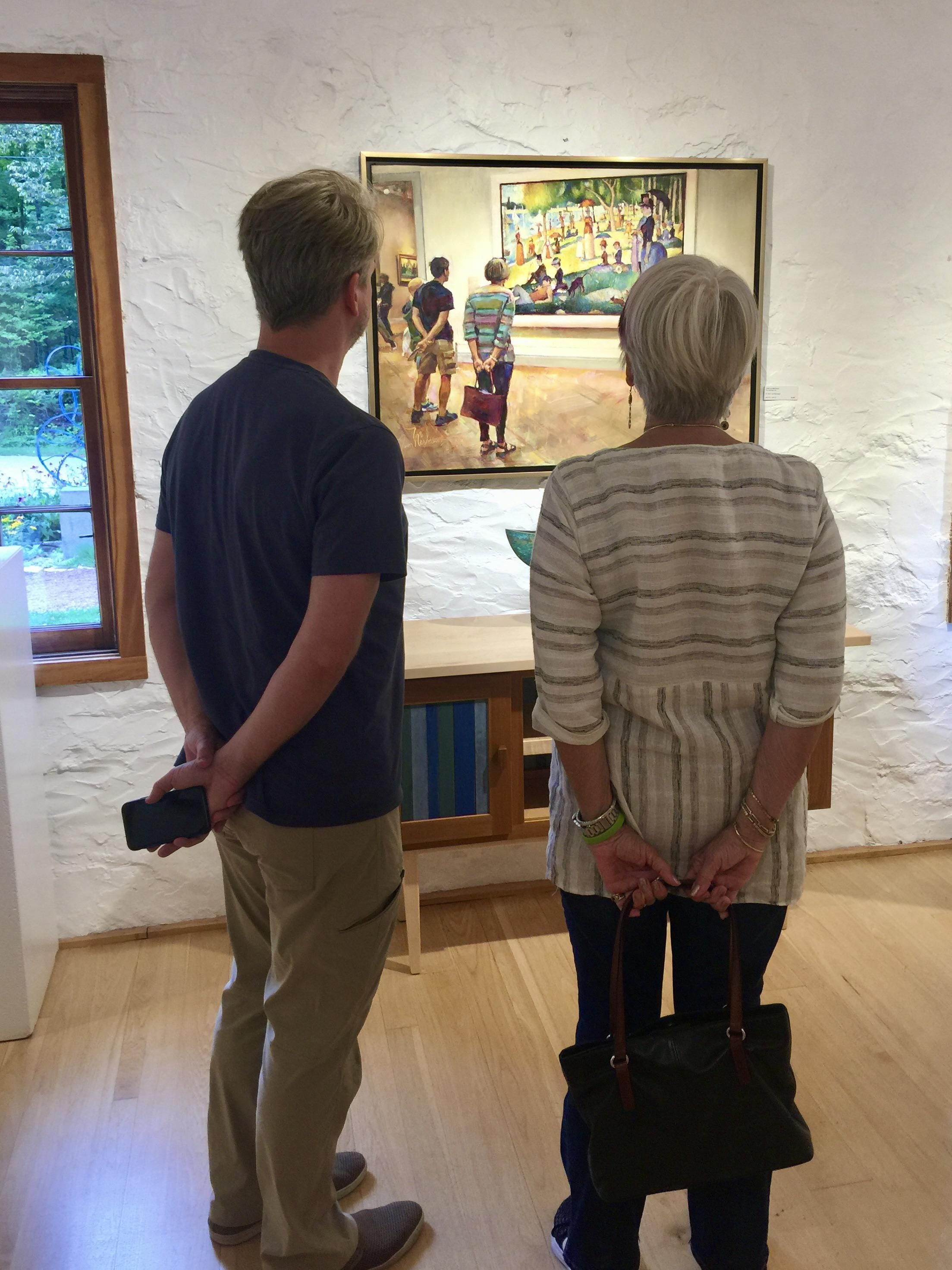
Researchers at University College London tracked about 3,500 adults and found that regular engagement with the arts — making it or just taking it in — was linked to aging roughly 4% slower. About a year younger, biologically. The same size of effect they measured for physical activity.
Source: Arts engagement and biological aging. Innovation in Aging, via UCL, 2026.
Not painting for a living. Going to a concert. A museum. Singing. Quilting, which the mother in the thread does, and which the son filed under “hobby” without noticing it might be doing as much as the gym.
The likely mechanism is unglamorous. Creative engagement lowers long-term stress, stress drives inflammation, and inflammation speeds the clock. Take the stress down and you may take the aging rate down with it.
This is worth saying plainly because it is the opposite of the thread’s message. The arts lever has no start-by date. You can pick it up at 70 and the biology does not check when you began. A researcher on the study said the honest open question is exactly whether someone starting fresh in midlife gets the effect — but nothing about the mechanism says the door is age-locked.
Where food actually fits, honestly
The thread’s “real food only, never frozen, never canned” is half right and half snobbery.
Cooking from scratch and leaning on vegetables and protein is genuinely good, and it slows the same clock everything else here is about. But frozen vegetables are frozen at peak and often hold more nutrients than the “fresh” ones that rode a truck for a week. Canned sardines and beans are exactly the cheap, real food a fixed income can afford. The rule that matters is protein and plants, not the temperature they arrived at.
There is a piece of this the thread skips entirely, and it is the gut. What lives in your gut shapes how you handle food, how steady your energy runs, and how much inflammation you carry — which loops straight back onto the aging rate this whole post is about. That is its own subject.
Back to the window.
What nobody knows, including me
Three honest gaps.
The arts study is a snapshot. It found a link, not proof, and it asked people what they’d done in the last year rather than following them as they took up something new. The lead researcher said it herself: it needs replicating, and nobody has yet shown that a person starting an art hobby at 60 gets the slowdown. Plausible. Not proven.
Nobody has shown that a lower epigenetic clock number makes any individual live longer. The clocks predict across populations. Whether nudging your own number down on a Tuesday changes your Thursday has not been established, and anyone selling you a test and a supplement stack off the back of it is ahead of the science.
And the third gap is mine. I do not know how much of these two people’s late-80s independence is the lifting and the learning, and how much is a genetic hand they were dealt and a bank balance that bought them a trainer for 23 years. Neither does their son. The thread reads their outcome as proof of their method, and one uncontrolled life cannot separate the method from the luck.
Certainty is what the supplement industry sells. This is not certain. It is directional, and the direction is hopeful, which is different from a promise.
The strongest case against everything above
The pushback is fair, and I’ll make it properly.
The thread’s underlying instinct is right, and I don’t want to bury that under caveats. Starting earlier genuinely is better. A 45-year-old who begins lifting has more runway than a 75-year-old who does, and pretending otherwise to be kind would be its own kind of lie. Compound interest is real in bodies as in money. The parents’ 23-year head start is doing real work, not just luck.
Concede it. Earlier is better. If you are 45 reading this, the thread is right that today beats next year.
The correction still holds. Because “earlier is better” and “your fate was sealed at 60” are different sentences, and the thread quietly swaps the first for the second. Better runway is not the only runway. The muscle evidence shows strength responds at 80. The survival evidence shows the slope matters more than the starting height. Earlier would have been better, and later still works, and the person who most needs to hear the second half is the one the thread just told to give up.
What I got wrong
This newsletter has run the “start now, your future is in your hands” line plenty of times, and it is mostly true and mostly useful. But it has an ugly twin, and I have not always kept them apart.
“You can still change this” is empowering. “So if you’re unwell, you must not have tried” is the same sentence turned into a weapon, and I have not always caught the moment one becomes the other. A reader on four medications at 62 did not fail a test. Sometimes the body just does what it does, and the honest version of this newsletter says both things at once: you have real leverage, and not everything was ever in your control.
Three things you can do this week, free, no start-by date.
→ Take in one piece of art on purpose. A gallery, a concert, an hour of music with your eyes closed, an evening of the thing you used to make and stopped. The evidence says the taking-in counts, not just the making. This is the lever the thread left off the list.
→ Add one flight of intent to your day. You don’t need their four-storey house. Take the stairs you already have, once, deliberately, a little faster than comfortable. Built-in movement is the real thing in the thread, and it doesn’t require the mortgage.
→ Stop reading your medication list as a scorecard. If you’re on tablets that are working, that is not the failure the thread implies. It is often the reason you’re here to read this.
Useful. None of it is the plan.
What the free half leaves out is the part that actually moves your rate: the protein number that protects the muscle behind all of this, the way to train stairs and standing so they build strength instead of just tiring you, and the honest short list of what shifts the aging clock versus what just sells tests.
the protein number for a body over 50, the way to turn stairs and standing into real strength work, the arts-and-stress routine that costs nothing, and the plain list of what moves your aging rate versus what only moves your money.
The thread’s plan assumes you began at 45 with a trainer. You didn’t, and it doesn’t matter.
The order below is built for someone starting now, at whatever age now is.
Move → Feed → Engage → Connect.
The lifting is the truest thing in the thread. It is also the one most people over 60 skip because they think the window closed. It didn’t. Strength responds into your 80s.
→ Sit-to-stand, every day. From a chair, no hands, stand up and sit down slowly. 2 to 3 sets of 5 to 8. This one move trains the exact strength that keeps you off the floor, and it needs no equipment and no house with four floors
→ Stairs with intent, if you have them. Not just climbing them absent-mindedly. Once a day, take a flight a little faster than comfortable, hand on the rail. That is the parents’ “built-in movement,” made deliberate
→ 2 resistance sessions a week if you can manage them, across squat, hinge, push, pull, carry. Bands or light weights count. A trainer who works with older adults is genuinely worth it if you can afford one, and a chair and your own bodyweight work if you can’t
→ If you’re deconditioned or have any heart or joint history, start with a doctor’s nod. This is the one place caution isn’t optional
“High-quality protein” is not a dose. Here is the dose.
Research suggests a body over 50 needs more protein than the old guideline — expert bodies now say at least 1g per kg of body weight daily, and 1.2 to 1.5g per kg if you’re training.
→ 60kg (132lb) = 72 to 90g a day
→ 70kg (154lb) = 84 to 105g a day
→ 80kg (176lb) = 96 to 120g a day
If you have kidney disease, this range isn’t yours. Ask your doctor for your number.
Front-load it: 25 to 35g at breakfast, within 90 minutes of waking, then again at lunch and dinner. And ignore the fresh-versus-frozen snobbery. Frozen vegetables, tinned fish, and dried beans are real food, cheap, and they hit the same targets. The parents’ scratch cooking is good. The rule that “never frozen, never canned” is a preference, not a health law.
This is the arts finding, made into a habit. It carries roughly the same weight as exercise, and it is the one most people over 50 have quietly let go of.
→ One arts intake a week, minimum. A concert, a gallery, an hour of real music with nothing else on. Taking it in counts, not just making it
→ Restart one creative thing you dropped. The instrument in the cupboard, the quilting, the sketchbook. The mother in the thread quilts, and it may be doing as much as the dad’s weights
→ The mechanism is stress, so treat it as stress relief, not homework. If it feels like a chore, it isn’t lowering the thing it’s meant to lower. Pick what you’d actually look forward to
The thread’s “67-year marriage” is not advice. Nobody can act on it. But the thing underneath it — regular contact with people you care about — is real, and it is buildable at any age.
→ One recurring human contact on the calendar. A weekly call, a standing coffee, a class with other people in the room. Recurring beats spontaneous, because spontaneous quietly becomes never
→ Choose the version with other bodies present where you can. A choir, a class, a walking group — it stacks the movement, the arts, and the connection into one outing
→ This is not optional softness. Social connection tracks with longevity as hard as the physical stuff. It is on the list because the evidence puts it there, not to be sweet
What to expect
→ Weeks 1 to 2: the sit-to-stand gets easier. That’s your strength answering, fast, at whatever age you are
→ Weeks 3 to 6: stairs feel different, energy steadier
→ Ongoing: you will not get an epigenetic readout telling you your slope changed. Judge it by what you can do and how you feel, not by a number a lab sells you
→ The real result: not a biological age you can screenshot. The direction of travel, bent slightly, from here
Take the stairs once today, a little faster than comfortable. Then book one thing worth looking at this month.
The thread told you your 80s were decided decades ago. The people who study this for a living found the opposite: what predicts how long you live is the direction you’re moving now, not the point you’re starting from.
You didn’t miss the window. You were handed a story where the window only opened once, and that story isn’t true.
One last thing.
Everything above is built for a body over 50 in general. It isn’t built for your body, because we haven’t seen your blood test.
That’s what we do with Dylan. You send your blood test. We read it, find what’s driving your belly fat, your crashes, your bad sleep, and build a plan around your numbers. Dylan coaches you through it and keeps you on track.
Want your own plan instead of a general one? Start here.
Comments
Nothing yet. Say the first thing.
Sign in to join the conversation.