
Imagine two 80-year-olds.
One struggles to climb a single flight of stairs. They move cautiously, spend most of the day sitting, and increasingly lose pieces of the mind they once had.
The other seems to have ignored the calendar entirely. They still go for morning jogs, can still spend all day walking Disneyland with their grandchildren, and remain as mentally sharp as they were decades earlier.
What separates these two people?
Is it simply genetics? Luck? How much of how we age is under our control?
The evidence increasingly suggests the latter.

While our genes undoubtedly influence longevity, emerging research indicates that a substantial portion of biological aging is modifiable. And among all the interventions we’ve studied, few consistently rival the power of regular exercise.
But a fascinating new study in Nature Aging pushes this idea much further.
Most people think of exercise as building reserve—adding muscle, strengthening the heart, improving endurance—as though you’re making deposits into a retirement account you’ll eventually draw from.
There’s some truth to that.
But that’s barely the tip of the iceberg.
The biology appears to be far more profound.
Exercise doesn’t simply build a reserve. It actively changes the way your cells age.
In this letter, we’ll explore one of the most comprehensive molecular studies of human aging and fitness performed to date.
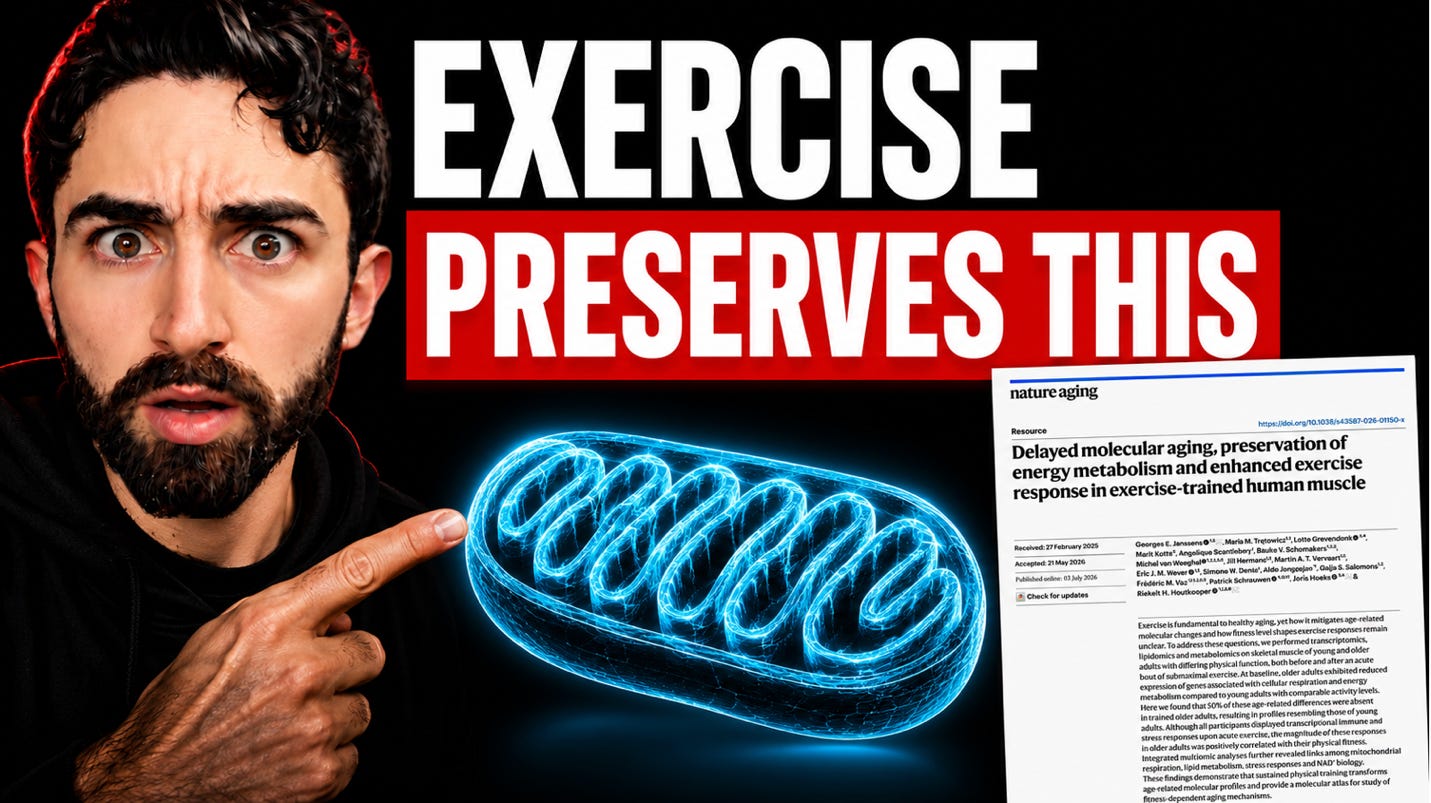
Let’s start with what makes this study methodologically impressive.
The researchers recruited 47 people spanning both age and fitness levels. There were young adults and older adults, ranging from highly trained athletes to normally active individuals to those with significant physical impairment.
They then performed a suite of comprehensive molecular analyses using muscle samples taken from the participants. This wasn’t a blood draw—it was looking within the muscles themselves.
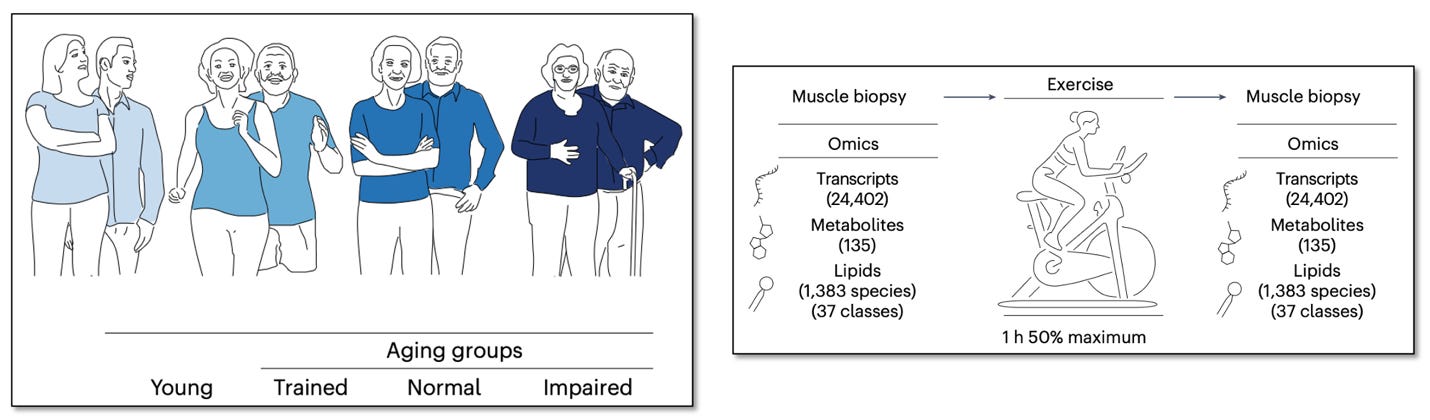
Researchers measured more than 24,000 gene transcripts, profiled hundreds of metabolites circulating throughout the body, and analyzed a vast array of lipid species. The result was an extraordinary molecular snapshot of how aging reshapes human biology.
But the real question wasn’t simply: What changes with age?
It was: How much of aging can exercise actually prevent?
When researchers compared normally active older adults with young adults, they found more than 1,100 genes whose activity had significantly declined.
The strongest signal was in energy metabolism pathways. Think: mitochondria.
You know what’s coming next… “the powerhouse of the cell.” (By now I think that phrase needs its own jingle. But I digress…)
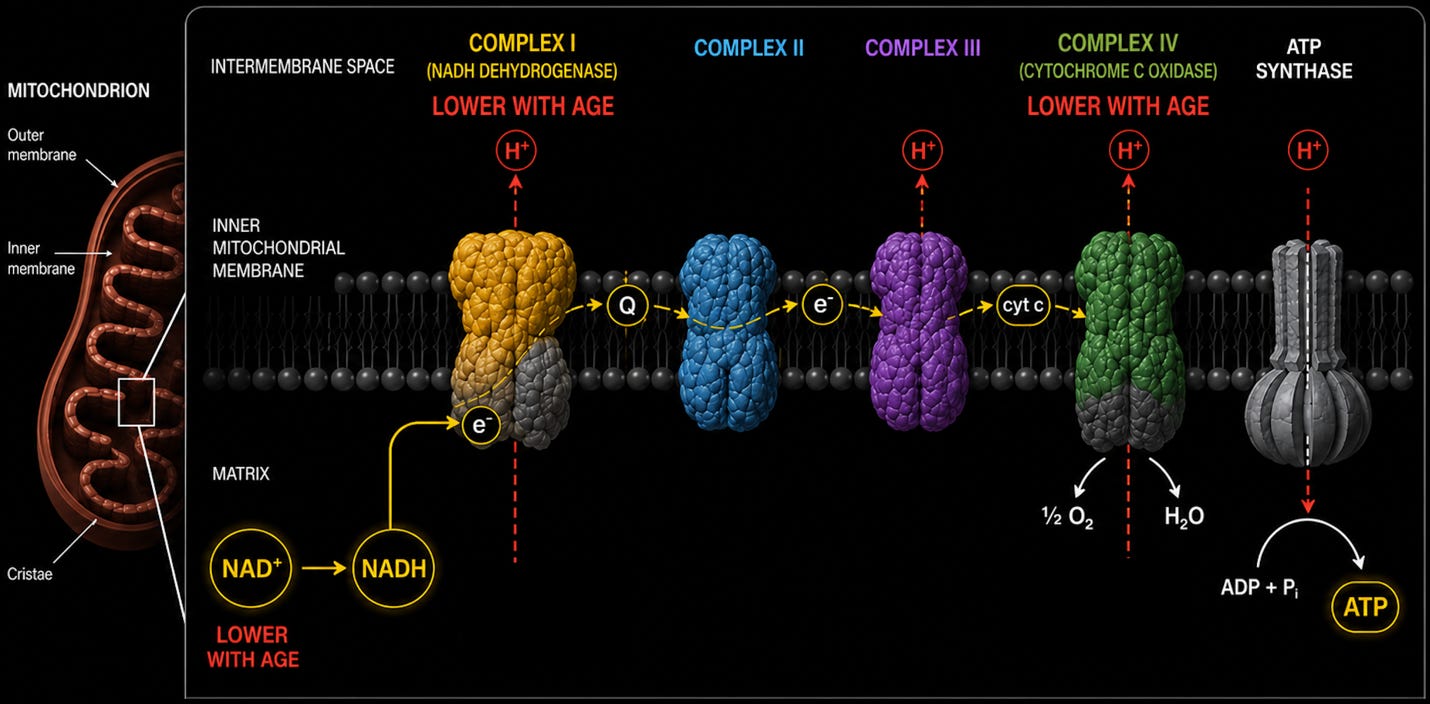
Genes responsible for assembling key components of the mitochondrial electron transport chain—like complexes I and IV—were tuned down with age.
In other words, aging appears to progressively impair the machinery that allows our cells to generate energy.
So, one might fairly argue there is something to the statement: “metabolism slows with age.”
Levels of key metabolites told a similar story. For example, NAD+ levels also declined with age. We’ve talked about NAD+ before, but as a quick refresher, it’s one of the body’s most important metabolic molecules.
And, as NAD+ levels decline with age—be that in muscles or the brain— metabolism begins to falter.
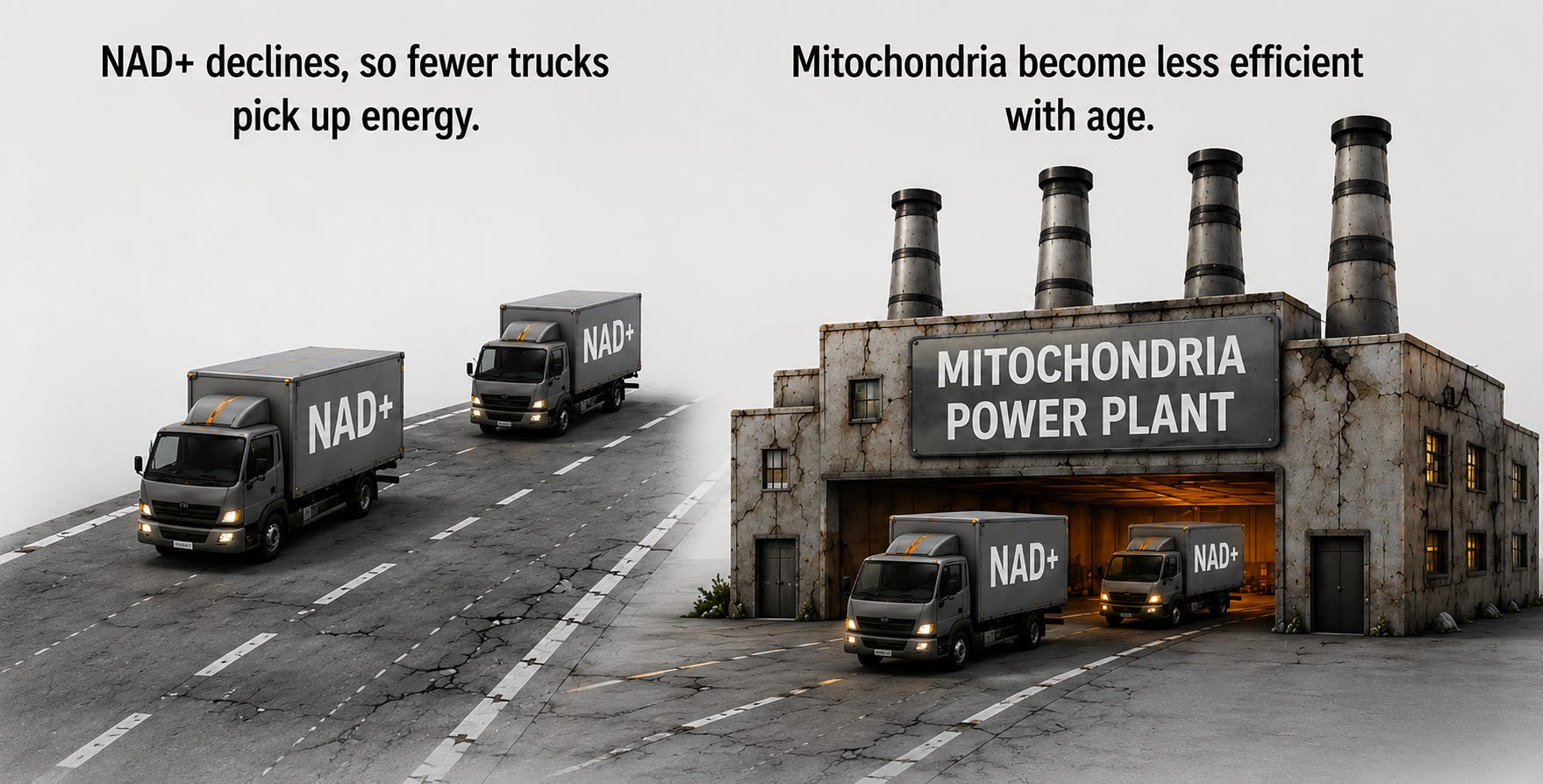
Or, if you want a cute analogy to wrap this all up…
One way to think about NAD+ is as a fleet of delivery trucks. Every time you eat, those trucks pick up energy from your food and transport it to your mitochondria—the cell’s power plants—where it’s converted into ATP, the energy your cells actually use.
As we age, two things begin to happen. There are fewer delivery trucks on the road because NAD+ levels decline, and the power plants themselves become less efficient. Less energy gets delivered, and less of what arrives gets turned into usable power.
If that were the end of the story, it would be fairly depressing.
Fortunately, it wasn’t.
This was the study’s headline finding.
When researchers compared highly trained older adults with normally active older adults, they discovered that over 55% of the gene-expression changes normally associated with aging were completely absent in those who exercised regularly.
Read that again. Not reduced. Not slowed. Absent. Regular exercise appeared to preserve a remarkably youthful molecular profile within muscle.
You can see this in the figure below. It’s a bit confusing, so let me walk you through it.
Each panel compares four groups (bars). Going left to right, we have:
Young adults
Highly trained older adults
Normally active older adults
Physically impaired older adults
Whenever the trained older adults resemble the young adults rather than the other older groups, it means that particular molecular hallmark of aging was effectively preserved despite decades of chronological aging.
Those red boxes highlight exactly those examples.
They’re molecular signatures of aging that were absent in adults who maintained high levels of fitness.
The pie charts on the right summarize the magnitude of this effect.
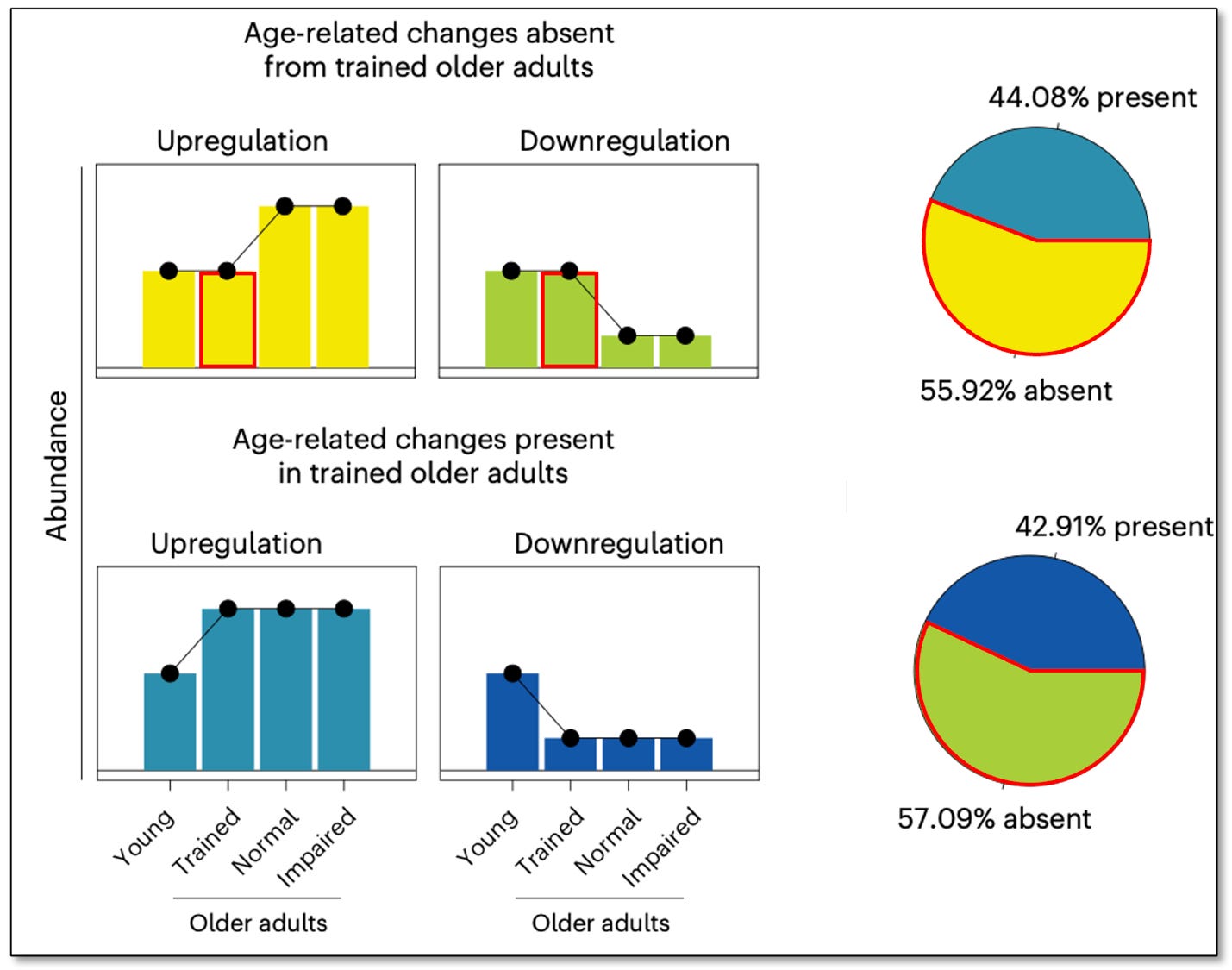
More than 55% of the transcriptomic changes associated with aging never developed in the highly trained older adults.
Think about what that means.
The calendar kept moving. But at the level of gene expression, much of their muscle simply refused to age.
Which immediately raises a fascinating question…
If exercise can preserve the molecular machinery of youth, can we identify those same pathways—and amplify them directly?
Spoiler alert: We can!
In the rest of this letter for StayCurious Metabolism Premium members, we’ll turn from Science to Solutions, exploring the most promising interventions we have today to support healthy muscle aging, including:
A mitochondria-targeting peptide
A mitochondrial hormone and exercise mimetic
A small molecule that enhances NAD⁺ metabolism
Muscle-building peptides, and more…
If you love living and living at the frontier of metabolic science, I think you’ll feel right at home in the StayCurious Metabolism community. Come see why it’s become the fastest-growing premium science newsletter on Substack, and why so many members tell me it’s one of the best investments they’ve ever made in their health.

Comments
Nothing yet. Say the first thing.
Sign in to join the conversation.