
After years of betrayal, divorce, and trying to rebuild life as a single mom, I got very good at surviving. I could work, take care of my kids, answer messages, pray for other people, and keep everything moving. From the outside, I probably looked strong.
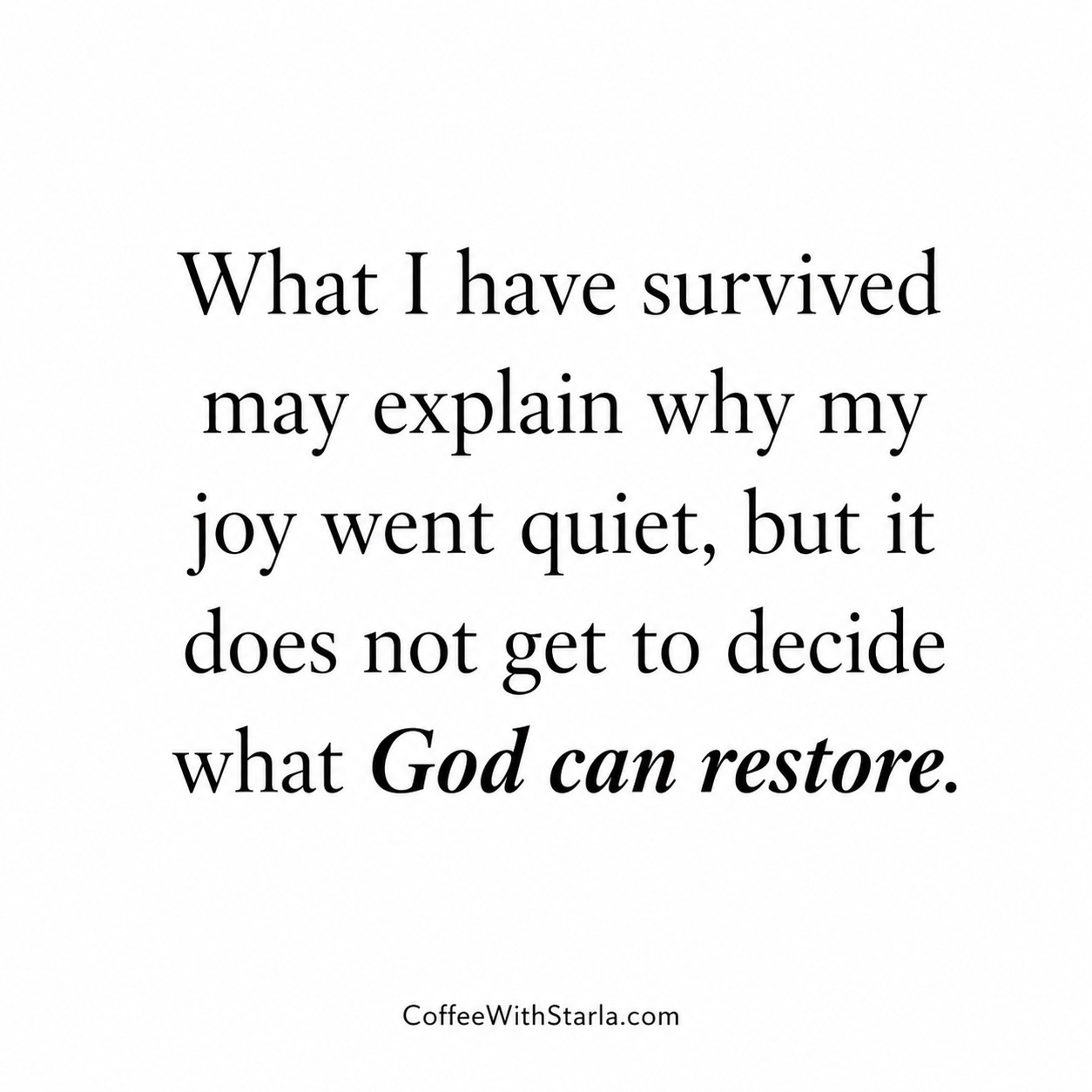
But somewhere along the way, I stopped looking forward to much of anything. Even on good days, part of me stayed braced for the next painful thing. I loved God, and I was grateful for what He had carried me through, but if I was honest, I had lost my joy.
Maybe you know exactly what I mean. Nothing in you has stopped loving God, but your heart has been holding its breath for so long that it has forgotten how to exhale.
Maybe you didn’t lose your joy because you stopped loving God. Maybe you have braced for the next phone call, argument, bill, or appointment so long that your heart forgot how to unclench.
Long-term suffering teaches us to survive. Eventually, we stop receiving anything good without waiting for it to disappear. Then “choose joy” feels like one more failure.
The Bible does not demand smiles from breaking hearts. Jesus was “a Man of sorrows” (Isaiah 53:3, NKJV). He knew Lazarus would rise, yet still wept (John 11:33–35).
His tears were not a lack of faith. Jesus knew the ending and still made room for sorrow.
That matters for the woman grieving a marriage she still lives in. It matters to prodigal mothers, exhausted caregivers, and women grieving what their health has taken from them.
Biblical joy does not ask you to call any of that good. Romans 12:15 tells us to “weep with those who weep.” God does not shame our sorrow or rush us through it.
Grab September’s Scripture Plan - How To Get Your Joy Back
Happiness responds to what is happening around us. Biblical joy is anchored in what remains true about God when life is painful.
Habakkuk described fig trees without blossoms, empty fields, and no livestock in the stalls. Their food and future were disappearing. Still, he said, “Yet I will rejoice in the Lord, I will joy in the God of my salvation” (Habakkuk 3:18, NKJV).
Habakkuk did not rejoice over the devastation. He rejoiced because after all was stripped away, God was still his salvation.
Biblical joy says, “This hurts, and God is still here. I do not understand, but His character has not changed. My suffering is real, but it is not the only truth.”
David prayed, “Restore to me the joy of Your salvation” (Psalm 51:12, NKJV). David had sinned terribly and was repenting.
That does not mean lost joy proves hidden sin. Joy gets buried beneath grief, betrayal, depression, a changing body, or responsibilities with little help, little rest, and nowhere safe to admit exhaustion.
David’s prayer shows us we may ask God to restore what has gone quiet. We do not have to manufacture joy or shame ourselves into feeling it.
Psalm 13 gives words to the tired woman: “How long, O Lord?” David voiced his anguish, then remembered God’s mercy. Biblical joy makes room for the question and the trust.
Jesus said, “These things I have spoken to you, that My joy may remain in you” (John 15:11, NKJV). In context, He speaks of abiding and obeying. Closeness with Christ does not always feel dramatic.
Sometimes abiding looks like opening your Bible with tears in your eyes. Sometimes it is whispering, “Lord, I still trust You,” when you lack strength for a longer prayer.
James said to “count it all joy” because tested faith produces patience and maturity (James 1:2–4, NKJV). He never said trials feel pleasant.
You can grieve and still receive joy. You can laugh and cry again before supper. Enjoying warm coffee, fresh bread, or a quiet house does not betray the person you miss.
Sometimes we believe staying miserable proves how deeply we love. But enjoying a good moment does not mean you stopped caring, praying, or remembering what was lost.
Take a piece of paper and divide it into two columns. On one side, write, “What hurts right now?” Tell the truth without cleaning it up for God.
On the other side, write, “What is still true?” Answer each hurt with Scripture. Beside “I am worn down,” place Jesus’ words: “Come to Me, all you who labor and are heavy laden, and I will give you rest” (Matthew 11:28, NKJV).
Then ask yourself, “What gift from God have I been refusing to enjoy because my life is still hard?” Sit with it instead of brushing it aside.
Ecclesiastes 3:12–13 says enjoying food, work, and the good before us is God’s gift. Receiving a good moment does not deny your suffering. Pain is not the only thing God places in your hands.
Tomorrow, your child may make destructive choices, your body may hurt, and the answer you have begged God for may still not have come. But suffering does not get to claim every good thing God gives while you wait.
Drink hot coffee and feel the sun. Laugh when something is funny, and receive the gift without apologizing. You are not forgetting who or what you lost.
This is not pretending the pain is gone. This is remembering that pain is not all God has given you.
Grab September’s Scripture plan - How To Get Your Joy Back
Still in this together,
Starla
Question - What is one small thing that still brings you joy?
Comments
Nothing yet. Say the first thing.
Sign in to join the conversation.