
💪 My Pre-diabetic Life: How I’m using some AI, some planning, some advice, and some luck to reverse a worrisome diagnosis. Powered by AROGYA WORLD, one of the most innovative health nonprofits in the world. Join our WhatsApp group and learn with me.
🎆 I am honored to be included in “250 at 250: The Indian American Story,” a list of 250 moments, 445 people, and 15 categories that shaped America. Curated by our friends at Indiaspora, which seeks “to inspire and position the Indian diaspora to be a force for good.”
🙏 Thank you to all our new paid subscribers! They and our sponsors help us do more. The main newsletter will remain free, but our new virtual salon series will be for paid members. Here’s how you can support Sree’s Sunday Note, even if you can’t afford to pay.
THE HEADLINE WAS SHOCKING and predictable at the same time:
Trump Administration Taps Climate Science Critic to Oversee Flagship Report. Matthew M. Wielicki has criticized the scientific consensus on global warming as alarmist. Now he’ll oversee a major federal report on the topic.
In any other administration (even Trump’s first), this Friday news alert would have been the subject of endless discussion and relentless news coverage. Now there are so many horrible, terrible things happening every day that no one can or wants to pay attention.
As I read the NYT alert, I thought, I know at least one place in the world that doesn’t operate like this: Scandinavia. I’ve seen how these countries operate up close, thanks to my work with the Nobel Prizes, which bring me often to Oslo and Stockholm (a #lifehighlight; register to remotely watch Ingvill Bryn Rambøl and me co-host the Nobel Peace Conference on Thursday, Sept. 3, featuring three Nobel laureates and more). Plus, my friend and long-time newsletter partner Zach Peterson, is in Denmark and Sweden on vacation with family, so today’s newsletter is all about what we can learn from the Nordics. [BTW, Norway was robbed at the World Cup. There, I said it!]
* * *
SCANDINAVIANS ENJOY THE HIGHEST QUALITY OF LIFE of anyone in the world. It’s not an accident—it’s policy.
More precisely, it’s a political and policy choice that America has made to not provide serious state investment in its people. I tend to criticize everything associated with the right, but more broadly, Democrats and Republicans have, for the past 50 years, largely agreed that work trumps life.
The political jargon around “socialism” in America is, at best, laughable. Fox News viewers are offered overdose-levels of garbage about socialism, communism, and the like—especially after Zohran Mamdani’s decisive win in New York City. Alexandria Ocasio-Cortez has become a household name for reasons both lofty and slanderous. If it weren’t so sad, it would be funny. The most popular parts of the political platform of today’s elected Democratic Socialists in America is almost indistinguishable from the platform of President Dwight D. Eisenhower’s Republican party—strong unions, robust living wages, and a social safety net that works to leave as few people behind as possible.
I’m convinced that most people who use the terms “socialism” and “communism” to describe whatever they conceive “The Left” to be actually know little to nothing of what socialism and communism actually are or were. Their understanding tends to be an amorphous version of Ronald Reagan talking points, completely devoid of meaning, fact, or current context.
Every single European country has a default bent toward social democracy—mandatory health insurance, robust social safety nets, and more. Most right-of-center political parties in Europe would fall far short of what the American polity considers “The Right.” If Social Security is the “third rail of American politics,” universal health care is the third, fourth and fifth rail of European politics. Even the most right-wing of European political parties adhere to this—people would revolt en masse if their respective country abandoned such policies—and that’s a good thing.
Nick Kristof, on the 4th of July no less, penned his column for The New York Times on the topic of Nordic quality of life, and it only further galvanized my thinking on the topic—it’s worth your time to read it in full. Here’s the passage that gets to the heart of the matter:
Is the Nordic model replicable? Could convenience stores and gas stations in America pay their cashiers and attendants $20 or more an hour plus a pension and five weeks’ vacation?
One challenge, economists told me, is that relative to many American workers, Norwegian laborers often have higher literacy rates, appear more able to pass a drug test, can handle technology better and can be relied upon to stay in their jobs longer, meaning that employers benefit from a more experienced, more productive workforce. In effect, Nordic employers can pay more in part because workers generate more income.
In that sense, learning from the Nordics is not as simple as raising minimum wages and seeing happiness soar. Rather, it’s the challenge of investing in human capital from early childhood through university-level education, pushing relentlessly to broaden opportunity at every level.
Deep, long-term investment in society, what a novel concept! If America truly is “the richest country in the world,” perhaps we should start acting like it. Nick’s column links out to several studies and data sets that show what naysayers refuse to acknowledge—a robust social state does nothing to inhibit innovation and economic dynamism. In fact, it does the opposite. It provides room for risk-taking and entrepreneurship across economic classes, giving people more space to be able to afford to fail. Unlike the American all-or-nothing approach that can literally ruin lives and communities.
Partner message — from me!

My friend and long-time collaborator, Zach Peterson, is currently travelling around Scandinavia—something he and family do relatively often—and I want to share his observations.
From Zach:
I’ve grew up in a mining town in Northern Minnesota, surrounded by people with Scandinavian last names—Petersons, Gustafsons, Nelsons, and Larsons abound. Red cabins on the lake, fish for every other meal, immense respect for nature and the outdoors, and a sort of understated altruism, were the norm throughout my life. I’ve now lived in the Czech Republic for close to two decades and, while I have benefited greatly from the country’s social democracy, it is far from the Nordic way of life in many many ways.
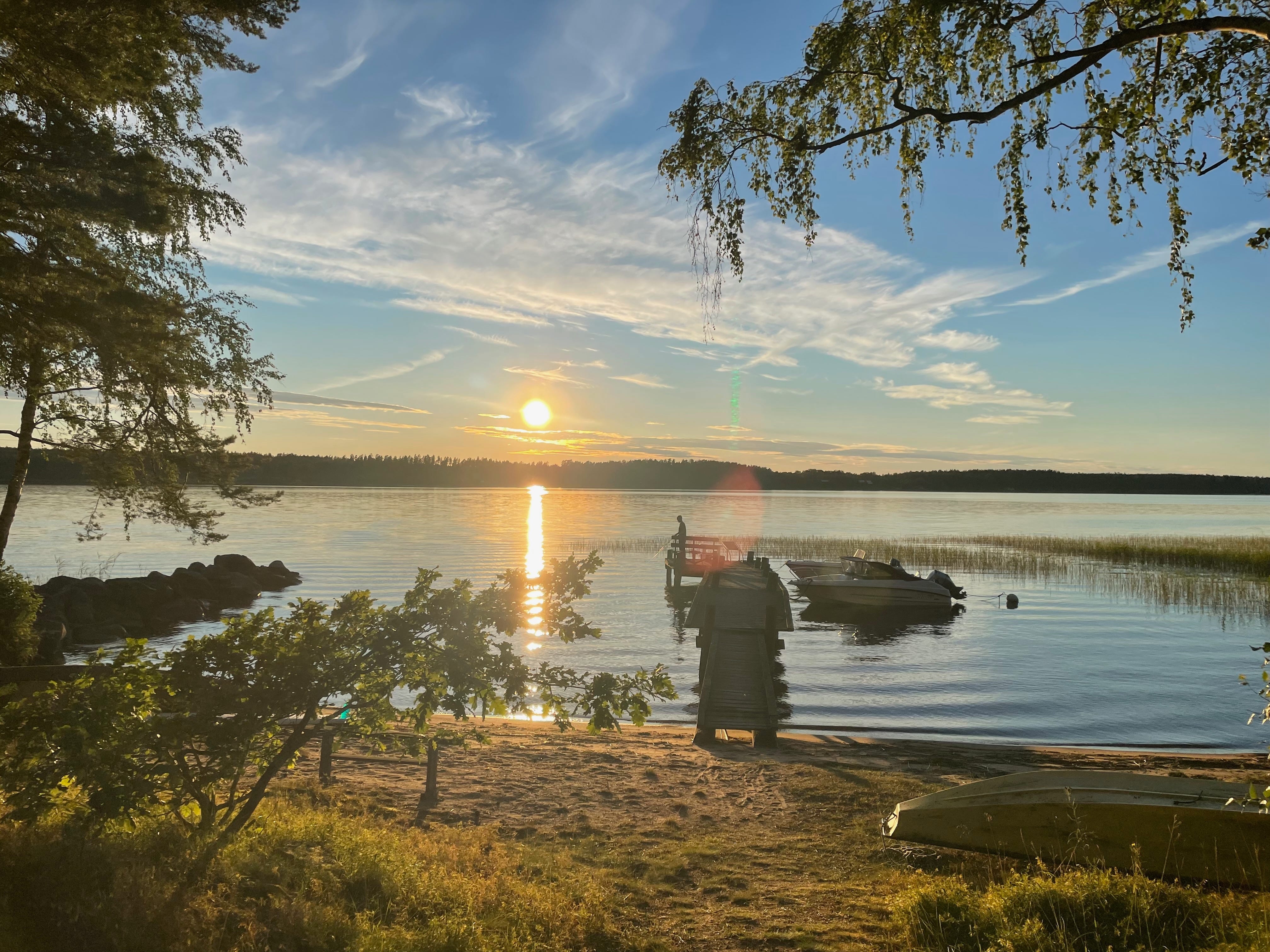
As I write this from a small cabin on the shores of Varnen, Sweden’s largest lake, I have never been more keenly aware of the vast gap between the Scandinavian way of life and that of my American homeland’s, and that of my adopted Czech one.
Czechs are a lot of things, but few would describe them as welcoming and warm to outsiders at both the macro and micro level. It’s odd to strike up conversation with strangers there to the point of something resembling stigma. “Private property” means private in the strictest sense, and there is a general standoffishness that is baked into the country’s personality. The historical factors that contribute to that are plain, but it’s still the way it is. All that said, raising a family in the Czech Republic is orders of magnitude easier than doing so in America—multiple years of paid maternity leave, a month of vacation annually, little-to-no violent crime—there’s a lot to like, and I do like it. I chose to raise my family here for a reason.
My kids, now 11 and 15, notice the difference between people here and our Czech brethren, and they won’t shut up about it. We have spent an almost inordinate amount of time in Sweden over the last three years, and, if they had their way, we’d probably just stay here. The people are warm, giving, and there is just something about the vibe here that works for us. It seems to work for most of the people who live here too.

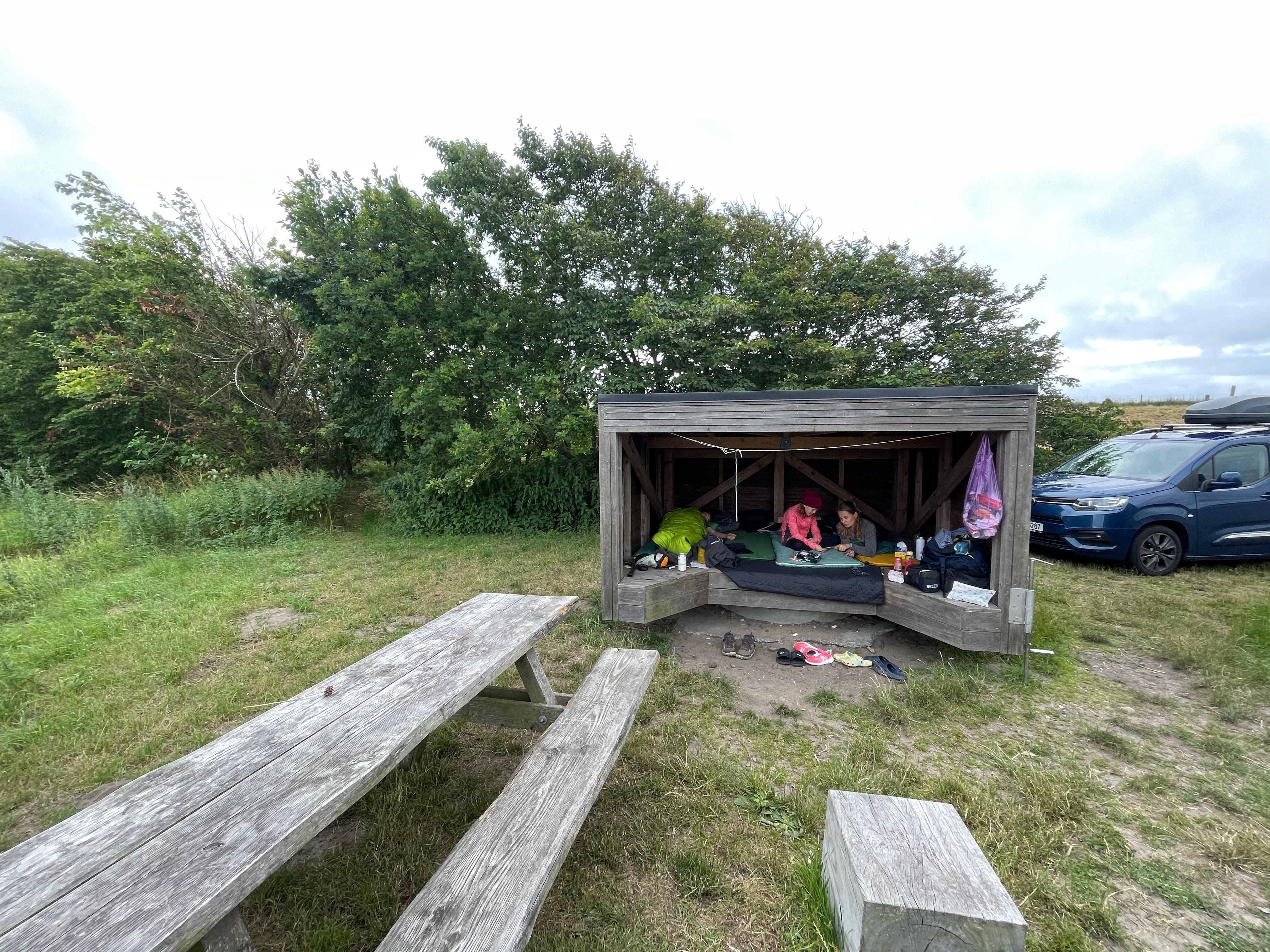
I want to note that we are tourists here, and there is an obvious tourist thing of “man, we could just live here” while you’re in a place on holiday doing touristy things. But, we don’t really do touristy things. We stayed in shelters up and down Denmark’s west coast and are doing the same for most of our stay in Sweden. We are generally off the beaten path and interacting with people from here on their terms.
I have a good friend from my hometown in Minnesota who has lived near Gothenberg, Sweden, for 20+ years now. His wife is Swedish, he has two teenage kids, and is, for all intents and purposes, Swedish. He’s a carpenter, he owns his home in a nice little beach town, and enjoys a stable, fruitful life on a tradesman’s salary. A couple of years ago his company downsized and he was laid off. Because he was over 40 with children under 18, he was eligible for the standard 300 days of unemployment insurance at 80% of previous wages, plus an additional 150 days. Norway and Denmark have similar systems that work toward one simple goal: Keeping people out of destitution.
Every measure of happiness and quality of life points to the benefits of the Nordic model, and spending time here makes it plain how it all works. There are the little things—an abundance of forest schools, the utter absence of litter on the side of the road, free or close-to-free camping and outdoor activities, and the calmness with which almost everyone drives (Czech drivers are the most aggressive and reckless drivers I’ve ever encountered by a wide margin).
Not to go all Tom Friedman talking to his taxi driver, but I sat on the upper decks of our overnight ferry from Frederikshavn, Denmark, to Gothenberg, talking to a Syrian Kurd who is an asylum grantee in Denmark. He’s lived there for years now after being sent away during the war with his sister. They were separated when they got to Europe and she lives in Sweden. We sat for hours talking about his experience as a Muslim asylum grantee named Mohammed in Europe. Needless to say it wasn’t all rosy, but, even about the darkest of instances of racism—of which he had far too much experience—he took pains to talk about how much he loved Denmark for what it had given him. He was educated there, he owns his own small company, and, as he put it, “the last thing” he wanted to do was “hate Denmark and Danish people” because a few dumb racists hated him for being there.
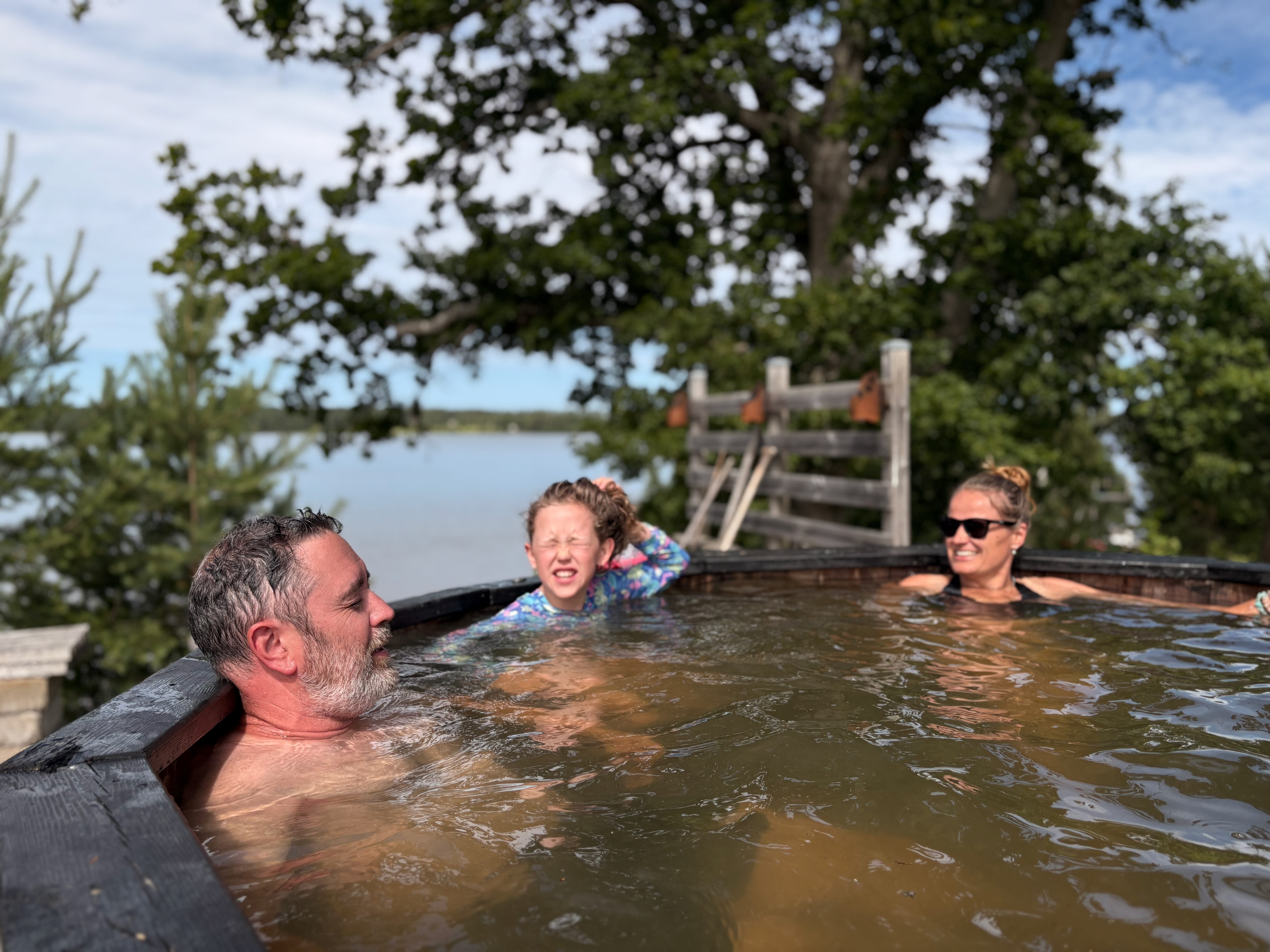
As far as it goes, you can do much worse than to live in Northern Europe, refugee or otherwise. Spending time here only reinforces it. My wife is Czech and the amount of times I hear, “Why can’t it be like this at home?” on these trips is mind-boggling. It’s the little things for sure, but they add up fast. In the end, it comes down to the system these people have grown up with—they know nothing else.
They are also the product of very serious investment in society that is uncommon to almost anywhere else. We can’t just a flip a switch and adopt a Nordic model of much of anything, but I also think that not doing so, and not even trying, is a choice, too.
As I write this, I am reading an Axios newsletter about how the American economic consensus of the last 50 years is buckling under the reality of its inherent brutality. Good riddance, I say. There is a better way, and it’s all around us. //Zach//
Some final thoughts about Norway:
Today, it’s one of the richest places on the planet. It leverages its colossal $2.2 trillion sovereign wealth fund to bankroll its social democracy while controlling $1.5\%$ of the world’s stock market. By comparison, Saudi Arabia’s more famous fund sits at about $1 trillion.
While the U.S. has shamelessly taken a chainsaw to its foreign aid through deep budget cuts and a retreat from international organizations, Norway consistently sets the global standard. It dedicates a full 1% of its Gross National Income (GNI) to international development and rapidly finances critical humanitarian crises around the world. The U.S. peak sat around 0.5% of GNI in the early 1960s and has since hovered between 0.1% and 0.25%.
But it wasn’t always this rich. Two centuries ago, it was one of the poorest places in Europe. Driven by poverty, an astounding one-third of Norway’s entire population left for North America during the mass migration waves of the 19th and early 20th centuries—a proportion surpassed only by Ireland. Everything changed with the discovery of oil in 1969.
Today, the country is facing growing challenges. Among them is a shortage of manpower (its population is just 5.5 million), which threatens its renowned universal healthcare system. Additionally, the rise of the political right has led to growing polarization. Immigration is being severely restricted, and the country is grappling with economic headwinds due to a weak currency and high interest rates. Yet, through all of this, Norway’s social cohesion still prevails.
53% of 2026 is already over. What will you do with the remaining 47% of the year? LMK and I’ll see you made it all the way down here.
ICYMI, OUR MOST RECENT ESSAYS:
💪 My Pre-diabetic Life: How I’m using some AI, some planning, some advice, and some luck to reverse a worrisome diagnosis. Powered by AROGYA WORLD, one of the most innovative health nonprofits in the world. Join our WhatsApp group and learn with me.
Comments
Nothing yet. Say the first thing.
Sign in to join the conversation.