
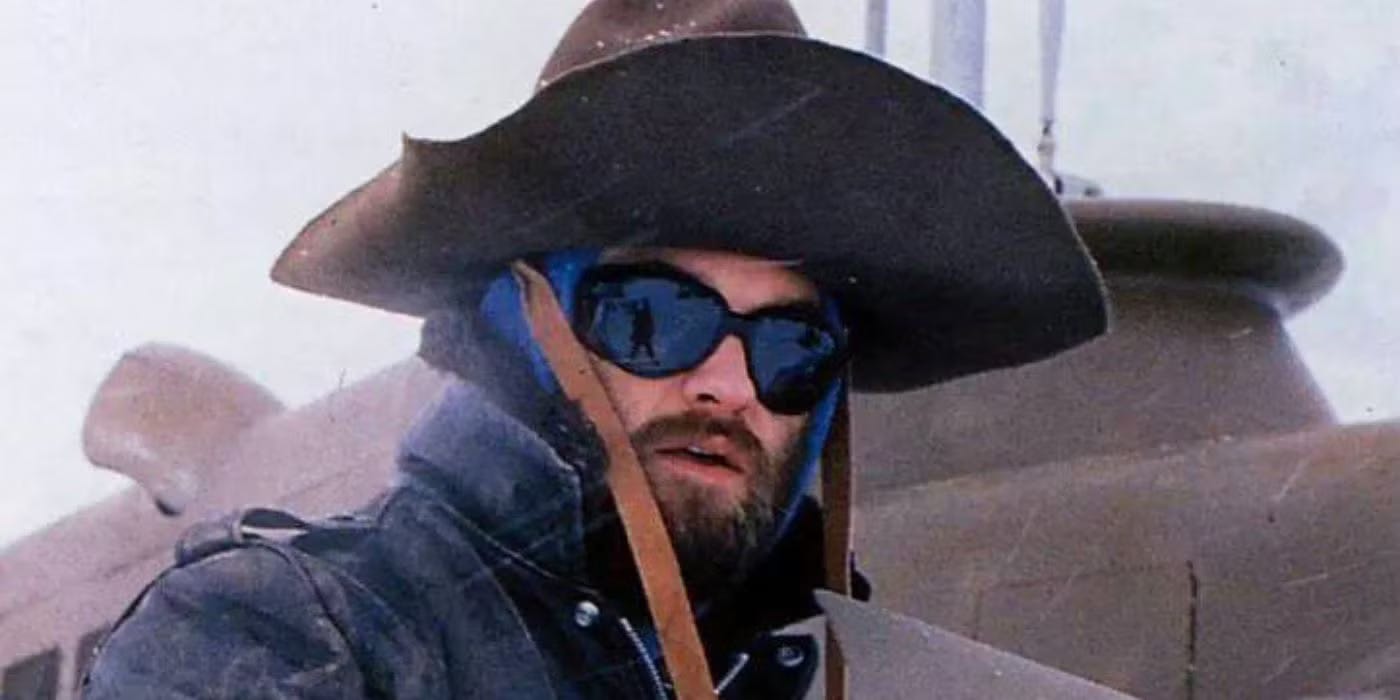
A man named Macreedy steps into a desolate, unforgiving landscape. He’s surrounded by a group of paranoid, increasingly dangerous men hiding an unspeakable evil. Human civilization is out of reach, no one is coming to save him. These men will kill him, if they don’t kill each other first.
And he wears a sweet hat.
If you’ve ever watched John Carpenter’s 1982 masterpiece The Thing, this story will sound familiar. Kurt Russell does indeed wear a sweet hat. But this is actually the story of John Sturges’s 1955 masterpiece Bad Day at Black Rock, starring Spencer Tracy. The echoes between these two pictures are, in this humble editor’s opinion, too resonant to be a coincidence and too numerous to ignore. To begin with, the two protagonists practically share the same name:
Spencer Tracy’s John J. Macreedy and Kurt Russell’s R.J. MacReady.
Because I am apparently a psychopath, this slight difference in character names set me off on a hunt to uncover the creative lineage, the spiritual bond between these two neo-westerns (yeah, I said it) made 27 years apart.
This week, we’ll examine how Bad Day at Black Rock evolved in the edit to become one of the most economic, suspenseful movies ever made. And next week…well, next week is, like a corpse using its stomach to bite off your arms, a surprise.
So, buckle up for Part One of our first SPLICE WORLD DOUBLE FEATURE: Y’ALL MACREADY FOR THIS?
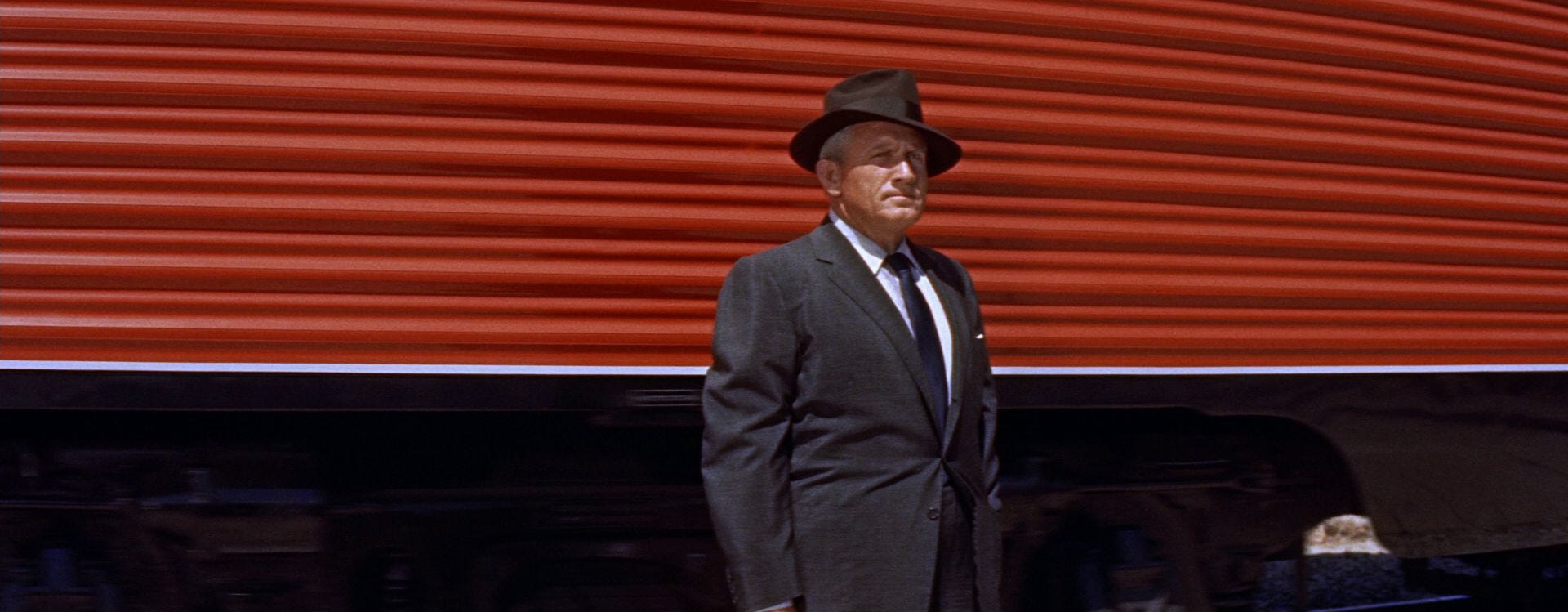
Clocking in at a bafflingly taut 81-minutes, Black Rock follows Spencer Tracy’s enigmatic, disabled war veteran as he attempts to uncover what happened to Komoko, a local Japanese man whom the residents of Black Rock claim was interned during World War II and just…never came back. As Tracy discovers the secrets - and bodies - buried under the surface, the townspeople, led by a menacing Robert Ryan and flanked by the young, imposing duo of Lee Marvin and Ernest Borgnine, tighten ranks. They will do anything, and kill anyone, to keep the sins of the past buried.
While the script begins with a languid series of introductory shots of the town and its inhabitants, this opening was deemed boring and totally scrapped in the edit. We love to hear it. In his epically informative Criterion Laser Disc Commentary,1 director Sturges recalls:
“The title [sequence] in the script was originally shot for the film, all these characters in Black Rock sitting around waiting for something to happen and in comes this train. We previewed the picture and an agent, a fellow from MCA said, you know, great picture, only thing wrong with it is that title, it’s a dreary dull title, why don’t you start with the train roaring in, that’s got the sense of this picture.”
Millard Kaufman, the screenwriter, remembers it slightly differently:
“You were about five minutes into the damn story before you had any idea what it was about. We sneaked a preview in Pasadena, and the audience hated it. Terrible cards. The first five minutes of a picture are very, very important. So, the question came up of what was wrong with it. And I said, ‘What’s wrong with it, John, is that it just takes forever to get started.’ I said. ‘Give me a cutter.’ So, I forget the guy’s name—he was a wonderful cutter—but I said to him, ‘Cut this stuff down! Take this stuff out,’ which he did.”2
Whether Kaufman suggested the change or an agent, the script’s opening was replaced with an energetic and threatening credits sequence as we watch Macreedy’s train barrel north, a red needle searing through the California desert.
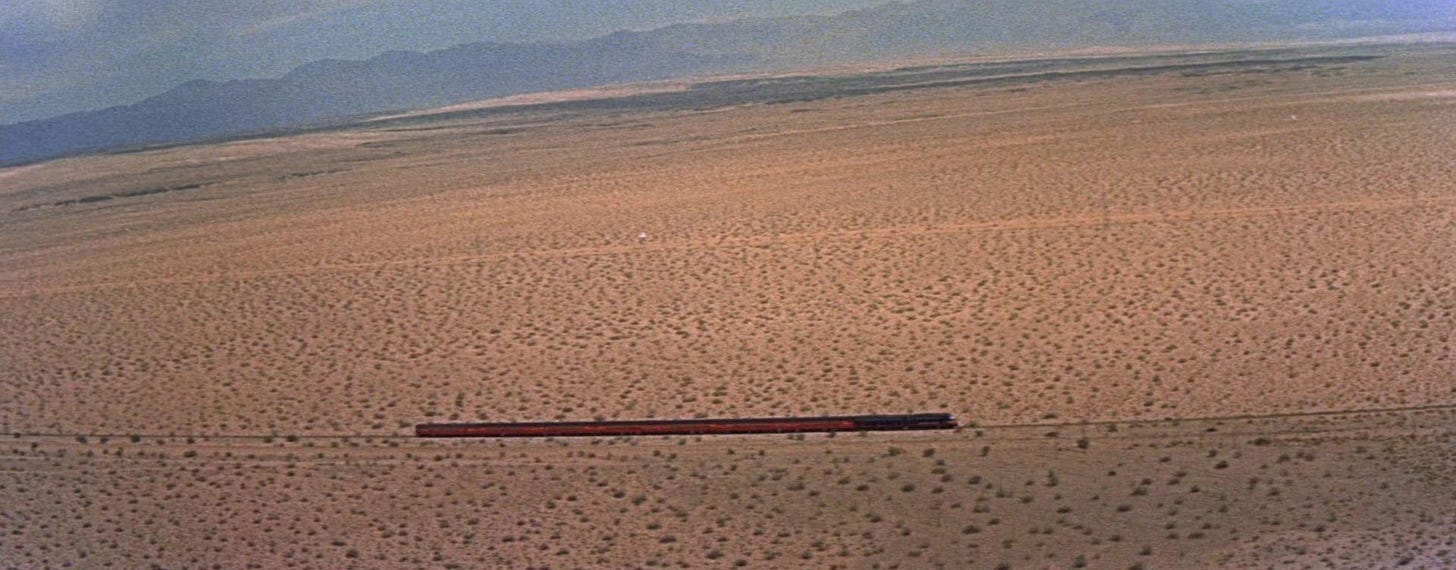
What I love about this edit is, yes, it solves the boring problem. But it also fundamentally changes the point of view of the movie to one of ambivalence. And ambivalence drives the suspense.
Unlike the script, we aren’t with the townspeople waiting for the train. We aren’t in their shoes. Nor are we on the train with Macreedy. The music tells us something terrible is about to happen, but we don’t know what’s coming. This feeling simmers as Macreedy steps off the train. The locals act suspicious, but who is this guy? What’s he want? What’s he hiding? We don’t know who to trust, and we immediately get the sense that both sides have their secrets.
And you know which movie starts almost exactly the same way? Bet you can’t guess.
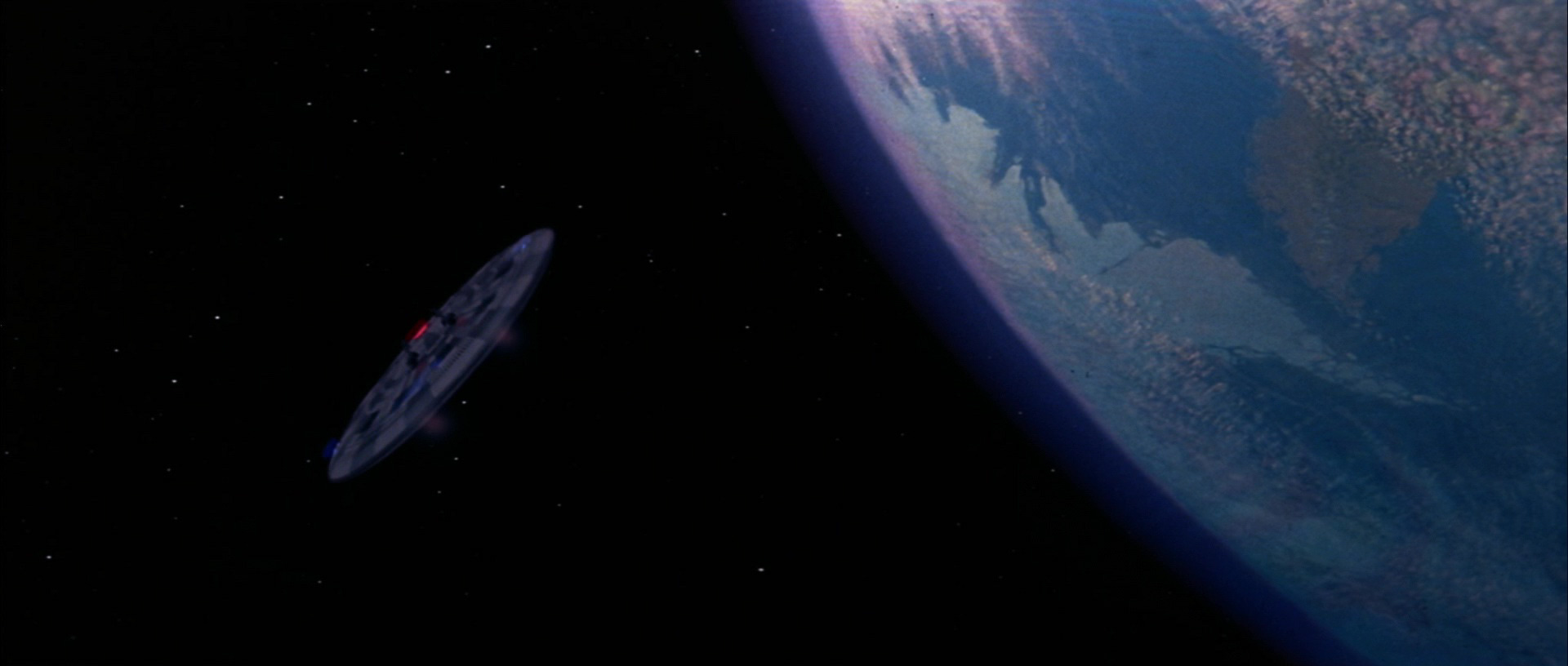
The Thing!
Instead of a train, we have a UFO, and instead of Macreedy, we have the dog. What’s this dog’s deal? What’s he hiding? We don’t yet know what his arrival will mean for U.S. Outpost 31, but we do know that some bad shit is about to go down.
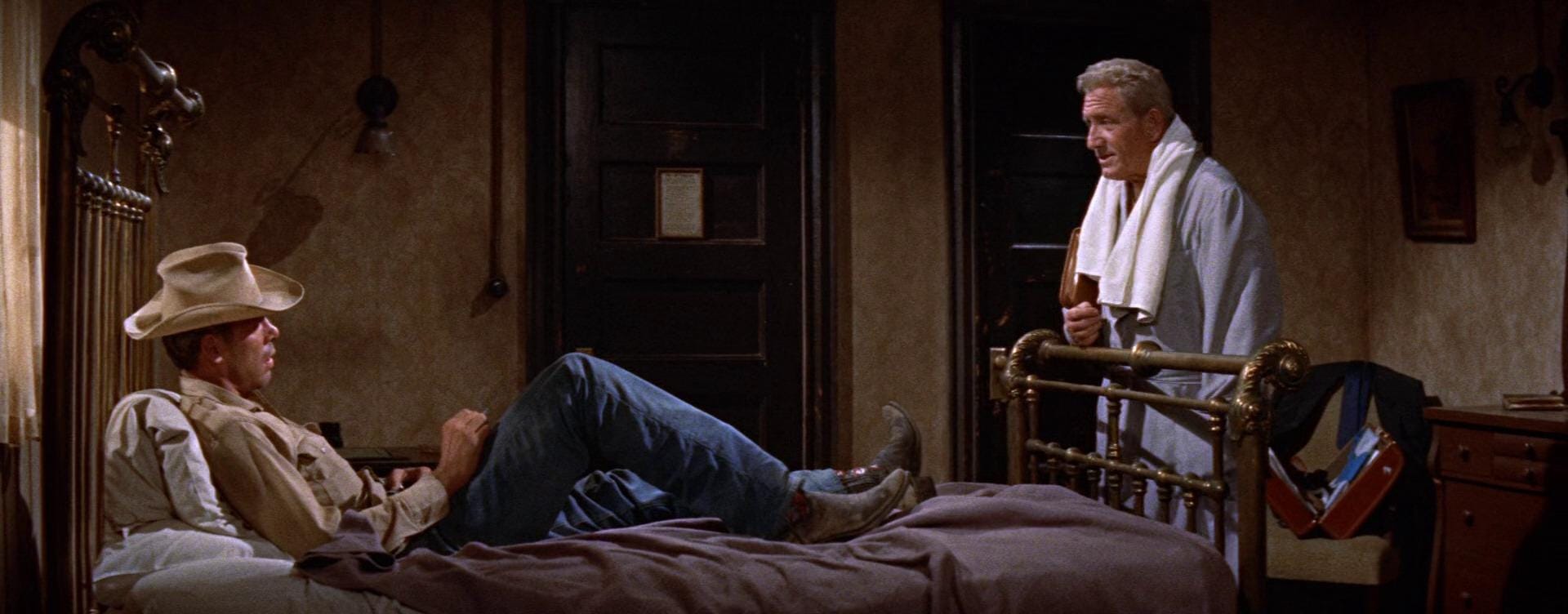
Macreedy exits the train, is given the side-eye by suspicious locals, and checks into the only hotel in town. Only a couple of minutes later, another crucial edit was made. Sturges again:
“In the full version of the picture, before we cut it down a little, and it was only cut down a little, the scene in the bathroom with Spence was to demonstrate that his arm was in fact useless. He had to lift it out, clean his nails, and put it back. That was a mistake. We didn’t have to demonstrate it was useless. It obviously was.”
I would argue that it obviously was in the script. Sturges’s statement would imply that Macreedy isn’t missing an arm, he just can’t use it. But cutting this relatively small bit of exposition (how long could this have taken? 20 seconds? 30?) has split audience interpretation for decades: in his contemporaneous review of the film, Bosley Crowther references Macreedy’s “lame arm,”3 while Pauline Kael refers to Macreedy as “one-armed”4 36 years later.
No one seems to know if Macreedy has a disabled arm, or no arm at all. Without seeing it, we begin to wonder. I began to think his arm was a diversion, that he’d pull a gun out or was pretending at his disability. By not letting us into Macreedy’s head, or even his day-to-day manicure routine, the edit doubles down on the ambivalence of the new title sequence. This edit welcomes us to lean in and become more engaged with this mysterious dude. It makes us want to know more about him rather than giving us everything all at once.
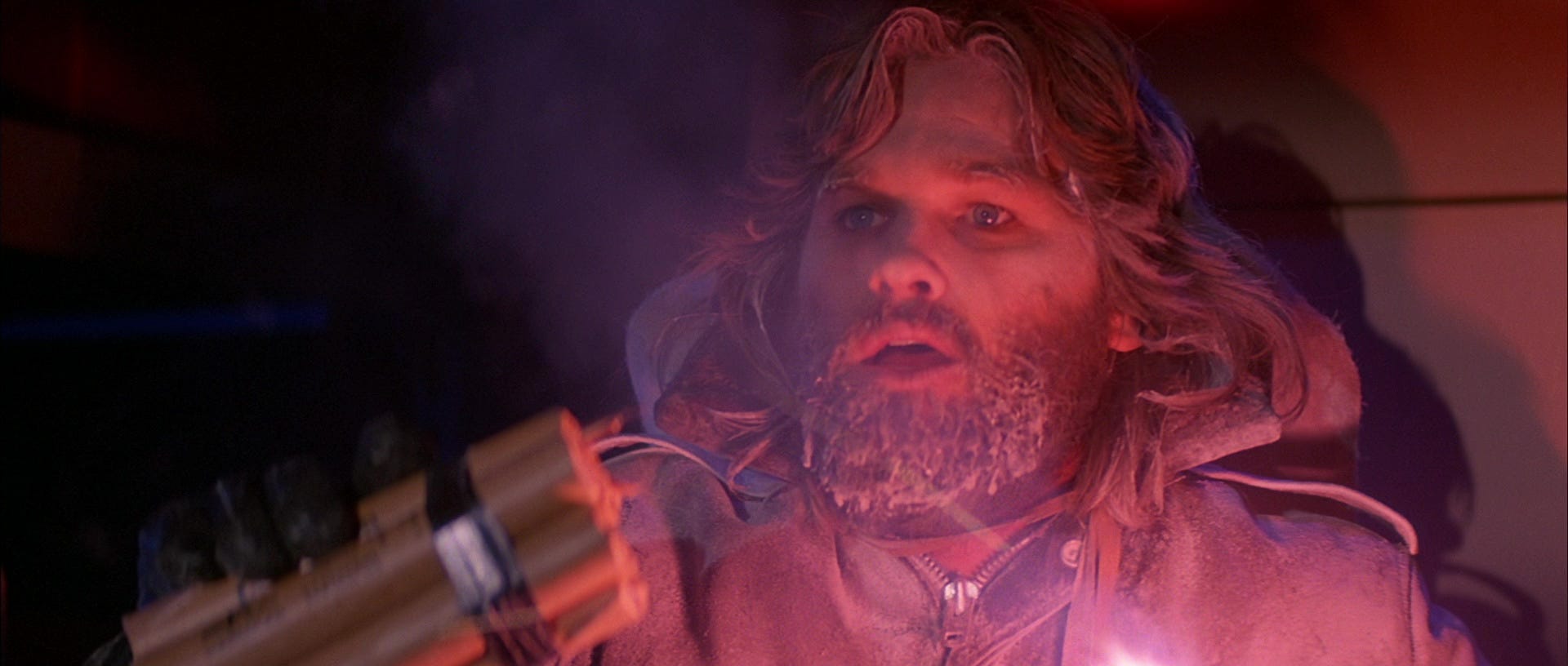
The Thing also builds suspense by withholding key information about MacReady. For example, we lose sight of MacReady after Nauls abandons him in the snowstorm. When MacReady eventually makes his way back inside we, like the other men holed up in US Outpost 31, don’t know if he’s been assimilated. Is he human or alien? We have to decide for ourselves.
A moment like this is obviously scripted - editor Todd Ramsay didn’t cut 30 seconds of Kurt Russell (not?) being an alien - but the effect is the same: we wonder. And like his spiritual predecessor, public opinion on MacReady has been split for decades.
The success of Black Rock’s edit stems from two things. First, Sturges knew the value of a good editor, namely Newell P. Kimlin:
“When I left Metro and became an independent, the one thing I took with me was the editor there, who was their top guy. And I tripled his salary. Put him on the contract, said you’ll never regret it. You’ve got to have these guys. Invaluable.”
AGREED Mr. Sturges. Second, he approached the shooting and staging with an editor’s eye. A former editor himself, he learned a key lesson while cutting for George Stevens:
“The trick to cutting is like the trick to staging. It's reactive. Cary Grant used to tell me, one time I was working as a cutter on Gunga Din. He said, ‘Let the other fellow have all the jokes. I just want to be the fellow that reacts to them.’ He knows exactly what he was talking about.”
This ethos made me think of the biggest laugh in The Thing, when Norris’s spider-head scurries away in the background, completely terrifying and totally ridiculous. But the laugh isn’t at the spider-head. It’s at the reaction. And just like Cary Grant, Kurt Russell doesn’t even deliver the joke. The entire scene - script, camera move and edit - is built around letting him stay silent and react.
We’ll leave it there.
Next week: our SPLICE WORLD DOUBLE FEATURE continues with a deep dive into the edit of The Thing. Until then, I’ll take a cue from Cary and Kurt and let the other fellows have the last word - in this case, John and Alfred:
“Film is reactive. What counts is what your players react to. So if you go past your principal actors and what’s happening, then you cut back on that actor…automatically you’re cutting off what happened to see how it affected him. That’s the name of the game in films. Hitchcock said it all. “Cutting means the ability to make an audience feel what you want them to feel by the reaction of somebody to something.”

Joe Peeler is a Sundance award-winning director and editor who writes about the art of making movies through the lens of film editing.
SPLICE WORLD. The world of movies, y’know, spliced.
“You can learn more from John Sturges’s audio track on the Bad Day at Black Rock laserdisc than you can in twenty years of film school.” - Paul Thomas Anderson.
No posts
Comments
Nothing yet. Say the first thing.
Sign in to join the conversation.