
Bleak House, Charles Dickens’s masterpiece, was published in 20 monthly installments between 1852 and 1853. An indictment of the corrupt oligarchy then misruling England, it still resonates 173 years later in our own troubled times.
BH was the featured novel at this year’s Dickens Universe. The Universe is a unique, week-long conference sponsored by the Dickens Project at UC Santa Cruz every year since 1980. It brings together the leading scholars of the long 19th century, who focus on Dickens’s relationship with the world system of the British Empire as well as on the specific novel chosen for that year, with lay readers who love Dickens and are eager to discuss him and his era with passion and learning of their own. There were 250 of us this year.
Two lectures especially stood out among the brilliant scholarly talks (which, as a criterion of the speakers’ being asked back, must be jargon-free and intelligible to lay people) as readings about the present as well as the past.
Barbara Leckie, a professor at Carleton University, taught us to read BH in the context of both the environmental devastation being wreaked by the industrial revolution on England’s once green and pleasant land and our current climate crisis. BH famously begins by depicting London’s deadly miasma of smoke, fog and mud:
LONDON. Michaelmas term lately over, and the Lord Chancellor sitting in Lincoln’s Inn Hall. Implacable November weather. As much mud in the streets as if the waters had but newly retired from the face of the earth, and it would not be wonderful to meet a Megalosaurus, forty feet long or so, waddling like an elephantine lizard up Holborn Hill. Smoke lowering down from chimney-pots, making a soft black drizzle, with flakes of soot in it as big as full-grown snowflakes—gone into mourning, one might imagine, for the death of the sun. Dogs, undistinguishable in mire. Horses, scarcely better; splashed to their very blinkers. Foot passengers, jostling one another’s umbrellas in a general infection of ill temper, and losing their foot-hold at street-corners, where tens of thousands of other foot passengers have been slipping and sliding since the day broke (if this day ever broke), adding new deposits to the crust upon crust of mud, sticking at those points tenaciously to the pavement, and accumulating at compound interest.Fog everywhere. Fog up the river, where it flows among green aits and meadows; fog down the river, where it rolls defiled among the tiers of shipping and the waterside pollutions of a great (and dirty) city. Fog on the Essex marshes, fog on the Kentish heights. Fog creeping into the cabooses of collier-brigs; fog lying out on the yards and hovering in the rigging of great ships; fog drooping on the gunwales of barges and small boats. Fog in the eyes and throats of ancient Greenwich pensioners, wheezing by the firesides of their wards; fog in the stem and bowl of the afternoon pipe of the wrathful skipper, down in his close cabin; fog cruelly pinching the toes and fingers of his shivering little ‘prentice boy on deck. Chance people on the bridges peeping over the parapets into a nether sky of fog, with fog all round them, as if they were up in a balloon and hanging in the misty clouds....The raw afternoon is rawest, and the dense fog is densest, and the muddy streets are muddiest near that leaden-headed old obstruction, appropriate ornament for the threshold of a leaden-headed old corporation, Temple Bar. And hard by Temple Bar, in Lincoln’s Inn Hall, at the very heart of the fog, sits the Lord High Chancellor in his High Court of Chancery.
The many characters peopling the crowded world of BH are all enmeshed in the both the literal poison of the smoke spewing from coal fires and factory smokestacks and the epidemics that spread from the toxic filth of the poor’s neglected tenements to the country houses of the rich and powerful, and the plague of heartless cruelty and exploitation spread by a triumphant capitalism. They are also entwined in the deadly web of delay, corruption and injustice spun by Chancery, the court of last resort for family disputes, where cases are never resolved and the inheritances being fought over there are eventually entirely dissipated by legal fees. It’s where Jarndyce and Jarndyce, the case at the heart of the novel, drones on and on.
Chancery embodies the sclerotic, dead hand of the aristocracy and its rotten boroughs and the failure of Parliament to address the twin plagues of disease and immiseration wrought by industrialization and the untrammeled greed and unbridled power of an outmoded, corrupt and unaccountable bureaucracy and its ruling class.
What can be done? When everybody and nobody is at fault—when it is the “system” that triumphs over all and imprisons everyone in its iron cage—how can individuals act in solidarity to change things?
Leckie makes us see Dickens’s ambivalence as a reformer nonetheless terrified of popular insurrection, sensitive to his characters’ everyday complicity in blindness and indifference to suffering yet aware of their seeming powerlessness, as a telling commentary on our own failures to act in the face of global warming, technological disruption, and emergent fascism. Can kindness, common decency and the desire for a better life ever coalesce into a mass movement for change that avoids the Scylla of tyranny and the Charybdis of too little, too late? (Can’t avoid those Odyssey refences these days.) BH gives us a way of asking those questions rooted in the lived experience of past generations yet evocative for our own.
The other lecture that really hit home was Amy Wong’s on “China’s Bleak House.” Wong, a professor at Dominican University, showed us clips from “Petition,”surreptitiously filmed in China by Zhao Liang between 1996 to 2008 and released in truncated form in the West in 2009. It follows families from the provinces who travel to Beijing to petition the State Bureau of Letters and Visits for relief from erroneous decisions by local courts. The petitioners have no legal right to housing in the city, and live in miserable shantytowns near the South Railway Station, waiting for their cases to be heard.
In BH:“Innumerable children have been born into [Jarndyce and Jarndyce]; innumerable young people have been married into it; innumerable old people have died out of it… The little plaintiff or defendant who was promised a new rocking-horse when Jarndyce and Jarndyce should be settled has grown up, possessed himself of a real horse, and trotted away into the other world. Fair wards of court have faded into mothers and grandmothers, a long procession of Chancellors has come in and gone out; the legion of bills in the suit have been transformed into mere bills of mortality… [and] Jarndyce and Jarndyce still drags its dreary length before the court, perennially hopeless.”
In “Petition,” we follow petitioners at the Bureau’s tiny, overcrowded office as they are shuffled from one unfeeling, unseen bureaucrat shielded behind iron grates to another, then from one location to another, then back to where they started, for years. Only two-tenths of one percent of the cases are ever resolved. In one family, a girl who comes to Beijing with her petitioner mother as a grade-schooler reaches adulthood and, in despair, returns to her home village while her mother stays behind, still seeking reparations for her unjustly accused and jailed husband, now long dead. The establishing shot at the beginning of the film is a modern evocation of the beginning of BH: a panoramic vista of Beijing swathed in a toxic fog that occludes the skyline and causes persistent coughing fits among the shantytown residents.
The film ends in 2008, when the petitioners’ shantytown is razed to make way for a gleaming new railroad station in time for the 2008 Olympics, and they must seek shelter elsewhere, where tourists won’t see them. Heartless cruelty has not diminished in the 173 years since Dickens wrote his blistering epitaph for Jo the crossing sweeper, one of BH’s ill-fated misérables: “Dead, your Majesty. Dead, my lords and gentlemen. Dead, right reverends and wrong reverends of every order. Dead, men and women, born with heavenly compassion in your hearts. And dying thus around us every day.”
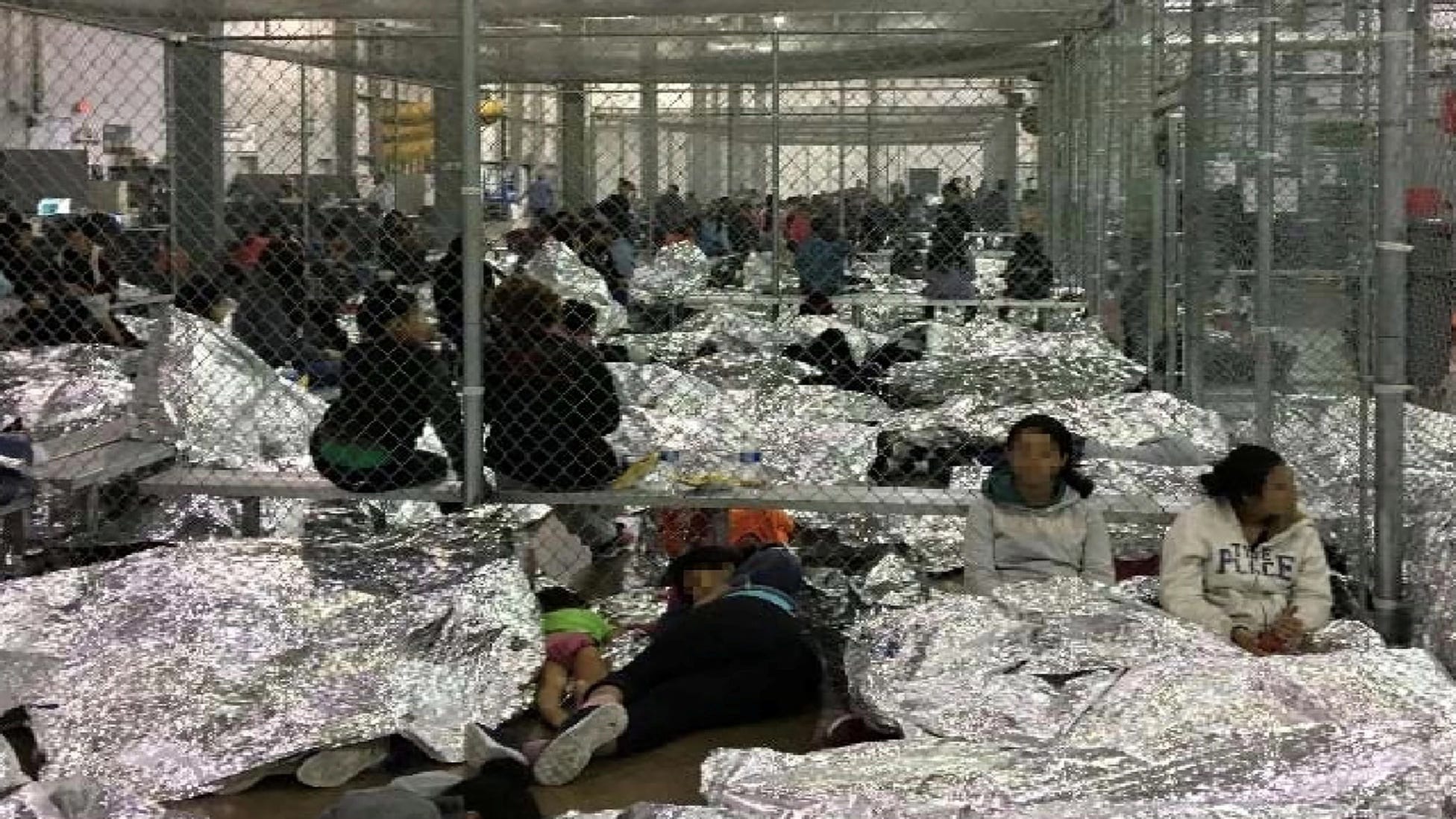
So it still goes, in a United States now dotted with concentration camps for immigrants and under the sway of a mad would-be king whose armed paramilitary hunts—and sometimes kills—victims with impunity. Can we make a difference this time? BH is a cautionary tale, but one that offers a modicum of hope as well. It’s up to each of us to fulfill that promise of compassion we have the capacity for, and to act on it together.
Credits to Austin Kocher and Public Notice respectively, for the reporting. Photo courtesy of Reuters.
No posts
Comments
Nothing yet. Say the first thing.
Sign in to join the conversation.