
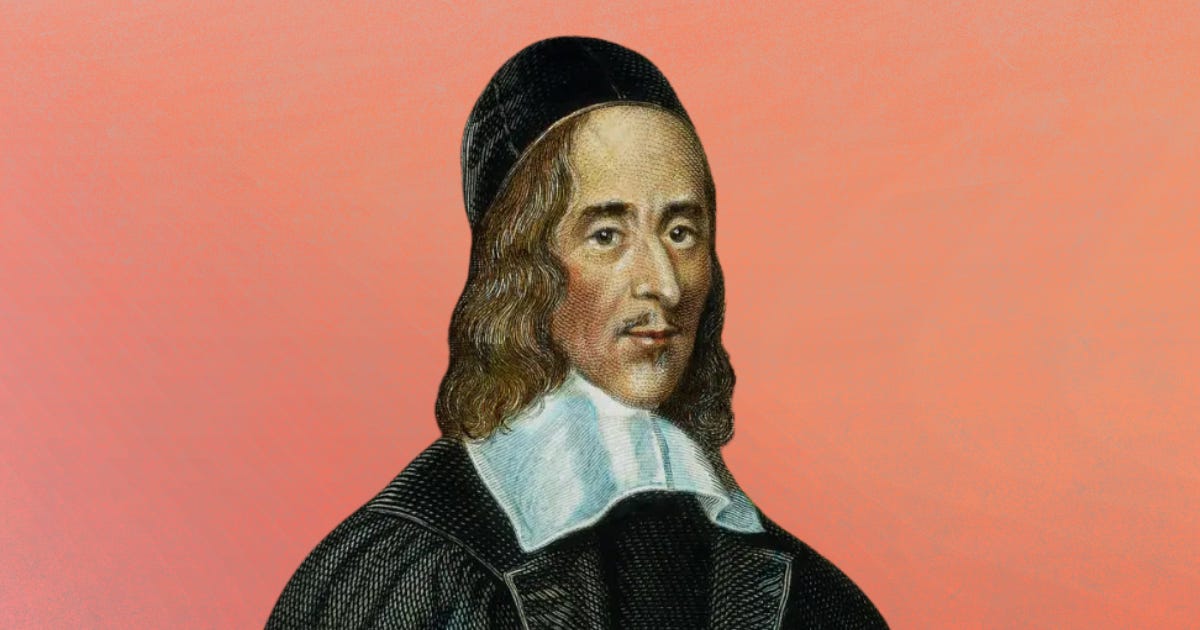
George Herbert (1593-1633) embodies a certain kind of English and Anglican temperament marked by quiet dignity, self-restraint and a lack of showiness. It has much greater depth than appears on the surface; elegant, but in a rather homely way. England, and its Christianity, has its share of show-offs and self-publicists, but George Herbert is not among them. Instead, he channels a kind of discretion.
His is – or at first appears to be – a rather homespun, lowly, kind of faith. He expresses himself modestly, and his poems – the medium through which most of us know him (sometimes as hymns) – can seem startlingly ordinary. Certainly they describe ordinary things and familiar situations; they breathe the air of domesticity – of homes and hearths, and parlours and dining rooms. Along with the local parish church, these are the places where God comes and visits us – or, rather, the places we find God already to have been waiting for us until we noticed his presence already there.
George Herbert’s God shares some of his own discretion and self-restraint – although, of course, he would have seen it precisely the other way round. We ourselves are bidden to nurture a modesty of spirit and lowliness of heart – genuine humility – because that is how Jesus Christ himself comes among us, emptying himself in the form of a servant – but thereby meriting the greatest glory of all (cf Philippians 2.6-11). For George Herbert, the glory of God gently warms our hearts and quickens our souls like sunlight shining through the clear-glass windows of a country church – and it is the layout of that church, its fixtures and fittings, the prayers and praises which fill it week by week, which becomes the template for his great cycle of poems, The Temple.
Starting at the church door and working their way to the altar, these poems culminate in an account of the Holy Communion which is one of the most exquisite poems ever written: ‘Love bade me welcome’. It is this quiet embrace in the welcome of Jesus Christ whom we did not at first recognise, but who bids us set aside our sense of guilt and shame, to receive his ministrations as we sit and eat of bread and wine, described in terms which are completely ordinary but also as exalted as could possibly be. We would be mistaken not to notice the subtle brilliance of such a poem – this combination of the earthly and the heavenly in so profound but unself-regarding way, always refusing to draw attention to itself. Instead, it becomes a vehicle for describing the beauty of God.
The poems themselves model the character called forth in us who read them, just as they offer a kind of commentary on the Prayer Book which guides our public and private devotions. It is a truly remarkable achievement – but it always draws our attention away from itself and back to God.
In this way George Herbert is a quintessentially pastoral theologian, even if the plants and the creatures of the churchyard and the countryside beyond it are implied more than they are described. His poems capture perfectly the ambience of the church itself – but it is a church which is grounded in the same pastoral landscape that appears more directly in the poems of a slightly later Anglican poet, Thomas Traherne (1636/7-1674) – poems in which the sun shines with an effervescent radiance; the grass and the flowers shimmer with iridescent almost other-worldly colour; everything is suffused with a quietly ecstatic joy – where the heavens declare the glory of God; and the firmament sheweth his handywork (Psalm 19.1, Book of Common Prayer). George Herbert is more understated, but he knows the same kind of spiritual delight and transport of thanksgiving.
This ‘homely glory’ never forgets that we have fallen and continue to make mistakes: it remains mindful of the faults and failings which mar God’s image and likeness within each one of us. But it never demands of us to be other or better or greater than we really are – it is honest and reasonable, even in its deep moral and spiritual integrity. It trusts in God’s power to make good his promises within the constraints of who and how we are. Would that the same honesty, integrity, and humble discretion marked more of us today. That this need not be combined with any lack of exuberance and joy can be proved in what may be the best-known poem of them all:
Let all the world in every corner sing,
My God and King.The heavens are not too high,
His praise may thither fly:
The earth is not too low,
His praises there may grow:Let all the world in every corner sing,
My God and King.The church with psalms must shout,
No door can keep them out:
But above all, the heart
Must bear the longest part:Let all the world in every corner sing,
My God and King.
I love the way Nicholas invites us in to find George Herbert’s poetry is still accessible across the generations. For many of us, his poetry is at the periphery of our consciousness; an old friend, worth the re-acquaintance.
And of all his poems, I would agree that ‘Love bade me welcome’ is the most outstandingly beautiful.
LOVE bade me welcome; yet my soul drew back,
Guilty of dust and sin.
But quick-eyed Love, observing me grow slack
From my first entrance in,
Drew nearer to me, sweetly questioning
If I lack’d anything.‘A guest,’ I answer’d, ‘worthy to be here:’
Love said, ‘You shall be he.’
‘I, the unkind, ungrateful? Ah, my dear,
I cannot look on Thee.’
Love took my hand and smiling did reply,
‘Who made the eyes but I?’‘Truth, Lord; but I have marr’d them: let my shame
Go where it doth deserve.’
‘And know you not,’ says Love, ‘Who bore the blame?’
‘My dear, then I will serve.’
‘You must sit down,’ says Love, ‘and taste my meat.’
So I did sit and eat.
As I was writing this piece, one of my friends and a priest in the Church in Wales, told me simply that this poem gave her the courage to take communion for the first time. Five months after coming to faith from a tumultuous personal situation, she still felt too guilty and shamed to dare to receive the bread and wine in church.
In her words: “I found George Herbert’s poem kept drawing me in”… “I kept saying I am too guilty to take Holy Communion.” But through the poem it was as if Jesus were saying to her: “I see you. I know what you’ve done. I love you. Come and taste”. And so she did. George Herbert’s poetry sliced through her shame with surgical precision.
Then strangely enough, when she had finally plucked up the courage to take communion, the actual service she chose to go to was totally in Welsh. “I couldn’t understand a word”. But the effect of taking communion floored her. She went to bed afterwards for 48 hours – “it was like a cleansing.”
On the day of my ordination as a priest, I woke to bright sun, blue skies and, unexpectedly, this verse from the Song of Songs in my head:
My dove in the clefts of the rock,
in the hiding places on the mountainside,
show me your face,
let me hear your voice;
for your voice is sweet,
and your face is lovely. (Song of Songs 2:14, NIV)
I was 31. I was pregnant. Not quite fitting into my jeans. Not fitting in to my stereotype of a priest in the Church of England. But ‘Quick-eyed Love … drew nearer to me, sweetly questioning if I lack’d anything.’
I am grateful to George Herbert; his poetry across the generations has welcomed many home.
George Herbert’s hymns and poetry point to the homely glory of God, accessible and present in everyday life, drawing us home. Invite God to open the eyes of your heart to his quick-eyed love and homely glory today.
“Let all the world in every corner sing” (George Herbert)
Get Your Copy Of 'Held In God's Gaze'

No posts
Comments
Nothing yet. Say the first thing.
Sign in to join the conversation.