
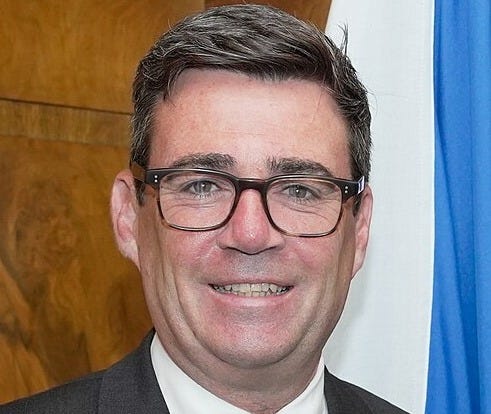
Andy Burnham has been prime minister for two weeks. It’s far too early for any comprehensive assessment of how he’s faring. But I think it’s been about as good a first couple of weeks as any new PM could hope for.
That hasn’t been a surprise to me. As someone who watched Keir Starmer in the 2020 Labour leadership contest I never thought he had what it takes to make a good prime minister. (Although I wouldn’t have predicted that he would have been tendering his resignation just two years after winning a huge majority.) In the run up to the 2024 election many people made the case that someone dry and incrementalist was exactly what voters were craving after the instability of the Boris Johnson/Liz Truss years. I was never convinced.
In contrast, Burnham is an able and authentic communicator with a gift for getting voters to like him. There is no world in which he was not going to be better than Starmer. There’s been some snark about how he can’t make tough decisions and how he likes to be liked too much to be an effective PM. I think that’s an odd critique to make of someone who has taken well-judged risks - leaving Westminster in the first place to become mayor of Greater Manchester, running for Parliament in a seat that was Reform’s to lose - and succeeded. He he’s made a savvy set of Cabinet appointments that were not just about handing his allies what they wanted. None of making John Healey chancellor while appointing Ed Miliband to foreign secretary, keeping Shabana Mahmood in the Home Office and Pat McFadden at the Department for Work and Pensions, and moving Wes Streeting to defence, signals that Burnham is going to be shifting the Labour government significantly to the left.
The first fourteen days have been a whirlwind of announcements. For me, there’s been a lot to like, some stuff to feel ambivalent about, and one intervention that does concern me and which I hope gets refined in the coming months.
To start with the obvious: Andy Burnham is really good at talking to voters; whether that’s in-person, via traditional media, or through social media. He managed to make a video about pub snacks with John Healey - an endeavour that would have been intensely cringey in the hands of most politicians - warm and watchable. Zooming out, his first two weeks has been a masterclass in No 10 getting a grip on the agenda and dominating the airwaves with the stories and the lines they want to be out there. Good strategic comms is not just the icing on the cake: without it, a government is nowhere, and this is a major part of what went wrong for Starmer.
The second thing I have found impressive is Burnham’s decision to run headlong into one of the most difficult social challenges of our time. There have been scores of independent commissions, reviews and government papers on social care over the last three decades. But the last politician brave enough to talk about socialising the care costs of an ageing society was one Andy Burnham, back when he was health secretary in 2010. That earned him a brutal Tory attack: in the run up to the 2010 election, Conservatives claimed a Labour government would introduce a ‘death tax’ in order to pay for free personal care at the point of need, on NHS principles.
A lesser politician who had been burned in this way would do exactly what Keir Starmer did and shove it into the ‘too difficult’ box: the review Starmer commissioned from Baroness Louise Casey was not due to report until just before the next general election. Instead, Burnham has said he wants to look at collectivising the costs of social - completely the right thing to do, given the unjustified difference in state support for those unlucky enough to get cancer, and those unlucky enough to get dementia, and has brought Louise Casey’s work forwards. That he is so prepared to grapple with a tough public policy challenge - to which there are no easy answers, just difficult trade offs - suggests he is an unusually brave and bold politician of the sort we desperately need in these times.
The third admirable thing he has done is make clear that he does not think we should be talking about legalising assisted dying until the desperate state of social and palliative care is sorted out. Assisted dying is a subject that invokes strong feelings. Burnham has made positive noises about it in the past; as someone who used to be a supporter, I am now against it because I don’t think it is possible to legalise medically-assisted suicide without posing dangerous risks to vulnerable people, including people who are suffering abuse and coercive control, people who are disabled, and people who are not currently well served by the NHS or the state.
Wherever you sit on the principles of legalisation, however, there was much to dislike in Starmer’s dishonest approach to getting a bill over the line: from hinging everything around a promise to a celebrity that he would make the time for the debate, to leaving it up to a private member’s bill that was riddled with problems and which no royal medical college decreed safe, and claiming his government was ‘neutral’ on the idea while backbench MPs were well aware of what their leader and Prime Minister wanted to happen. It showed an extraordinary lack of political judgment that Starmer thought delivering something as complex and risky as assisted dying should be a priority for his government, given all the other challenges the country faces. So it is hugely welcome that Burnham has effectively kiboshed the bill with what he said: it is now highly unlikely to pass.
Last, Burnham has expressed concerns about Starmer’s plans to restrict access to trial by jury and indicated that they may also be on the way out. I wrote about why these plans were so ill-conceived here. If he does decide to scrap them - and it’s looking that way - good riddance to a set of reforms that would have increased the risks of miscarriages of justice while only generating very marginal efficiency savings for the justice system.
I find it hard to get massively enthusiastic about Burnham’s plans for English devolution. On the one hand, it is true that the UK is both one of the most highly-centralised, and also one of the most geographically unequal countries amongst the world’s wealthy democracies. Devolution has helped drive economic success for Manchester, and it might well deliver similar benefits for other big city-regions. I’m sceptical, however, that devolving powers over transport, education and other public services and allowing local areas to keep a proportion of income tax revenue, as has been suggested, is going to create an evenly-distributed economic miracle across the country. Not least because the areas that have the most tax-raising capacity are those which are already economically dynamic. I’m also not sure there is huge public appetite for a radical devolution of power in every part of the country. I’m a fan of Number 10 North though: it makes sense to have an outpost of the prime ministerial office outside of London, in a way that makes it easier to employ people who live outside of the capital and so bring a greater diversity of perspective to the heart of government.
The announcement I’ve been least enamoured with has been on vocational and technical education. There is no question that vocational and technical education has been under-prioritised in England. I’ve also questioned the wisdom of the expansion of an expensive university sector in which young people feel huge pressure to go university in order to get their foot in the door for careers that require a degree as a basic minimum, but there is so little accountability for how universities spend vast sums of young people’s future earnings.
But every politician since the year dot has vowed in some form or another to bring about ‘parity of esteem’ between academic and vocational qualifications. I highly recommend this Substack by Dasiy Christodoulou on this.
In a nutshell: the way to get parity of esteem is to create robust, stretching vocational and technical qualifications, and the way not to do it is to shunt children and young people being failed by the education system into vocational education at the age of 14 because of a misplaced belief that this will be a magic wand for their life outcomes.
I think there are three key issues in the education system:
The number of children and young people being failed by the education system - including the ‘long tail’ of young people who leave education without functional literacy and numeracy, and the inadequate levels of support available for children with special educational needs.
Relatedly, the socioeconomic gap in attainment between children from more and less affluent backgrounds - a gap that was closing before the pandemic, but which then started widening again.
The over-reliance on the university system to act as a bridge to work post-18 - and the huge lifetime financial burden this places on many young people. It would be better if there were high-quality options that allowed people to study and work at the same time post-18, and did not involve racking up tens of thousands of pounds of debt for degrees, some of which will be of questionable value in terms of skills formation (and we don’t know which ones are which - because universities effectively mark their own homework in awarding their own degrees).
As Daisy argues, it’s not clear what creating a vocational/technical route at age 14 does to address each of these. And it is important that the government makes clear it is not going down the route of the Scottish and Welsh curriculum reforms: both nations have in recent years pursued ‘progressive’ skills-based curricula that underemphasise knowledge, and which have negatively impacted educational standards particularly for children from disadvantaged backgrounds.
There are important tests yet to come for Burnham: I will be watching keenly how he approaches the protection of women’s rights in the face of gender identity ideology, and the draft conversion practices bill which might just beat the assisted dying bill as a piece of badly-designed legislation. But overall, Burnham’s first two weeks have left me feeling more optimistic about politics than I have in a long time.
No posts
Comments
Nothing yet. Say the first thing.
Sign in to join the conversation.