
Architecture taught me that every structure is a decision about who belongs inside it.
There is a particular quality of attention that architects develop early and carry everywhere: the ability to read a brief for what it doesn’t say.
A client presents requirements — floor area, budget, programme — and underneath, something else is being asked.
How should this place make people feel? What should it signal to the street? What kind of future is it trying to hold open?
The drawing is always a hypothesis. The building, when it arrives, is a commitment. Architects love saying this kind of thing. We say it a lot.
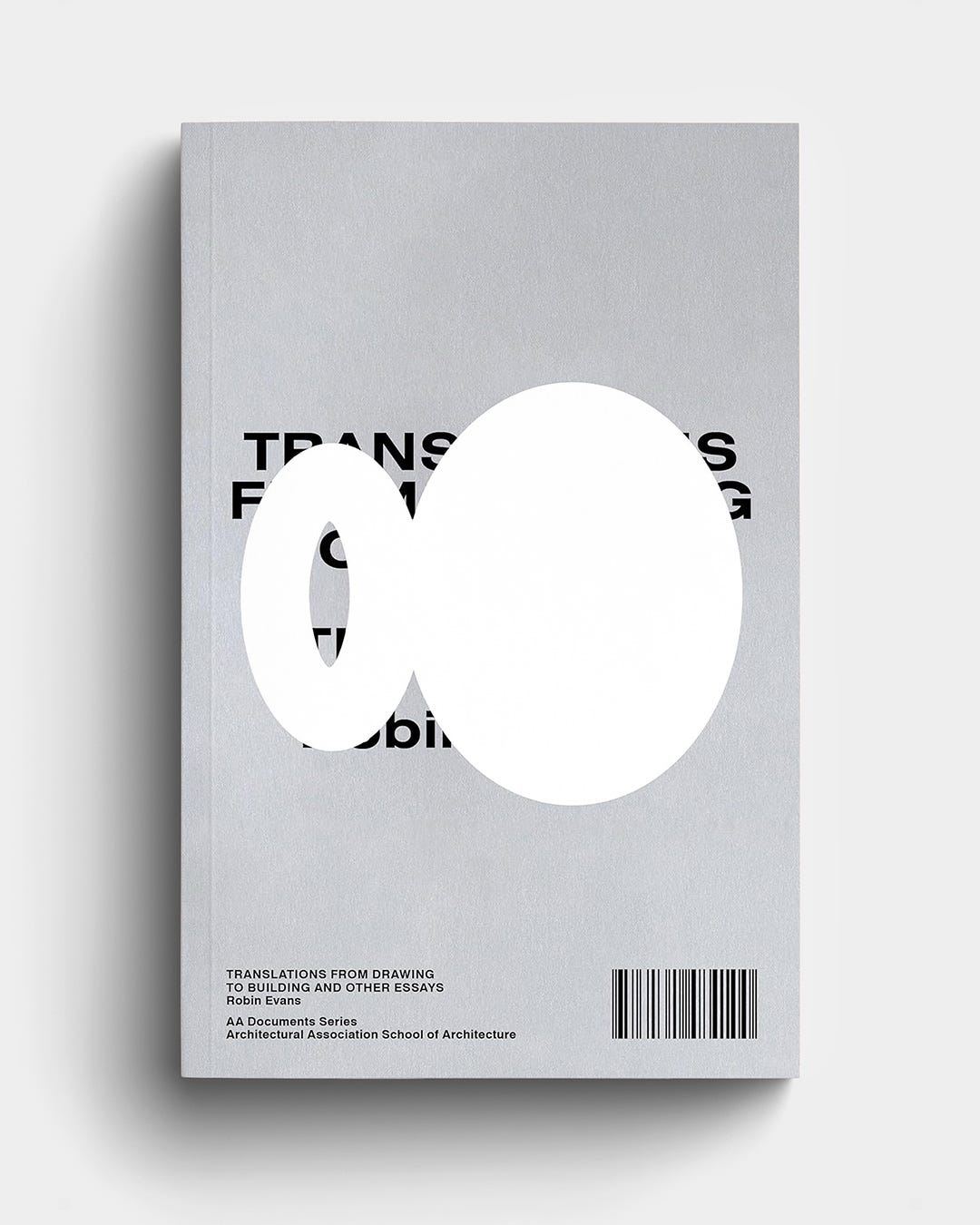
I’ve been thinking about this in the context of capital. About the people who deploy it — and whether they read briefs the same way.
Early in my career, I worked on a primary school in one of Melbourne’s more disadvantaged suburbs. The project moved between two funding streams: concentrated capital from government sources, and distributed capital raised through local effort. Both were necessary. Neither was sufficient alone.
What I understood then, working through the gap between what the budget allowed and what the community needed, was that capital isn’t neutral. It has a point of view. It determines which ideas find footing and which remain drawings.

The school became something the brief hadn’t asked for directly. Designed as a walled city, its outer wall, banded in colour and silhouetting the skyline of housing and industry around it, was both enclosure and invitation. It reflected a community’s present while holding its future open.
The question I’ve carried since: who holds the brief for the futures that don’t yet have a business case?
Capital is an author. It decides whose drawings become buildings.
Concentrated capital moves fast. It reshapes markets, abstracts quickly, and lifts decision-makers above the ground they’re reshaping. Distributed capital does the opposite: it spreads agency through cooperatives, communities, local experiments. It stays close to context but rarely scales.1
A school is an unusual brief. It asks you to design for futures that cannot yet articulate what they need — and to hold that open long past the point where a business case could be made. Dallas Brooks CPS was exactly that. What the capital couldn't cover, the design had to.
What neither model asks often enough is the question English architects Alison and Peter Smithson spent a career pressing: what kind of life does this make possible?2
Robin Hood Gardens, their 1972 social housing estate in east London, was underfunded from the outset, controversial on arrival, and demolished in 2017. And yet the argument they made — that architecture carries an obligation to the future it makes possible, not merely the brief it answers — has outlasted the building entirely.
The brief for the future is worth holding even when the structure doesn’t survive.
With democratic institutions visibly under strain, the choreography of capital accelerates into the space politics vacates. The question of who holds the brief has rarely felt more material.3
This is what drew me to SDR Capital — a London-based family office built on the conviction that venture capital can amplify overlooked voices, not merely scale familiar ones. The brief asked for a position, beyond a logo: a way to move through capital without being absorbed by it. The full project is here.
The work of design and the work of capital resemble each other more than either profession tends to admit.
Both begin with a reading of what isn’t yet visible. Both require holding a brief past the point of comfort. Both are exercises in deciding which futures deserve to exist — then building the structures that make them legible to the world.
The difference is accountability. A building has to stand. It exists in public, subject to weather and time and the people who move through it. Capital can remain abstract long past the point where its consequences are concrete.

Architecture taught me that the gap between the drawing and the building is where most of the real decisions happen. The ones that determine whether the thing you make serves the brief, or merely satisfies it.
The drawing is still a hypothesis. The question is who gets to make it.
Thanks for reading.
Feel free to share drafts— with someone who might appreciate a quiet read.


Jacobs, Jane. The Death and Life of Great American Cities. Random House, 1961. Galbraith, John Kenneth. The New Industrial State. Houghton Mifflin, 1967.
Smithson, Alison and Peter. Ordinariness and Light. Faber, 1970. The Charged Void: Architecture. Monacelli Press, 2001.
Chomsky, Noam. Understanding Power. The New Press, 2002.
Comments
Nothing yet. Say the first thing.
Sign in to join the conversation.