
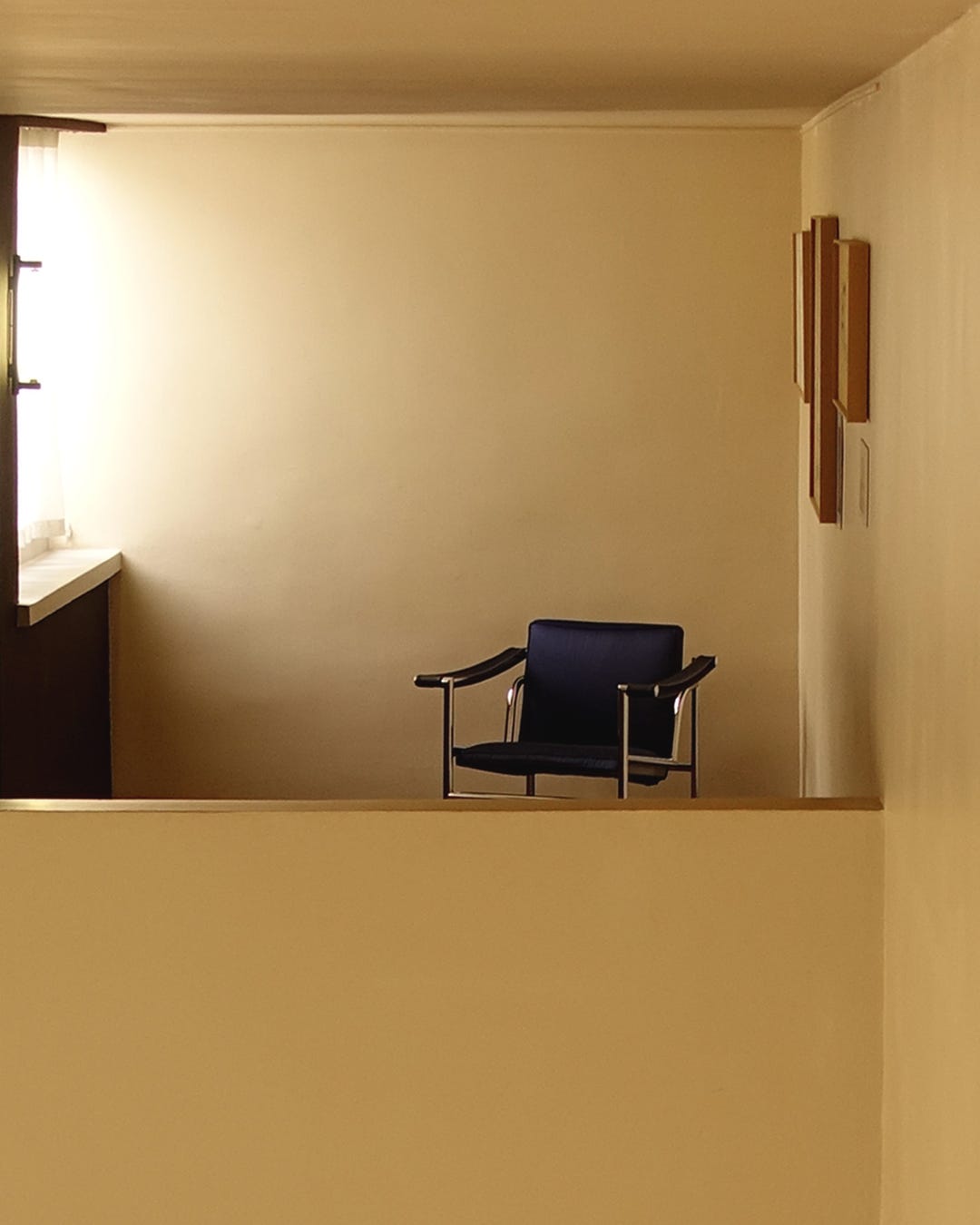
There are rooms that remember us.
A grandmother’s kitchen, a childhood bedroom, the café corner where years dissolved into notebooks. More than mere settings, these places are mirrors reflecting who we were, holding fragments of who we still are. The French philosopher Gaston Bachelard, in The Poetics of Space (1958), suggested that intimacy is spatial. Our identities take shape in the contours of rooms, the shadows of staircases, the corners where we staged entire childhood kingdoms. Space cultivates how we live and move. It forms us.
But intimacy, once held by walls, is now exposed to the feed. Homes stretch into offices, studios, warehouses—carefully staged backdrops for lives we curate online. The kitchen is no longer only for cooking; it doubles as a set for Zoom calls, a flatlay surface for Instagram. Cities densify and splinter, leaving less room for the kind of private reverie Bachelard described.
Text within this block will maintain its original spacing when published
When space becomes a commodity—or worse, a performance for the algorithm—what happens to the selves it once sheltered?

Look around: boutique laneway apartments promise “character,” but compress life into cupboard-sized footprints. Co-living start-ups sell “community” with suspicious smoothness, sanding away the texture of individuality. And online, Pinterest boards and Zoom backdrops attempt to announce taste and aspiration, while eroding the ambiguity of self—the subtle messiness of simply being human. The intimacy Bachelard imagined is being replaced by simulation.
As our physical spaces shrink, the pressure to express ourselves elsewhere grows. Homes, offices, and public realms, when compressed or staged, push architecture towards shorthand. Identity is flattened into signals: taste, status, brand. Spaces perform for us. Rarely do they nurture.
And yet, tension is generative. It’s in these compressed moments that restlessness surfaces, for people and for brands alike. I recognise this restlessness. The sudden urge to chop your own fringe. To start something. To make inner truth meet outer expression. Design, at its best, answers in silence. It translates friction into form. Sometimes it even transforms the way we move through life.
Bachelard, ever the poet, offers a quiet sort of optimism. Even the smallest corner can hold possibility. When space grows tight, the self doesn’t need to disappear. It is refined. Depth, privacy, imperfection become luxuries. A borrowed desk, a stairwell, a shaft of light: modest sanctuaries, waiting to be remembered.
In the stillness of small spaces, there is always a part of us that can find a home.
Thanks for reading.
Hope this provided a mildly diverting pause from the noise.
Feel free to share drafts— with someone who might appreciate a quiet read.

Comments
Nothing yet. Say the first thing.
Sign in to join the conversation.