
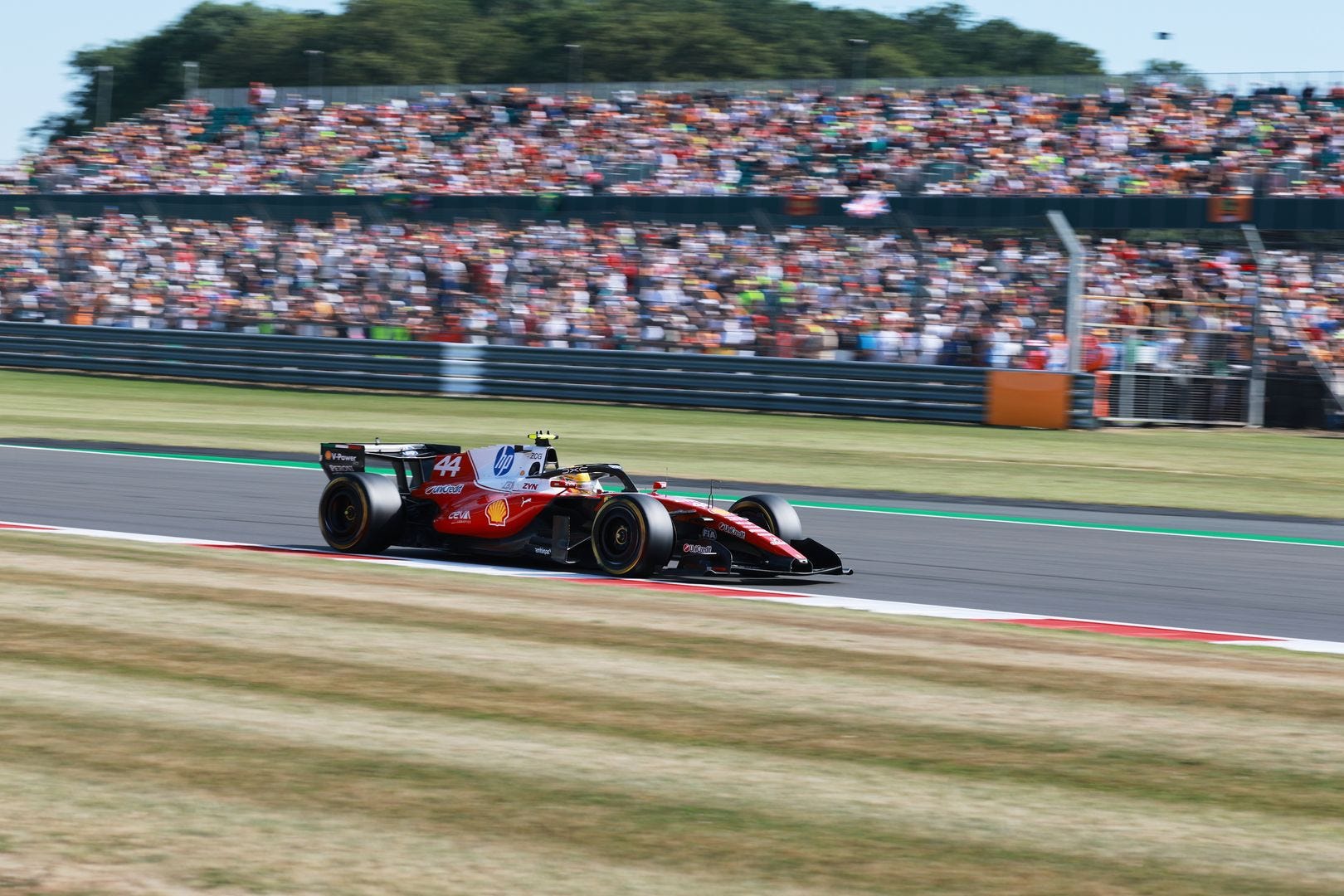
Don’t call it a comeback but, Ferrari seem to have the right momentum now, with Austria a blip that they’re just putting in the rear view mirror.
There’s still plenty to do though, with long run pace still a factor, especially as the circuit is always brutal on the tyres.
However, you could argue it’s the same for everyone and it will come down to who has made the right choices heading into the Sprint and Grand Prix.
For Ferrari those choices seem to have been made cleared by the tests that the team conducted in Austria, whereby they switched back to an older deflector array setup on the SF-26, before going back to the newer solution in qualifying and the race.
This, for many, seemed like a correlation test of sorts, at the time, with back-to-back work being done in conjunction with the arrival of a new front wing arrangement.

nicolas carpentiers@carpentiers_f1
Ferrari Tech: #AustrianGP 🇦🇹 vs #BarcelonaGP 🇪🇸 1️⃣ Front Wing Endplate: new diveplane & footplate vane arrangement to consolidate flow features and maximize load. 2️⃣ Floor Board: Single vertical element optimization tested in FP to improve aero correlation. #F1 #FerrariF1 #TechF1
9:54 AM · Jun 26, 2026 · 11.1K Views
3 Replies · 21 Reposts · 225 Likes
This new front wing specification was a subtle reoptimization of the one introduced as part of the big update package unveiled in Spain.
The main objective of which was to rebalance the distribution between the diveplane and footplate vane, with the latter being pushed further back.
The return to an older, seemingly more simplistic, deflector array solution might seem counterintuitive then, but I suspect it has more to do with what window they want the car to be in, with the team potentially switching back and forth between the two options based on circuit characteristics.
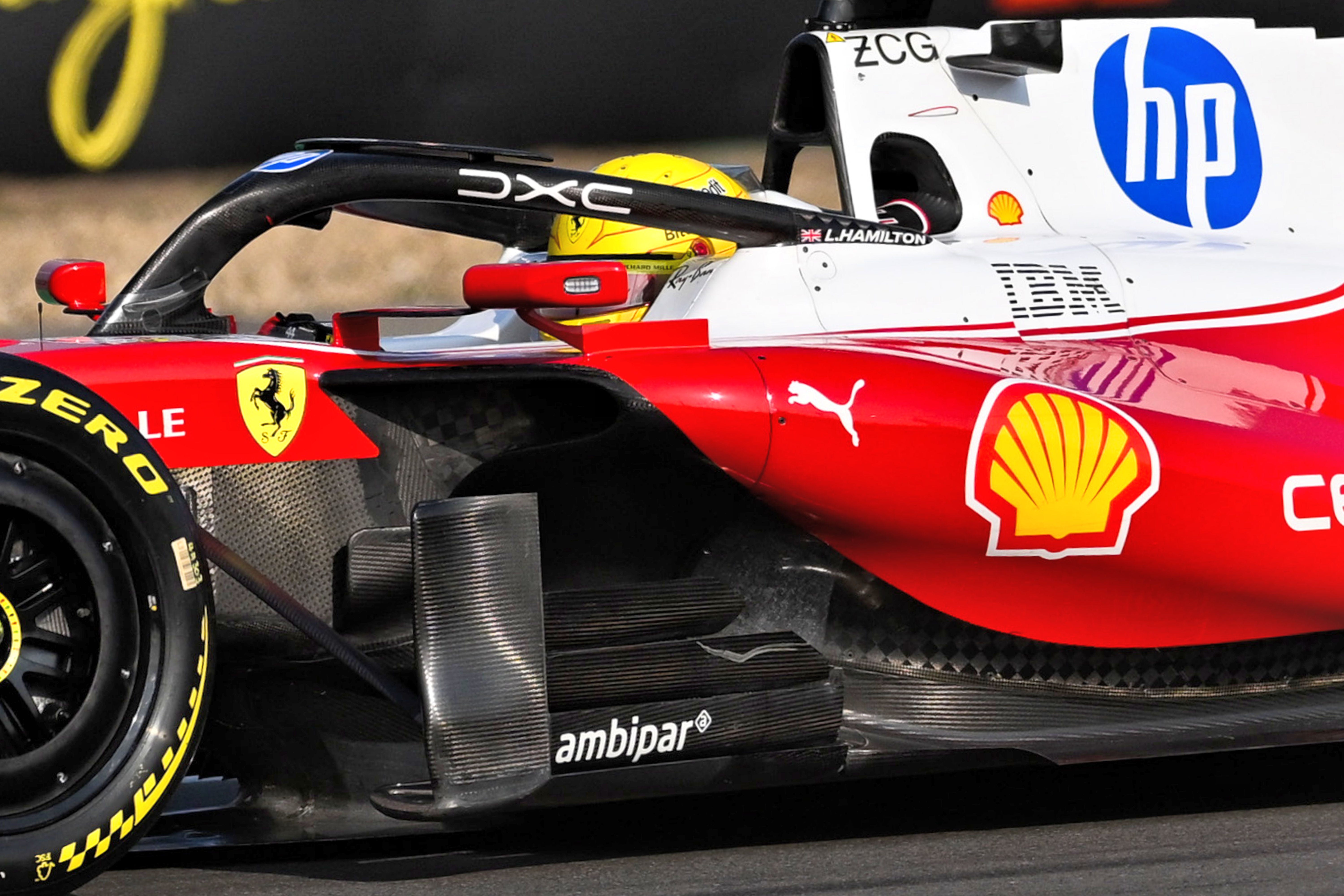
Also, the original design concept, as seen here, might look the same as the one used at Silverstone but I think there’s some subtle differences to the horizontal elements and how the deflector and floor foot interact.
I also assume this is why they entered it into record on the car presentation document in Austria, as there’s a sufficient difference compared with when the solution last raced in Miami.
That in of itself could be considered a clever ruse, as it then didn’t appear to be a new part, that might otherwise be put under the usual technical scrutiny by myself and others.
With all that in mind, I suspect that the aerodynamic work being done by this solution might be more conducive to the downforce and drag levels around Silverstone and other similar track configurations, whilst the more complex, three vertical element arrangement could return at others.
nicolas carpentiers@carpentiers_f1
#FerrariF1 has revamped the SF-26's rear wheel bodywork for Silverstone #TechF1 #BritishGP #Leclerc #Hamilton https://t.co/oFi8jVwN2s


nicolas carpentiers @carpentiers_f1
#FerrariF1 has revamped the SF-26's rear wheel bodywork for Silverstone, focusing on the brake ducts and winglet arrangement. 🛠️ While rear brake ducts primarily cool the carbon discs via convection, they also serve a crucial dual aerodynamic purpose... 👇 #F1 #BritishGP #F1Tech
5:49 PM · Jul 2, 2026 · 11.7K Views
2 Replies · 19 Reposts · 199 Likes
The other seemingly confusing aspect of their Silverstone ‘update’ is the changes made to the rear brake duct.
Ordinarily, you’d expect teams to reduce their brake cooling for a circuit like Silverstone, as there’s far less duty being performed by the brakes, something which is even more perplexing when we consider how little the brakes are being used this year.
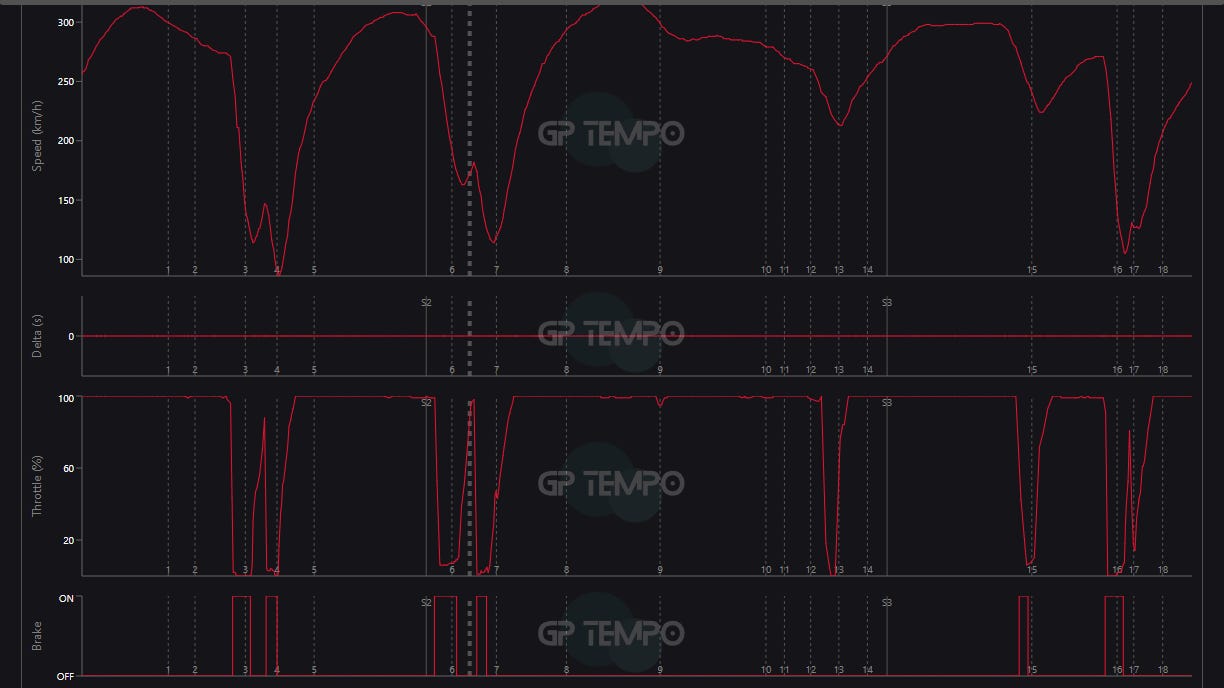
If we look at Hamilton’s pole lap for the Sprint, we can see that the Brit didn’t touch the brakes, at all, between T7 and T15, using downshifts and throttle application to fulfill that role, as the MGU-K sets about the task of recovering energy along the way too. (I’ll caveat that this was on the softs, he did brake at T13 on the mediums earlier in the session).
Now, don’t get me wrong, looking through the data, Hamilton was by no means the only one doing this but, it then further begs the question, why more cooling?
This could be Ferrari’s masterstroke though, as I suspect the reason for that additional cooling (both the inlet and outlet has been opened up) has little to nothing to do with keeping the rear brakes cool and everything to do with optimising rear tyre temperature.
Afterall, whilst the cool air will enter the brake duct and circulate around that assembly, it will also help with the temperature interchange that occurs between the wheel rim and the bulk temperature of the tyre.
We know, from past experiences at Silverstone that it has a habit of munching through tyres, such are the loads being exerted and if you’re able to keep the tyres in a better window throughout the course of the lap it makes those high load sections of the track much less difficult to manage.
If you’ve made it this far I’m pretty sure you must be enjoying the content I’m providing here on substack, if so please be sure to subscribe in order you get it delivered straight to your inbox.
Check out these other articles from the British Grand Prix so far too…
Comments
Nothing yet. Say the first thing.
Sign in to join the conversation.