
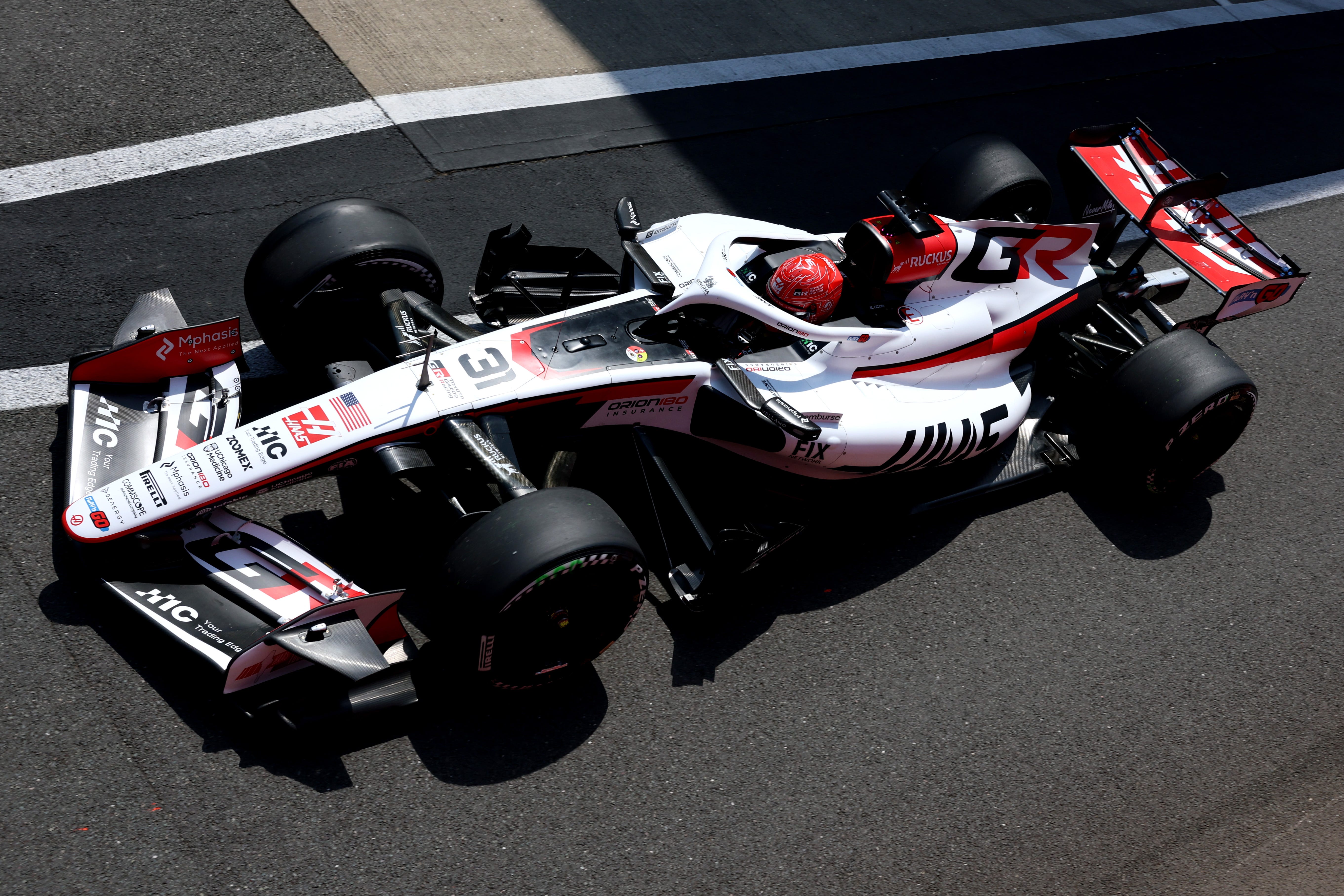
Haas have arrived at the British Grand Prix with a completely overhauled rear wing arrangement, which not only takes design cues from their rivals, but weaves those concepts into their own design DNA.
One of the most distinct differences in the two wing specifications comes in the form of the endplate redesign.
The new solution, shown on the left, below, features the upwash strikes that we’ve become accustomed to seeing over the course of the last few years.
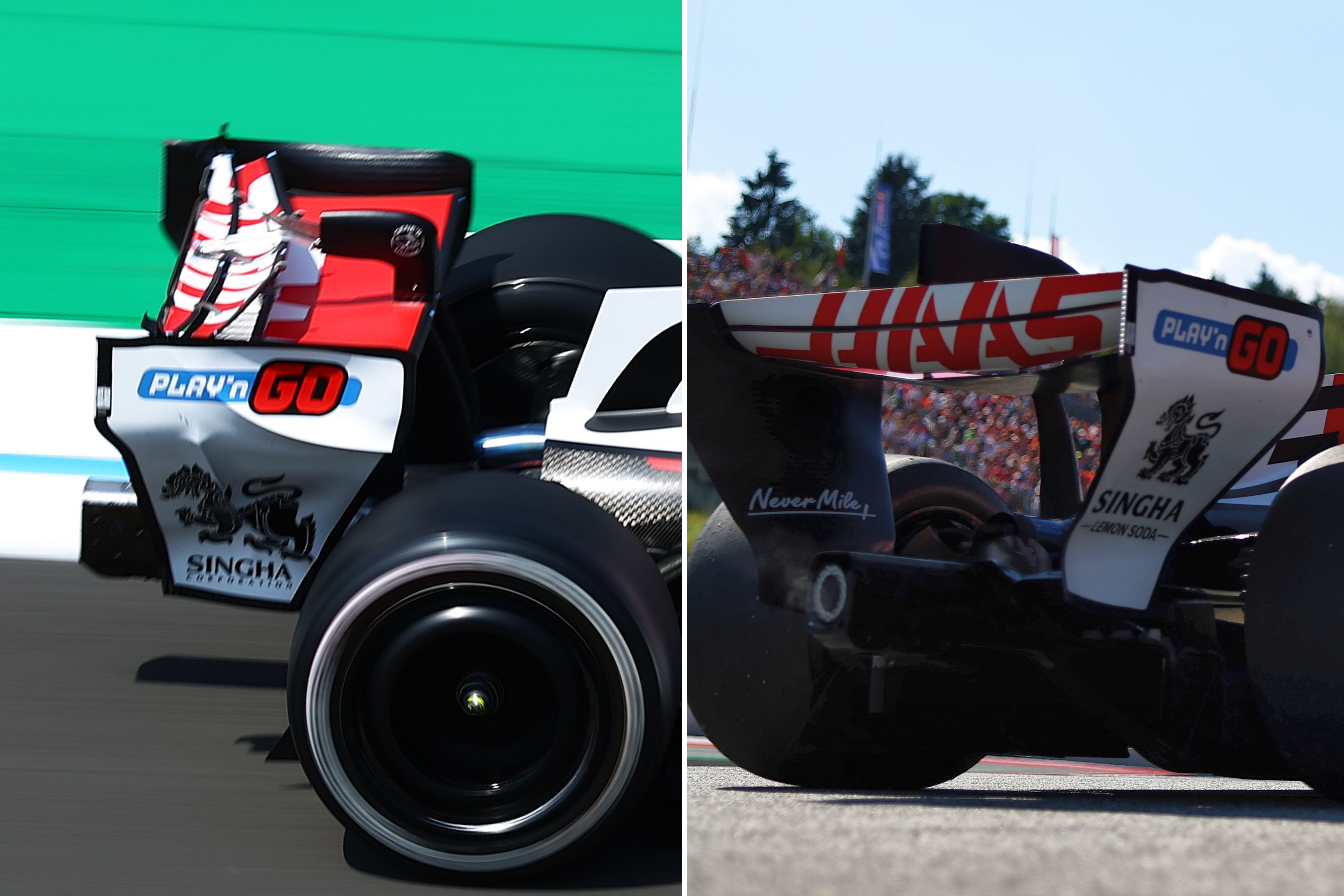
These strikes help to alter the airflow’s trajectory, not only directly but also in combination with the the structures spilling off the surfaces in their orbit, such as the rear brake duct winglets, for example.
The strikes and the flow structures being generated are also impactful in terms of the relationship they’ll have with the tip vortex, something that’s going to be affected by the other changes that Haas have made to their rear wing this weekend.
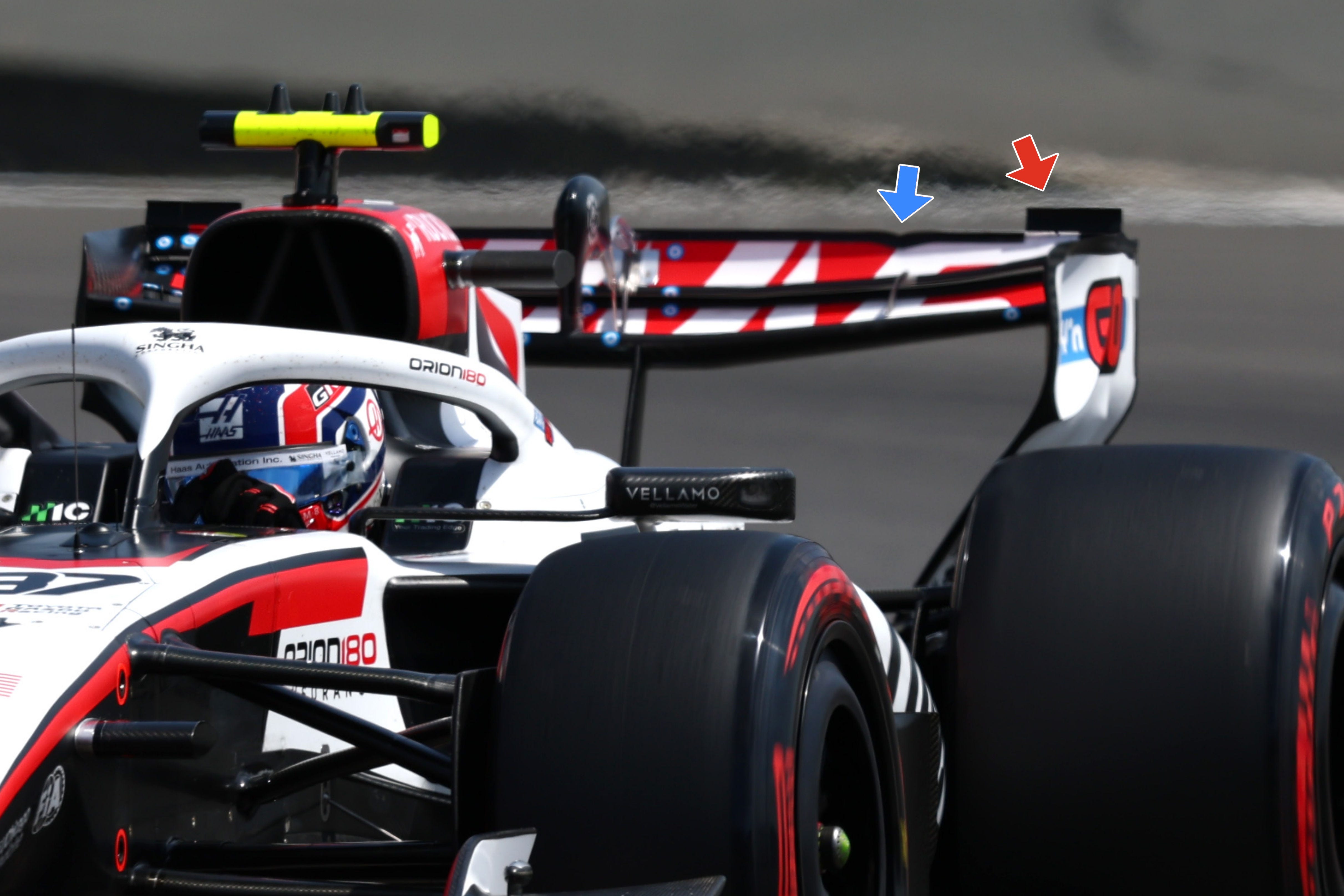
This includes the addition of the rear wing ‘rotation brackets’ in the outermost corner of the upper flap (red arrow), which create an extension to the flap and were first seen on the Mercedes eariler in the season.
To help increase efficiency, Haas have also added a small V-shaped notch in the trailing edge of the upper flap, which is a feature that became commonplace around the slot gap seperators that teams had to fit a few years ago.
This is likely paired with the change in sloping profile that the leading edge of the upper flap has undergone, with overall chord length of the upper flap reduced, whilst the outboard section now has a more gradual taper.
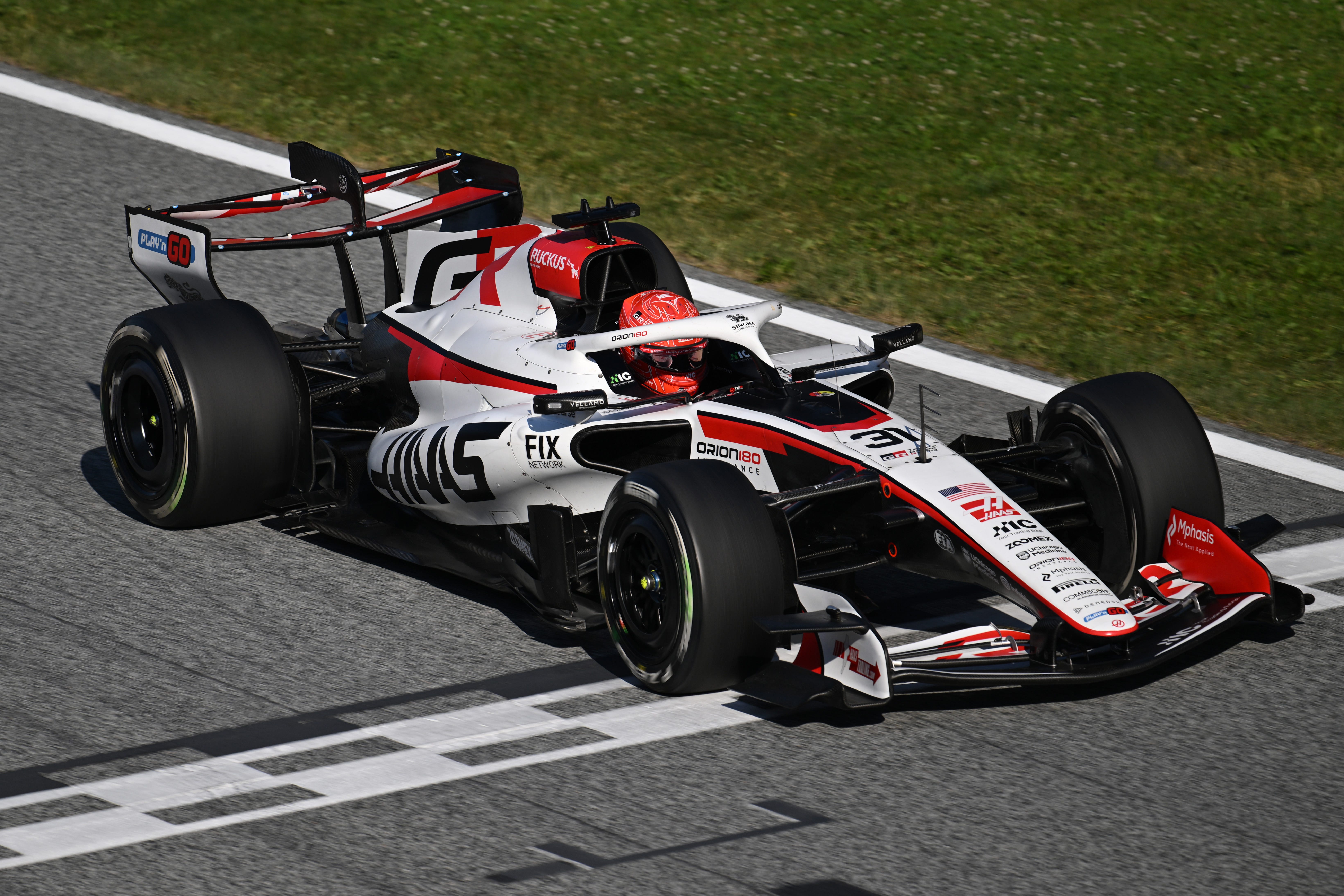
Of course, we must also remember that any changes made here will have an impact on the effectiveness of straight-line mode, as seen here on the old specification of wing at the Austrian Grand Prix.
If you’ve made it this far I’m pretty sure you must be enjoying the content I’m providing here on substack, if so please be sure to subscribe in order you get it delivered straight to your inbox.
Check out the other articles from the British Grand Prix so far too…
Comments
Nothing yet. Say the first thing.
Sign in to join the conversation.