
Hi everyone, and welcome to our newest subscribers. Great to have you along!

A few weeks ago, I asked if you would take a minute or two to complete the Soil & Roots Spiritual Formation Survey. Thank you to all of you who have already done so!
If you haven’t yet taken 2-3 minutes to complete it anonymously, click here to do so today.
We’d love to hear your heart and thoughts about your discipleship journey.
This is the last week we are offering the survey,
so make sure to submit your responses!
Complete the Soil & Roots Survey
We’ve been exploring the spiritual journey through a somewhat unique lens. As it turns out, the human person features both conscious and unconscious elements, as well as visible and invisible forces.
If we wish to become people of depth, we acknowledge that there will be times in our lives when digging into these mysterious places will be good and necessary.
We function on a type of “operating system.” As we navigate our way through life, various biological systems function in the background. As it turns out, non-physical forces are also powering us from behind the scenes.
Among those forces are ideas: assumptions, principles, and conclusions that sit in the hidden corners of our hearts, quietly governing how we operate in the world.
An idea is not really an intellectual conclusion - it is an experienced reality.
Thus, ideas may not be greatly affected by the intake of information. They are more formed through relationships and experience.
Ideas and beliefs are not always the same thing. Though the biblical concept of belief points to a fully embodied trust and loyalty, our modern Western cultures tend toward a concept of belief centered on intellectual acceptance.
It is essential that we wrestle with ideas, as they are central to our discipleship journey. If we wish to be formed more like Jesus, to increasingly think, act, relate, and love as He does, both our conscious and unconscious selves need discipling.
We are currently exploring some of our ideas about God. So far, we’ve touched on the ideas that God is not really good and that God is partial.
And we are currently, gently looking at the idea that God doesn’t really like us.
Again, if we were to ask any well-meaning follower of Jesus if they believe that God is good, impartial, and delights in us, they would rightfully insist that those are all true. Yet our hearts often reveal that they don’t agree, usually through what I call the Eight Indicators: our thought patterns, emotions, behaviors, words, relationships, health, time, and money.
If, for example, we intellectually assert that God views us and treats us as sons and daughters, even as friends, yet we discover we routinely disparage and condemn ourselves in our thought life, we’ve uncovered a disconnect between our beliefs and ideas. Our minds agree that God relishes us as His family, while our hearts don’t experience that reality.
Speaking of reality, there is a principle at work here that is worth noting as we examine our ideas of God. Counselor Jim Cress often says, “Mental health is a commitment to reality no matter the cost.” I think spiritually healthy formation follows the same maxim - it’s a commitment to what is real, to what is intellectually and experientially true, no matter what.
When we function from a set of false, harmful ideas about God, others, ourselves, or the world, we are, in effect, operating in a false reality.
If you’ve ever attempted to help a victim of abuse who continually returns to their abuser, you’ve seen this phenomenon in action. The victim’s heart has often been so wounded and conditioned by harmful ideas that they are unable to see or function in the world healthily. They may, at times, mentally agree that suffering abuse is wrong, but their hearts are molded in a set of experiential assumptions that often overpower the mind.
Often, the best method of rescue is to invite the victim into a safe, trusted community where their hearts’ ideas can be reshaped through new relationships and experiences. Over time, the victim “awakens,” as the truth of their abuse and abuser travels the 18 inches from head to heart.
It’s not enough to tell them, over and over again, that their abuser is harming and exploiting them. They must experience a different type of person, a different type of relational reality, often for long periods.
That same dynamic, though usually in less dramatic ways, applies to many of us in our relationships with God. We may be told that He loves us. We may sing about it, read about it, teach it, and defend it. But if our hearts have been shaped by disappointment, religious performance, shame, fear, or spiritual abuse, the information may not reach the place that needs healing.
The mind may nod politely while the heart stays hidden in the corner.
Though our post-modern ethos demands that we consider truth and reality as non-existent or personally determined, experience suggests otherwise.
As philosopher Dallas Willard used to say, truth is “what we humans run into when we are wrong.” We may insist that gravity doesn’t exist until we try to jump off a cliff.
I’m not sure why our age has concluded that spiritual, emotional, and relational reality don’t function the same way as the very real laws of the physical universe.
We may insist that resentment will not corrupt us, but eventually we run into the truth. We may conclude that chronic isolation will not deform us, but eventually, we bump into the truth. We may hope that the relentless pursuit of approval will make us secure, but eventually, we come face to face with the truth.
If God’s like is true, then to live as if He only tolerates us is to live in a false reality of our own creation.
So, back to the idea of God at hand: if spiritual formation is a commitment to what is real, to what is true, no matter what, what is real about the like of God?
As I noted last time, by “like,” I mean that God genuinely enjoys being with us. He takes delight in us. He welcomes our presence and desires our company. He is not merely tolerating us until we become better people. He doesn’t accept us reluctantly, but rather joyfully. He wants our good, our flourishing.
I’m not sure any fair reading of either or both of God’s books (the Bible and creation) could reveal anything but a God who really, really likes us. Have you seen any of those videos of otters floating around on their backs, playing with their hands while enjoying the current? I mean, c’mon.
Jessica and I were visiting friends who live on a lake that features a nature preserve. We marveled at the zebras, ostriches, camels, and all sorts of other creatures wandering around the open fields. The sheer detail, diversity, and animation of these animals were staggering. They certainly seem to exist as a delighted expression of a divine creative “like.”
Jess is a plant-lover, and, at last count, our house is home to over 100 indoor plants. Every Saturday, she waters and cares for them, and she very often runs into my office to show off some new bud, sprout, or flower. It certainly seems that God likes my wife and has provided an infinite number of potted opportunities to show her just how much.
Creation does not feel like the work of a God who merely tolerates existence. It feels like the overflow of a God who enjoys, delights, adorns, and plays.
Of course, creation is also groaning. There is suffering, death, decay, and quite a few insects I’d rather not meet. We are not pretending the world is untouched by evil or immune from grief.
But even in a groaning world, beauty keeps breaking through. Color shows up. Laughter often breaks out at funerals amid caring, memorable stories. Flowers pop up through the concrete. Otters keep being cute.
The world is sometimes a battlefield, but it is also a love letter.
We know this at the human level, don’t we?
A child may be fed, clothed, sheltered, corrected, and educated, and yet still wither inside if they are not enjoyed, if their family doesn’t seek to know them.
Human beings do not simply need provision. We need delight.
We need the experience of someone lighting up when we enter the room. We need to be known and still wanted. We need to sense, in the hidden places of the heart, that our presence is not a burden.
This is one reason the idea that God does not like us is so damaging. It does not merely affect our “quiet time” or our theological confidence. It distorts the way we inhabit and perceive reality. If the deepest Person in the universe is perpetually disappointed in me, then I will learn to hide, protect, or disappear from myself and everyone else.
But if the deepest Person in the universe delights in me, then an entirely different kind of life becomes possible. I can, perhaps for the first time, relax.
And as Benner reminds us, surrender involves relaxing, and we must feel safe before we can relax.
Perhaps this is why the like of God matters so much. It is not sentimental; it is not to be ignored in light of more “serious” doctrines. It is one of the relational, experiential realities for which the human person was made.
If God’s like is true, if it is real, then we are invited into a bit of self-exploration. If my mind believes that God likes me, does my heart agree? Do I live in the reality that He wants to be with me, to share Himself with me, to enjoy my company?
After studying ideas, anthropology, and theology on this topic for the past five years, I’ve become convinced that the first step into deep discipleship is the willingness to ask this type of question. It is, in some way, an awakening to the reality that our beliefs may not align with our ideas.
Let’s go back to David Benner’s diagnostic:
“Imagine God thinking about you. What do you assume God feels when you come to mind?”
Author Tony Stolzfus suggests other similar questions:
“Jesus, what do you like best about me?”
“How is my life significant to you?”
“Jesus, what are you praying for me right now?”
If those questions feel easy, wonderful. Sit with them.
If they feel awkward, offensive, or impossible, it may be an invitation to pay attention. That resistance may be your heart offering one of its most honest responses.
Don’t scold yourself or rush on. Don’t numb it with a Bible verse or a theological explanation. Simply notice it with God.
My mind says God delights in me. My heart is not so sure.
Perhaps deep discipleship begins, not when we finally get our act together, but when we finally allow Jesus to meet us in the hidden place where our hearts still wonder whether He enjoys us.
And perhaps, over time, in prayer, in Scripture, in creation, in trusted community, and in the ordinary experiences of life with God, the truth becomes something we not only agree with, but something we experience.
Duc In Altum
Brian
Updated resource: This article has been expanded and combined with two later essays into a fuller evergreen guide: Why We Assume God Is Disappointed in Us.
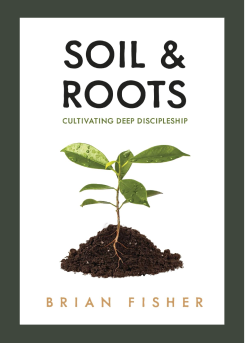
Perhaps you’ve heard of it, because I’ve only mentioned it here a few hundred times. If you’d like a simple primer on deep discipleship and the desperate need for small, healthy, safe, formative communities, check it out.
Comments
Nothing yet. Say the first thing.
Sign in to join the conversation.