
(Disclaimer: Opinions expressed are solely my own and do not express the views or opinions of the Singapore-based social service and non-profit organisations with whom I work or consult.)
Across the first days of GE2025, all political parties unanimously agree on one thing – that a trade- and globalisation-dependent Singapore is vulnerable, as tensions between China and the United States (US) intensify.
Where the parties differ – based on the opening salvos launched by party leaders – are their assessments of how Singaporeans have fared in the past five years, as well as their visions of what the Singapore parliament and government should look like, so that the country is best-positioned to meet those looming international threats.
For the ruling People’s Action Party (PAP), given the wide-ranging and adverse effects of the COVID-19 pandemic, it hasn’t necessarily been “the best of times” since 2020. However, prime minister Lawrence Wong is asking voters to keep their faith, to both look back and take a longer view, respectively, of the internationally recognised success of “the Singapore story” and the PAP’s plans for the future. On the other hand, with inflationary pressures and the rising cost of living, the opposition parties are arguing that it’s truly been “the worst of times” for the average Singaporean.
The Singapore Democratic Party (SDP) is unequivocal that the PAP and its ill-advised policies are to blame. That the ruling party has gone wrong and its ministers are oblivious to Singaporeans’ everyday struggles. The Progress Singapore Party (PSP) and Workers’ Party (WP) don’t disagree with the SDP. Yet they explicate a more nuanced message – perhaps unsurprisingly, given their parliamentary representation and track record in parliament – that they’ll definitely not form the next government. Instead, in a PAP-dominated 15th parliament, diverse opposition MPs, as a “loyal opposition,” are needed to counter “groupthink.”
Frustratingly, because it has been an electoral tale of these two general versions of Singapore, any substantive discourse on policies has mostly stopped at: “Read our ostensibly detailed manifestoes!” Thus far, party leaders seem content to talk over each other, rather than with one another. For me, in this remaining week of campaigning, the heavier responsibility falls on Mr. Wong and his PAP to set the engagement terms over specific socio-economic issues and policies of interest. The party has introduced dozens of new candidates, some of whom could be political office holders. Can they speak more substantively about issues and policies? Or take up challenges to debate policy?
Furthermore, if we accept Mr. Wong’s premise that a sizeable political opposition is determined, here to stay, and desires growth, I’d like to hear him share, from the PAP’s perspective, the role of the opposition in parliament.
To start, Mr. Wong’s party political broadcast on April 25 was largely similar to his April 24 kick-off speech, during the PAP rally for Marsiling-Yew Tee GRC. Delivering a standard stump speech is part and parcel of most political campaigns globally, though his is becoming a tad too templatised and too formulaic. His speeches start with wary proclamations of a dangerous world, before turning to the PAP’s historically strong and stable stewardship. “This election comes at a time of profound global change. A storm is coming upon us,” the prime minister warned, and he emphasised that these were not exaggerations or attempts at fear-mongering.
With tariffs and trade barriers, the world is becoming more turbulent. The risk of a recession cannot be ruled out, Mr. Wong added. It is not the PAP versus the opposition, but the little red dot that is Singapore versus a world that is “dangerous,” “troubled,” “contested,” and “fractured.” Therefore, it is against this tumultuous global background that the prime minister explains his need for a good team to not only continue fighting fires, but also plan ahead by reviewing and updating policies.
That the PAP would seek to capitalise on a rally-round-the-flag effect was predictable for many, including Prof. Cherian George of the Hong Kong Baptist University. He wrote, at the start of GE2025:
“In ordinary times, it is hard for the government to educate Singaporeans about Singapore’s vulnerabilities in a global economy. Donald Trump is doing the PAP a favour. This year, there is no need for the PAP to explain supply chains, interest rates, and the invisible forces of global competition. The havoc being unleashed by the most powerful man in the world is as visible as Godzilla rising out of the Singapore Strait in some monster movie.
In this environment, the PAP may be exceptionally successful in projecting itself as able and trustworthy guardians of a safe haven in a dangerous world.”
To Mr. Wong’s credit, he’s gone beyond mere references to global threats as well as Singapore and PAP exceptionalism. When acknowledging concerns over the cost of living and employment, his go-to anecdote is Budget 2025-related, that the average Singaporean family with two young children will receive about $5,000 in comprehensive financial support this year. Furthermore, he’s alluded to aspirations for children, youth, and working adults, and to policies on affordable public housing and preventive healthcare.
Conversely, when you listen to the first two rally speeches made by SDP’s Chee Soon Juan (April 24 and 25), he paints a different, more negative picture of the past five years. Dr. Chee laid out examples demonstrating the government’s “profligate spending,” such as on the Founders’ Memorial. He also criticised the PAP’s insistence to raise the GST – alongside other increased utility, transportation, and healthcare expenses – despite the financial hardship experienced by Singaporeans. “The PAP raises the GST and then tells you that it is giving you vouchers to help you cope with the increased GST,” he added.
Overall, the SDP secretary-general is holding the PAP government responsible. “Here in Singapore, we have the potential, we have the talent, we have the energy to do big things.” He concluded: “The only thing that’s stopping us is the PAP squatting on top of all that happens on this island and hoarding front and centre of everything we do.”
Thanks for reading socialservice.sg! This post is public so feel free to share it.
The PSP and WP – more specifically, their party leaders – have taken a slightly dissimilar rhetorical approach. During his party political broadcast, PSP founder and chairman Tan Cheng Bock described PSP’s role as a “loyal opposition that proposes constructive alternative policies.” Given that it is impossible for the party to form the government, they will instead push and help the government by offering diverse and constructive views. Even more concretely, the party takes pains to highlight the respectable performance of its two NCMPs in the 14th parliament.
Additionally, at his kick-off rally speech on April 24, Dr. Tan stressed that the PAP of today “has lost its way,” with the party’s candidates and MPs increaingly susceptible to groupthink.
WP secretary-general Pritam Singh has also echoed Dr. Tan’s notion of serving as a “loyal opposition.” During his party political broadcast, Mr. Singh started with an explicit message that his party will not form the next government. Rather, WP candidates are qualified and viable because they can handle municipal and town council affairs, speak freely on topics in parliament, and help build for the future.
At his kick-off rally speech on April 24, Mr. Singh did not shy away from lambasting the PAP government – and its poor timing – for raising the GST and consequently turbocharging inflation. As aforementioned, his SDP and PSP counterparts have delivered the same message. Nevertheless, Mr. Singh took a step further to describe how “a vote for the WP is your instrument of change.”
He detailed five observations. First, his stress-tested WP – loyal to Singapore and Singaporeans, not to the PAP – has done well in parliament, complementing the ruling government. Second, independent ideas by its MPs help counter groupthink, when they offer alternative ideas for structural policy improvements. Third, its manifesto offers not “motherhood statements,” but a concrete and realistic vision. Fourth, the party pressuring the government as the voice of Singaporeans. And fifth, that his party is working towards and building a more balanced political system.
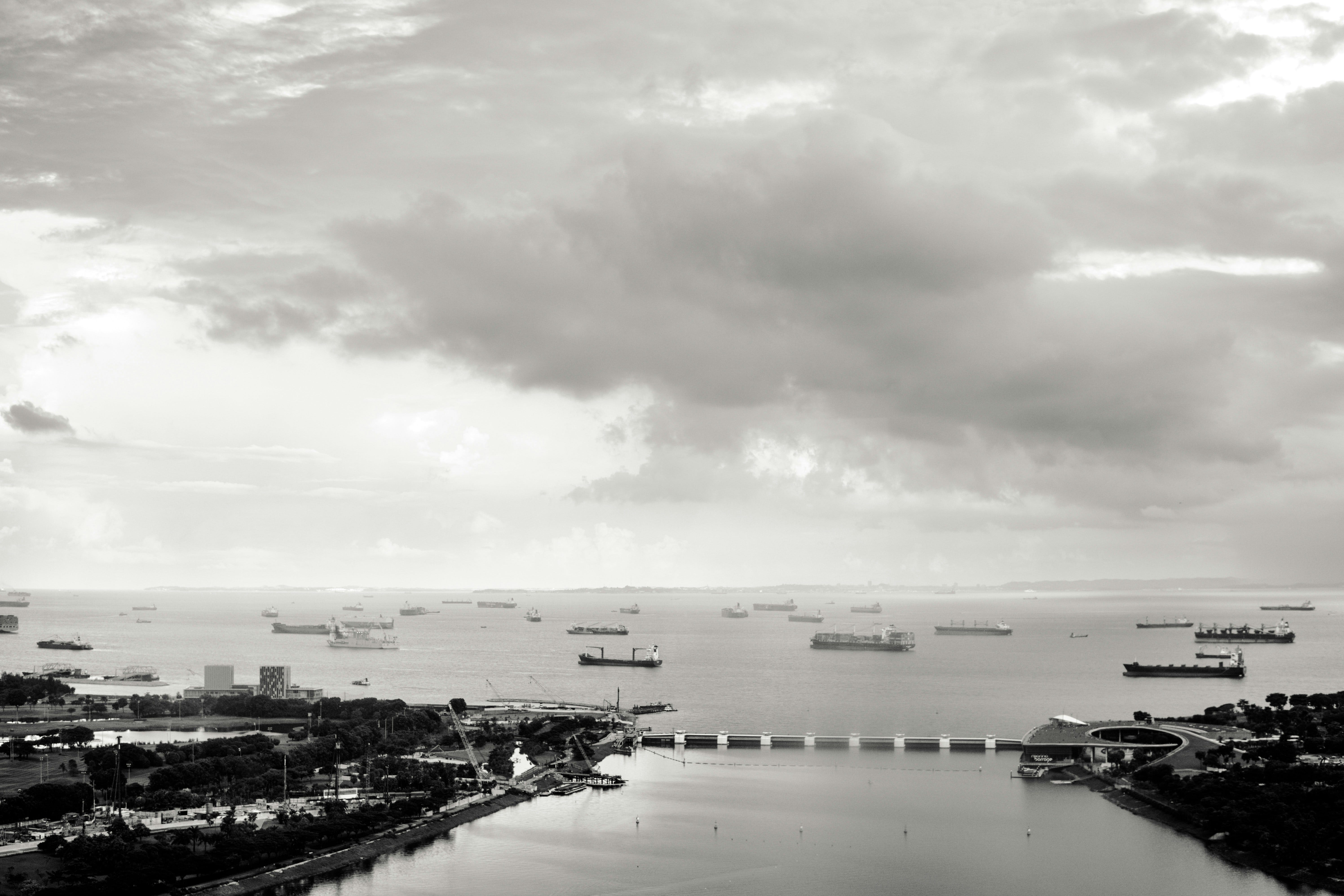
At the end of the day, with less than week of campaigning left, how many times can the opposition parties – including and beyond the PSP, SDP, and WP – lambast the ruling government for its perceived failures since 2020? To remind the voters that it’s been the worst of times. And for the PAP, for how long can it rely on the “a PAP-governed Singapore is a safe harbour in a turbulent world” shtick, with promises of the best of times within our collective grasp, before its candidates seriously engage on substantive issues and policies and reckon with the permanence of an opposition (loyal or not!) in our politics.
I have no dog in this fight. For Singapore’s opposition parties, their campaigns are straightforward if and when GE2025 is reduced to these questions uttered by then US presidential candidate Ronald Reagan in 1980, against incumbent president Jimmy Carter: “Are you better off now than you were four years ago? Is it easier for you to go and buy things in the stores than it was four years ago? Is there more or less unemployment in the country than there was four years ago?”
If so, if I were in the shoes of Mr. Wong and his PAP, do I continue pointing to Singapore’s objective economic conditions – higher household incomes and lower income inequality, as well as the country’s inflation growth hitting a four-year low – signalling that things will get better? Or do I take a more impassioned approach with the issues and policies, setting the terms of engagement and debate, articulating a more compelling vision for the next five years – and beyond?
No posts
Comments
Nothing yet. Say the first thing.
Sign in to join the conversation.