

Alexander Ullom’s It Ends, serves as a Gen Z movie that does a perfect job in turning uncertainty itself into something really terrifying. The endless roads feel frightening even without a monster showing up, and there's no clear path, no obvious escape and no certainty that the journey will lead anywhere.
The film focuses on a relatable fear of growing up and being expected to move forward while having no real idea where life is taking you. It just continues to move on without explanation, ultimately creating a kind of world where your efforts may or may not bring progress.
This is how scary it keeps getting. However, Ullom said that It Ends has an optimistic end:
"It's an optimistic ending."
Viewers will also learn about a sense of nihilism that may also exist in the story. It means there's a possibility that there may be no larger meaning waiting at the end of the journey even though the characters keep searching.
However, the film does not leave that idea completely unchallenged. As it reaches the finale, there's another shift in the story. Want to know what it is? Keep reading below!
It Ends movie: How the endless road turns hopelessness into horror
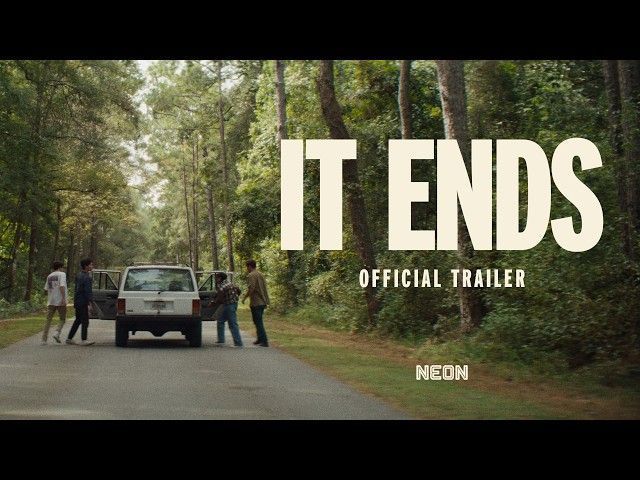
What's unique and chilling about It Ends movie is that the road is frightening not because of where it leads, but because it appears to lead nowhere. Usually, a journey promises a destination, even if the traveller does not know exactly what awaits them.
But in this Gen Z horror, that promise disappears. The characters keep driving, yet every mile only reinforces the feeling that they are trapped in something they cannot understand or control.
That makes the road more than a strange setting for the horror. It appears to be a look into the future with no clear shape. Even if you continue the journey, there seems to be no answer waiting for you.
This idea is actually tied to Alexander Ullom’s own experience when he made the film. At 22, he was struggling with existential dread and was finding the transition into adulthood overwhelming.
He later connected the film’s sense of endlessness to that period of his life, saying:
"I was very close to the edge and I was probably thinking about not sticking around and I felt that adulthood was going to be something that was insurmountable for me to stick."
Ullom continued:
"The rest of existence felt kind of eternal. And I think that's where some of that infinite came from."
So, this feeling is the most important to understand the journey. does not depend only on the people emerging from the forest or the mystery surrounding the road. It comes from being forced to keep going when there is no reassurance that the journey has a purpose.
It Ends reveal what happenes when moving forward becomes its own dead end
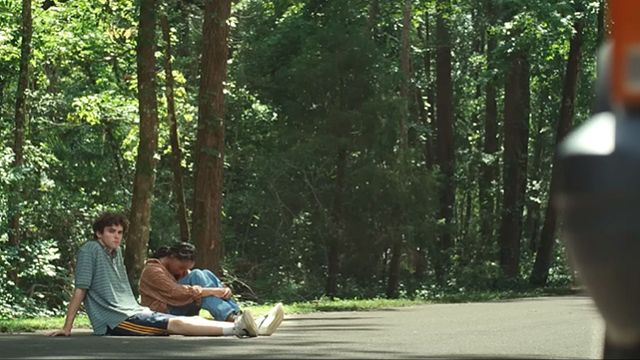
The story in It Ends movie begins with James, Day and Fisher being picked up by their old friend Tyler for a late-night drive before their lives take different directions. These youngsters were out only for a fun outing and soon realized that there's no clear way out once they step into a forest.
When they stop, several people emerge from the woods and start screaming. They want to get in and the friends keep moving forward without any clue about what is happening. Then they discover something worse: the road seems endless.
Their fuel never runs out, their bodies do not seem to follow normal rules, and the passing of time loses its usual meaning. At first, they try to handle this situation by talking, making routines, listening to music and tracking their enormous mileage.
This eventually starts affecting them and Tyler is the first to abandon the journey. He leaves the car after roughly 50,000 miles and becomes one of the withdrawn people in the forest.
Much later, Day and Fisher reach the same conclusion. They take the keys and decide they would rather remain behind than continue driving without knowing whether an escape exists. James refuses to accept that choice. He fights to keep the car, manages to restart the engine and drives away alone.
Alexandr Ullom connects the forest people in It Ends with overstimulation and the endless cycle of doom-scrolling. It explains that people can become focused on immediate urges rather than meaningful progress. They are not simply monsters. They are the ones who have stopped finding a direction.
But if we look at James, he continues the journey because he believes there must be an answer. His determination could be seen as hope, but the film also raises a harder question: when does refusing to stop become another kind of trap?
James finds a way out in It Ends, proving that it's an optimistic ending

After driving alone for what could be weeks, months or even years, James finally reaches something he has been searching for all along: a small dead-end road marked "End of the road."
Yet the ending does not give James a grand explanation for the strange world he has been trapped in. There is no final revelation that explains the road, the forest or the people who live there. Instead, James simply stops, turns the car around and begins driving back toward the friends he left behind.
That small decision in It Ends changes the meaning of the entire journey. The dead end, which should represent defeat, becomes the first real moment in which James has freedom. Ullom said:
"Once he hits that dead end, he's free. He is going back."
So in that sense, It Ends does not completely surrender to the nihilism it spends so much time building. Its dead end becomes less a symbol of hopelessness and more a reminder that sometimes, finding no way forward can be what finally allows someone to turn back.
Also Read: Without Blood cast guide: Meet the stars of the Salma Hayek drama
Continue exploring SoapCentral for regular updates on TV shows and films!
Join our newsletter.
Spoilers, breaking updates & must read recaps—straight to your inbox.
Quick Links
More from SoapCentral
Edited by Alisha Khan
Comments
Nothing yet. Say the first thing.
Sign in to join the conversation.