
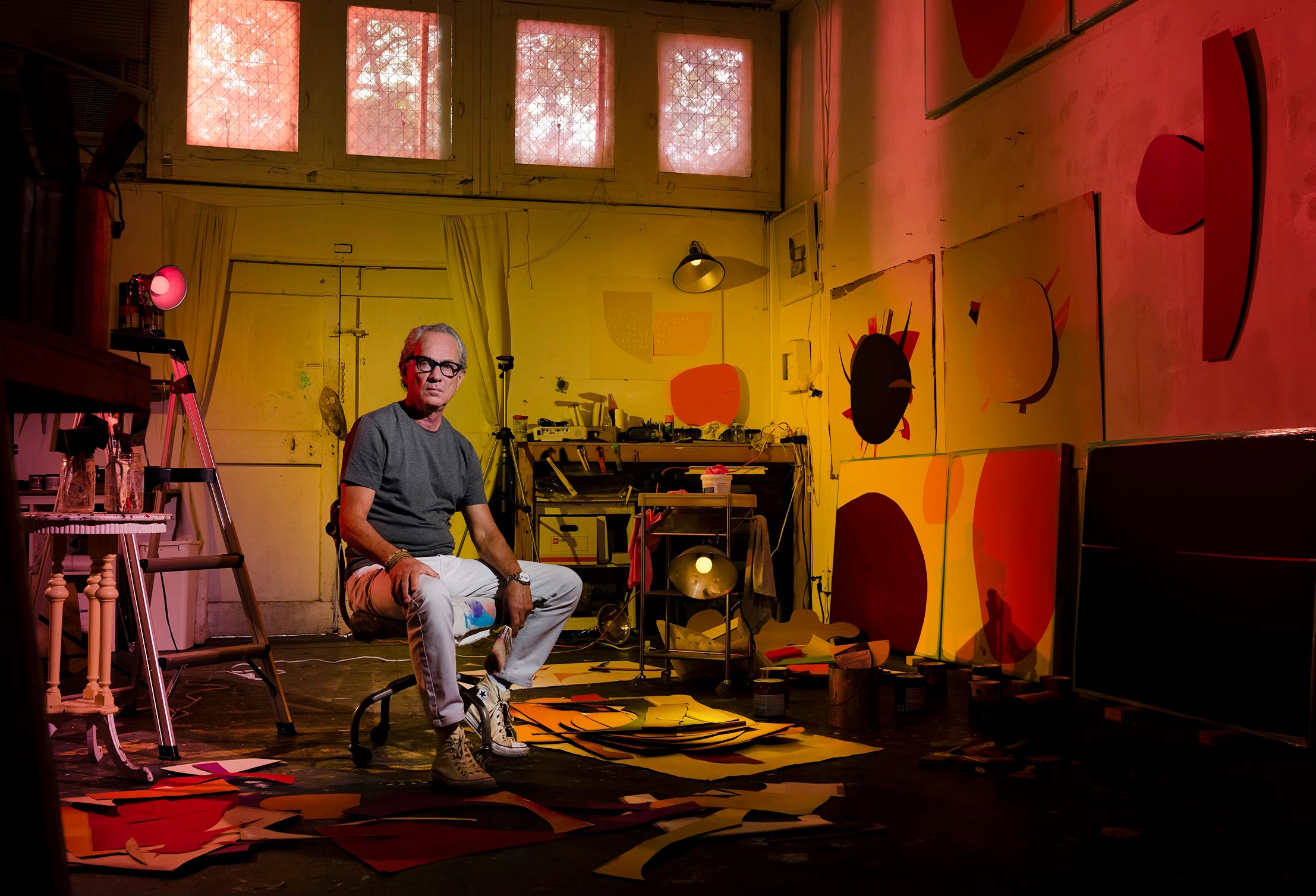
Alain Castoriano’s practice is rooted in a deep understanding of visual language. Trained at the École Nationale Supérieure des Arts Décoratifs in Paris, he spent over two decades working as an art director and creative director in publishing, advertising, and fashion before turning fully to painting. Those formative years shaped not only how he constructs images, but how he thinks about scale, clarity, and the physical impact of form.
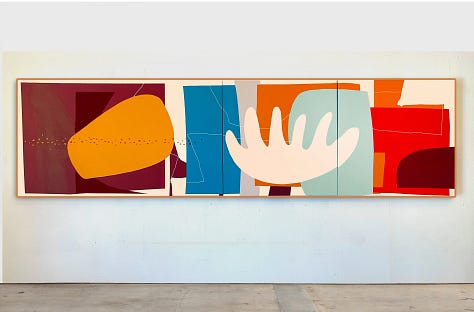
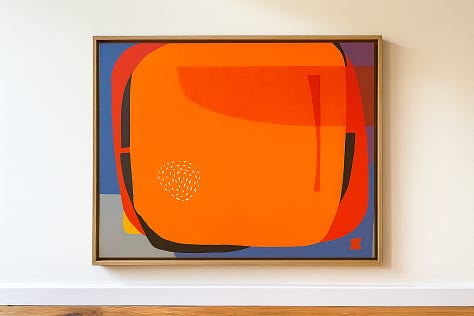
Now based in Miami, Castoriano’s work explores colour, mass, and spatial tension through paintings and large-scale installations that function as objects rather than images. Influenced by artists such as Calder, Matisse, Miró, and Richard Serra, his practice embraces materiality, surface, and the activation of space, resisting the speed and flatness of the digital image in favour of physical presence.
In this conversation, we talk about the move from design to painting, the role of process and texture, working between screen and canvas, and how Miami’s light and energy continue to shape his work, from studio paintings to large-scale public installations.
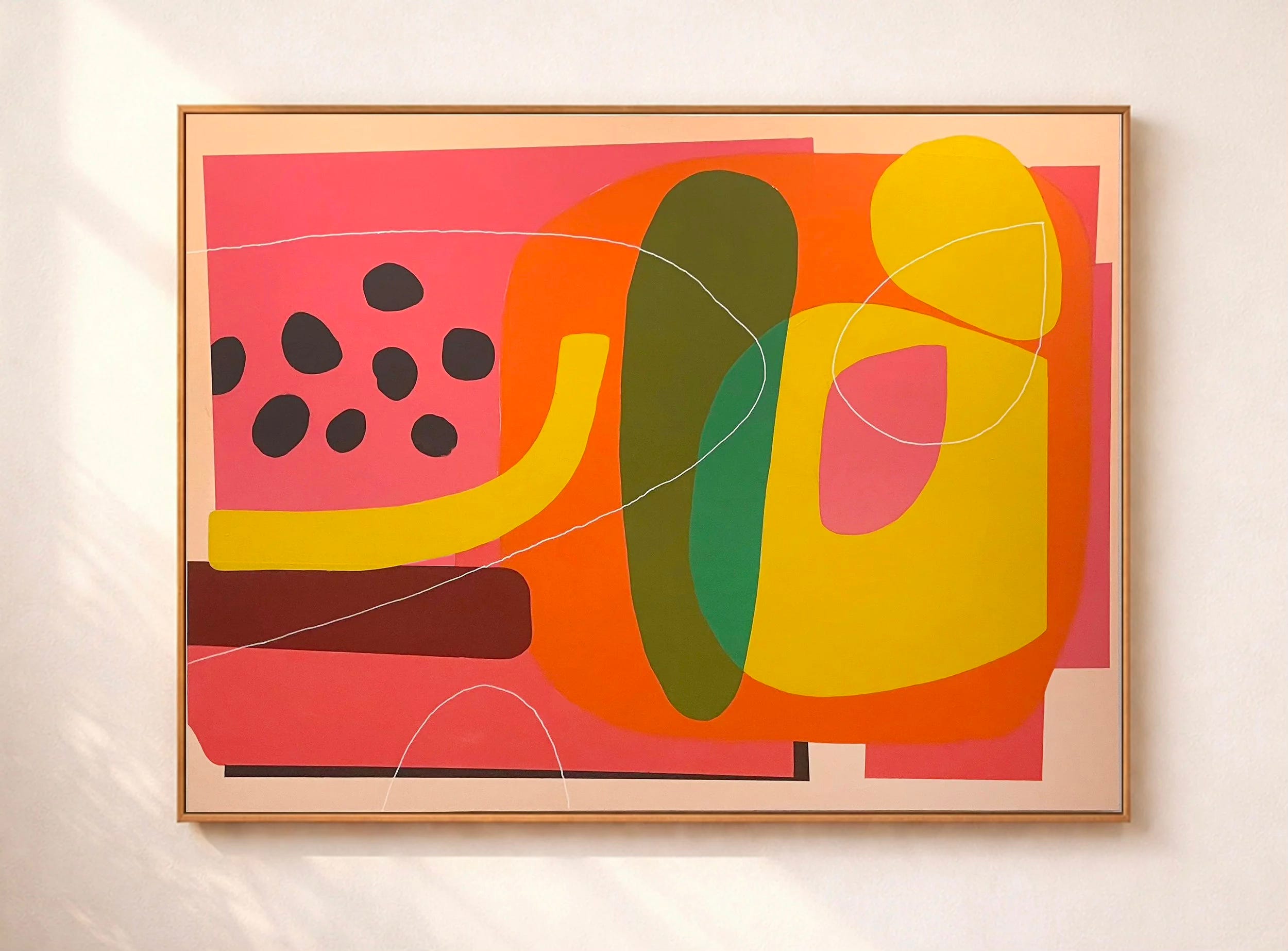
How did your early years in publishing, advertising, and fashion shape the way you think visually today?
Beyond learning how to construct and manipulate images, those years really taught me to understand the power of visual language. Working in publishing, advertising, and fashion meant constantly thinking about how images communicate, how they’re perceived by different audiences, and how they function at different scales. It also trained me to develop and present projects clearly, to collaborate, and to execute ideas within complex frameworks — skills that still deeply inform the way I approach my work today.
You’ve mentioned working closely with stylists at that time who introduced you to new approaches to color and form. At what point did you feel the need to move from communication design towards painting?
As my career progressed, I found myself becoming increasingly drawn to the expressive potential of color, texture, and materiality. Over time, I realized that I was more interested in the forms I was creating than in what they were supposed to represent or communicate. I began to understand that color, shape, and texture could carry emotion and meaning in ways that go far beyond words or narrative. That shift made it clear to me that I needed to move toward painting as an autonomous practice — and eventually to commit to being a full-time artist.
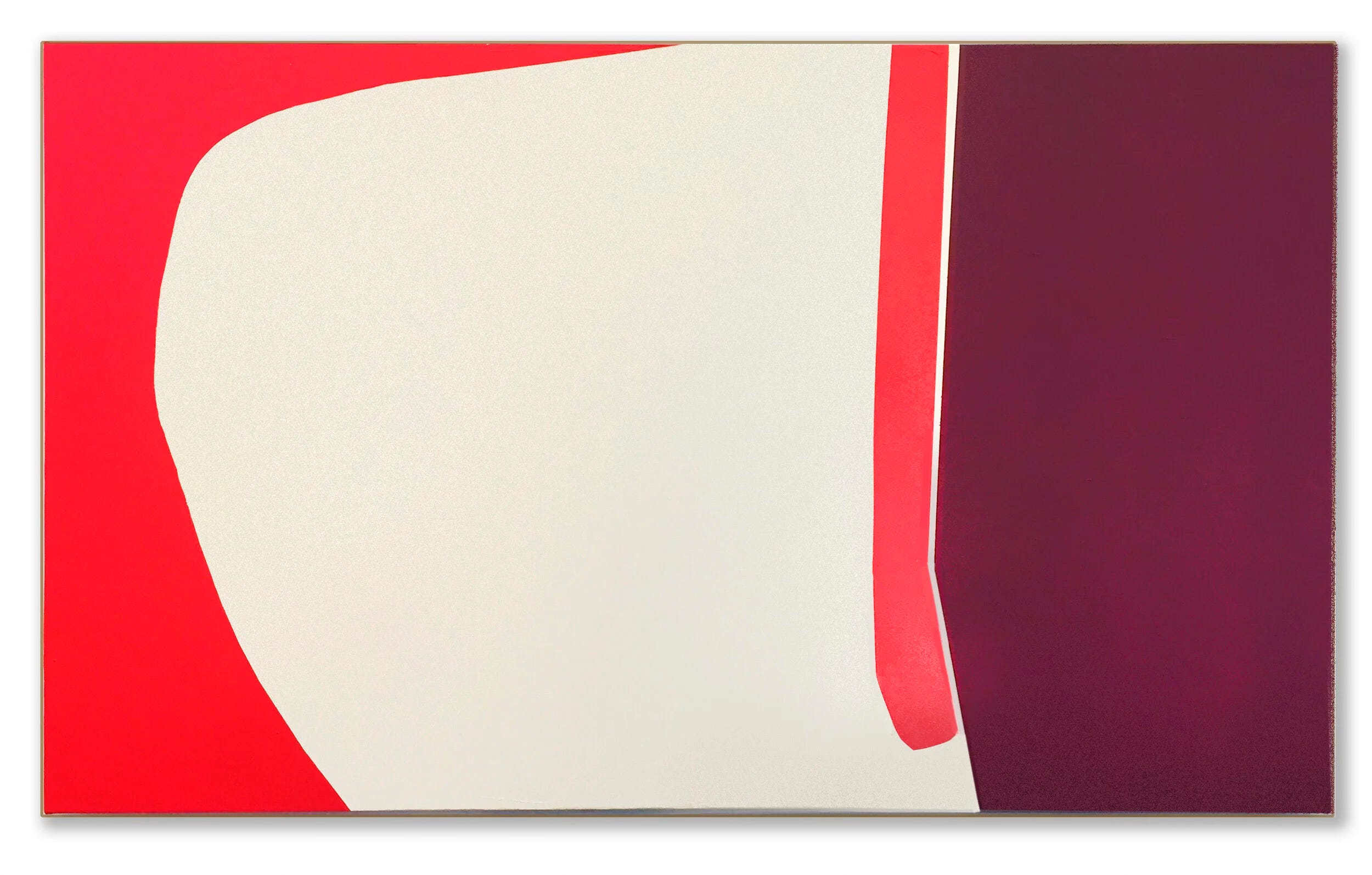
Which artists have been particularly influential in shaping your practice and what do you feel you’ve learnt from them?
Somewhat paradoxically, one of my strongest influences is Richard Serra — particularly in the way his work fills, reshapes, and activates space. My visual vocabulary is obviously quite different from his darker, heavier aesthetic, but I share that same desire to transform the space a work inhabits rather than simply occupy it.
At the same time, artists like Alexander Calder, Pablo Picasso, Joan Miró, and Henri Matisse are of course central to my personal pantheon. Not only for formal reasons, but for the extraordinary freedom they allowed themselves in their practice — a freedom that continues to inspire me.
Moving between French and American cultures: do you feel your work carries traces of both, or has it evolved into a language that sits outside national identity?
Honestly, the idea of “national identity” doesn’t mean very much to me. That said, I’m deeply influenced — both mentally and artistically — by my environment. Where I live, what surrounds me, the rhythms and energies of daily life all inevitably seep into my work.
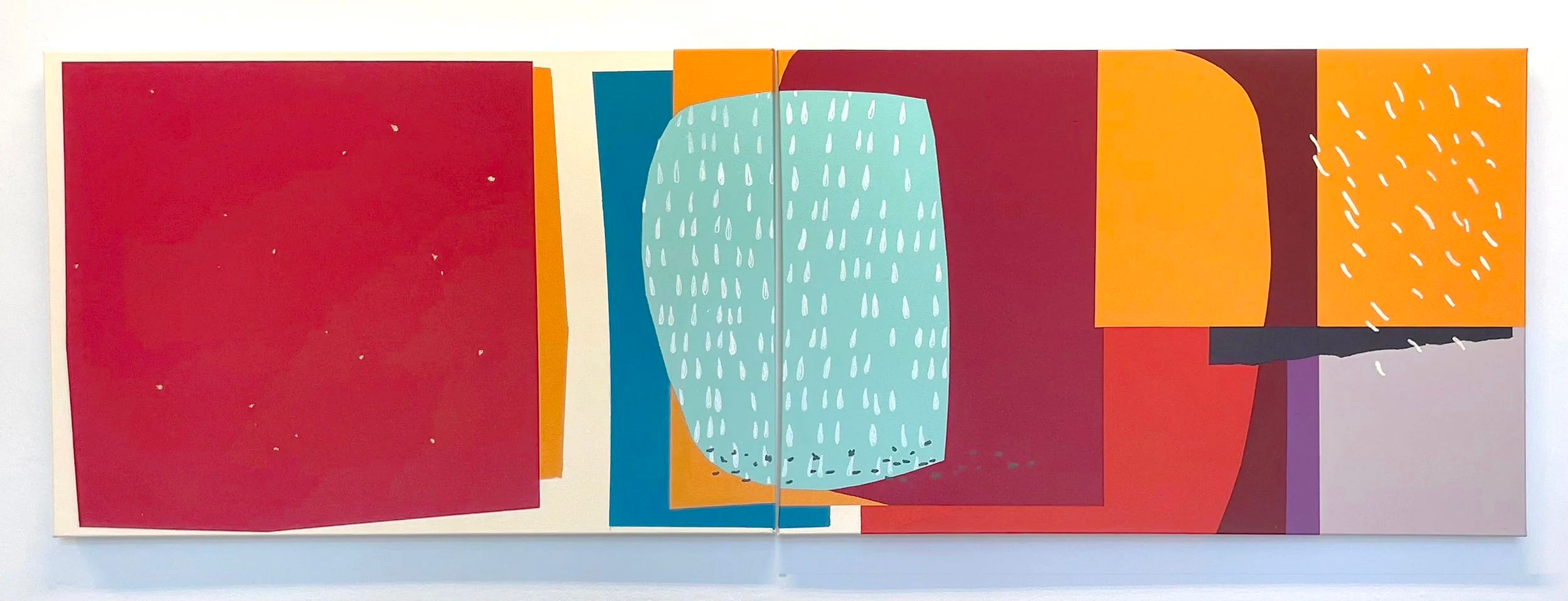
You’ve stated that “My paintings are not paintings… they are things. What does it mean for your work to exist as a thing rather than an image?
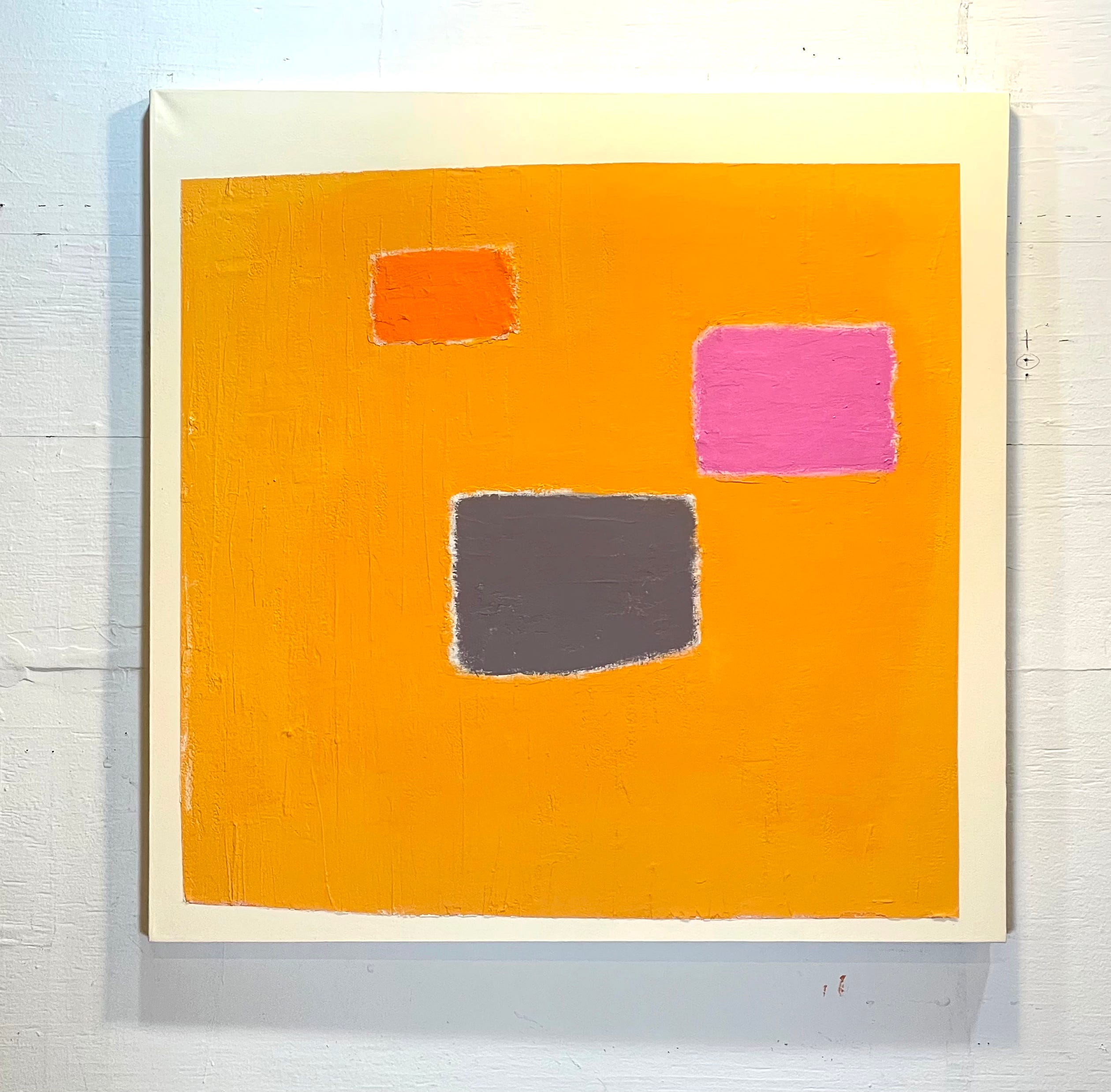
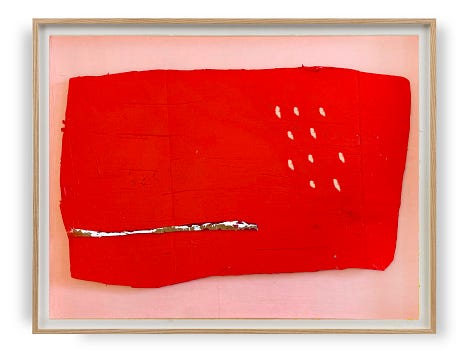
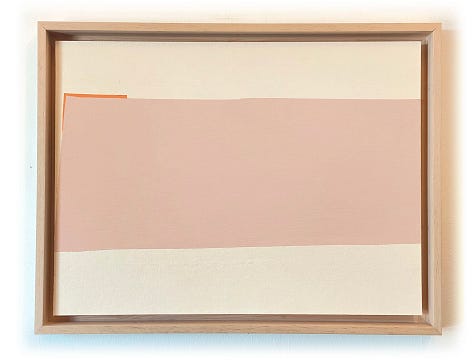
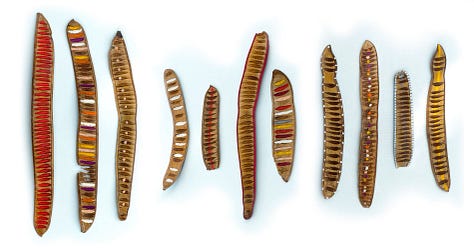
They are not “images” or fictitious realities; they are objects in their own right. They are what they appear to be: things of pure color, shape and material. My approach might seem out of step with our increasingly virtual or over-conceptualized world. In an age when visual satisfactions scroll by on Instagram in seconds, my intent is to reveal the physical power of abstract forms and color within the space they occupy.
Texture plays a key role in how your work is experienced up close. How do layering and surface treatment contribute to the sense of weight and density in your forms?
For me, painting is very much about pushing and moving sensation. Layering and surface treatment allow the work to accumulate density and weight — not just visually, but physically. Texture becomes a way to anchor emotion in matter.
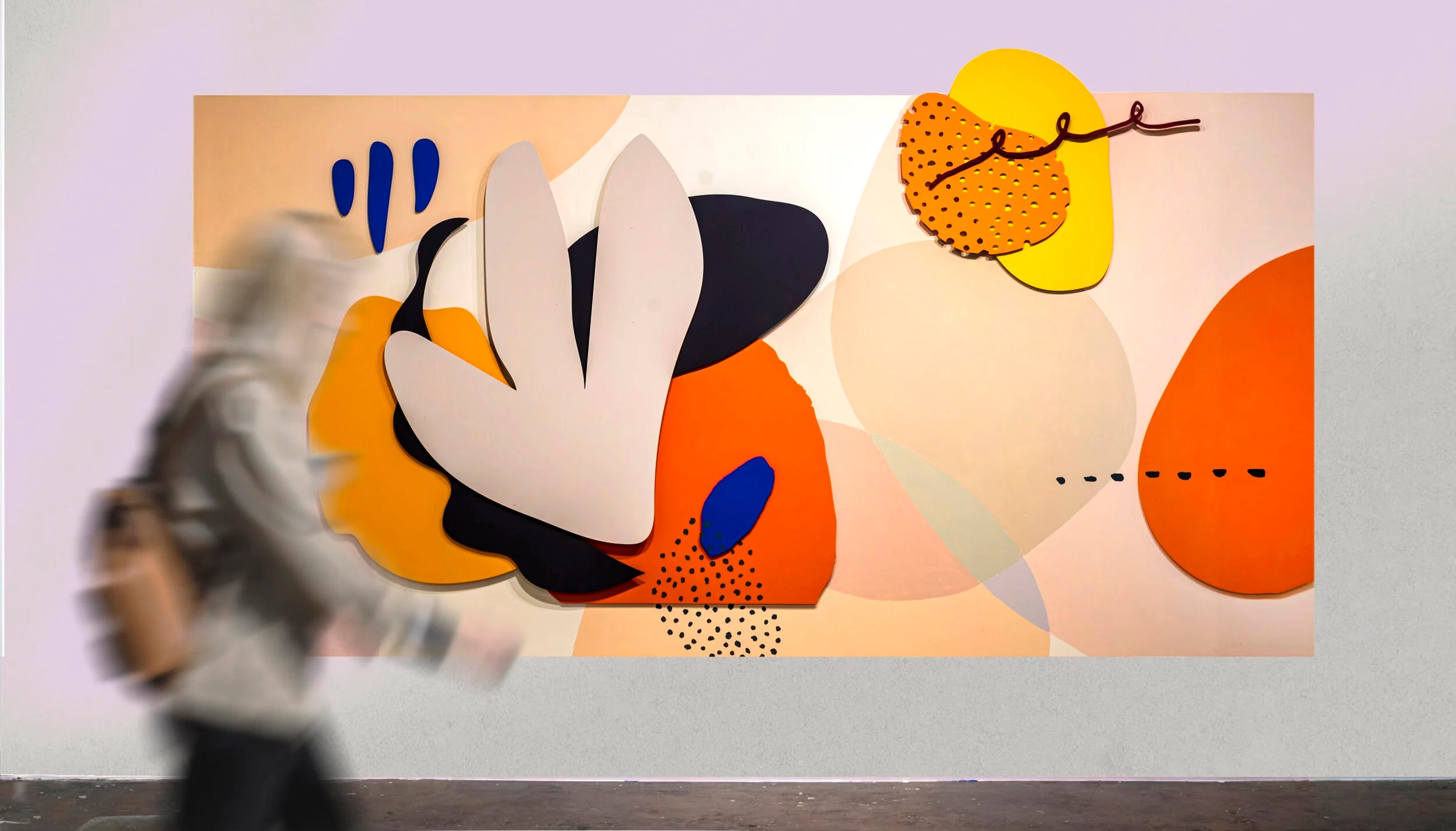
When working with such pressure between form and surface, how do you know when a painting has reached the right balance and is resolved?
I usually begin with a limited number of forms and a carefully chosen color palette. From there, the work evolves organically. Shapes shift, relationships change, and the painting gradually finds its own internal logic. At a certain point, the balance feels right — I’d say it’s really the work itself that tells me when it’s finished.
Before paint touches canvas, what role do drawing and sketching play in developing your compositions?
I typically start with small black-and-white sketches — very simple, organic shapes drawn with a marker. I then arrange and refine them on the page. Once that feels right, I scan the drawing and continue working digitally, adjusting proportions and relationships before committing anything to canvas.
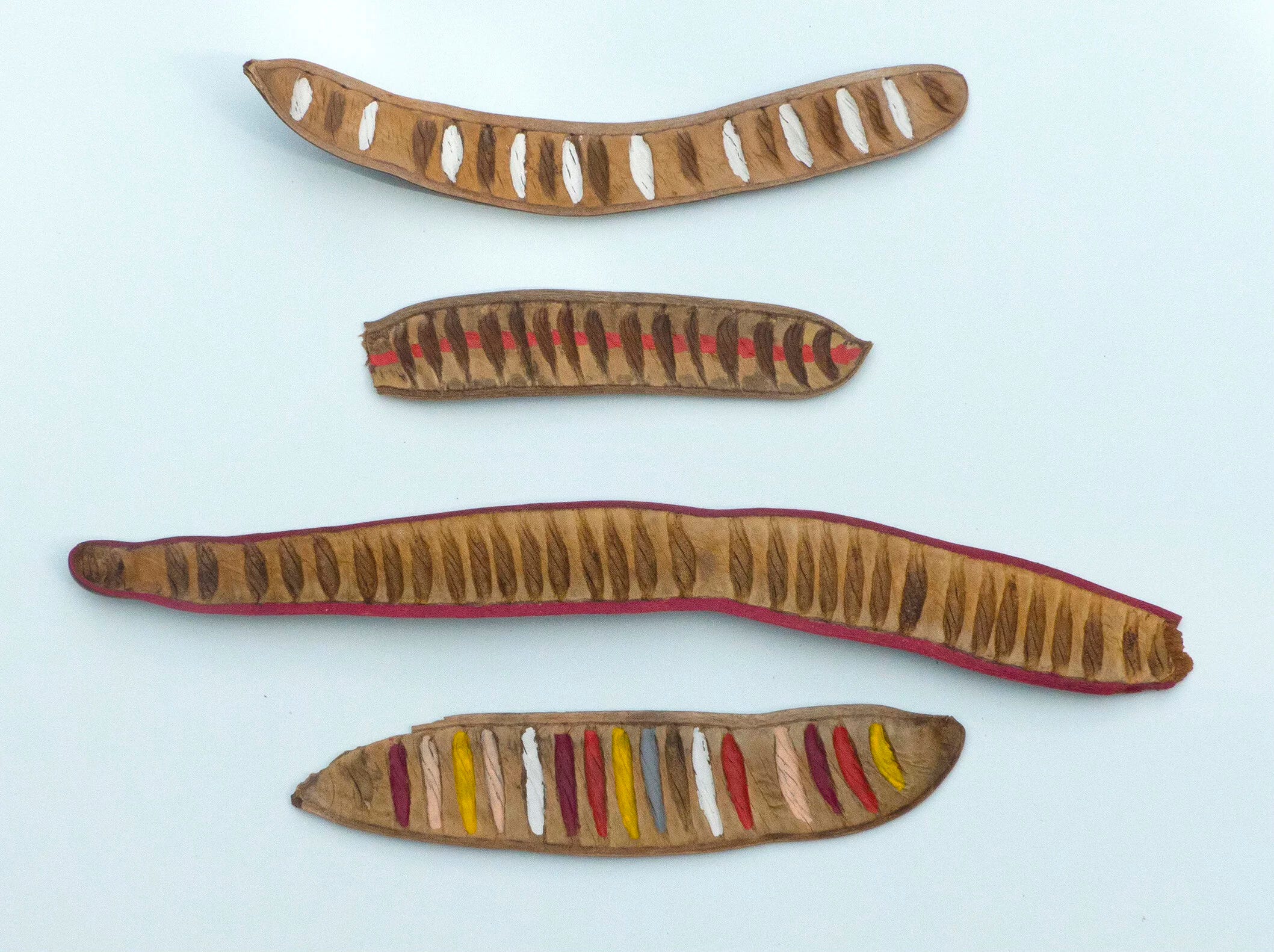
You’ve developed a color reference system and work digitally to render designs before painting. Can you tell me a little more about this?
I mostly use industrial paints (thank you Home Depot!). Through a lot of trial and error, I’ve built a library of nearly a hundred colors that translate relatively consistently between my computer screen and the canvas. I reference each color using the manufacturer’s name, which makes it much easier to stay consistent and to retouch a piece when necessary.
Can you walk us through how you build this visual vocabulary and how the digital phase informs the final physical work?
Over time, this process has helped me build a very specific visual vocabulary — a recurring set of forms, proportions, and colors that I can continuously recombine. The digital phase allows me to test and refine these relationships with precision, to explore variations quickly, and to resolve many compositional questions before I start painting. It’s not about locking the work in place, but about creating a strong framework for what comes next.
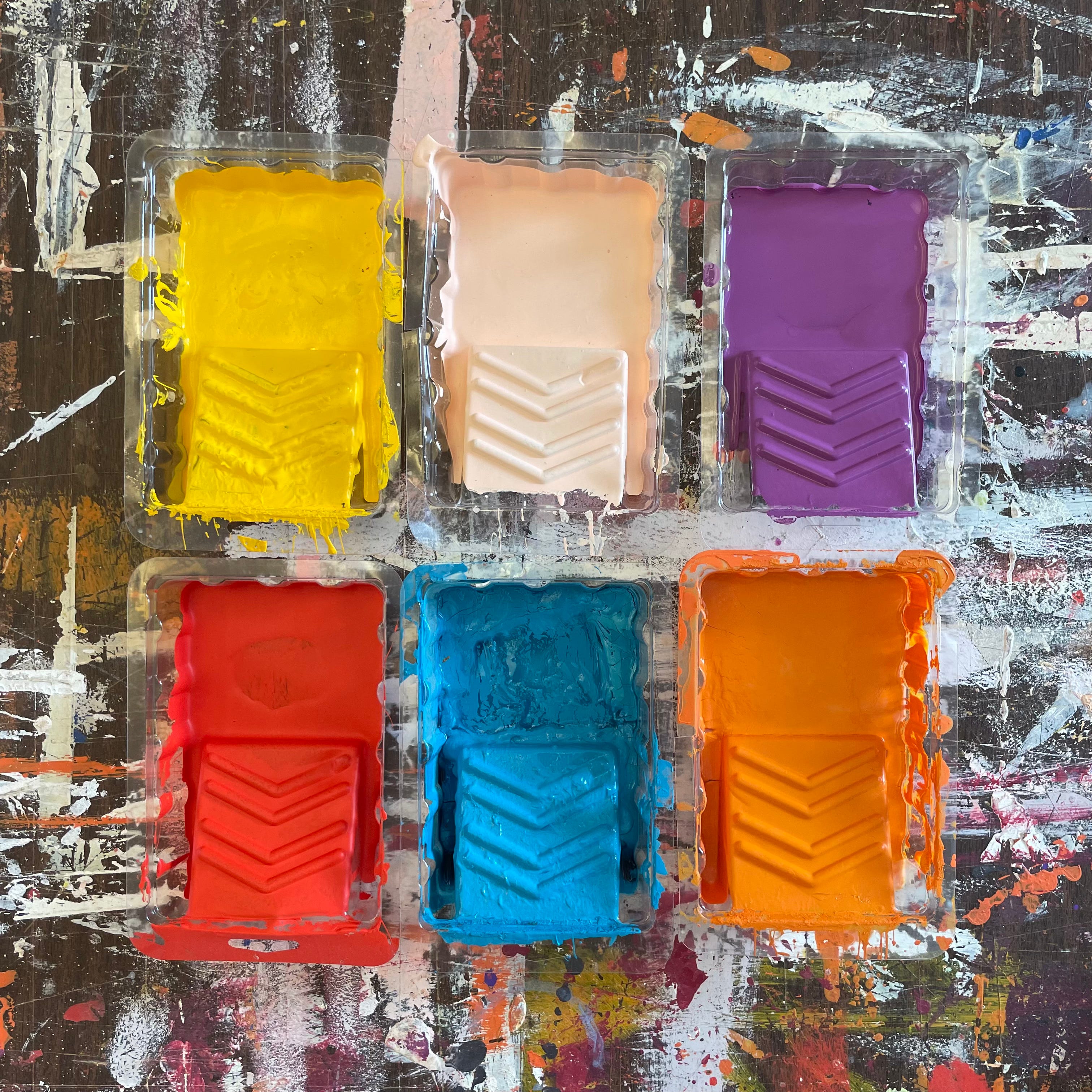
Once you move from screen to canvas, what changes, what resists planning and demands intuition instead?
That transition from screen to canvas is actually one of the most exciting moments. Once the design becomes physical, things start to take on a life of their own. Human intervention introduces accidents, subtle color shifts, imperfections — all the things that resist planning. And those elements are essential; they’re what ultimately give the work its personality.
You’ve been based in Miami for nearly two decades now, how does the city’s light and energy influence your approach to color and form?
It’s a young city, constantly evolving, and an endless source of inspiration. The mix of cultures, the intensity of light, the saturation of color, the tropical vegetation, the music, the energy and noise — all of it creates a continuous flow of stimuli. The challenge, and the pleasure, is learning how to channel that intensity into the work.
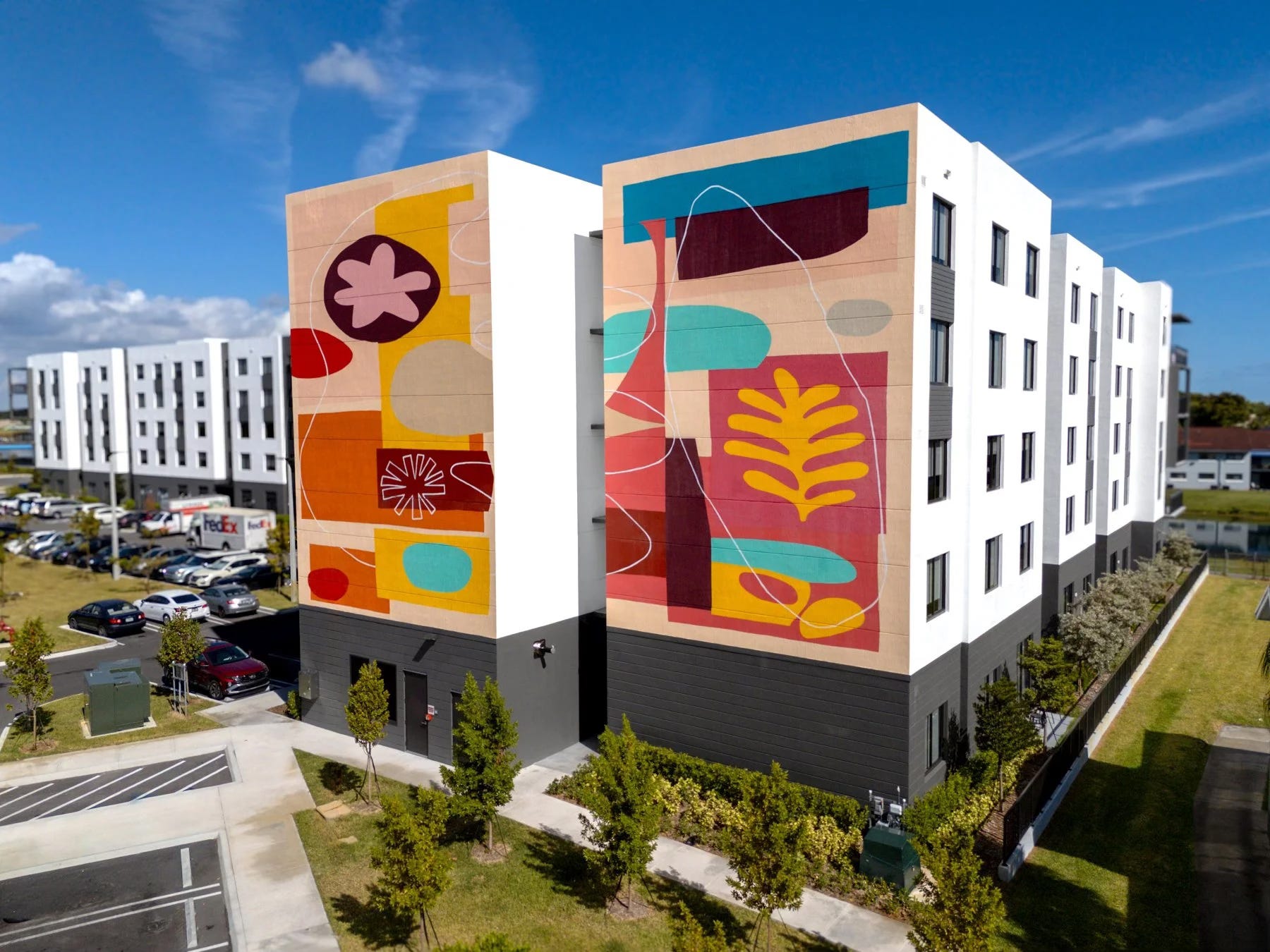
Your recent public art and large-scale installation projects such as the Pinnacle Housing Project in Miami have pushed your work into new spatial and social contexts. What did scaling-up reveal to you that you hadn’t encountered on canvas?
I’ve always felt that my work reaches its full potential when it engages directly with a specific space. Large-scale installations make it possible for viewers to physically enter the work, to move through it, and to experience it with their whole body. That level of immersion adds a new dimension, allowing the work to resonate both emotionally and spatially.
How have these large-scale projects fed back into your studio practice, have they altered your sense of proportion, process, or ambition, particularly as you’ve said you hope to create more public art?
To be honest, I’ve always thought of my work as large-scale — even when the pieces themselves are small... I am definitely not an “easel painter”! Working in public space has reinforced that mindset, sharpening my sense of proportion and confirming my desire to keep pushing the work beyond the limits of the canvas.
Finally: is there anything about your practice, thinking, or recent work that we haven’t touched on here but feels important to share?
One thing I’d really like to add is how important the Bakehouse Art Complex has been to my career. My time there marked a pivotal chapter in my practice. Being an artist often means working in solitude, but meaningful exchange with an audience and a community is essential. Bakehouse offers that balance. Through exhibitions, events, and studio visits, it creates a dialogue with the outside world that’s incredibly valuable.
Thanks to Cathy Leff and her team, what began as an artists’ squat in the 80’s has grown into a vital cultural institution within Miami’s art scene — and I’m deeply grateful to have been part of it.
Thank you Alain!
Where can people see and buy your work?
My site: www.castoriano-art.com
IG: alain_castoriano
Studio: Bakehouse Art Complex
Prices upon request
CONTACT
Email: acastoriano@yahoo.com
Tel: +1 786 259 4613

No posts
Comments
Nothing yet. Say the first thing.
Sign in to join the conversation.