
Part two takes a deeper dive into the issues dental sleep medicine practitioners enumerate when dissecting the direct-to-consumer OAT business model employed by Daybreak and others.
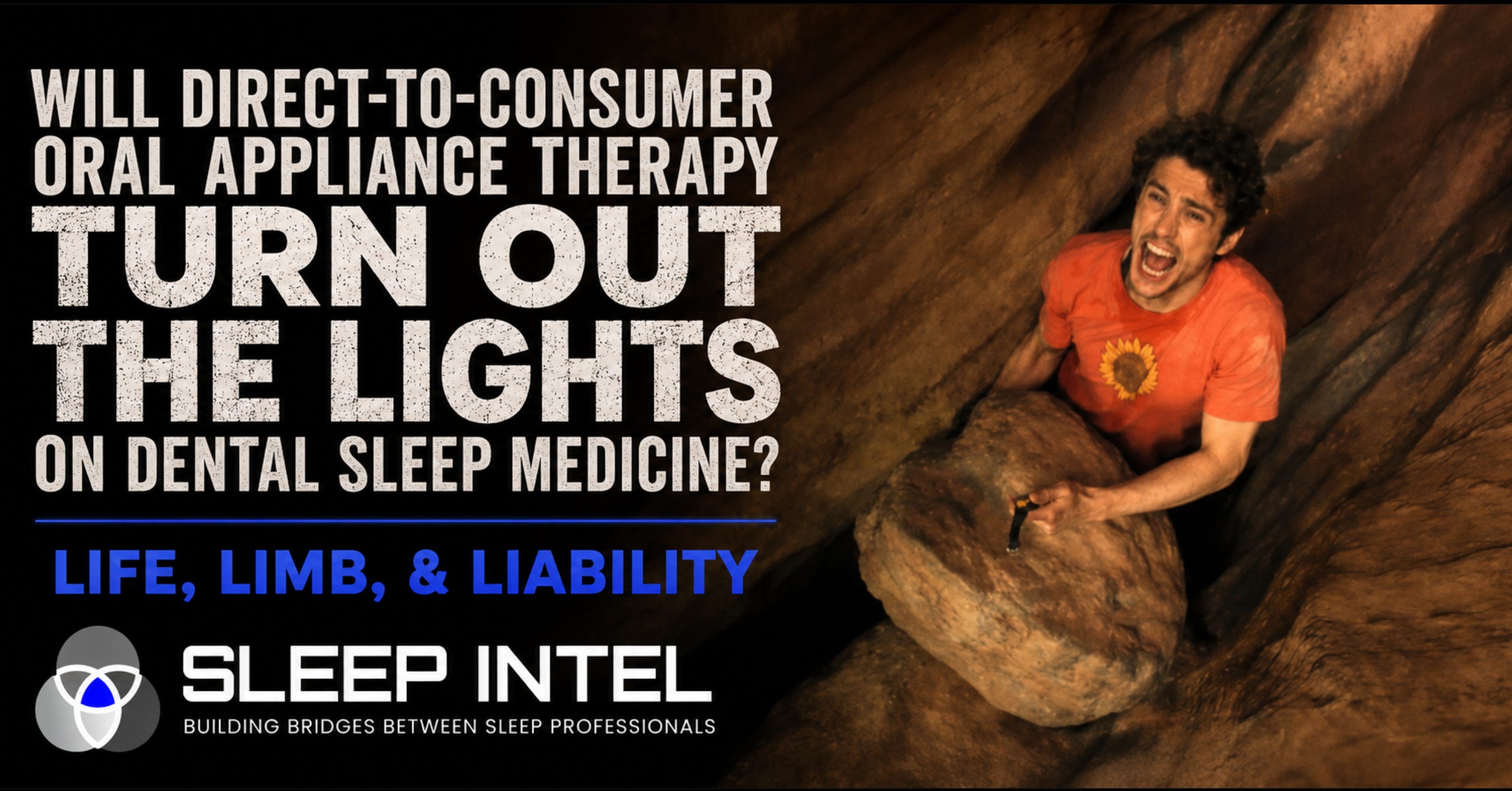
23 years ago, Aron Ralston amputated his own arm. An experienced mountaineer, he was exploring a remote canyon in Utah when a massive boulder shifted under him and pinned his right arm against the canyon wall. For almost a week, he rationed his water, recording farewell messages to his family, exhausting every possibility of escape. When rescue seemed impossible and death inevitable, he did the unimaginable. He used a dull Swiss Army knife to cut off his arm and hiked to safety. Dramatized in the film 127 Hours, it remains one of modern times’ most harrowing survival stories. Almost no one would posit that self-amputation is good medicine, but under those circumstances, it was the only available solution, and it saved Aron’s life.
Obstructive Sleep Apnea (OSA) healthcare models face similar dilemmas. Approximately 35 million Americans remain undiagnosed or untreated, with many living hours away from qualified providers or unwilling or unable to navigate seemingly labyrinthine treatment mazes. In those situations, telemedicine, remote monitoring, and simplified care pathways might be preferable to no care at all. But trouble can arise when compromises born of necessity become the new norm because they’re cheaper, faster, and easier to scale.
The tension between access to care and optimal care was in stark relief two years ago when 26-year-old dental student Conor Hylton died in a Connecticut intensive care unit overseen by remote tele-ICU physicians. In a wrongful death lawsuit filed by his family, they allege that warning signs were overlooked, and an in-person physician would have identified his grave condition, properly intervened, and potentially saved Conor’s life. Whether the courts agree remains to be seen. However, the case decidedly demonstrates that all-out efforts to scale healthcare via decreased costs and increased costs carry tradeoffs. Those tradeoffs can be measured on spreadsheets in dollars, but they can also be measured in side effects such as lawsuits, side complications, and lives forever changed.
Dental Sleep Medicine (DSM) finds itself confronting similar issues. Direct-to-consumer oral appliance therapy (DTC OAT) may expand care for segments of the patient population that might otherwise go untreated, much like SmileDirectClub (SDC) increased access to orthodontic care. Expanding access and providing optimal care aren’t necessarily synonymous. Luddites needn’t protest technology and innovation’s disruptive impacts on the field. That future is already here, as evidenced by the widespread use of home sleep testing, telemedicine, 3D printing, and ProSomnus’s RPMO2 device. The more revelatory question is whether in the quest for convenience and scale, commercial entities will preserve the parts that matter most or decide that “good enough” is actually good enough.
While the examples shared are extreme, hopefully you get the point…
Comments
Nothing yet. Say the first thing.
Sign in to join the conversation.