
When Alexandra Oliva first had the idea to write about one family forever changed by intelligent life on another planet, she knew immediately that motherhood would play an enormous role. As she dug into the story of this mother and her two children, she found that the speculative world she was building around her characters freed her to talk about complex family dynamics, including postpartum depression.
This week, SJP Lit author, Alexandra Oliva, chats with the founder of Ladies Who Lit, Kaylen Ralph, about how the unknown brings people together, learning directly from astronomers about the stars, and how her own experience of motherhood inspired the heart of The Radiant Dark.
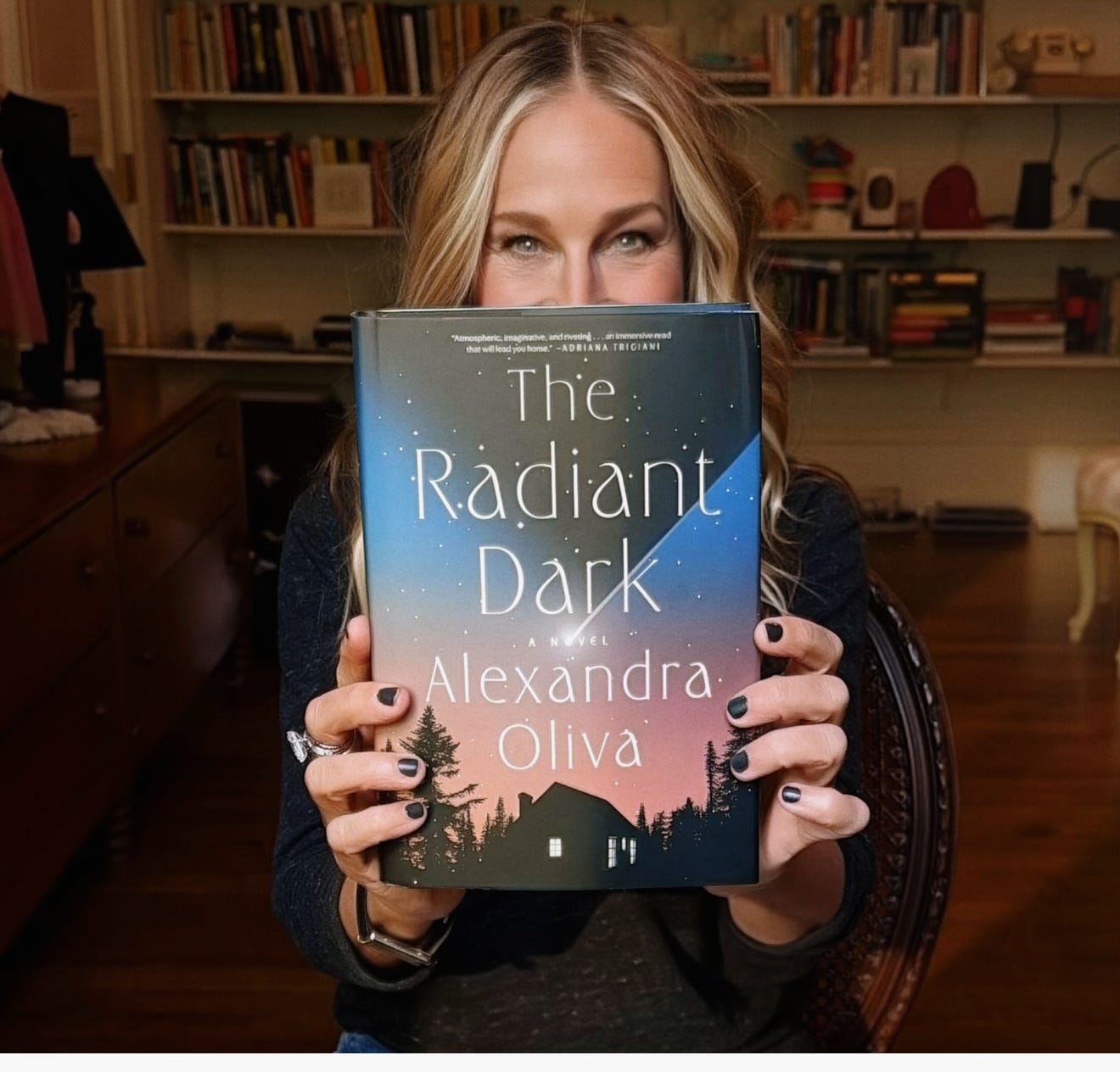
Kaylen/Ladies Who Lit (Kaylen): The Radiant Dark is a multi-generational family saga that tackles the impact our individual emotional inheritances can have on humanity as a whole, from the minuscule to the galactic. With it, you’ve presented a possible future for humanity that is both devastatingly realistic and cautiously hopeful. Were you conscious of maintaining that balance while writing, and is hope a takeaway you intended to offer?
Alexandra Oliva (Ali): That’s a beautiful description, thank you. I think life is this mix of finding hope in dark times, moments of laughter, and a crazy balance of everything coming at you at once. So I’m happy to hear that’s how the book is coming across, because that was what I was trying to accomplish—making it feel very real and very possible.
Kaylen: It definitely came across as realistic. How long have you been interested in space?
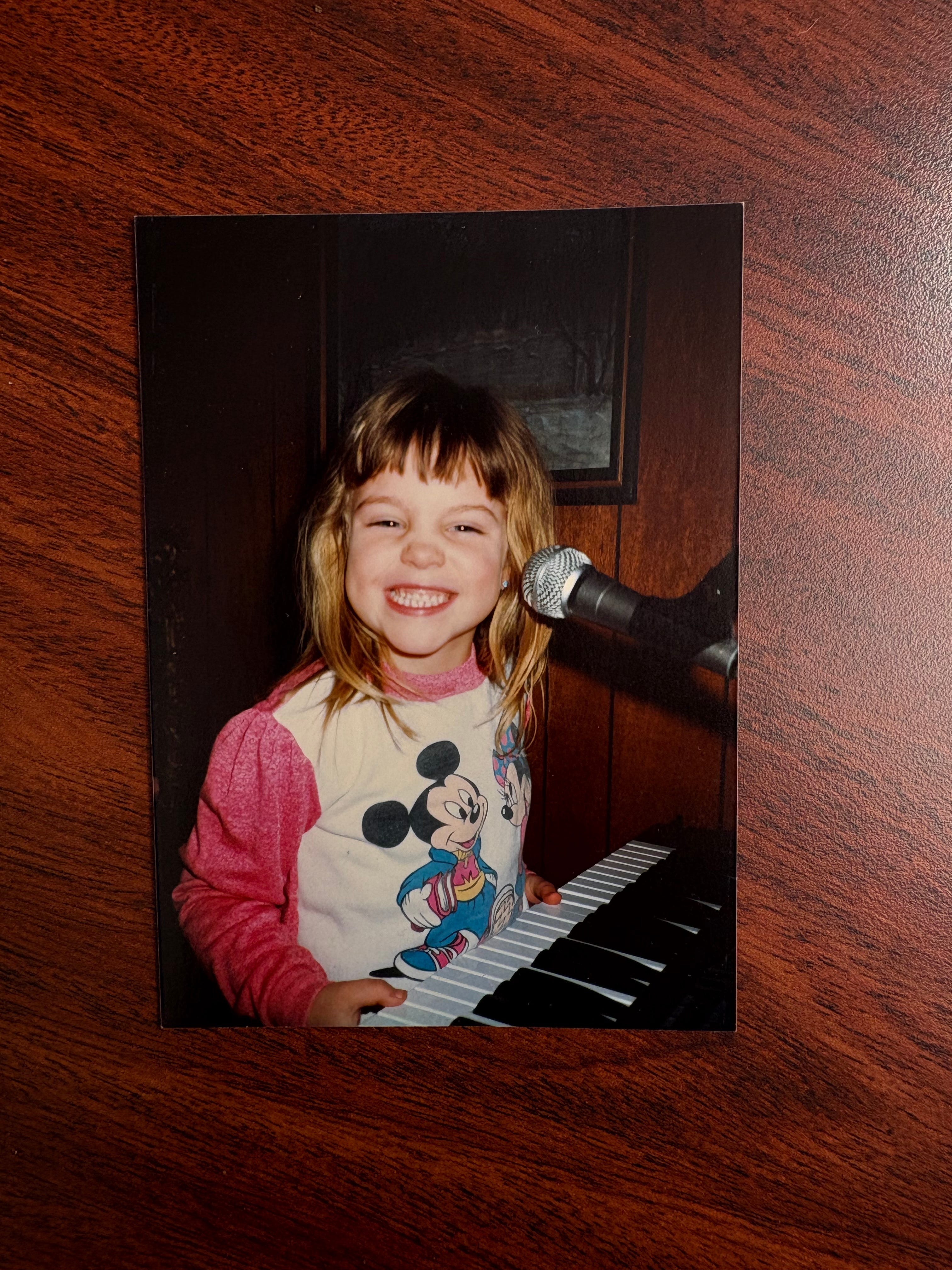
Ali: Growing up, I was a big science fiction and fantasy reader. In fourth grade, my teacher brought my mother in for a conference and was like, “We’re concerned about Ali. All she reads is sci-fi and fantasy.” And my mom responded, “Isn’t it just good that she’s reading?”
As I grew older, I got more into real-world science. I remember in seventh-grade Life Science, I kept saying that when I grew up, I wanted to be a genetic engineer for SETI, as though that was a job that might someday exist. Then, in college, I tried taking some science courses and realized that that's just not how my brain works. I don't want to be sitting in a lab studying these things. I want to grab onto exciting ideas and play with them.
Kaylen: For this particular novel, with its unique and wonderful premise, when did that idea first come to you? How long did it take you to write this book?
Ali: I got the idea for The Radiant Dark while I was sitting on a plane in 2017, pregnant with my son. I was listening to a podcast about the movie Arrival. A linguist and an astronomer were talking about how we would communicate with aliens if they were to just show up.
The astronomer made an offhand comment about how if we ever do make contact with an alien civilization, it’s more likely to be through radio waves with a civilization tens, hundreds, maybe even thousands of light-years away, in which case communication could take generations to unfold. As I remember it, he made a joke about Hollywood and how there’s no way to make that kind of slow exchange exciting. And I had this moment of, “Oh, I know how to write that story. I can make that exciting.”
I immediately knew this story would be about a new mother. She would turn on the news and hear that Earth had received a transmission, and the book would follow her and her two kids over many years.
Kaylen: The level of detail in The Radiant Dark is so impressive. What did your research into space travel look like for you when writing this book?
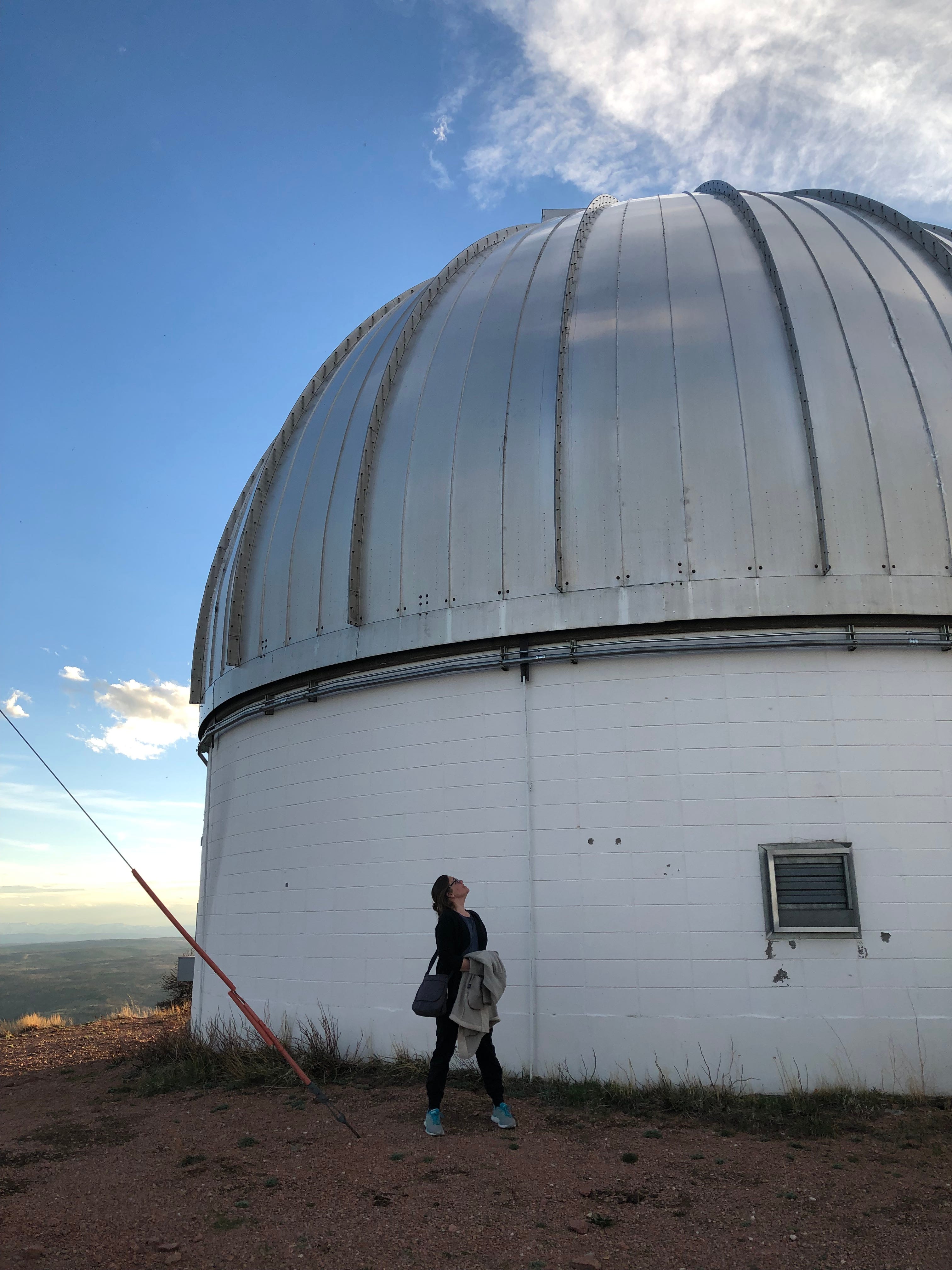
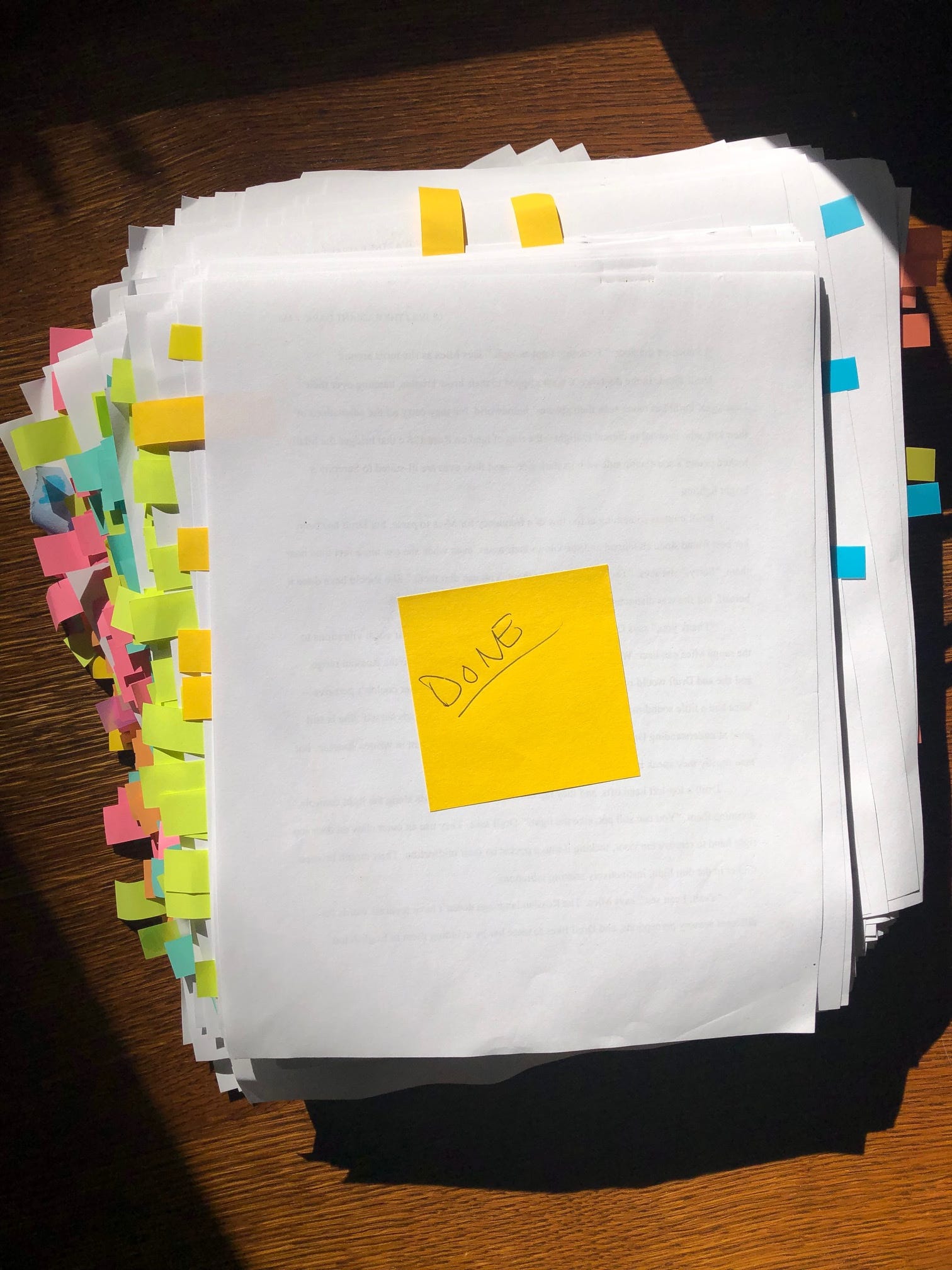
Ali: The research was intense. I spent some time trying to get personal connections to astronomers. Then, a sci-fi author friend recommended the Launch Pad Astronomy Workshop, which is run out of the University of Wyoming in Laramie. It’s these two incredible astronomers who are really passionate about getting more accurate science into pop culture. I took their week-long astronomy intensive and came home with 80 pages of handwritten notes.
Kaylen: I think your readers are going to be delighted by the timing of your book coinciding with Artemis II. It feels like a very otherworldly synergy, and like any great work of literary fiction, you’re giving us the opportunity to process our present reality through a fresh lens. Your book spans decades, and it does so with detail that feels like deeply researched historical fiction. And of course, the certitude of intelligent life on planet Ross makes this a work of speculative science fiction as well. We’ve definitely heard of reading across genres, but writing across genres is a whole other story. And yet you pulled that off in one singular, unique book. How did you do it?
Ali: I don’t think much about genre when I write, but I am drawn to stories that feel new and exciting. And I couldn’t have written the family drama in this novel without its speculative side, because I love connecting narrative elements that don’t seem like they should fit together. For example, the greatest irony in this novel is the idea that we have Earth and this alien civilization communicating fairly effectively over a distance of 11 light-years, but then you have people living in the same house who don’t know how to talk to each other. That combination is what gets me excited. I think it becomes more interesting when I’m approaching questions of communication from different angles at the same time.
Kaylen: I love that note about irony. And it reminds me of one of my favorite lines in the whole book: “On and on, Earth spins, years pass, a family grows, and everything gets that much more complicated.” When I read that, I immediately thought of earthly complications between members of the Girard family, but obviously, it pertains to the communication between Ross and Earth, too. And the overarching dichotomy between Earth conservation and space exploration.
Ali: That chapter ending was one of the ones that was hard to find, and it’s really gratifying to hear that it’s hitting.
So, in the book, we have Ro, the daughter, who grows up to be an astrophysicist. She’s thinking about humanity’s expansion to other stars. We also have her brother, Michael, who is very nature-focused and artistic. He doesn’t care that aliens exist. He’s known it his whole life. The same way we know koalas exist. Ro and Michael are at opposite ends of the spectrum. But in real life, I don’t think it’s an either-or.
Going back to Artemis II, it was such a wonderful, beautiful moment of connection. I think there is merit to the idea of expanding humanity, but we have to take care of our planet here, too.
Kaylen: Earth is our home (for now), but each of us, at the most basic level, has a home within our own bodies. People who give birth have to renegotiate their bodies in very real ways. In this vein, motherhood is a huge theme of The Radiant Dark, and the cataclysmic effect giving birth can have on your psyche and physiology. We see the ramifications of this play out through the novel in both Carol and Ro, two generations of women in the Girard family. How did the speculative nature of your book make tackling the very real-life issue of postpartum depression more accessible?
Ali: I don’t think I would have explored it as fully in a novel that didn’t have speculative elements. For me, the speculative elements in there are very freeing. To have, in particular, Carol, the mother, have her spiritual beliefs become so entangled with her role as a mother and what she sees as the destinies of her children…there was an opportunity there that I found really exciting.
At the same time, a lot of the postpartum details are inspired by my experience of having my son. It was really important to me that I be honest and detailed there.
For example, in the opening scene, Carol is in the shower, and she hears her baby crying, so she panics and runs out to check on him. She finds him asleep. He’s fine. It’s this real-life phenomenon called phantom crying that I experienced hundreds of times during the first years of my kid’s life. I had never heard of it before. Phantom crying wasn’t in any of the books I read before my son was born, but nearly every mother I’ve ever spoken to has experienced it. So, it was important to me to get that very visceral experience into the book.
Kaylen: Both Carol and Ro come to a place where they have to grapple with their role as a new mom versus the ambition that they have always had, albeit very different types of ambition.
Ali: One of the wild things about becoming a mother is that it just completely shifts your identity. You become responsible for this whole other being that just needs you so hard. That can create this dissonance between “what is my role as a mother” and “what do I want to accomplish in this world?” It was important to me to explore how your sense of self and your sense of your place in this world, and what you can accomplish in it, shift when you have kids.
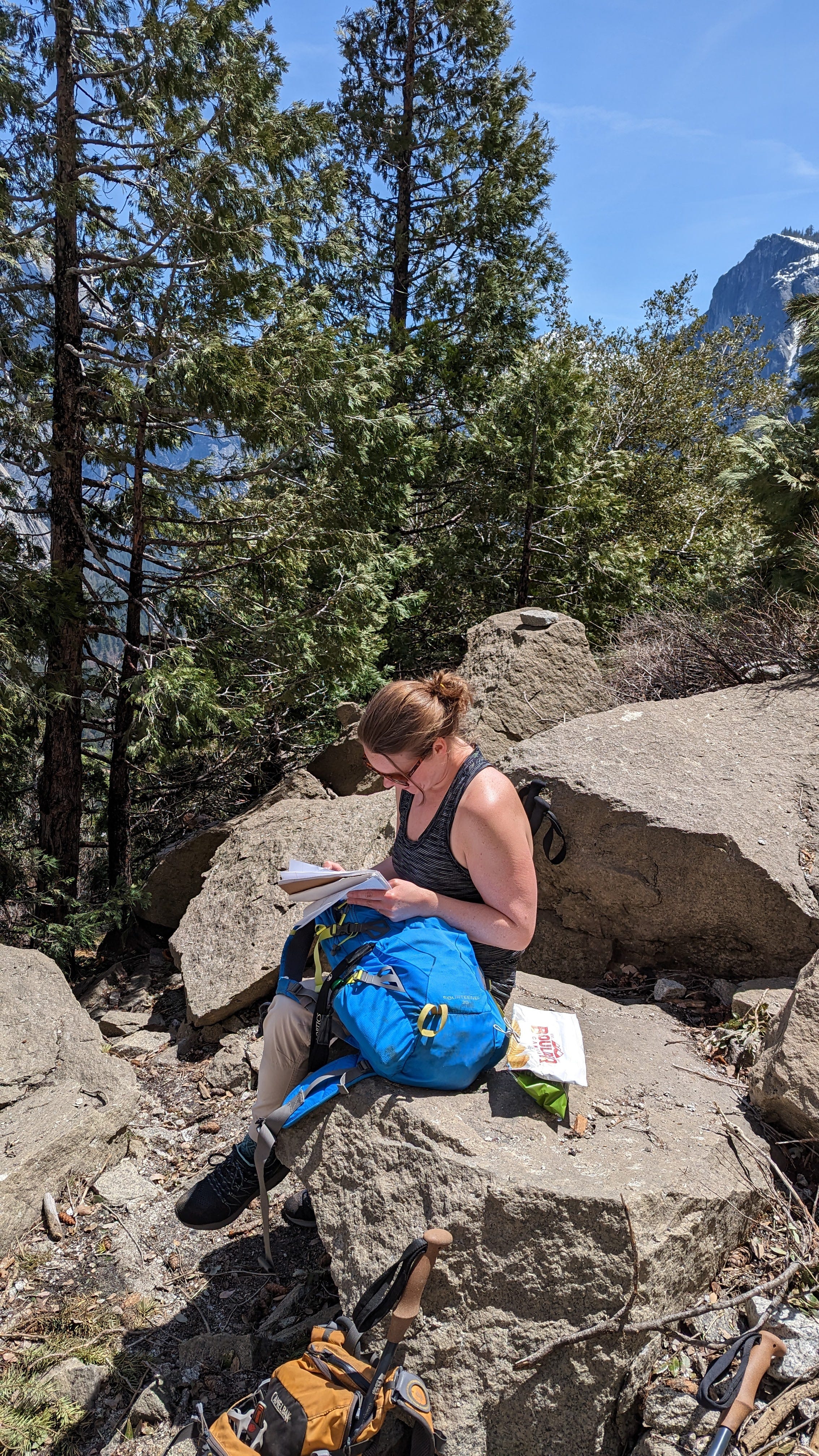
Kaylen: Ro and her mother, Carol, are not that far apart in age, and yet their avenues of realizing ambition are so vastly different. I feel like your book is one of the first in a genre that will look at the lifespan of Gen X and even millennials as historical fiction in that way. And I really enjoyed that aspect of the book too.
Ali: Thank you. I hadn’t thought of it that way, but I was born in 1983. I am part of that generation that got my first home PC, and then smartphones started coming out when I was in my twenties. The shift that we’ve experienced in real life is mind-boggling. And I did want to play with that in telling an alternate history.
For example—no spoilers—there are some technologies that we don’t have that appear in the book. And I had a lot of fun playing with the threads of technology and how these things would develop. In Carol’s opening scene as a mother, there’s no real technology involved. And then when her daughter becomes a mother, there are baby monitors, bassinets that can soothe your baby, socks that track their vital signs. All these tools and technologies. But fundamentally, we’re all dealing with the same issues.
Kaylen: To come full circle, and thinking of you in your fourth-grade classroom, bingeing these sci-fi novels: I’m curious if you remember who wrote any of those or if you had any favorite sci-fi writers at the time?
Ali: My first favorite author, whom I found when I was in second grade, was Terry Brooks, who writes the Shannara series. I just adored those books as a kid. Then, in fifth grade, I found Mercedes Lackey and Robert Heinlein. Those are the three that really stick out in my memory as a kid. Although now that I’m saying it, I’m also thinking of Anne McCaffrey and Elizabeth Moon.
I was deeply engrossed in sci-fi and fantasy as a kid. They’re very fundamental stories for me. They have completely built my writer and reader core. And then, as an adult, I became more exposed to literary fiction. Authors like Elizabeth Strout, who was probably the first contemporary literary writer to just blow my mind with Olive Kitteridge.
I love the idea of taking the intense character-focused writing of literary fiction and putting in the big ideas and some of the action sequences of a more traditional genre story, and just mixing it all up and having a lot of fun. That is what I try to do and what I hope comes across in this novel.
Kaylen: It definitely does. That is exactly my takeaway as a reader. And I’m just so excited for everyone else to get the opportunity to spend time with these characters you’ve created and within the world you’ve created for them. It was a very special trip.

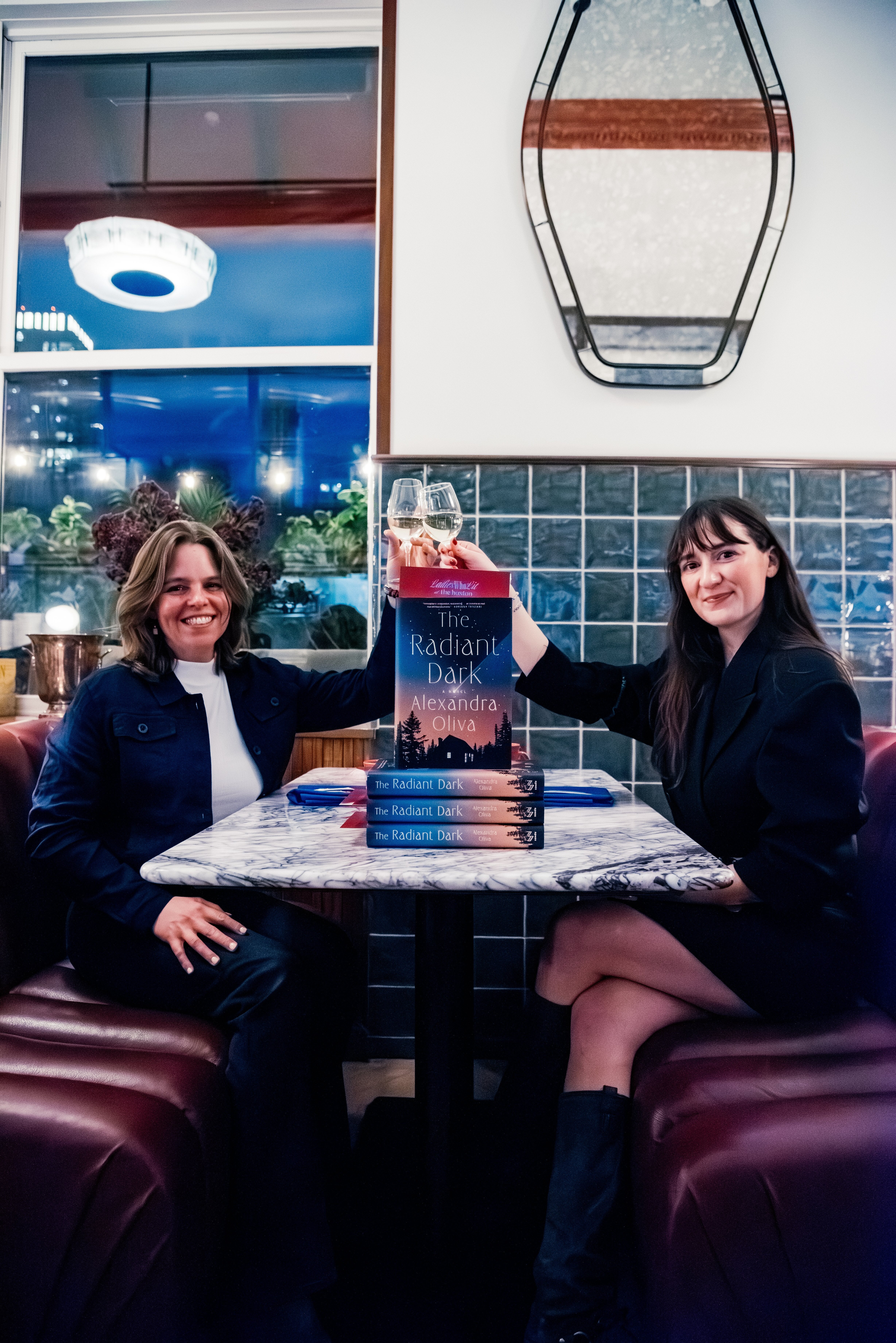
Curious about how Ali’s fascination with the unknown turned into this novel that Sarah Jessica Parker says is “incandescent”? You can enter to win your own copy by commenting below with your favorite piece of media about space or being a mom. Or, follow in Ali’s footsteps, and send us a rec that speaks to both.
No purchase necessary. Open to US residents 18+. Sweepstakes begins at 10:00 AM ET on 4/30/26 and ends at 10:59:59 AM ET on 5/5/26. To enter, share your recommendation in the comments. Limit one (1) entry per person. Five (5) winners will be selected at random and notified via DM by SJP Lit on or about 5/5/26. Void where prohibited. Sponsor: Zando, LLC. This promotion is in no way sponsored, endorsed, administered by, or associated with Substack.
No posts
Comments
Nothing yet. Say the first thing.
Sign in to join the conversation.