
Note: The author is the Director of Polar Intelligence for Davie Group. The opinions and views expressed at Sixty Degrees North belong solely to the author and do not necessarily reflect those of his employer.
Much has happened since Sixty Degrees North published a general U.S. Coast Guard Update/round-up article in December.
Although covering discrete news items is important, I find writing these articles helpful in maintaining the big picture of operations and procurements. Hopefully the help my readers as well.
Because it has been so long and there is so much ground to cover, this one will be split into two parts. This article (part one) will focus on operations and part two (coming soon!) will track procurement and infrastructure news.
National Security Cutters continue to deploy to the Arctic in the absence of Arctic Security Cutters. This particular patrol featured some important activities. From the U.S. Coast Guard press release:
Following the aftermath of Typhoon Halong, Kimball’s crew provided critical support to the area by positioning as a ready fueling platform for responding air assets. The crew also served as the on-scene coordinator and rendered assistance to a disabled and adrift bulk carrier that lost propulsion near a heavily trafficked pass through the Aleutian Islands.
Kimball participated in two joint operations with United States Alaskan Command under Operation TUNDRA MERLIN. These activities involved Kimball and multiple U.S. Air Force aircraft in simulated joint maritime strikes, providing valuable insight into the national security cutter’s capabilities and demonstrates integration of Department of Homeland Security and Department of War assets in support of homeland defense.
In January, as the St. Lawrence Seaway and Soo locks closed for the season and Operation Coal Shovel began, I published this article which looked at icebreaking operations in the Great Lakes and St. Lawrence Seaway:
From a U.S. Coast Guard press release:
KODIAK, Alaska — The Coast Guard commissioned its newest and sixth Arctic District Fast Response Cutter (FRC), Coast Guard Cutter Frederick Mann (WPC 1160), for official entry into its service fleet during a ceremony held in Kodiak, Friday.
The Mann is the Coast Guard’s 60th FRC and the third to be homeported at Coast Guard Base Kodiak. The crew of the Mann will primarily serve in and around the Aleutian Islands, Bering Sea, Gulf of Alaska, and North Pacific Ocean. The cutter is designed for missions such as search and rescue; fishery patrols; drug and migrant interdiction; national defense; and ports, waterways, and coastal security.
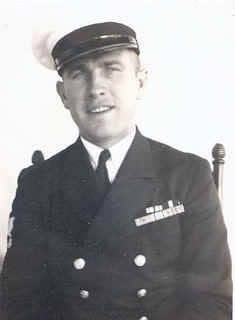
The cutter is named after Chief Warrant Officer Frederick Mann. I’m including his story, because it’s well worth a read:
During World War II, Mann’s ship, the USS George F. Elliott, participated in the initial landings of Guadalcanal on Aug. 7, 1942. The following day, Japanese bombers attacked the landing fleet and a bomber aircraft crashed into his ship, spilling fuel across the decks and setting the ship on fire.
Mann carried a fire hose into the burning ammunition compartment and pumped water into the space. Despite a lack of oxygen, suffocating smoke, and super-heated bulkheads, Mann re-entered the compartment to ensure the hose was dousing the fire and filling the compartment properly. His immediate actions prevented the space from detonating and causing more casualties aboard the Elliot.
As a direct result, the vessel continued to burn overnight without the ammunition detonating, and everyone was able to safely evacuate the vessel. For his heroic actions, Mann was awarded the Gold Life Saving Metal, and also received the Silver Star medal and the Presidential Unit Citation.
Afterward, Mann returned stateside and served a total of 31 years at a variety of units including captain-of-the-port (COPT) stations and lifeboat stations on the Great Lakes, East Coast, and Gulf Coast. He also served aboard the cutters Bibb and General Greene, buoy tenders Myrtle, Oak, White Pine, and finally Narcissus, which he commanded.
Mann met his wife, the former Winnie Knox, who served as a SPAR at COTP Miami at the same time as he did. Fred and Winnie retired to Bayview, Texas, near his last duty station at Port Isabel. They were married for 54 years.
Coast Guard veteran and war hero Chief Warrant Officer Frederick Dean Mann passed away at the age of 98 on Jan. 9, 2017.
From a U.S. Coast Guard press release:
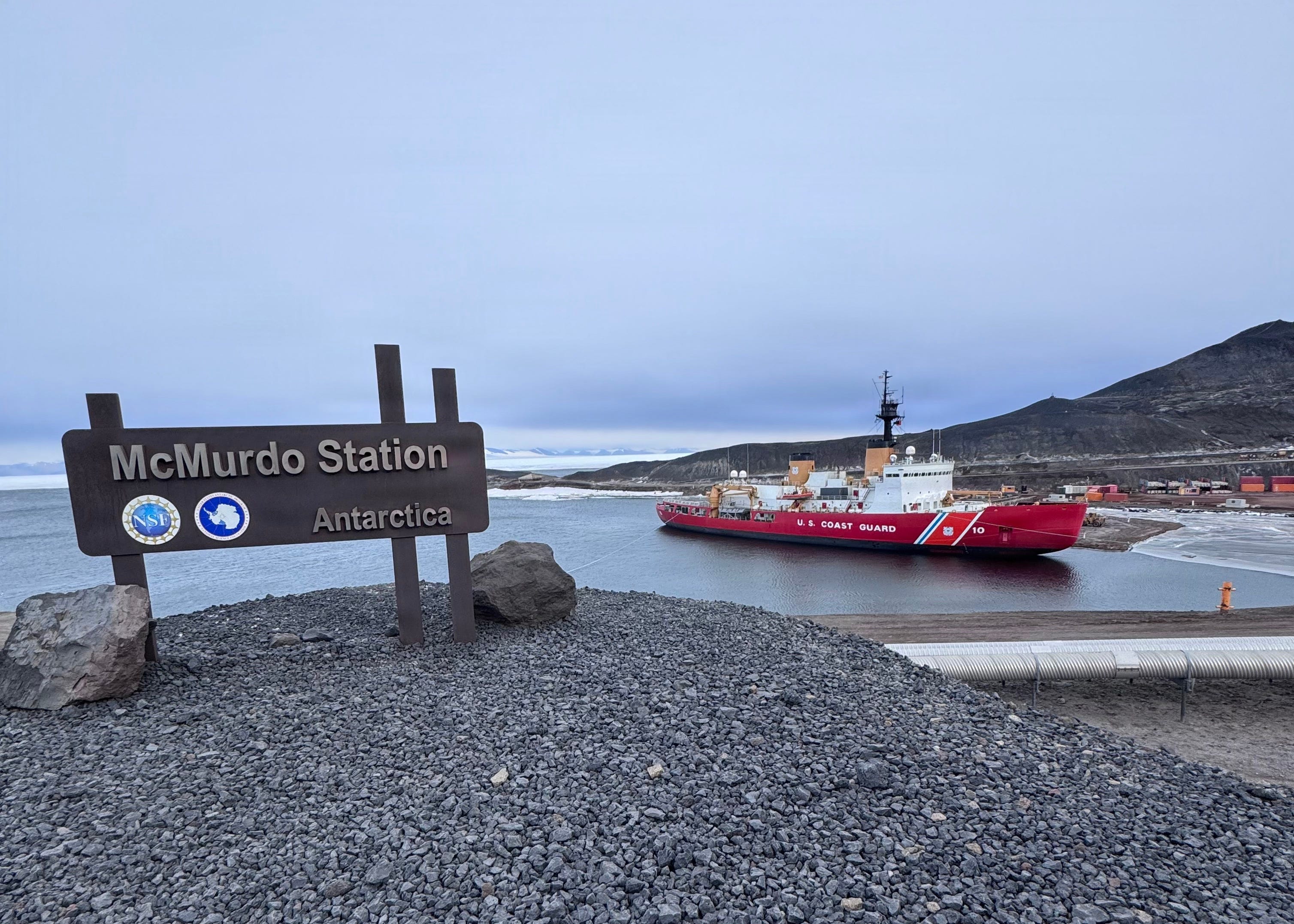
SEATTLE — The crew aboard the U.S. Coast Guard Cutter Polar Star (WAGB 10) returned home to Seattle on April 13, following a 146-day Antarctic deployment in support of Operation Deep Freeze (ODF) 2026.
Polar Star departed Seattle Nov. 20, traveling more than 20,000 nautical miles through ocean and ice to complete ODF 2026. ODF is the logistical support provided by the Department of War to the U.S. National Science Foundation (NSF)-managed U.S. Antarctic Program (USAP).
While spending 62 days in Antarctic waters, Polar Star conducted multiple mission sets before departing the Antarctic region on March 8. The cutter established a seven-mile-long channel through fast ice up to eight feet thick and escorted a fuel tanker and container vessel through the ice in McMurdo Sound in order to resupply McMurdo Station. Polar Star also escorted a tug with the 330-foot-long NSF Discovery Pier for install at McMurdo Station to provide a semi-permanent means to moor ships for the USAP.
Polar Star celebrated her 50th birthday during this year’s Operation Deep Freeze. The aging vessel is the only ship in U.S. inventory capable breaking a channel to McMurdo. The press release continues:
“Polar Star reminded us of her age on more than one occasion this deployment, but as always, this crew demonstrated the cutter’s unique capability by working together through each challenge and finding a way to get the job done,” said Capt. Jeff Rasnake, Polar Star’s commanding officer.
Polar Star will be completing its annual dry dock maintenance over the summer, ensuring it is ready to meet all mission requirements for ODF27. The critical work completed during these periods ensures that U.S. maintains year-round access to the high latitudes.
I’ve previously written about Operation Deep Freeze and its importance to U.S. security policy in the Antarctic:
More coming soon about Antarctica, including a look at Chinese policy and activity in this important region.
From a U.S. Coast Guard press release:
SEATTLE — The crew of the U.S. Coast Guard’s newest polar icebreaker, the USCGC Storis (WAGB 21), returned to their temporary Seattle home port Monday after a 36-day deployment to the Bering Sea.
The patrol focused on advancing operational readiness, strengthening interoperability with other military assets and testing new concepts to support prolonged operations in one of the world’s most demanding and austere maritime environments.
The U.S. Coast Guard continues to assess her capabilities:
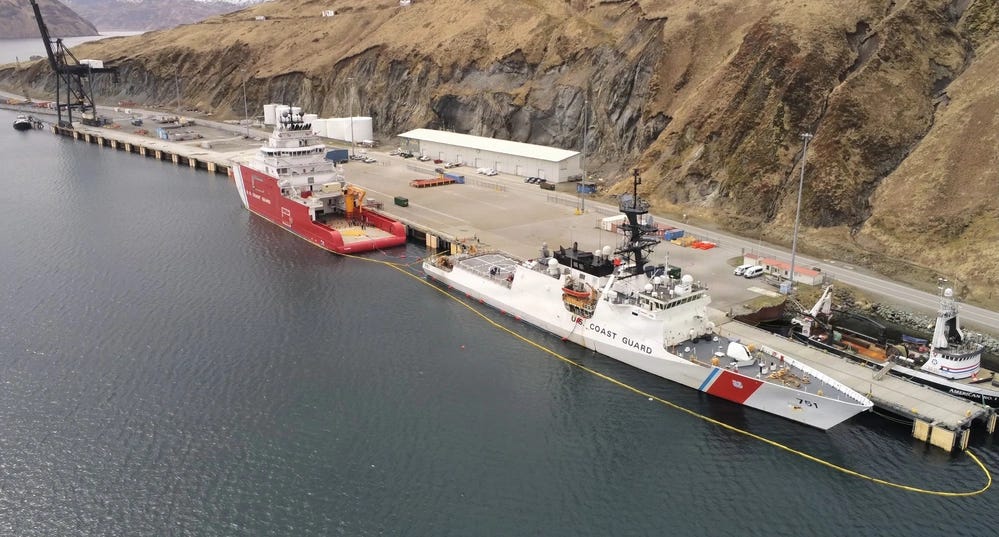
To demonstrate U.S. operational capability in the high latitudes, Storis conducted a joint passing exercise with the Legend-class national security cutter USCGC Waesche (WMSL 751). The exercise took place in challenging winter conditions less than a mile from the ice edge, with visibility limited to 150 yards.
Storis and Waesche also executed a proof-of-concept fueling evolution in Dutch Harbor, Alaska. This logistical demonstration expanded Storis’ operational flexibility for future deployments. By establishing cutter-to-cutter refueling capability, Storis can extend an asset’s time on station, maximizing operational reach while reducing the need for long transits back to port for logistics.
To ensure maximum readiness in a rapidly evolving geostrategic environment, the crew also conducted a gunnery exercise. Operating in the Arctic presents unique defense challenges, and the live-fire exercise provided essential hands-on training for the ship’s weapons teams. By honing marksmanship and weapons system proficiency, the crew reinforced the Coast Guard’s role as an armed service capable of defending national security interests and responding to emerging maritime threats.
From a U.S. Coast Guard press release:
ALAMEDA, Calif. – The crew of U.S. Coast Guard Cutter Waesche (WMSL 751) returned to their homeport in Alameda Friday after concluding a 113-day patrol in the Bering Sea. The cutter traveled 18,685 nautical miles conducting a broad range of operations including maritime law enforcement, search and rescue and the integration of new capabilities, all while projecting U.S. presence in the high north environment.
The Waesche crew rescued five mariners from the fishing vessel Ocean Bay after it ran aground and began taking on water near Umnak Island, Alaska. The cutter provided on scene support while an Air Station Kodiak MH-60T Jayhawk helicopter crew hoisted the fishermen to safety. Additionally, the Waesche provided communications and oversight during the aerial rescue of two hikers stranded in the Dutch Harbor mountains.
As mentioned above, Waesche took part in several exercises with Storis. The U.S. Coast Guard will likely continue to deploy National Security Cutters to Alaskan waters until the Arctic Security Cutters come online. This can be a challenging mission for the NSCs:
“The Bering Sea is one of the most challenging areas that the Coast Guard operates in, especially during the winter,” says Capt. Tyson Scofield, commanding officer of Waesche. “I am extremely proud of the grit and devotion to duty that the crew displayed by rising to the challenges of sub-freezing temperatures, equipment casualties and a government shutdown to successfully execute a myriad of missions and provide sovereign presence in this challenging environment.”
The U.S. Coast Guard wrapped up icebreaking operations along the East Coast and in the Great Lakes in early May, following a tough season. My article on the subject:
Those of you who track U.S. Coast Guard icebreaking/Alaska operations will recognize this as a fairly regular cycle. The U.S. Coast Guard continues to deploy National Security Cutters to the Bering Sea where they often face challenging conditions, as was documented in Kenneth Rosen’s Foreign Policy article from 2024. (paywalled).
Polar Star completed her sole annual mission, Operation Deep Freeze, and will soon return to the drydock. With the first Polar Security Cutter still years away, the U.S. remains one equipment casualty away from being unable to support its Antarctic program.
Storis brings some additional capability, and I suspect we will see her tasked with keeping track of China’s annual Arctic mission. Three of China’s polar research vessels recently got underway (with a fourth expected to join them) and will likely reach the Bering Sea in mid-July.
Note that these U.S. Coast Guard patrols conducted military exercises, including Kimball conducting simulated joint maritime strikes with the U.S. Air Force and both Storis and Waesche conducting live fire exercises. This underscores my strongly held opinion that future U.S. Coast Guard icebreakers, which will replace these NSC patrols, must be armed. They need to have, at a minimum, self-defense weapons and the ability to carry modular systems (such as the Mk 70 launcher). That way, they can supplement the U.S. Navy (and other U.S. Coast Guard missions) in wartime scenarios, as was the case in the Second World War. We have too few ships to build new ones without weapons.
That’s all for today.
All the Best,
PGR
Comments
Nothing yet. Say the first thing.
Sign in to join the conversation.