
We have an unpopular opinion about door frames. And window frames. And, honestly, most of what architecture calls "trim."
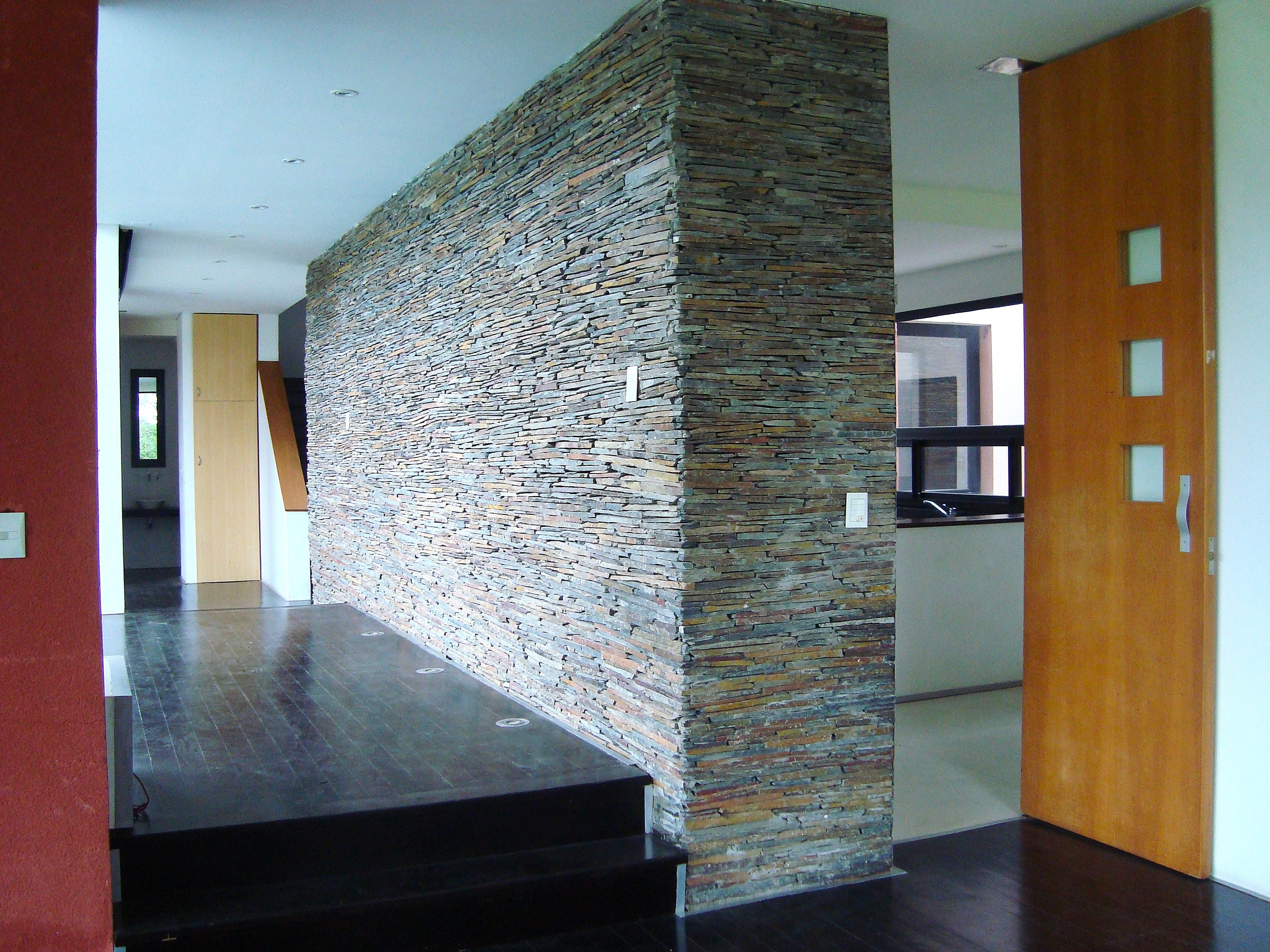
A frame announces a boundary. It says: here is where the door ends and the wall begins, here is the window and here is everything around it, look at this junction, we have decided it needs attention. We would rather the junction disappeared entirely. A door without a visible frame is not a door with something missing. It is a plane in a wall that happens to open.
This comes from thinking about a house the way you might think about a Mies van der Rohe building — walls, floors, ceilings as planes in space, meeting each other, sometimes overlapping, rarely announcing themselves with a border. A pivoting door reads as a moving plane, not a door-shaped hole with hardware around it. Hidden frames on windows do the same work. The glass becomes part of the wall's logic instead of an interruption to it.
We push this further than most people would tolerate. When two materials meet at a right angle, we like them to overlap rather than mediate the joint with a trim piece or a transition strip. Let the stone surpass the plaster. Let the wood run slightly past the tile. The meeting point becomes a decision, not an apology.
Pitched tile roofs are, in our opinion, the least resolved version of this idea. Two planes meeting at a ridge, usually finished with a row of decorative tiles that exist purely to hide the fact that two roof surfaces are touching. We would rather treat a roof the same way — as planes, stacked or offset, with a window plane inserted between two roof sections instead of a ridge line pretending the meeting never happened.
The same logic governs how we feel about tiles on floors and walls. Large format, or cement, laid so the surface reads as one continuous plane rather than a grid announcing every thirty centimetres that this is, in fact, tile. If small tiles are unavoidable, they need extreme discipline — one pattern, one direction, treated as a single surface rather than an opportunity for pattern-making.
And decoration follows the same rule. One large, considered object does more for a room than a shelf crowded with six small ones. A single piece with enough presence becomes part of the room's architecture. Six small pieces become clutter that a plane-based space has no patience for. The only exception is a genuinely small surface — a narrow console, a slim shelf — where one object, singular and resolved, is still the only right answer.
None of this is really about door frames or roof tiles specifically. It is about believing that a house is made of a small number of decisive surfaces, and that most of what gets added to "soften" or "detail" those surfaces is actually just noise arguing against the plane.
Une maison n'est pas faite de détails. Elle est faite de plans. Una casa no está hecha de detalles. Está hecha de planos.
No posts
Comments
Nothing yet. Say the first thing.
Sign in to join the conversation.