
Warning: This article contains references to abuse and neglect
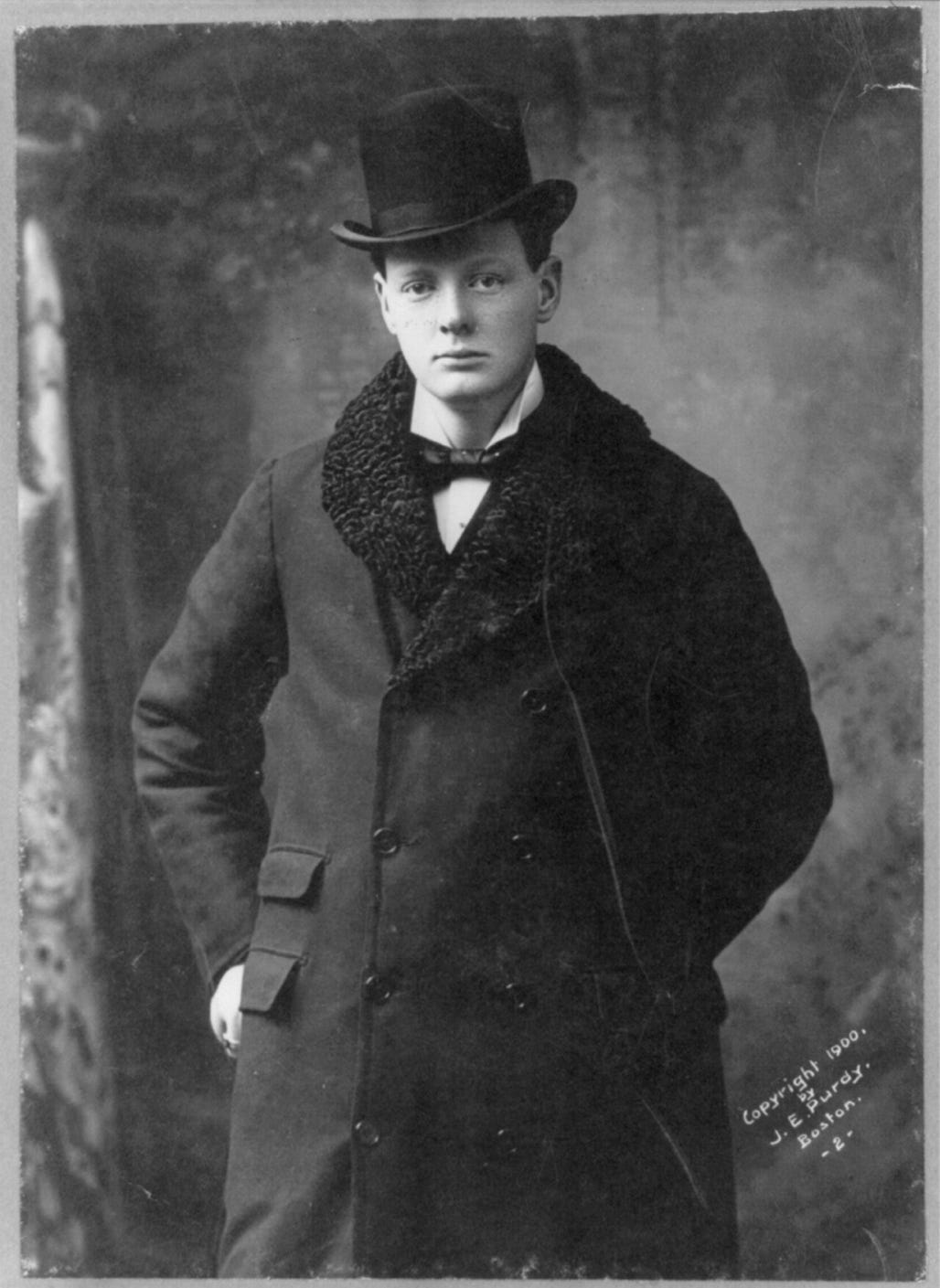
Winston as a teenager
In part A I looked at Churchill’s adult strategies for living. There was condemnation and judgment. And his varied frenetic activities had in common performance and the provoking of admiration. In part B, we look into the childhood of this man. From an early age there is evidence of a sense of destiny – an idea that he would be the leader of his country. At first glance, this makes sense when we think of his father - a famous politician – and his birth into the ruling class. But I think there is a problem with this explanation for Churchill being voted “the greatest Briton”1. Because there are other aspects of Churchill’s childhood that don’t fit so well with the narrative of success. Summarising his school days in later life, Churchill said “It is not pleasant to feel oneself so completely outclassed and left behind at the very beginning of the race.”2
I have found in the childhoods of iconic figures emotional trauma behind a drive for idealisation and power. Was this true of the child born in the palace of Blenheim? On the map of narcissism, three kinds of childhood experience are implicated in steering a child’s strategies for living. Are these three found in severe form in this boy’s childhood?
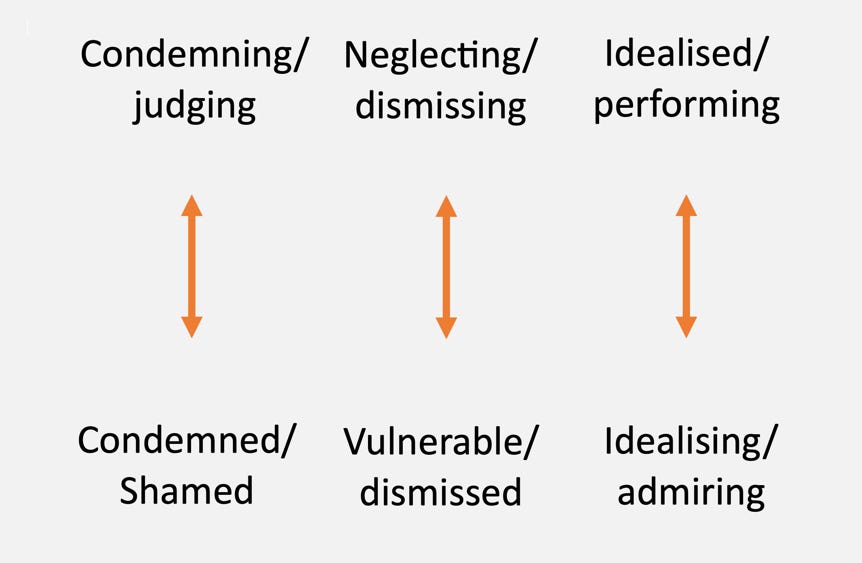
The map of narcissism3*
In narcissism theory taking a powerful, idealised or condemning role in relationships is a strategy for finding distance from shame and humiliation in ourselves. Those who need to do this most are those for whom these feelings have been most overwhelming. This raises questions about some of our political leaders.
If we were to go back to 1884, and the consulting room of the Churchills’ family doctor, we would find a nine-year-old Winston being examined. The boy has developed a fever. But this appointment will be a turning point in the boy’s childhood. The doctor will urge the family to move the boy out of St George’s boarding school where he has been for two and a half years. The examination has revealed infected wounds - the results of severe beatings. In his autobiography this boy will one day describe “the most cruel and sadistic headmaster in the land.”4 He inflicted beatings in which “blood flowed freely”2 and Winston received beatings more than most.5 The punishment when, in defiance Winston destroyed this headmaster’s hat, is recorded nowhere.
Winston had been quickly identified as a difficult and failing pupil with “no ambition.”4 He was described as “a constant trouble to everybody and…always in some scrape or other.”5 Churchill later said that if he had stayed at St George’s, “I would have broken down completely. Can you imagine a child being broken down? I can never forget that school. It was horrible.”4 Churchill’s experience of school could have crushed any sense of destiny, greatness or self-esteem. He was shamed, condemned and devalued in ways that would be illegal today. And he was an academic failure. Winston prepared for entrance to the Royal Military Academy. But his housemaster was struck by his “forgetfulness, careless, lateness and irregularity in every way.”4 I wonder how much of this was a consequence of trauma. How might this experience have influenced this boy’s adult personality?
Surely though, this future national leader felt valued by his family? For a while, Winston appeared to be next in line to be the Duke of Marlborough. But his grandmother said “it would be intolerable to have that little upstart Winston become a Duke.”6 This doesn’t yet sound like destiny coming into being.
All accounts of Winston’s relationship with his father, Lord Randolph, describe a boy trying to win his father’s approval and receiving instead condemnation. In response to such efforts, he said his father “froze me into stone.”4 Randolph said his son’s expensive education proved only “his total worthlessness as a scholar or a conscientious worker”.4 Only when he became a military gentleman cadet did he “acquire a new status in [his] father’s eyes.”4 He was now taken to parties where he began to mix with the elite. Was condemnation and shame a part of Winston’s childhood more than for other boys? Despite the social status of his family, it seems that it was.
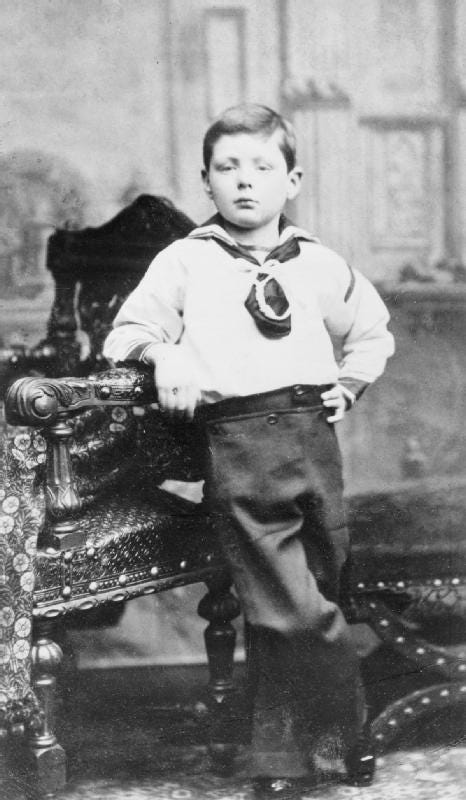
Winston as a small boy
Before his dramatic resignation from government and descent into terminal syphilis, Winston’s father, Lord Randolph, was a powerful man. He dressed eccentrically – the only baby blue coat in a parliament filled with black.5 He smoked cigarettes from a diamond studded holder.4 But Lord Derby said “with all his remarkable cleverness [Lord Randolph] is thoroughly untrustworthy, scarcely a gentleman, and probably more or less mad.”6 This is an extreme personality. His oldest son, it seems, was “ignored… by Randolph in his headlong pursuit of power.”5
Writing to his mother after his father’s death, Winston quoted from his book, The River War (1899): “Solitary trees, if they grow at all, grow strong: and a boy deprived of a father’s care often develops, if he escapes the perils of youth, an independence and vigour of thought which may restore in after life the heavy loss of early days.”4 Winston said he was closer to his mother, Jennie. Was this a relationship that would cushion the blows of boarding school abuse and a disinterested father?
Jennie was the beautiful American daughter of a “corrupt, ruthless manipulator of Wall Street…a swindler.”5 Father and daughter shared a love of singing – a talent Jennie would later use in English high society. Jennie was not close to her stoic and snobbish mother, Clarissa. When her mother saw the possibility of having a Duke for a son in-law, Jennie’s proud father had a warning: he had “fathered a tigress.”5
At the boarding school at which Winston was being treated cruelly, we might hope that he was visited by parents, or that stays at home offered respite. But neither birthdays nor Christmas were times when he saw his parents. Winston’s feelings about the lack of interest from his parents can be read in desperate letters to his mother. They contain phrases like, “it seems that with you, out of sight is out of mind”4 and “I shall never trust your promises again.”4 The boy resorted to telling his parents how they should feel: “300 mamas and papas want to have their offspring home. You should like to have me.”4 Later, Winston’s son concluded that, “the neglect and lack of interest [in Winston] shown by his parents were remarkable, even judged by the standards of late Victorian and Edwardian days.”4 Winston’s separation from his mother was, according to one biographer, an “emotional bereavement, the pain of which failed to wane as the years went by.”4 How does this create the confidence of a world leader?
What was taking up his parents’ time? One observer said of Jennie that “if something of beauty attracted her, she just had to have it; it never entered into her head to stop and think how she was going to pay for it.”6 This applied not only to objects in shops but also to powerful men. These included Edward, the future King of England. This was the same King who in part A, was found giving Jennie’s politician son a telling off for bad behaviour. Randolph could claim the busyness of parliamentary duties. But he was also making time for affairs.
There was another mother figure. In the novel Savrola (1897) is an older woman whose relationship with the main male character is given high value. “All the love of her kind old heart was centred in the man she had fostered since he was a helpless baby. And he did not forget.”4 Churchill is this main character in his own novel, and this kind-hearted woman was a representation of Elizabeth Everest. She joined the family as Winston’s nanny before he was a month old. At her funeral Winston remembered her as “my most intimate friend.”4 We will never be able to measure the difference this woman made to the mental health and leadership of this adult.
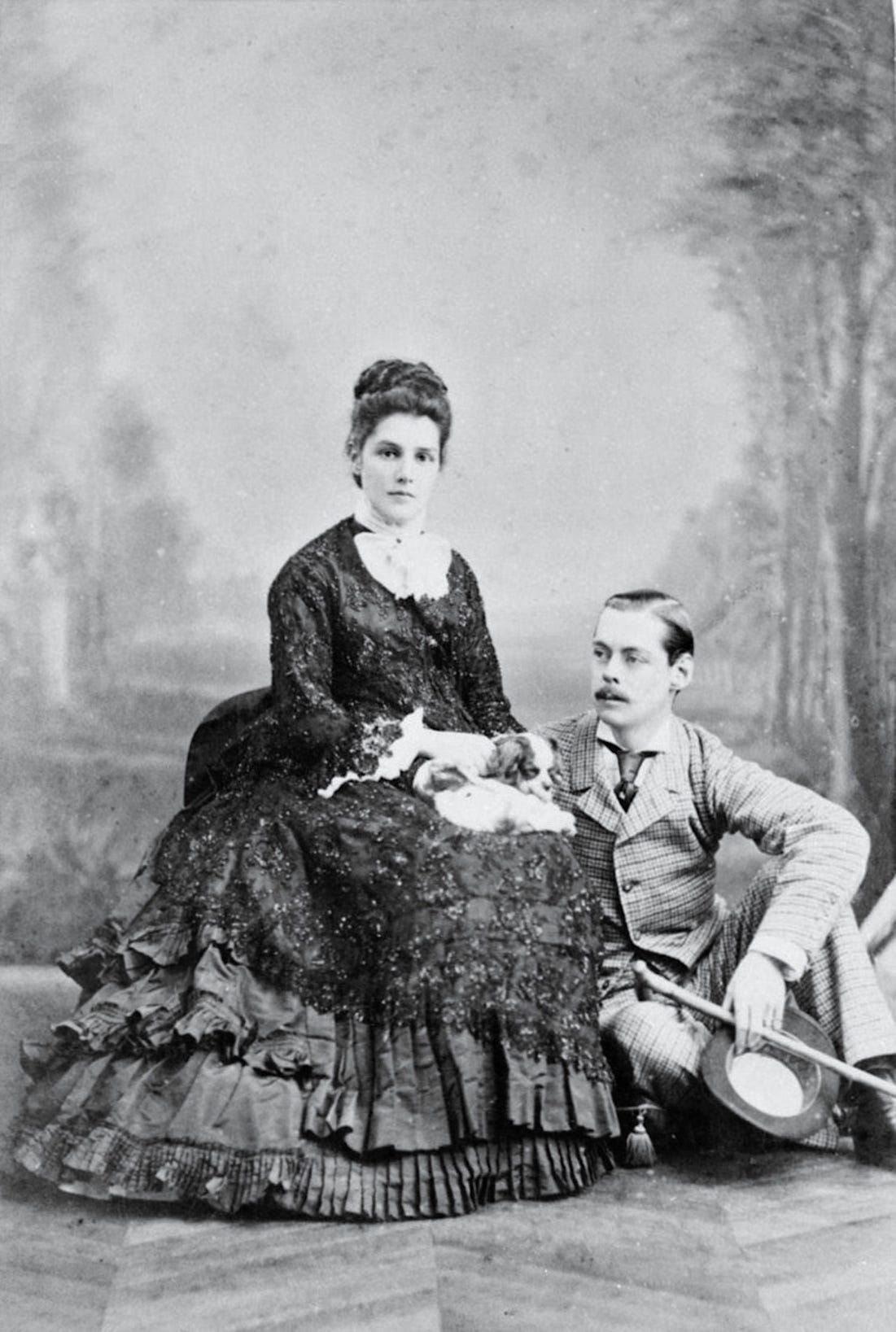
Jennie Churchill, pregnant with Winston, with Lord Randolph Churchill
Yes, for this first son of an English Lord, there was idealisation and specialness. But this came in a context that is also an important part of the narcissism algorithm. It was part of a childhood devoid of parental interest and packed with condemnation.
In the grounds of Blenheim palace is a 41m high ‘Column of Victory’. As a child, Winston learned that at the top of this column was Lord Marlborough – hero of the battle of Blenheim. This same man was pictured all around the palace. For the young Winston, adult success was defined by victory. But following this example, there were Winston’s parents – two adults who were living examples of how to live by power, performance and admiration.
Writing about Jennie and her sons, biographer Shelden makes a connection between emotional neglect of children and idealisation: “She missed birthdays and left letters unanswered and breezed in and out of their lives so quickly that she seemed at times more a passing vision than a real person. Winston resented the neglect but tried consoling himself with the idea that she was ‘a fairy princess’ – elusive and ethereal.”6 Churchill himself said that “she shone for me like the evening star. I loved her dearly – but at a distance.”2 We now know from research that in order to learn how to manage themselves emotionally and in relationships, children need an idealised parent less and an emotionally close parent more.
Lord Randolph too, was a performer. He was “an ambitious and outspoke politician…always searching for attention but never getting enough to please him; the proud son of a great family, but a difficult husband and father.”6 Winston practically disowned his father at times - feeling both judged and neglected by him. But he said later, “I read industriously almost every word he had ever spoken and learned by heart large portions of his speeches.”4
For this teenager though, powerful speeches in parliament did not have to be imagined. Winston watched debates from the gallery for weeks whilst recovering from injuries after leaping from a bridge whilst being chased. He thought Prime Minister Gladstone was like “a great white eagle at once fierce and splendid. His sentences rolled forth majestically and everyone hung upon his lips and gestures.”2 Outside the Parliament, walking with his father, he saw “the passers-by take off their hats in the streets and the workmen grin when they saw his big moustache.”2 The boy was surrounded by idealised performing adults who appeared, most importantly to this boy, to be quite far from vulnerability and shame.
When do we first see such strategies of power and performance being picked up by Winston himself? If we were to go back to April 1889 and Harrow School, we would find this forgetful and failing 15-year-old with the lisp and stammer reading a poem in a school competition. The poem - Macaulay’s ‘Lays of Ancient Rome’ - is 1200 lines long. As the school look on in shock, he is reaching the end of the poem, read from memory, having made not one mistake. The performance will win him first prize. What has happened? Winston will later acknowledge the massive effort put into rehearsing this poem. But after these years of emotional neglect, condemnation and physical abuse, here is a different kind of experience. How does this feel for this boy? He has found a way to get far from humiliation. And it is a route he can control.
One biographer names a new personal goal forming in Winston’s mind: a goal of “personal distinction.”4 He began to dream of being a great orator – someone who, like his father could “dominate the House of Commons.” He had discovered performance.
The man who navigated Britain to victory over Nazism is often described as having from an early age a sense of destiny. At 17, he told a friend “I shall save London and England from Disaster.”6 When we idealise someone, it is an attractive idea that they had this certainty about who they would be. I’m not discounting destiny. I don’t discount the supernatural. And I cannot deny the confidence that the 41m Column of Victory at Churchill’s birthplace might offer a boy. Dreams of heroism were more conceivable for this boy than for most.In his parents also he was shown examples of how to use performance and powerful condemnation. But even though Churchill was born in a place filled with paintings of the victorious Lord Marlborough, there is in this same room an elephant. Even world leaders are born vulnerable. And when Winston had needed his parents desperately, they had shown no interest. When he was being abused by those in power, he was being condemned also at home. Emotionally, how would this impact a child? It might create a sense that despair, shame and humiliation were things to find distance from – as a priority in life. Those close to Churchill knew a man who could not stop working. Prophecies of idealisation, power and victory can be a sign of anointing, or an expression of desperate intent.
Hitler made a prophecy about his distinctive moustache. When a friend suggested it was no longer fashionable, he predicted that in the future this moustache would become fashionable precisely because he wore it. Like Churchill’s this was a prophecy about future greatness and fame. Perhaps we can see more easily in Hitler less prophecy and more ambition and personal need. But by the time we idealise a political leader, narcissism has created a persona of strength. It becomes difficult to work backwards to childhood vulnerability, because all vulnerability has been hidden.
The narrative we often accept about our leaders is that they have been given confidence, encouragement and resources by an optimised start in life. Behind the iconic status of this leader though, is a combination of privilege with two other primers: neglect and condemnation. We can adapt the narrative to say this man’s success overcame obstacles. But in narcissism, this is not how it works. Trauma was not a tree across the road. It was the fuel that powered his drive. How should this influence how we judge those who want to lead us?
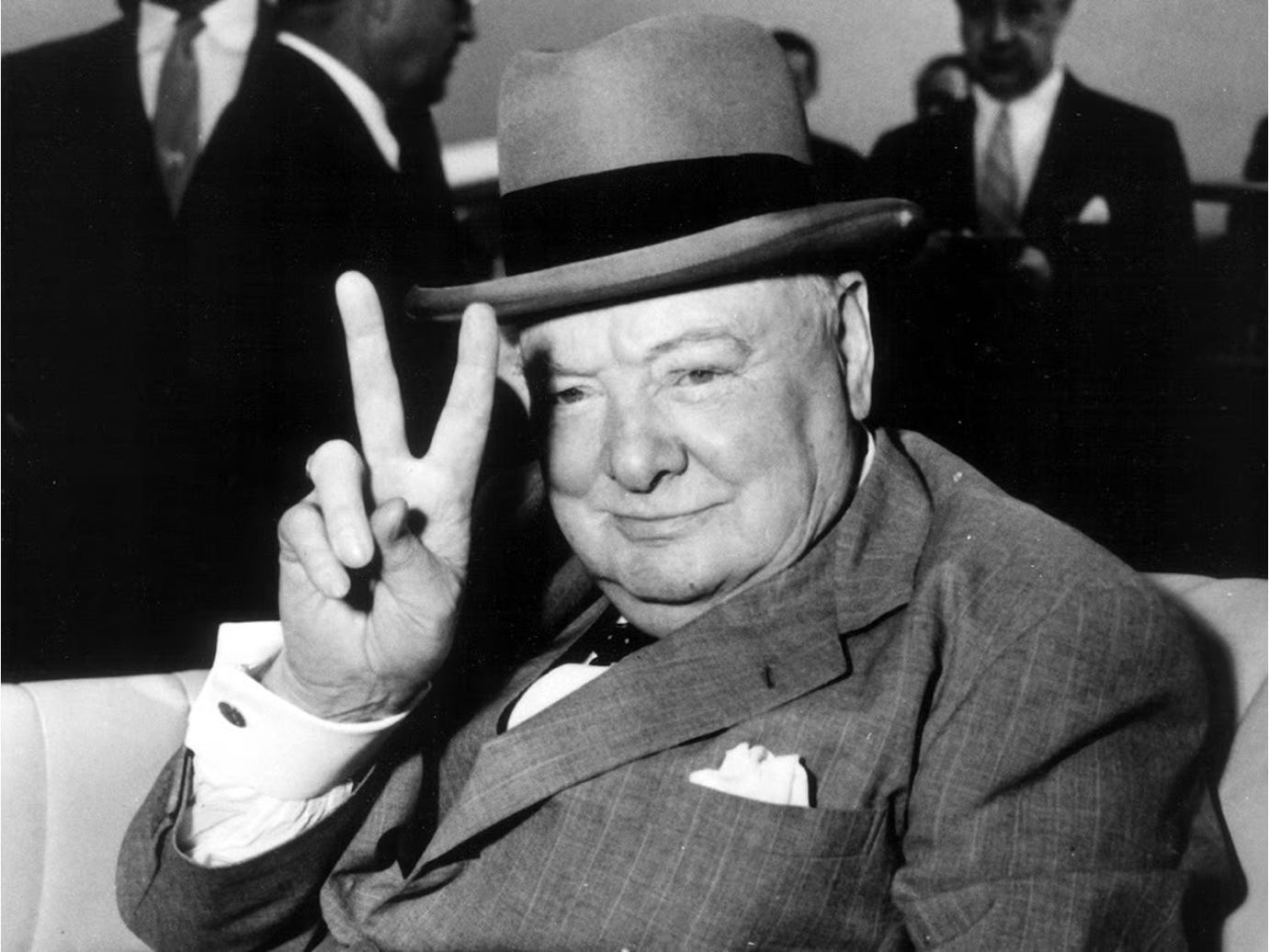
At the end of the first world war, Winston’s childhood prophecy was in pieces after a fall from grace from which it would take decades to recover. But this need to become a hero was so great that history could not argue with it for long. In the 1940s this man’s personal needs and the needs of his nation converged. In April of 1945 Mussolini was executed. On 30th of April, Hitler committed suicide. On the 8th of May, West Germany surrendered. Churchill was now an icon. But narcissism is a thing of paradox. And the end goal can often be understood by that which it promises escape from. The two-finger sign that became such a part of Churchill’s persona was a V for victory. The success story of his life was conditional upon victory. When a country needed someone to carry them urgently and forcefully to victory, they found someone who was moving obsessively in that direction – running faster than anyone else - from victory’s polar opposite: humiliation.
Disclaimer: All views expressed are my own unless otherwise stated, and do not necessarily reflect the views of any institution I have been employed by. The content here is for information and should not be interpreted as advice.
1. BBC (2002) TV poll of the greatest Briton to have ever lived.
2. Churchill, W. (2000) My Early Life. Eland.
3. Ryle, A. & Kerr, I.B. (2002). Introducing Cognitive Analytic Therapy. Wiley.
4. Norman, A. (2012) Winston Churchill: Portrait of an Unquiet Mind. Pen & Sword.
5. Higham, C. (2006). Dark Lady: Winston Churchill’s Mother and her World. Da Capo Pr.
6. Shelden, M. (2013). Young Titan: The Making of Winston Churchill. Simon & Schuster
7. Roberts, A. (2019) Churchill. Penguin.
*Ryle did not apply this approach only to narcissism. If this mapping approach has been used in your own therapy, this does not mean that you have narcissistic difficulties.
Comments
Nothing yet. Say the first thing.
Sign in to join the conversation.