
It’s been a couple weeks since I unboxed the new Rolling Stones album, “Foreign Tongues”.
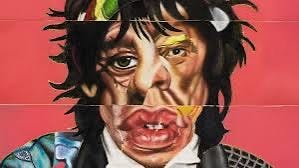
When I was 15 years old I saw the Stones at Chicago Stadium on July 23, 1975. It had a significant impact on my life, to say the least. Since then I’ve seen them play live sixty-five more times, which is equal to how many years I’ve been alive.
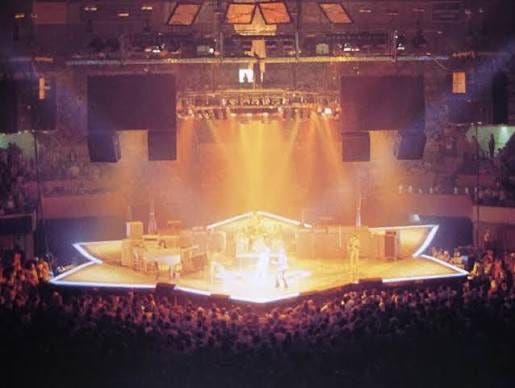
Since that first show 51 years ago, they’ve released 12 albums with new, original music. In the 10 years prior to that, they released 15 albums with new, original music.
Their music, as most people who know me would say, has been the soundtrack to my life. I love multiple genres of music, but for some reason, their music and seeing them perform live has captivated me in a way that’s different from any other musician or band.
It’s always exciting when they put out new music, and their newest album is no exception.
The first new music from the Stones I heard on the day it was released was “Black and Blue” in 1976. I remember one song on that album really captured my interest; “Memory Motel”. It was a love ballad that featured Mick Jagger and Keith Richards, alternating vocals back-and-forth, telling the story of a lost love.
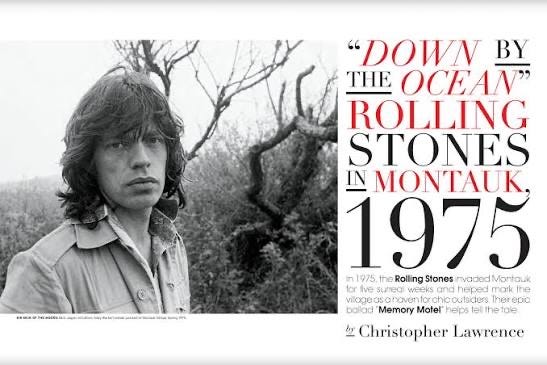
While they had sung backing vocals on each other’s tracks on prior songs, the only other example closer to a duet like this was from the late 60s in a song from “Begggars Banquet” called “Salt of the Earth.” Memory Motel also reminded me of the film “Ladies and Gentlemen”, a concert film from the 1972 tour that played every weekend at the midnight movies at the Biograph Theater in Chicago, the same place the “Lady in Red” set up the assignation of notorious bank robber John Dillinger in 1934.
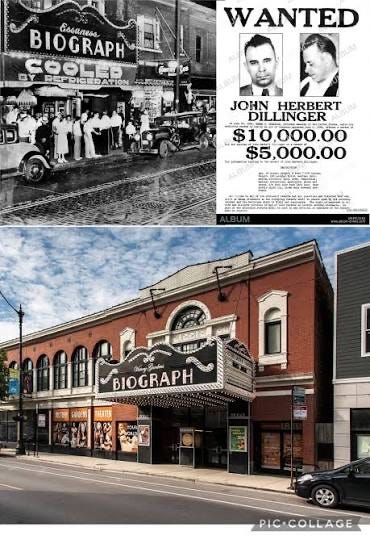
When there weren’t any parties on a Friday or Saturday night in Buffalo Grove, several of us ended up at the Biograph to watch the concert film. One of my favorite parts was when Mick and Keith shared the microphone and sang the chorus together during “Dead Flowers”.
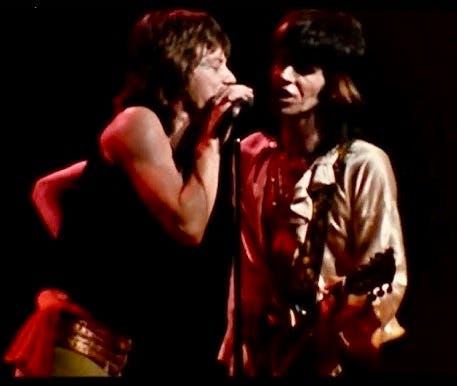
This was before Mick and Keith, two of the most famous rock stars of our time, were fighting in a way that would have broken up most bands.
Up until that point, they’d had a great camaraderie. Whether it was on stage, on film, or in an interview, they epitomized the rock star lifestyle and seemed to be the best of friends.
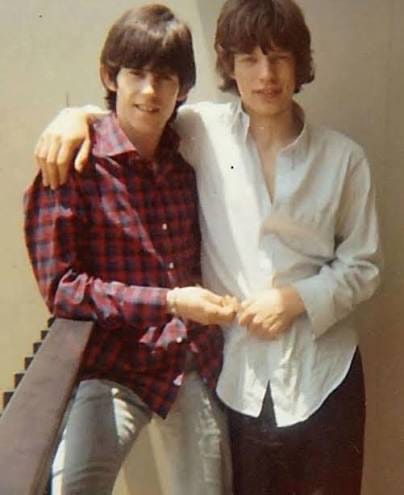
As the years went by, the distance between Mick and Keith began to become publicly known. In fact, in the 80s, it was so prevalent that Mick went off and recorded a solo album, and the battle between the two became known as WWIII amongst their fans. It stopped them from touring, from making new music, and it put a wedge between the two of them that has become difficult to overcome.
They even filmed a music video for “One Hit to the Body” that looked like it was filmed by the “Warriors” director. At around the 2 minute mark, they put Mick and Keith alone together to go at each other while they perform the song.
Fortunately, they came to an agreement that The Stones was more important than their differences, and eventually called a cease fire .
To me, the biggest impact of the breakdown of their relationship has been in the process of how they create new music, or don’t create new music.
From the time they started writing songs together, up until the early to mid 1970s, there seemed to be some type of magic formula that allowed the “glimmer twins” to write and create music that will go down as some of the best classic rock ‘n’ roll music in the genre’s short lived history.
Most critics agree that what started with Beggars Banquet, then Let it Bleed, then continued with Sticky Fingers and culminated with Exile on Main Street.. were as strong a quartet of albums consecutively put out by any rock and roll band ever, including any four album stretch by the Beatles.
At the same time, they also were able to break new ground and succeed in redefining multiple aspects of the rock and roll industry that they single handily were helping evolve.
Jumping Jack Flash was the first Music Video a major band had produced. They were the first major artist to use wireless microphones and guitars. What started with the 1969 tour and continued on with the 1972 and 1975 tours became the blueprint for every major rock ‘n’ roll tour for the next several decades. The creation of a logo in the form of a simple tongue design started the process of how to market and monetize their music through tshirts and related merchandise alongside music.
I bring all this up because at 80+ years old, I see Foreign Tongues as the potential rebirth of a band that had become a bit stagnant, and hopefully, an opening in the door to allow Mick and Keith one more opportunity to get back to what made them the greatest rock and roll band in the world.
As someone who has followed them so long, that’s part of what makes this new music so remarkable. It’s not just that Mick and Keith are still recording in their 80s. It’s that they’re still capable of surprising listeners with fresh, adventurous music, something very few rock artists have ever accomplished at that age. The only other examples of any musicians who’ve even come close to this would be Tony Bennett, Willie Nelson, and Paul McCartney, who plays Bass on one track on this album.
As I began to listen to this album, something about it seemed familiar, but I couldn’t put my finger on it. On July 8th, one of my friends sent me a picture of their tickets stub from the Stones concert we attended together at soldier Field on that day in 1978.
It caused me to look for my 78 ticket stubs
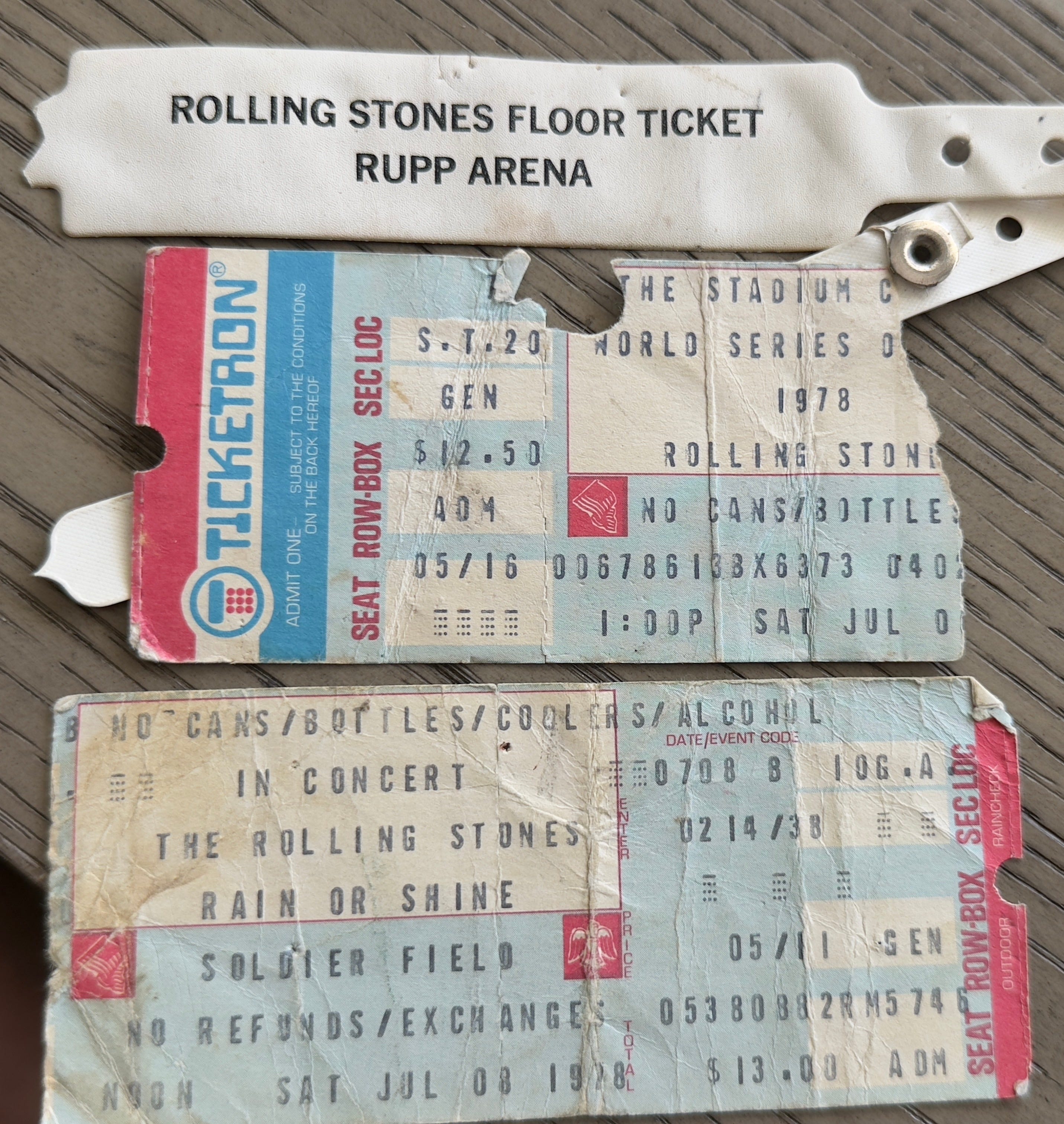
Suddenly .. everything clicked.
For Rolling Stones fans, the summer of 1978 was magical.
Some Girls had been released in April and it wasn’t just another Stones album. It was a statement. While punk and disco were changing the musical landscape, the Stones didn’t fight either one. They embraced both, while still sounding completely like themselves. Rock, blues, punk, country, disco, soul. Every song had its own personality, yet somehow it all fit together. It was adventurous, unpredictable, and unlike anything they’d done before.
My friend Ben and I were a year out of high school and we couldn’t get enough of it.
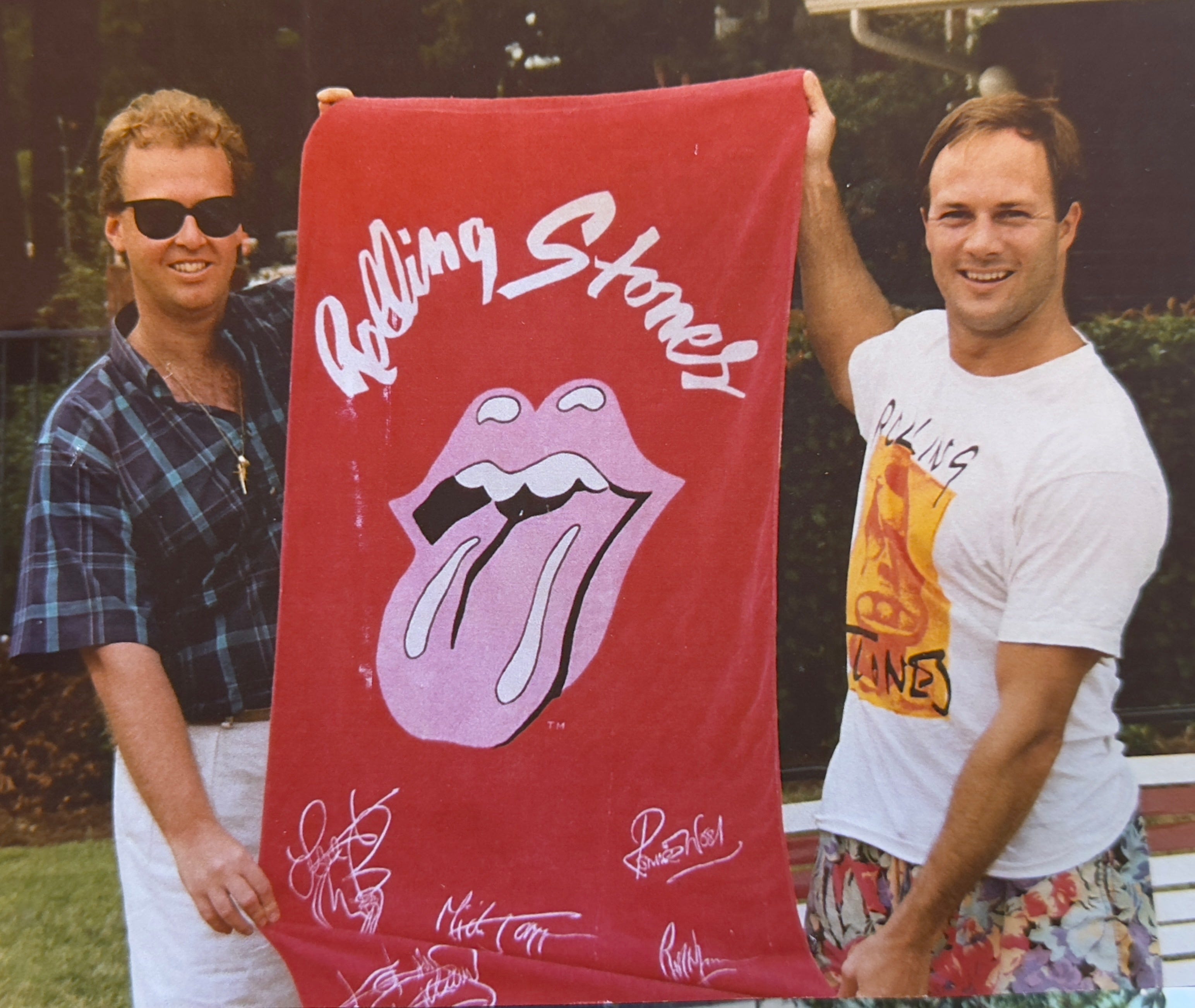
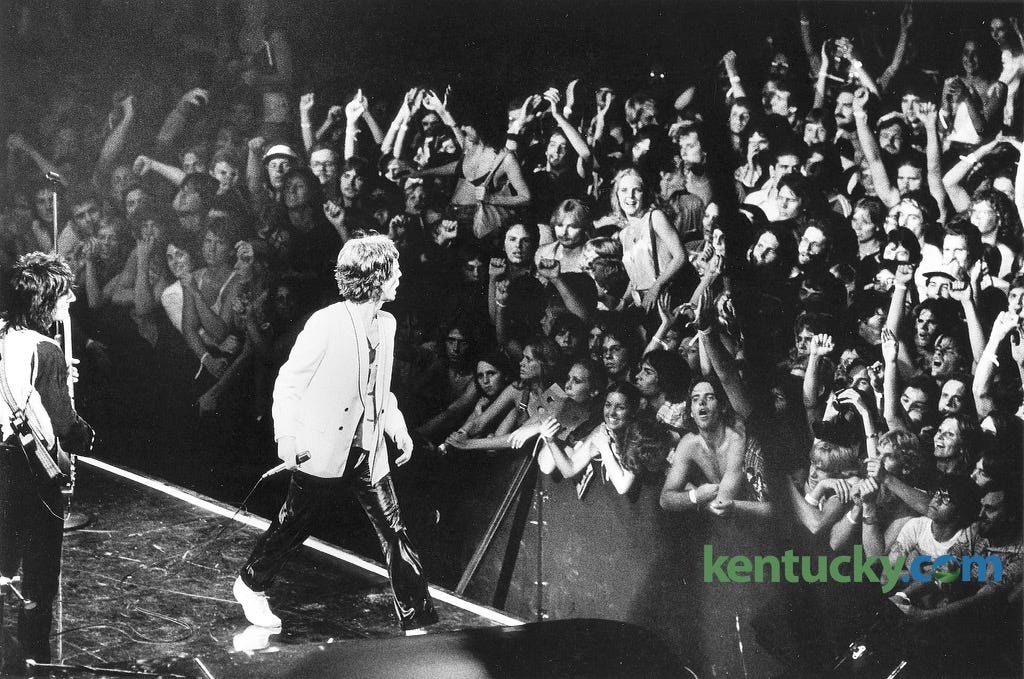
We already had tickets to see the Stones at Soldier Field in Chicago with a large group of our friends, but when we realized they were playing in Lexington a few days earlier, we decided on a whim to drive to Kentucky without tickets. We’d take our chances.
A couple of hours before showtime we pulled up to Rupp Arena. I had my head out the window asking anyone and everyone if they had extras. Just then, some guy walked across the cross walk as we were at a red light, and he had two floor wristbands. We bought them for face value, parked, made our way inside, and slowly worked through the crowd until we were a couple rows back, center stage, in the crush. Not sure how we managed that, but we were from Chicago and used to improving our view at GA shows.
I’m upper right in the photo below, curly hair and glasses.
The lights went down.
They opened with Chuck Berry’s “Let It Rock” and we looked at each other cluelessly, as we didn’t recognize the song. Apparently it was the B side of a single off of Exile that we had never bouggt, or heard, and while we knew the other Chuck Berry sings the Stones had covered, this wasn’t on our radar, but man, it sounded great.
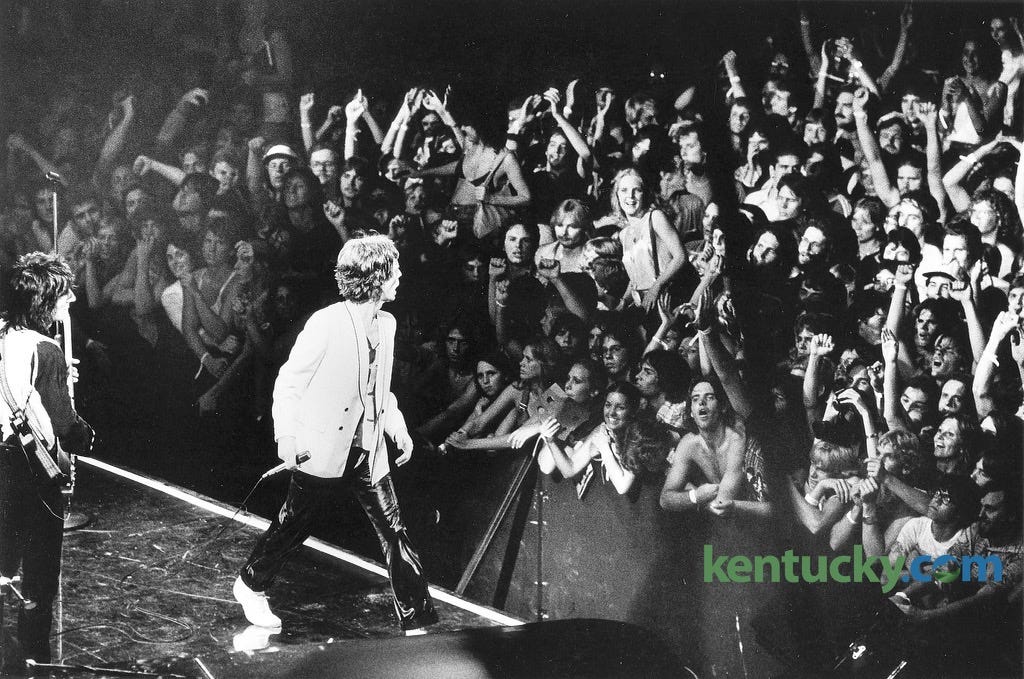
Then “All Down the Line.”
Then “Star Star.”
Nearly fifty years and 66 Stones concerts later, I still think that’s one of the greatest three song openings I’ve ever experienced.
We had been listening to Some Girls nonstop all summer, and that night they played ten of the album’s eleven songs. That’s almost unheard of for the Stones, whose tours usually revolve around the hits. But in 1978, they believed in the new material, and they played it like they knew they just released another classic Stones album.
That concert only fueled our obsession. We followed the tour to Cleveland before heading back home for the Soldier Field show.
I’ve loved every era of the Rolling Stones, and seeing them three more times in 1978 only increased my thirst for more new music and more opportunities to see them play live.
A couple significant changes happened to the Stones, and to my life after that tour.
Shortly after the tour finished, they did an epic performance of three songs on Saturday Night Live and it also included a really cool skit with Charlie and Ron portraying customers at the Billy Goat Tavern in Chicago ( Cheezeboogie, Cheezeboogie).
Shortly after that, Keith Richards was given probation and ordered to play two concerts for the blind as his sentencing for the arrest on drug charges he had been awaiting trail on from a drug bust in Toronto in 1977.
After his arrest, Keith had been helped by Mick, and by a person on Mick’s mgmt team; Jane Rose. They helped him get sober, get off heroin, and not only was Jane there during the really difficult times, she also changed sides and to this day she’s still Keith’s business manager.
During this time they recorded Some Girls, went on tour and filmed SNL, all not knowing if the charges against Keith would stick and could it be the end of the Stones?
The raw energy combined with Keith’s newfound sobriety had allowed the band to fire on all cylinders. This also would be the last album they recorded that would be like every album since Mick and Keith started writing the majority of the songs they went into the studio to record. They’d each bring in ideas and then they’d work together on the music and lyrics in a collaborative manner that would create some of the greatest songs in rock and roll history.
Their next album in 1978, Emotional Rescue, didn’t hit the mark in the way Some Girls did. Perhaps the biggest difference wasn’t musical but personal. During this period, Keith had become relatively sober after his Toronto legal problems and wanted to reclaim a larger role in running the band. At the same time, Mick had become accustomed to making many of the decisions himself. Contemporary accounts describe them working different shifts. Mick often recorded in the early evening, while Keith arrived much later at night, meaning they were rarely in the studio together. Mick and Keith were beginning to function more as separate creative centers than as the inseparable “Glimmer Twins.
Tattoo You came after Emotional Rescue in 1981, and to me, that was another masterpiece, but much of Tattoo You was built from older, unfinished recordings, masking the fact that the band wasn’t functioning particularly well in the studio.
Chris Kinsey, a key part of the album engineering and production process since “Get your ya ya’s out” in 1970, said “Emotional Rescue was at a slower pace in making that record. It wasn’t as much fun as Some Girls. The energy had changed… Tattoo You… came about because Mick and Keith were not getting on. I had to go into the tapes… I knew there were four or five songs from Emotional Rescue and Some Girls that had never been used…. They fought a lot during that album because Keith thought Mick was getting his way too much, and Keith had to fight for what he believed.”
Shortly after the 1981 tour, WWIII happened, and the band went dormant. no studio album since these two have given me that same feeling of excitement, curiosity, and discovery.
Until now.
That’s why Foreign Tongues feels different.
Not because it sounds like Some Girls.
But because, for the first time in decades, it feels like Mick Jagger and Keith Richards are truly making music together again.
And that’s what makes this album worth talking about.
Next up: Foreign Tongues: The Sound of Mick and Keith Finding Each Other Again
No posts
Comments
Nothing yet. Say the first thing.
Sign in to join the conversation.