

Long before humanity grasped the concept of innovation, biology was the original innovator, orchestrating the Earth's natural processes and cycles. The carbon cycle, nitrogen cycle, and countless others have been finely tuned by nature over millennia, sustaining life and maintaining balance on our planet. These processes, often overlooked in our pursuit of technological advancement, are the foundation upon which all life thrives. As we confront the pressing challenge of climate change, largely driven by human activities, it's worth considering how we can harness the power of biology to mitigate its effects. Biotechnology offers a promising path forward by leveraging the same natural processes that have sustained the Earth for eons. By understanding and manipulating these processes, we can develop solutions that not only address the environmental impact but also drive sustainable economic growth - bioeconomy
At its core, the bioeconomy represents a shift toward utilizing biological resources and processes to fuel economic development. This emerging economy is driven by the potential of biotech to innovate in ways that are not only economically beneficial but also environmentally sustainable. In 2020, McKinsey identifies that innovations in biotechnology can have a $4 trillion impact on the economy for the next 20 years where biosynthetics stand at the forefront of this edge. (source: McK)
We’ve seen the bioeconomy ourselves! Biotechnology has already made significant impacts in our lives. In healthcare, the production of insulin is a prime example of biotech innovation. Using recombinant DNA technology, scientists have been able to produce insulin more efficiently and sustainably than ever before.
In agriculture, biotech has played a crucial role in the development of everyday products like yoghurt, cheese, and beer. These are all results of early biotechnological innovations such as biosynthesis, where biological processes are harnessed to create food products that have become staples in our diets.
Will our food supply stand the test of time? Is it enough for us — and for those who come after? As climate change accelerates, the very foundation of our food security starts to tremble. Unrelenting heatwaves, erratic droughts, devastating floods — these threats grow more frequent with every uptick in global temperatures and CO2 levels. In China, agricultural yields have plummeted by 8% over the past two decades due to relentless rainfall. Meanwhile, 25% of the world's farmland has been scarred by water erosion, and rising temperatures are stripping away soil fertility across South Asia.
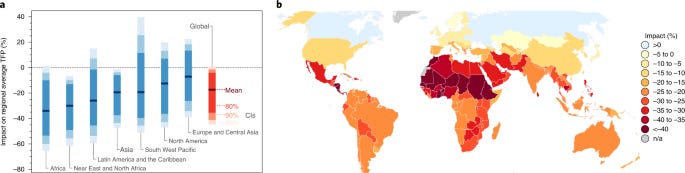
Source: Ortiz-Bobea, Anthropogenic climate change has slowed global agricultural productivity growth.
Anthropogenic climate change is found to affect agriculture TFP - reducing it by 21% globally, since 1961 - higher in some regions, shown in the geographical visualisation above. In Sri Lanka, where 2.5 million people rely on climate-sensitive livelihoods, these changes have already sparked economic turmoil. As the global population grows and resources dwindle, the stakes have never been higher. This is where biotechnology steps in — a beacon of hope amid the storm, offering innovative solutions to sustain agricultural productivity, reduce waste, and secure food for generations to come. (source: eastasiaforum, nature)
Biotechnology has the potential to revolutionize agriculture in the face of these challenges. From developing drought-resistant crops to engineering plants that thrive in less fertile soils, biotech innovations offer a way to boost productivity even as arable land decreases. By reducing waste and enhancing the resilience of our food systems, biotechnology may be the key to feeding a rapidly growing global population.
When we consider the future of food security, biosynthetic technologies emerge as a game-changer. At its core, biosynthetics involves creating valuable resources from existing natural materials by tweaking and engineering microorganisms. This approach not only leverages nature's inherent processes but also amplifies them, leading to solutions that are both innovative and sustainable.
Imagine the possibilities: by harnessing biosynthetic technologies, we can create alternative proteins that require less land and fewer resources. This could revolutionize industries like dairy and brewing, where milk, beer, and even sweeteners could be produced in ways that drastically reduce environmental impact. As the global demand for food increases, the ability to produce these staples more efficiently becomes crucial.
Biosynthetics also offer the potential to improve population nutrition. For example, the way we currently source omega-3 fatty acids—essential for human health—could be transformed. Instead of relying on fish, which are often overfished and subject to environmental concerns, we could produce omega-3 through biosynthetic processes, ensuring a more stable and sustainable supply.
Moreover, biosynthetic innovations can lead to the development of climate-resilient crops. These crops could be engineered to withstand extreme temperatures, poor soil conditions, and other challenges posed by climate change. Some biosynthetic approaches might even enhance soil quality, creating a more sustainable agricultural system that benefits both farmers and the environment.
A few pioneering startups are already leading the charge in this space, showcasing the transformative potential of biosynthetics:
Ginkgo Bioworks: This company uses biosynthetics to engineer custom microbes that solve a wide range of problems, including those in agriculture. Their services extend from crop protection to carbon fixation solutions, highlighting the versatility and impact of their innovations.
Pivot Bio: Focused on agriculture, Pivot Bio has developed microbes that help plants fix nitrogen naturally, reducing the need for ammonia-based fertilizers. This not only enhances crop yields but also minimizes the environmental damage caused by traditional fertilizers.
Both of these startups have attracted significant attention and funding, including equity investments from Bill Gates' Breakthrough Energy Ventures. Their work underscores the critical role that biosynthetics can play in addressing some of the most pressing challenges in food security and environmental sustainability.
As these examples demonstrate, biosynthetic innovations hold the potential for massive impact. However, to scale these solutions and make them accessible on a global level, substantial collaboration and funding are essential. Innovation alone is not enough; the ability to bring these technologies to market and implement them on a wide scale requires support from both the public and private sectors. In light of these possibilities, it's worth considering: Can biosynthetics truly strengthen our food security? The answer may lie not just in the technology itself but in our collective willingness to invest in and support these groundbreaking innovations.
For biotech startups, the stakes are uniquely high. The natural timeline of biotechnological innovations is long and fraught with challenges. Unlike other sectors, where products can be brought to market relatively quickly, biotech ventures often require years of painstaking research, regulatory approvals, and testing before they can begin to generate revenue. This extended path from lab to market demands significant upfront investment, often far more than what is needed in other industries.
Moreover, the inherent risks in biotech—such as uncertain outcomes, long development cycles, and the high costs of clinical trials—mean that strategic financing is not just beneficial but essential. The choice between debt and equity financing, the potential of grants, and the strategic use of corporate partnerships can all play a role in the growth of these companies. Understanding the nuances of each option is crucial for founders looking to navigate the financial challenges of this high-stakes industry.
Debt financing is attractive because it allows companies to borrow capital without giving up ownership. It provides scheduled repayments and tax deductions. A successful example of debt financing can be seen from Apollo Agriculture, a Kenyan agritech company. In 2021, Apollo secured $1 million in debt financing led by the Agri-Business Capital (ABC) Fund. This funding was instrumental in expanding their reach, enabling the startup to support small-scale farmers with crucial resources such as high-quality farm inputs, insurance, and tailored advice. By leveraging machine learning and digital tools, Apollo has empowered over 60,000 farmers in Kenya, helping them increase yields and income despite the challenges posed by climate change and the COVID-19 pandemic (Techpoint Africa)
However, in the biotech sector, debt financing is less common, especially in the early stages.
Let’s break down why it can be less attractive.
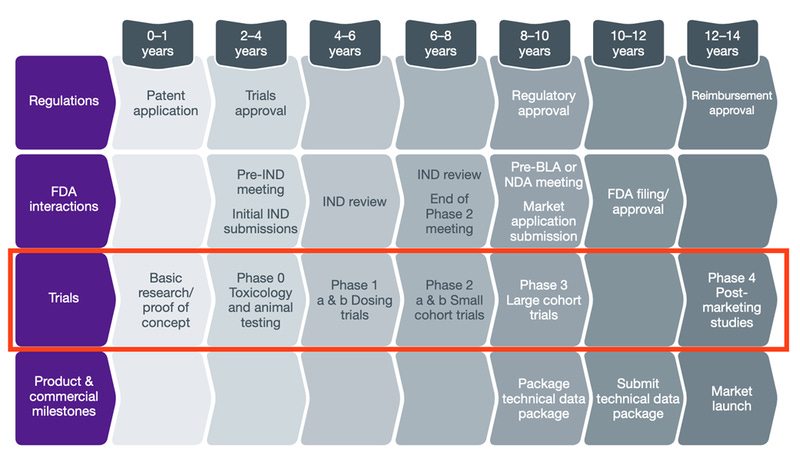
Lifecycle of an early-stage biotechnology product (source: next investors)
Long Development Cycles: Biotech products often take years to develop. Typical biotech companies can have up to 3 phases of trial - meaning that companies may not generate revenue for a significant period. This makes it difficult to service debt in the short term.
Lack of Collateral: Early-stage biotech companies typically don’t have tangible assets that can be used as collateral, making it harder to secure loans.
Cash Flow Constraints: The extended period before generating revenue can create cash flow issues, making debt financing risky.
Despite these challenges, there has been an increase in debt financing for biotech companies, particularly in 2022 and 2023, as the industry faced headwinds such as geopolitical uncertainty, rising interest rates, and inflation. However, this method remains niche due to the high-risk nature of the sector. The rising interest rates also led to a pullback in debt financing, with 2023 seeing a significant number of bankruptcies in the biotech industry, highlighting the risks involved. (Ropesgray)
An unfortunate example that we can learn from is Synergy Pharmaceuticals, which after securing $300 million of debt-financing in 2017, declared insolvency in 2018, due to its inability to deliver the revenue and liquidity terms agreed upon with their lender, CRG. (source: biospace, seekingalpha). It serves as a cautionary tale of the dangers of relying too heavily on debt in a high-risk industry.
For biosynthetic-focused companies aiming for commercialization, especially in regions like Southeast Asia, these two cases emphasize the importance of selecting a funding structure that aligns with their growth objectives and market realities.
We see equity financing to be more common in the early stages of biotech startups. While it can dilute ownership, it offers flexibility in repayment and is better suited for companies with long development cycles and high capital requirements. We’ve listed some considerations that we think push emerging biotech companies to seek equity financing.
High Capital Requirements: Biotech startups often need substantial capital upfront for research, development, and clinical trials.
High Risk, High Reward: Investors in biotech are often willing to take on high risk in exchange for potentially high returns.
Strategic Support: Venture capitalists (VCs) not only provide funding but also offer strategic support, helping navigate the complex regulatory environment and market dynamics of the biotech industry.
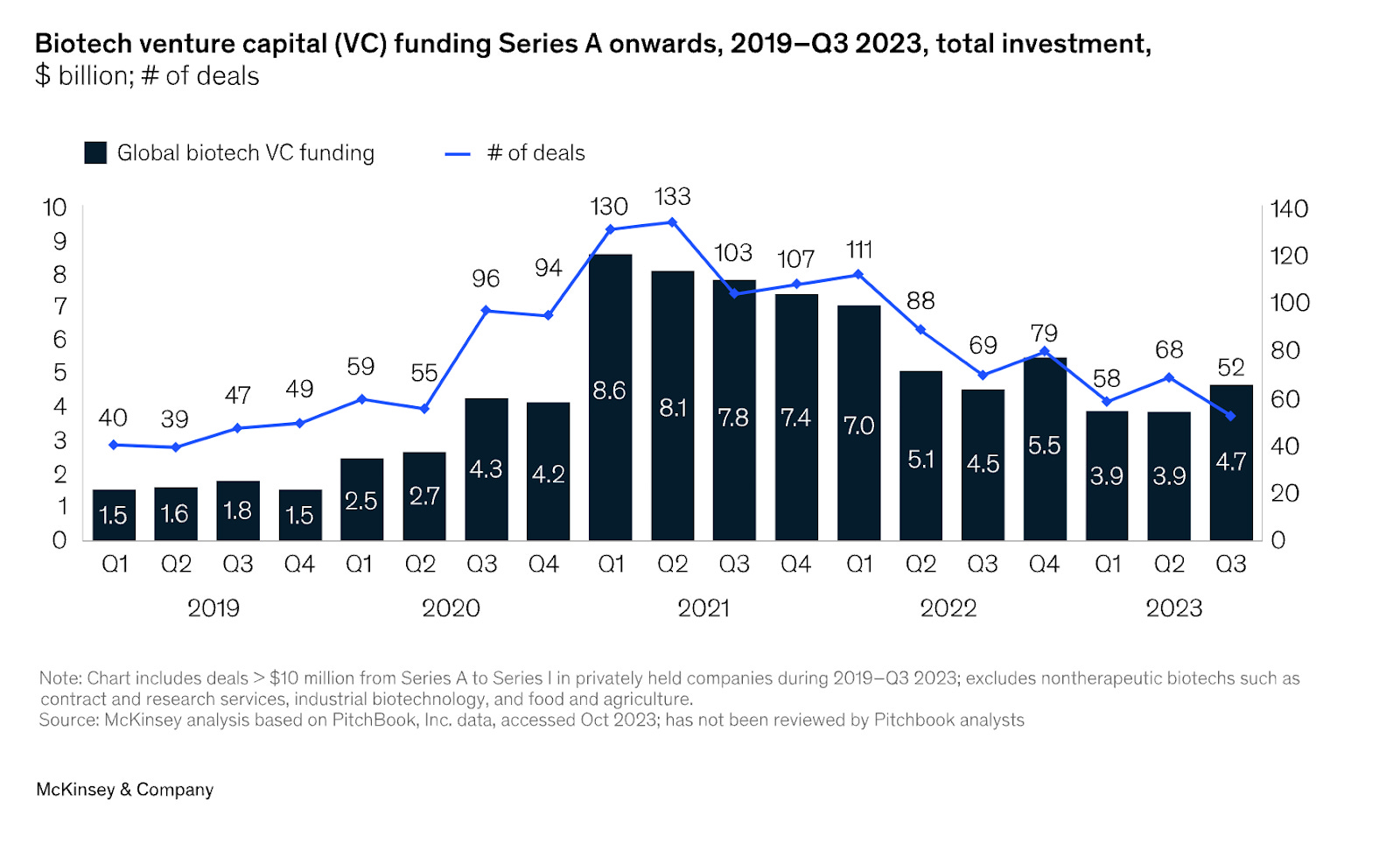
Source: McKinsey
The private financing landscape for biotech has seen a decrease from the peak levels observed during the pandemic. This decline is partly due to perceptions of overvaluation during the biotech boom, particularly in the biopharma sector. However, it still remains above pre-pandemic levels and shows signs of recovery as the market adjusts.
We should consider the different available types of structure within equity financing itself. Let’s talk about VC and CVC financing. Both funding options have distinct advantages and challenges, and the right choice can significantly impact the startup's trajectory. Here are the key considerations
Strategic Alignment and Industry Expertise
Long-Term Vision and Exit Strategy
Access to Resources and Networks
Flexibility in Pivoting and Innovation
Impact on Company Culture
While CVC might provide Industry expertise and access to their resources, flexibility might be compromised. VCs might be a good partner to expand their network and focus on growth but lack industry expertise! But remember, there are also some ventures that are biotech-focused like Arch Ventures that might be a match for some companies. In the end of the day, the decision between VC and CVC funding hinges on the biotech startup’s goals. If autonomy and flexibility are priorities, VC funding may be the better option. However, if strategic alignment with an industry leader and access to specialized resources are more critical, CVC funding could offer significant advantages. The choice will shape the startup’s financial future and its ability to innovate in a competitive landscape.
Grants offer a non-dilutive form of funding, meaning companies don’t have to give up equity or repay the funds. However, grants typically come with restrictions on how the money can be used, often limiting it to research and development rather than marketing or commercialization. Grants are highly beneficial in the early stages of biotech development, allowing startups to focus on innovation without the pressure of repayment or equity dilution. Malaysian-born startup, Qarbotech, focusing on boosting a plant’s photosynthesis efficiency, is a great example of an early stage innovative solution that can leverage grants to develop their product. However, the limitations on use can be a drawback when it comes time to bring a product to market - this is where other sources of funding can be more fitting.
In the complex and high-stakes world of biotech, especially for startups focused on biosynthetics, securing the right kind of funding is crucial for success. Biotech companies often face long development cycles, high upfront costs, and a challenging path to market, making the choice of financing critical.
Each funding option has its own advantages and challenges, and the best approach often depends on the stage of the startup, its specific capital needs, and its long-term goals for commercialization and scale. A balanced approach, or mezzanine financing, which combines elements of debt, equity, and grants, might be the ideal way to navigate the complexity, high-risk, and high-reward nature of biotech startups.
As we consider the future of biosynthetics and their potential to strengthen food security—especially in regions like Southeast Asia, where agricultural challenges are pronounced—the question of funding becomes even more critical. Biosynthetic-focused companies have the potential to revolutionize food production, from creating alternative proteins to developing climate-resilient crops. However, realizing this potential requires a well-structured funding approach that supports innovation while ensuring commercial viability.
So, what does the future hold? As biosynthetics expand beyond pharmaceuticals and medical applications, they’re beginning to reshape agriculture. We're eager to see how this unfolds. Looking ahead, we hope to see increased equity financing for biotech companies, particularly those focused on food security. The growing demand for solutions makes it clear: biotech holds great promise in addressing our most pressing food challenges.
Of course, there are risks — but they are risks worth taking, as long as they’re calculated. In fact, leaving these innovations unscaled may pose an even greater threat to food security. What matters is that trials show results, pilots demonstrate potential, and a clear commercial strategy is in place. Where commercial viability is present, the integration of biosynthetics into agriculture seems inevitable over the next decade.
So, how do we build a more secure future for the generations to come? We remain hopeful that creative financing solutions, including mezzanine financing from various tech sectors, will play a key role in advancing these innovations and ultimately improving global food security.
No posts
Comments
Nothing yet. Say the first thing.
Sign in to join the conversation.