
It’s officially spring! I’m thrilled to soon embrace the season fully, get my hands in the dirt, and plant some seeds! The next step in planning the garden space is creating a planting plan. I’ve measured the space and have made myself a general guide for how to approach planting. I love the planning stage of gardening. Dreaming up all the possibilities and plant combinations brings me great joy. I don’t have a shortage of ideas; my struggle is choosing which ideas to pursue. Especially when it comes to plants, I sometimes have to reel myself in a bit.
As we get closer to this gardening season, I’d love to know where you are gardening this year. I know not everyone grows a garden, but if you do, what are you growing in? Raised beds like me? Maybe patio pots or a community garden plot? There’s so much to learn from growing in different spaces. What have you learned grows best where you live? Share below!
As I shared in last Wednesday’s Newsletter, I have three raised garden beds to work with this year. If you missed that post, I’ve shared it again below. I gave more details on how I assessed the space, my garden goals for this year, and the plants I hope to grow.
Let's plan the garden together!
·
March 14, 2024
Thanks for reading Beets & Bites! Subscribe for free to receive new posts and support my work. Hey friends! How's March going for you? It's that time of year for all the garden planning to start. The crazy warm weather we've been having in Minnesota is giving me so much hope for early spring; let's hope it stays that way, and we don't regress into winter…
For today’s newsletter, I’m moving on to the next step in garden planning: figuring out the layout of each raised bed. Creating a general guide helps me use the space to its best capacity and design a beautiful garden. I thoroughly enjoy the design process and imagining the space from a new perspective. Before I share my layout plans, here’s a recap of the plants I want to try to fit in the space.
Tomatoes/Peppers
Sun Gold Tomatoes
SweetHeart Cherry Tomatoes
Poblano Peppers
Sweet Peppers
Squash/Cucumbers
Black Beauty Zucchini
Marketmoore Cucumber
Beans/Peas
Sugar Snap Peas
Snow Peas
Blue Lake 274 Green Beans
Herbs
Lettuce Leaf Basil
Genovese Basil
Cilantro
Parsley
Dill
Lemon Thyme
Tarragon
Chives
Rosemary
Alliums
Scallions
Leafy Greens
cut and come again, baby green mix
Romaine Lettuce
Buttercrunch Lettuce
Mustard greens
Red Russian kale
Dazzling blue kale
Marvel of four Seasons butterhead variety
Bloomsdale longstanding Spinach
Baby bok Choy
Scarlet Charlotte Swiss chard
Flowers
Glorious Gleam Nasturtiums
Evening Sun Sunflower
Double Sunking Sunflower
Lemon Queen Sunflowers
Sunspot Sunflower
Teddy Bear Sunflower
Paintbox Bouquet Sunflowers
Autumn Beauty Sunflowers
Kilimanjaro white marigolds
Pink senorita zinnia
Calendula Pink Surprise
Calendula Strawberry Blonde
Melon
MN Midget Cantaloupe
Building a garden is like putting together a puzzle. Sorting out the proper lighting and space requirements for each plant and fitting them into a cohesive plan can take some time. With that in mind, I’m sharing my first attempt at creating a raised bed layout. I look at this plan as more of a general guide because I have to be prepared for anything as the season progresses—pest issues, weather, etc. I hold the plan loosely.
I am confident, however, in placing my main crops, like tomatoes, zucchini, cucumbers, peppers, and green beans. A main season crop takes the majority of the garden season to mature and produce fruit, unlike plants like lettuce, radishes, carrots, and beets, which are quick succession plants. Those can be sown multiple times throughout a season and reap a harvest. I can easily make the most of my season by gardening this way and rotating in quick-growing crops when a harvest is made to prevent any wasted space.
As a side note, these plans won’t be planted all simultaneously. As the season progresses, so will the planting. Lettuce, radish, herbs, Swiss chard, peas, and kale will be planted first because they can tolerate cooler temperatures. Then, once May comes around, everything else will go in after our last frost, including basil, zucchini, tomatoes, and anything that can’t tolerate cooler temps below 50 degrees. I do plan to do some slight succession planting, too. So keep that in mind as you look at the planting plan. Once a crop is harvested, say radish, that space will be filled with something like lettuce or more radish.
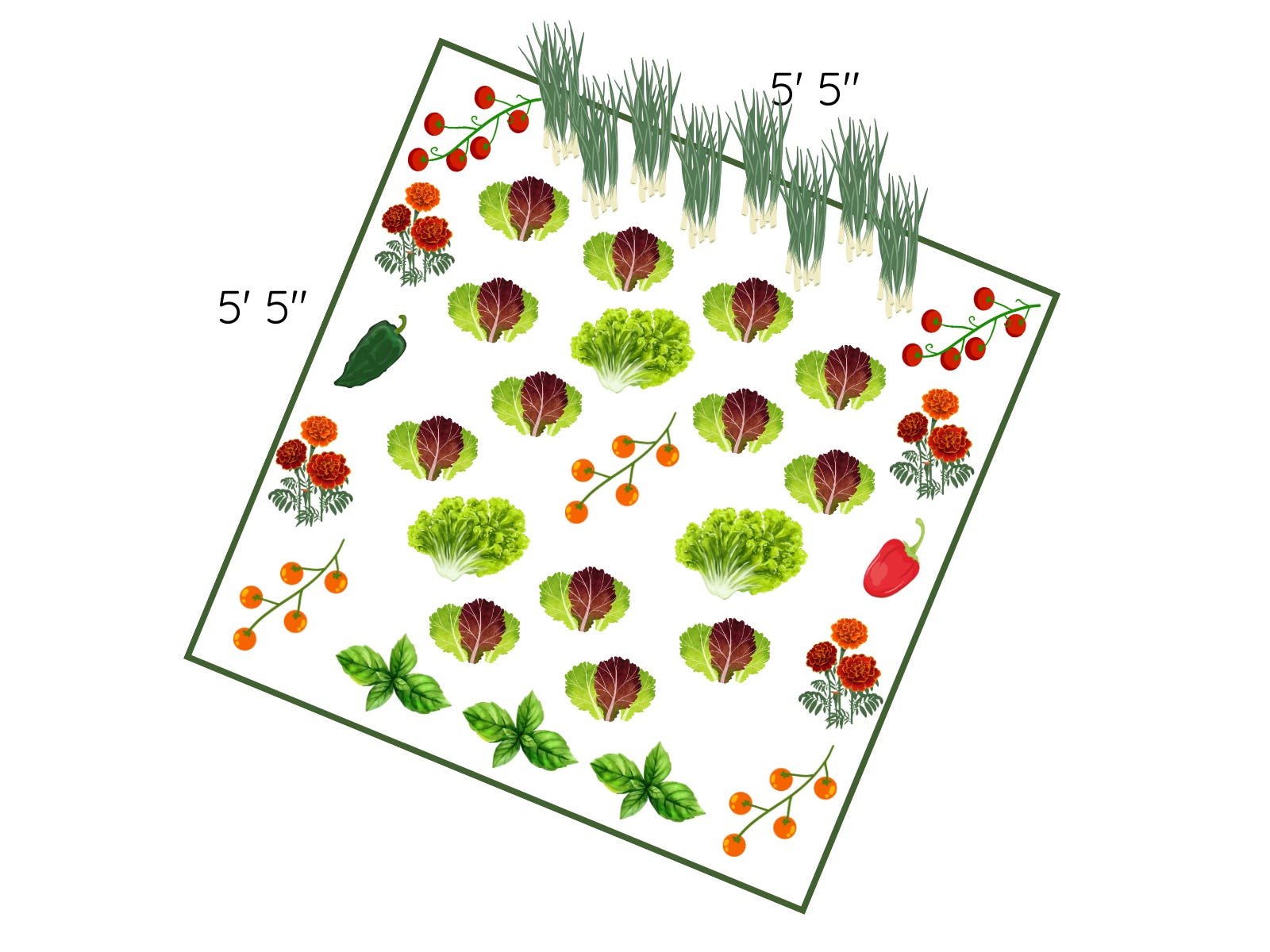
This first raised bed is about 5’ 5” square. I like playing with symmetry in these beds and finding the balance between wild chaos and neatly planned rows. I’ve also included some beneficial flowers for each raised bed. I’m also placing lots of lettuce greens in between and underneath the tomato plants because, during the season’s heat, these plants will create cool, shady spots the lettuce greens love. Plus, it will help prevent bolting and extend the harvest season for that veg.
This bed includes:
Sun Gold Tomatoes
SweetHeart Cherry Tomatoes
Poblano Peppers
Sweet Peppers
Basil
Scallions
Marigolds
A variety of baby green (cut come again) and head lettuce varieties
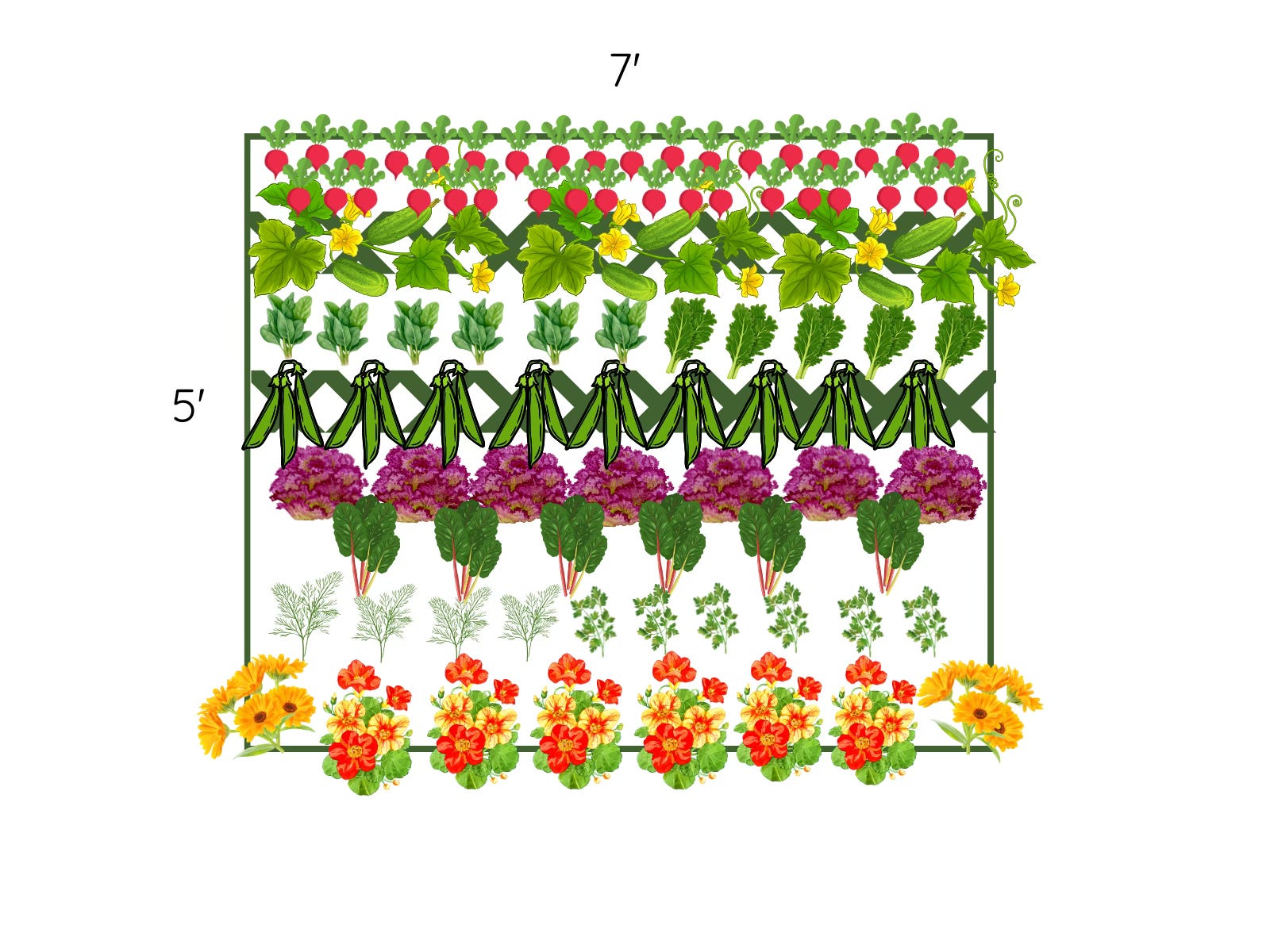
This second raised bed includes an A-frame trellis where, on one side, I’ll grow cucumbers and the other peas. I’ll grow leafy greens, spinach, and kale underneath the trellis because they like a cooler shaded spot. My favorite part about this bed is the nasturtiums that will fall over the edge of the bed. A mounding-shaped variety is perfect for this and creates the most beautiful borders. Cucumbers and flowers will be the last to be planted in this bed. Everything else loves the cooler weather and will be planted sometime in April, depending on the weather.
This bed includes:
Marketmoore cucumbers
Snap Peas
Nasturtiums
Calendula
Radish
Dill, Parsley
Swiss chard
Head Lettuce
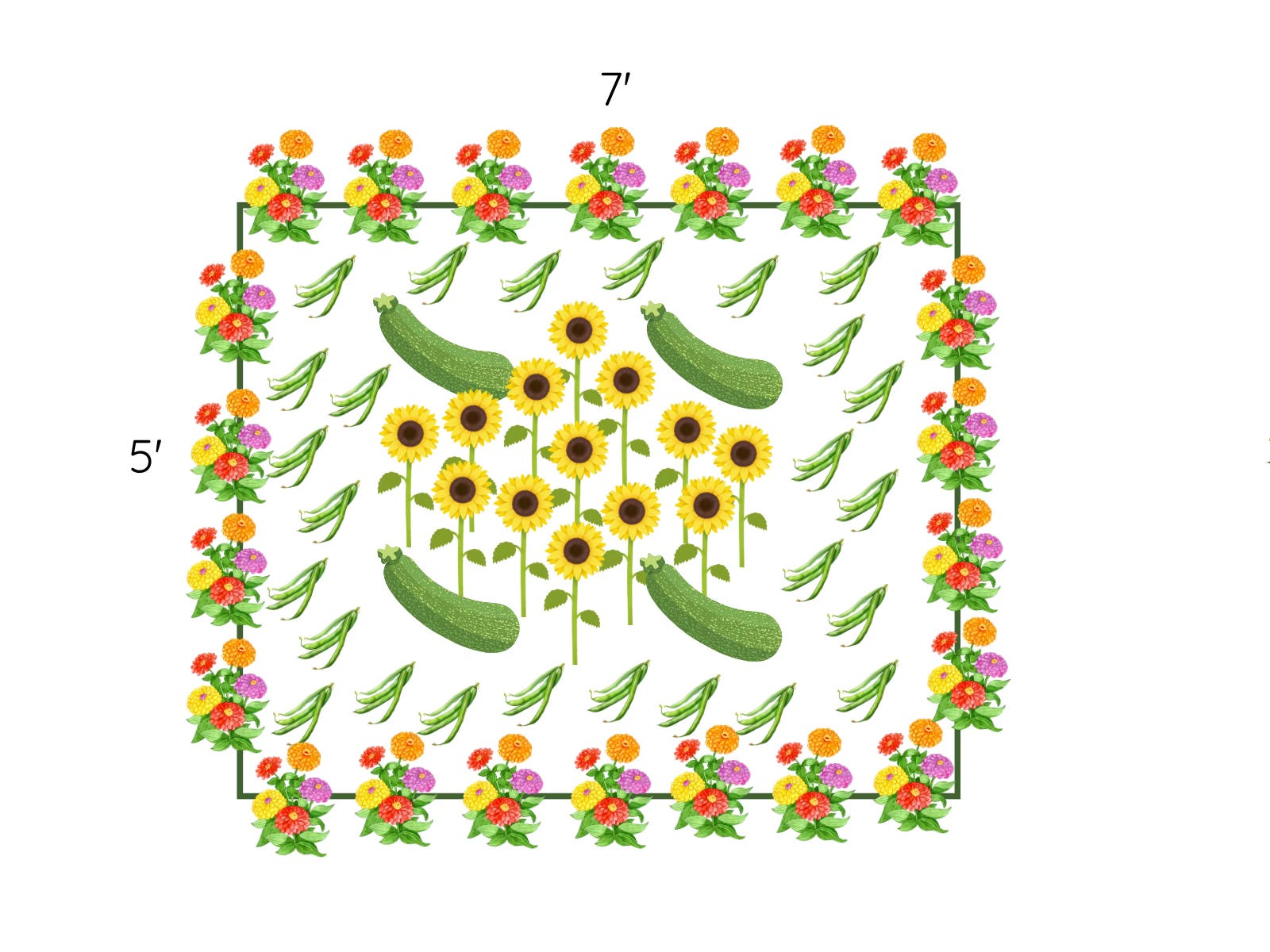
The last garden bed is connected to bed #2, roughly the same size, 5x7’. I’ve been playing around with the layout of this bed quite a bit. There are many layout options, but I like adding dwarf sunflowers in the middle of the bed, popping up between the large leaves of the zucchini plants. This bed needed a bit more wow factor, and I think adding some natural vertical interest from these sunflowers could be beautiful. Dwarf sunflowers usually are no taller than 3-4 ft. Also, with zinnias surrounding the entire bed, the space will have a bit of a cutting flower garden aesthetic, which I love.
This bed includes:
Zucchini
Green Beans
Zinnias
Sunflowers
The only plants I don’t have a place for are the melons and the full-size sunflowers. I have some time to think it through and also sort out how to clean up the space surrounding the garden.
As I’ve shared before, my goal for this season is to push the capacity of the space just enough to produce as much as possible while still allowing enough room for each plant to thrive.
The weather has dropped from 50-65 degrees to 25-30 degrees in the last few weeks. We had a really lovely warm stretch for so long. So, my planting timeline has changed slightly. The last weekend of March will be an excellent time to start working out in the garden. I plan first to amend the soil with compost and worm castings. Then plant cold, hearty greens: spinach, lettuce, radish, kale, peas, and scallions. I may also add a cover to a few plants to help speed the germination process. We’ll see what the weather is like then.
That’s all for today! I’m starting to see the light at the end of the tunnel. Spring is here and that makes my heart so happy! See you Friday, have a great rest of your week!
Comments
Nothing yet. Say the first thing.
Sign in to join the conversation.