
Contains spoilers for Michael Mann’s ‘Manhunter: The Final Cut’
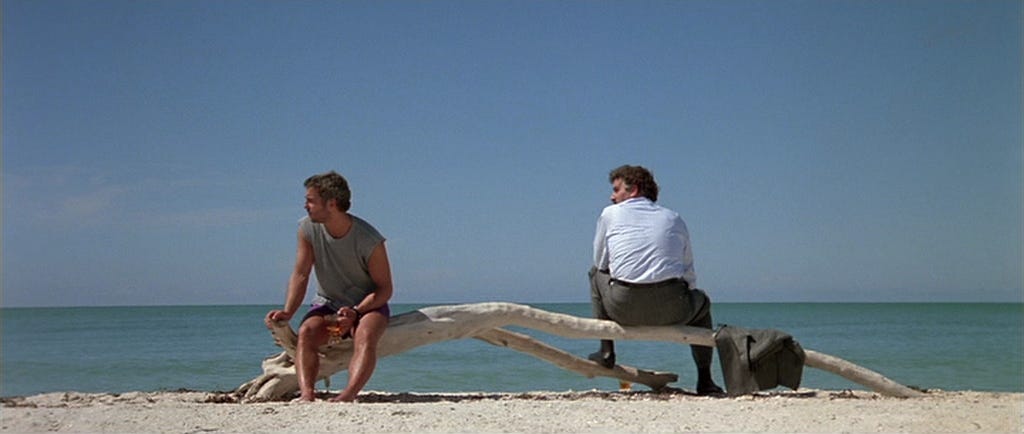
“Don’t try to run a game down on me, Jack.”
Will Graham can see the threat from a mile away. All of Michael Mann’s menn can. The chase or, as both the cops and robbers say in Heat, “the juice,” “the action.” For former FBI Agent Graham (William Petersen), the action lies in the photographs his friend offers, images of unspeakable violence committed with virtuosity. He is on a beach in Florida but those photos transport him back to Hannibal Lecktor (Brian Cox) and the action that got him sliced down the middle. He sees the game only to realize he started playing before Agent Jack Crawford (Dennis Farina) arrived at his doorstep.
In Manhunter (1986), like in Thief before it and Heat after, the menn are relentless, cop and criminal alike. Graham looks at the photos: two suburban families in big houses with children and pets, both murdered on a lunar cycle. The killer is methodical, meticulous, and brutal. He breaks mirrors and slashes throats and leaves bite marks on the housewives that look closer to the maw of a prehistoric mammal than a man. When he goes to visit the homes of the respective deceased families, Graham walks through them alone so that he can see what the killer did, what he was thinking when he did it. The action is seeing. The game is afoot.

Arguably Mann’s darkest film, Manhunter is stylish as hell. From the saturated blues of the Florida coast to forensic sets that anticipated and influenced the rise of CSI: Crime Scene Investigation, the thriller tackled the Thomas Harris Red Dragon Tooth Fairy story with a slick, unflinching approach. Graham is not the normal hardened cop with a drinking problem and quick temper: he’s sympathetic, haunted, and has an edge that comes from recognition of the monster that he’s chasing rather than total repulsion.
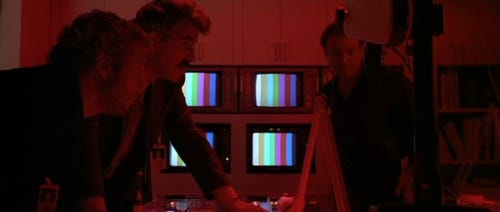
Despite the existing IP of Red Dragon and Hannibal Lecktor, Manhunter made $8.6 million on a $15 million budget. Critical reception was mixed at best, with many writers feeling the hyperstylized approach was negative, Petersen’s performance included. This stylization, however, is what makes the film mesmerizing: a particular sequence where Graham intercepts a note from Lecktor to the Tooth Fairy (Tom Noonan) sees him running through every forensic department, the labs closer to Kubrick meets CSI than a run of the mill procedural (my personal favorite line is Graham shouting “work the hair” then running down a hallway). The Tooth Fairy’s own lair follows the same saturation in the opposite palette: a Mars-rock den and glass block walls weigh down the screen. This a world that will make an impression, like the bite marks on the killer’s victims.
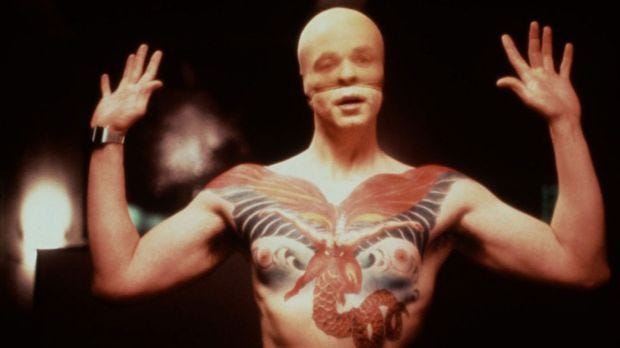
Yet Manhunter emerged on the American film scene at a time when heavy stylization and dark subject matter was anything but the status quo. Ronald Reagan’s presidency from 1981 to 1989 ushered in the dark underbelly of two modern day epidemics—-crack cocaine and the AIDS crisis—all while he maintained his all-American, Hollywood-honed veneer. The influx of the former made crime soar between ‘81 and ‘85, and as jobs left cities and crime was further penalized under the “War on Drugs” missive, a new caste system came to be. “One in every four African American men between age 20-29 was incarcerated, on probation, or on parole by 1989,” a number which ballooned to 1 in 3 by 1995. At the same time, while HIV/AIDS was medically recognized in ‘81, Reagan did not formally recognize the AIDS crisis until 1985, with no public address until 1987, not never for his friend Rock Hudson who passed of the disease two years before. As the Tooth Fairy Francis Dollarhyde says, “I am Becoming,” and that requires purification through sacrifice.
No one would have known these epidemics were afoot by looking at the movies that dominated the 1986 box office. Ferris Bueller’s Day Off focused on the loveable high school scamp cutting class and making the people of Chicago dance to “Twist and Shout.” Top Gun starring Tom Cruise saw high flying aerodynamic heights and increased enrollment in the Navy, doubling recruitment overnight. James Cameron’s Aliens neutered Ridley Scott’s darker vision in favor of more family friendly action and the rescue of a child. Even Canadian film gem David Cronenberg got in on the action with The Fly, a remake and much more accessible body horror romp in spite of the bleak ending.
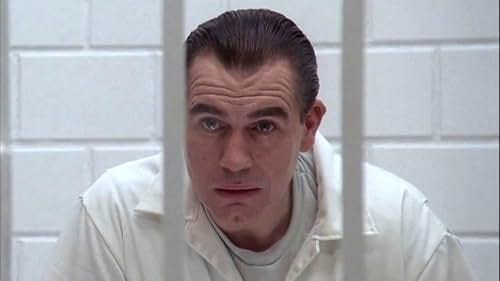
Manhunter doesn’t offer a look at the America Reaganism touted but one where the rot is visible for those with eyes to see. When Graham goes to Lecktor under the guise of getting advice, Lecktor, the embodiment of benign evil in the film, immediately calls his bluff. “You want the scent, Will,” he leers, “Smell yourself.” And he’s right: Will has the scent, the instinct similar to that of Lecktor and the Tooth Fairy. He knows why the Tooth Fairy breaks mirrors and keeps them near as he slashes his victims’ throats.
It’s Graham’s relentlessness as a mann, his ability to endure what looking calls up within him that cracks the case. Eyeing the videotapes of the two deceased families, he sees “the bloom on the woman,” that these families were “picked” and not at random. He recognizes that instinct to choose, to see in Dollarhyde, “my man” as he calls him. My mann, my mann, my mann.

Graham ultimately goes on the mission to take Dollarhyde down himself as a final act of bearing witness. He must if he is to reconcile the part of him that recognizes Dollarhyde’s instinct. After he rescues Reba (Joan Allen) and kills Dollarhyde, Graham goes back to the house of the third family, the one that the killer had been casing. He’s watched their videotapes, felt the bloom on the wife. He approaches the door covered in cuts and bruises. At first, the wife screams.
It’s hard to look at the degradation and darker predations of a person, of a country. The final cut of Manhunter, the one we get now 40 years after its initial release, affirms the difficulty in looking. And four decades later, the film slices through Reagan’s rah rah Americana guise just as well as the narrative of American greatness clumsily perpetuated by Trump’s bloated, draconian second term. The country hasn’t changed, just as Graham’s pull toward darkness hasn’t either.
The couple that should be dead invites him in for a cup of coffee. Graham hesitates at the door.
“I just came to see you,” he says.
No posts
Comments
Nothing yet. Say the first thing.
Sign in to join the conversation.