
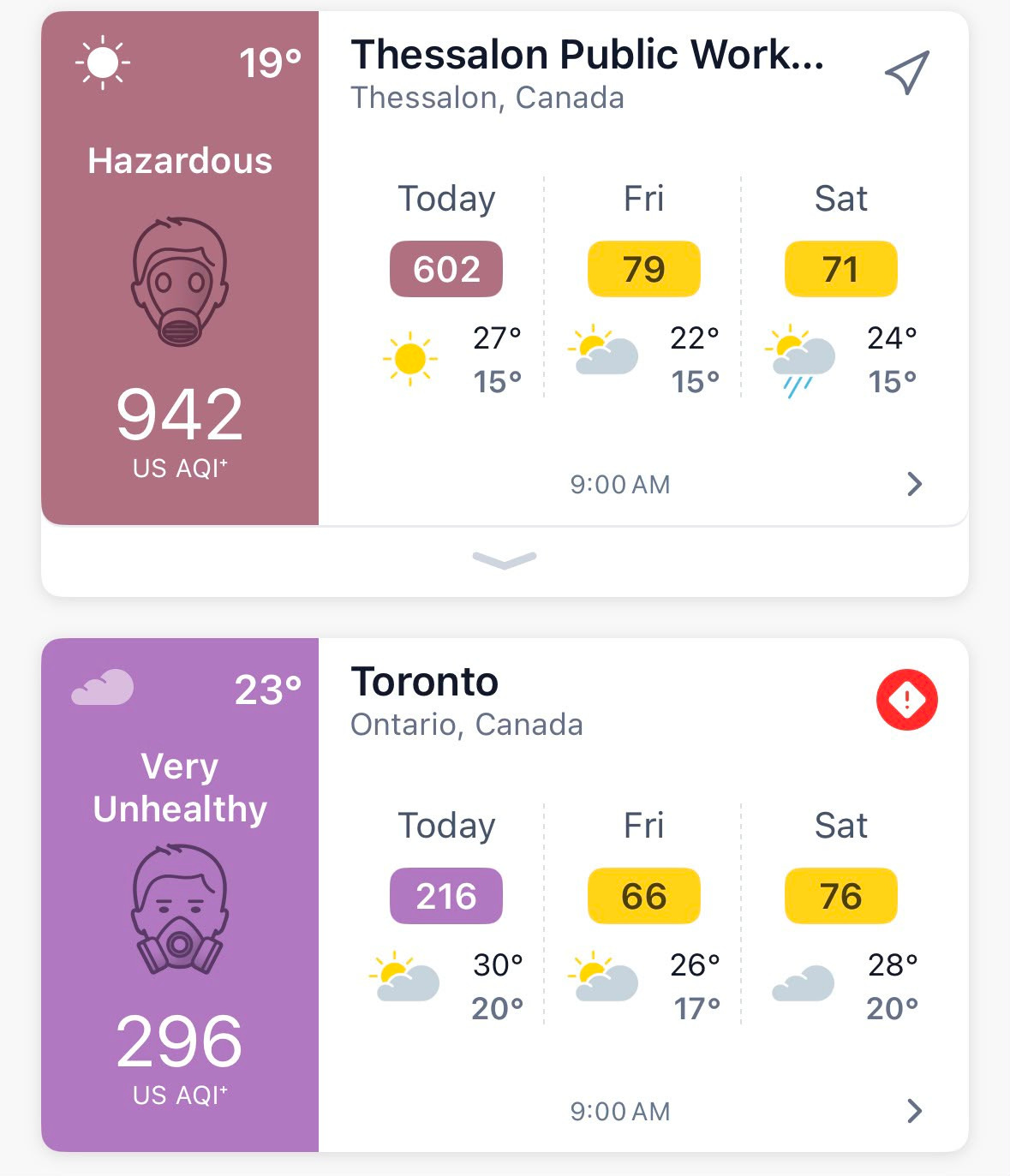
At least one air quality measure listed the North Shore town of Thessalon with some of Canada’s worst air to start the morning on Thursday, July 16th. IQAir takes readings from registered connected measurement devices, and appears to have access to one at the Thessalon Public Works Yard. As of 9 a.m. on the 16th, Thessalon showed a dismal AQI reading of 942. By contrast, Toronto, a city plagued by summer smog and smoke days, was listed at AQI 296. Neither is good. Thessalon’s is much worse.
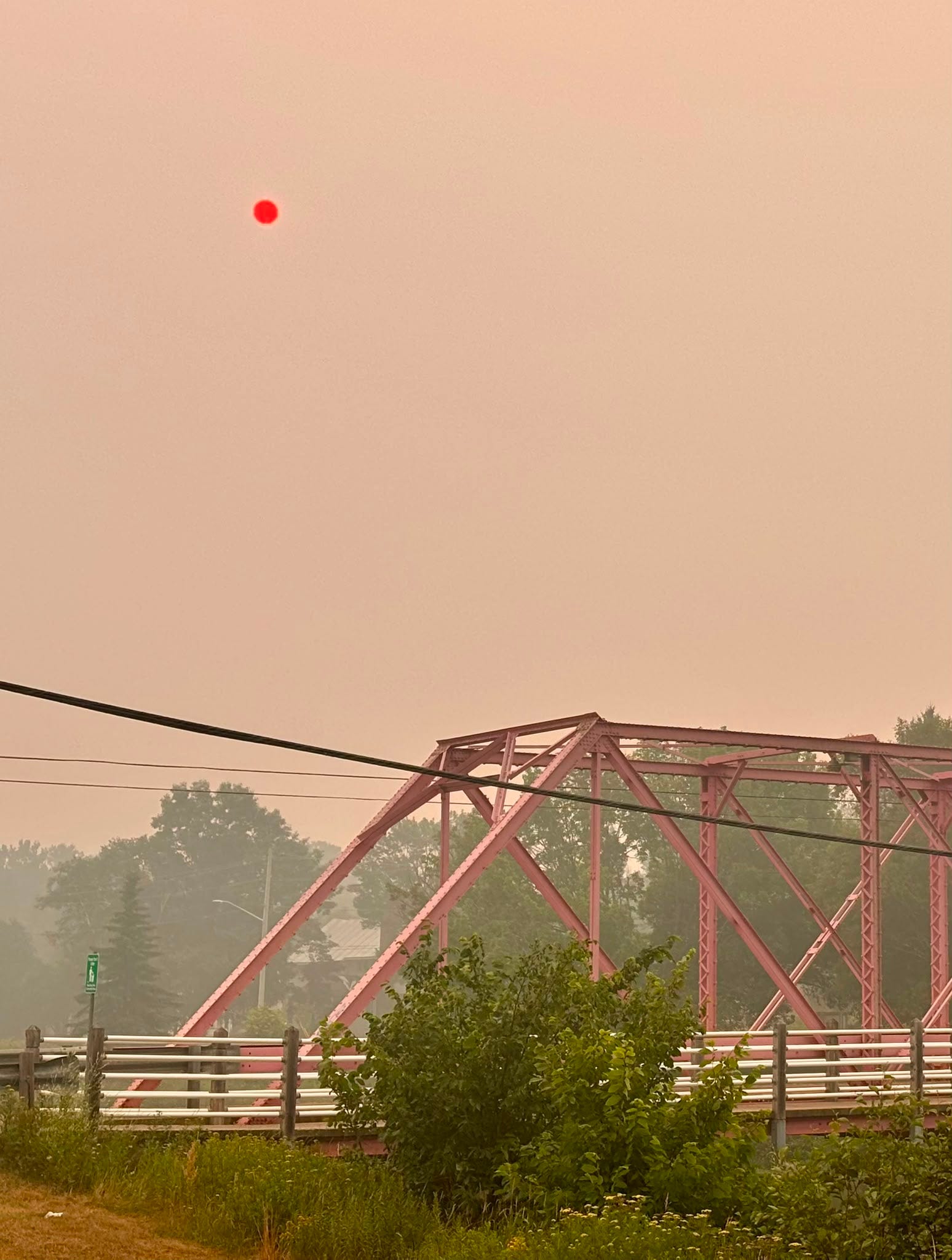
According to IQAir, Thessalon’s particulate matter (PM2.5) concentration was 109.4 times the World Health Organization’s annual PM2.5 guideline value. Residents are advised to stay indoors with windows closed, and run air purifiers where available.
Wednesday, July 15 saw social media flooded with orange sky imagery from all over the province. The Weather Network reports that Ontario is suffering under some of the worst air quality in the world right now. The Toronto Star had that city listed as the absolute worst on earth for air conditions, taking into account both an ongoing heat wave and the increased particulate matter from smoke. Clearly, the North Shore has taken over the mantle.
A quick look at Ontario’s interactive wildfire map dispels any mystery about why the air is so bad right now. Fully twenty-six new wildfires (out of more than a hundred total for the province) were reported for the northwest region as of July 14. There are thirteen active fires in the northeast, with several listed as “not under control.”
Local scuttlebutt indicates this is the worst smoke incident for the North Shore in recent memory, even over a series of fire seasons that have seen greatly increased activity and intensity.
So, why are we seeing so many new fires, and so much impact on our air quality?
Natural Resources Canada has been tracking the trends:
Warmer-than-average temperatures, decreased levels of snowpack, low soil moisture and elevated drought conditions are indicators that climate change is impacting the frequency, size and range of wildland fires in Canada. For example, the number of over-wintering fires is increasing.
The climate change link to wildfire activity is well-documented by respected bodies such as the Intergovernmental Panel on Climate Change, NASA, and the United Nations Environment Programme. This is particularly relevant to North Shore residents, given recent debate around renewable energy initiatives in the area.
Proposed wind and solar projects across Huron’s North Shore region have met with pockets of local resistance, despite an increasingly obvious need for serious climate mitigation. Much of that protest parrots the current US administration’s disdain for renewable energy, and leans heavily on questionable claims about environmental impact compared to agricultural use. There are, however, signs that North Shore residents are ready for a serious conversation about renewables. A local analyst has published The Massey Solar Project in 2026, a living online explainer delving into the detail of a particularly contentious 234 hectare proposal for northeast of Massey.
The International Energy Agency is tracking an active global transition away from fossil fuel generation to renewables and clean energy.
Orange sky days may lend some urgency to the idea of a renewables revolution.
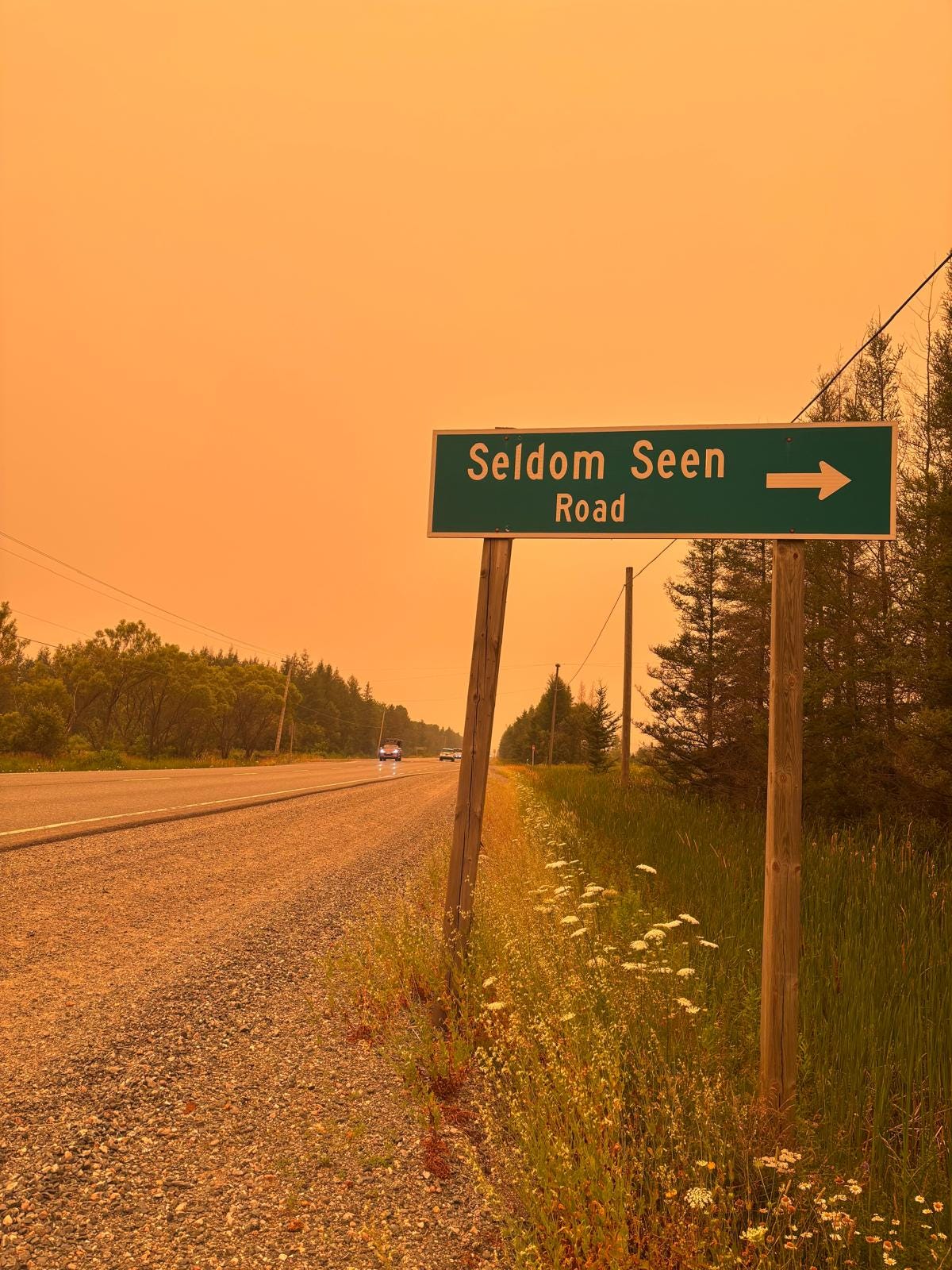
Environment Canada’s advice for those in poor air quality regions:
During heavy smoke conditions, everyone’s health is at risk regardless of their age or health status. Limit time outdoors. Reschedule or cancel outdoor sports, activities and events. You may experience mild and common symptoms such as eye, nose and throat irritation, headaches or a mild cough. More serious but less common symptoms include wheezing, chest pains or severe cough. If you think you are having a medical emergency, seek immediate medical assistance. People more likely to be impacted by wildfire smoke, including people aged 65 and older, pregnant people, infants and young children, people with an existing illness or chronic health condition, and people who work outdoors, should avoid strenuous activities outdoors and seek medical attention if experiencing symptoms. When indoors, keep windows and doors closed as much as possible. When there is an extreme heat event occurring with poor air quality, prioritize keeping cool. Protect your indoor air from wildfire smoke. Actions can include using the highest quality air filter that your ventilation system can handle and/or a certified portable air cleaner that can filter fine particles.
Shore Report acknowledges the North Shore of Lake Huron is the traditional land of the Anishinabek and the Métis Nation. This is Treaty 61 (Robinson-Huron) territory. Anishinabek have lived in the Great Lakes region for thousands of years. Shore Report is very grateful to live and work here.
All written content in this issue is © Shore Report 2026
Advertisement

John Degen’s mystery novel, Seldom Seen Road — set on Lake Huron’s North Shore — is making national headlines.
Online, direct from the publisher, and wherever fine books are sold.
Thanks for reading Shore Report — Covering Lake Huron's North Shore! This post is public so feel free to share it.
No posts
Comments
Nothing yet. Say the first thing.
Sign in to join the conversation.