
College campuses have always been valuable testing grounds for brands. For decades, the exchange was fairly simple: brands wanted access to students, so student ambassadors became the conduit to their peers. Red Bull helped define an early example through its Student Marketeer program launched in 1987. Local businesses popped up on the quad at folding tables, or interns might have brought samples from the food, beauty, or wellness brands they were working for into class or their dorm rooms.
By the mid-2010s, Bumble recognized the upside of a more formal campus ambassador playbook with its Bumble Honey program. A network of college students on campuses across the country hosted bar tabs where the price of entry was downloading the app or showing a profile, plastered bulletin boards with campaign flyers, and turned sidewalks and student events into acquisition channels. Top-performing Bumble Honeys could get a product in front of students, make it feel socially embedded, and drive downloads.
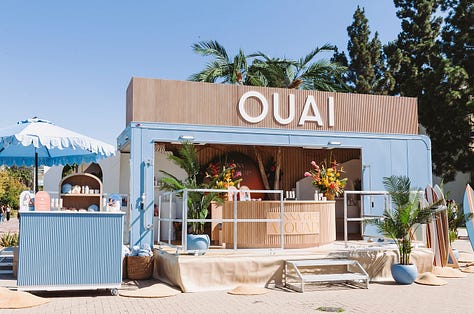
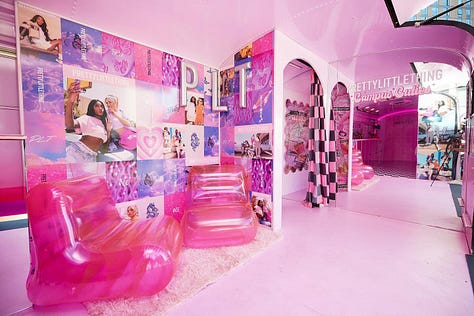
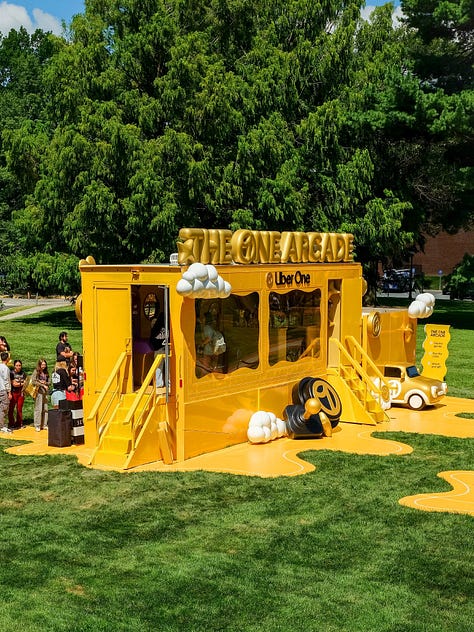
Today, brands still pop up on campuses across the country, but with robust programming and intricate build–outs. They’re also trying to extend that lifespan by becoming part of the content made about campus life itself, as closed social worlds documented in Facebook albums for friends have made way for dorm tours, rush recaps, game-day vlogs, and move-in hauls. What someone wears to class or keeps in their dorm-room mini fridge can reach peers at other schools and audiences who want to buy into the lifestyle being served on their For You page, and naturally, brands have found ways in.
This is a generation, after all, that has been marketed to online for most of its life. Gen Z and now, Gen Alpha, came of age alongside algorithmic product discovery and branded content that mimics everyday life. That has made them both more reachable and more skeptical. They can recognize a campaign instantly but are still responsive to recommendations from people whose taste they trust. A product can surface on TikTok, move into a group chat, appear in a dorm room or sorority house, and become socially validated within hours. For brands, the appeal is not only that students are online, but that their online and offline networks are so closely intertwined.
Filtered shower head brand Jolie prioritized college campuses because students were already emailing and DMing about the hair and skin issues they were experiencing in dorm showers after discovering the brand on TikTok.
The company’s ambassador program includes content creation, rush and sporting-event support, discount codes, product seeding, and even outfitting sorority houses with Jolie shower heads. In some cases, sororities have promoted Jolie-installed bathrooms as part of their recruitment offerings, proof that brands are becoming part of the physical and social infrastructure of campus living. Charlotte Morse, the brand’s Head of Community Growth and Partnerships, says the investment has “absolutely driven meaningful sales and content volume,” with especially strong traction in California, Texas, Florida, and across the South.
But the real value may be the trust embedded in the channel. “As a company, we have always believed that people influence people,” Morse says. “But for this group, it is especially true. I think this generation is much more discerning. They want to hear real results from their peers.”
That peer-to-peer influence is not incidental; it is part of the value students on the other side of the equation are being recruited to provide. Amelia Coons, a junior at the University of Southern California, has worked with at least 10 brands, including Saint James Iced Tea, Princess Polly, Form, Good Girl Snacks, Uber, Khloud Popcorn, and Barry’s Bootcamp, becoming a point of entry for companies trying to navigate the school’s social ecosystem. “Each ambassadorship tends to open the door to the next opportunity,” she says. “I’ve become a touchpoint for this kind of work.”
The work increasingly extends beyond posting. For Form, Coons helped turn her sorority house into the set of the brand’s Form University campaign, coordinating access to the house, submitting headshots of potential participants, and appearing alongside her sorority sisters while a 15-person production team shot throughout the space, including in her bedroom. For Princess Polly, what began as a straightforward product-for-TikTok exchange later became a larger sorority activation, with the brand gifting rush outfits to the entire house. Her sorority’s Instagram handle even has a story highlight dedicated to PR, showcasing and tagging the brands it has partnered with.
A single student can introduce a brand to her followers, her friend group, her sorority, and a wider online audience at once. The product is not only posted; it is worn, used, photographed, discussed, and socially validated in real time.
The opportunity for students, however, is not always matched by compensation. Coons says most programs offer some combination of free product and a one-time payment in exchange for TikToks, Instagram posts, or UGC. After reviewing creator contracts through other jobs, she believes many brands significantly underpay college ambassadors, assuming gifted product will compensate for the time required to plan, film, and edit content.
“What they don’t realize is that college-aged creators are surrounded by engaged, driven, like-minded peers,” she says, making their participation especially capable of “moving the sales needle.” For Coons, a partnership is worth accepting when she genuinely likes the brand, can learn from the people behind it, is paid fairly for her limited bandwidth, and can extend the benefits to her community. But brand cachet can distort the calculation: “If there’s social status attached to the brand, students will often accept a lot less in payment.”
That is why the most effective campus marketing often looks more like a recommendation moving through a social circle than an #ad. Coons believes the brands that succeed on campus identify a credible tastemaker, give her the product, and allow interest to spread through her network. “When one girl wears a cool shirt, a friend buys it, and within weeks, half of campus is walking to class in it,” she says. “Overly manufactured activations” have the opposite effect. “College kids can sense desperation in a heartbeat.”
While there is still room to more closely align student compensation with the value they create, creator commerce platforms are already helping to close the gap. On ShopMy, creators identifying as college students represent 6.4 percent of all valid creator accounts. During the 12 months ending July 31, 2026, they drove $12.75 million in GMV and earned nearly $1.56 million in commissions. Several took home commissions in the high five figures, with the top earner making just shy of $100,000.
Current opportunities running on the platform suggest that brands are actively trying to reach this demographic in more targeted ways. As of August 16, 16 live Opportunities included terms like college, campus, university, sorority, dorm, or freshman; 32 included broader back-to-school language–spanning brands like Walmart, Wayfair, Ruggable, Poshmark, Kurt Geiger, ON, L’ange Hair, and ASOS. What was once primarily a résumé-building role or a way to score free products has become a measurable sales channel–and, for some students, a meaningful source of income.
A student can introduce a product into the physical campus ecosystem, show how it fits into her daily life, share the link, and reach an audience far beyond her school. As Coons puts it, “Everyone I pass on campus already posted their DIML [Day In My Life] that morning. I probably saw you get ready on my feed before I saw you in person.”
The days of tabling on the quad, taping a brand’s flyer on a lecture hall noticeboard, or passing around a canned beverage brand’s latest flavor to a class just for fun are a thing of the past. The new college ambassador is hosting the activation, appearing in the campaign, earning a commission, influencing her friends, and helping a brand understand what will actually resonate with the next class of consumers.
No posts
Comments
Nothing yet. Say the first thing.
Sign in to join the conversation.