
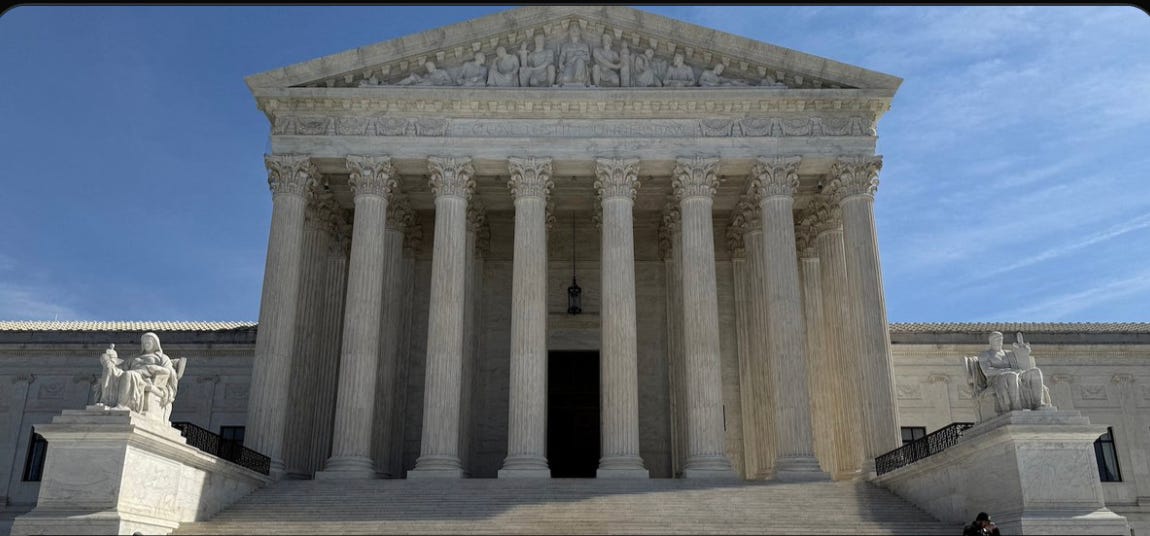
This week the Supreme Court finally laid to rest one of the final vestiges from the New Deal Era of the Court — its ruling in Humphrey’s Executor v. United States, that the President lacked the authority to fire a member of an independent Executive Branch Agency, in that case the Federal Trade Commission.
I’ve written previously about Trump v. Slaughter, the case now finally decided by the Court. I’d refer you to these earlier articles — all free to read now as the paywall has disappeared.
My first article was not about Louise Slaugther, but it anticipated the course that Trump Administration 2.0 was going to chart in its efforts to rein in the Administrative State. The article explained what the Humphrey’s Executor case was and why it was important to the task of trying to harness the “Administrative State” that has grown into a de facto fourth branch of government.
It’s always entertaining to the humorist in me to remind readers about how the sometimes mundane facts of simple cases can lead to long-lasting consequences when converted into legal principles written to stand the test of time. Humphey’s Executor is among the best examples. William Humphrey was named to the Federal Trade Commission by President Hoover in December 1931. After confirmation, his term was set to expire in September 1938. But in July 1933, President Roosevelt send him a letter requesting his resignation, but setting forth no “for cause” justification for replacing him. Humphey declined, and in October 1933 President Roosevelt fired him. Humphrey refused to acknowledge his termination, continued to identify himself as a Commissioner, and continued to insist that he was entitled to the $10,000 per year salary provided for by law. In February 1934, five months after being fired, Humphrey died. The Executor of his Estate (“Humphrey’s Executor”) sued the United States, claiming that is termination was unlawful and his estate was owed the five months worth of salary from October 1933 to February 1934. From that — less than $5000 — was born the legal controversy lasting over 90 years about whether a President can fire subordinate officers of the Executive Branch who wield his authority.
Comments
Nothing yet. Say the first thing.
Sign in to join the conversation.