
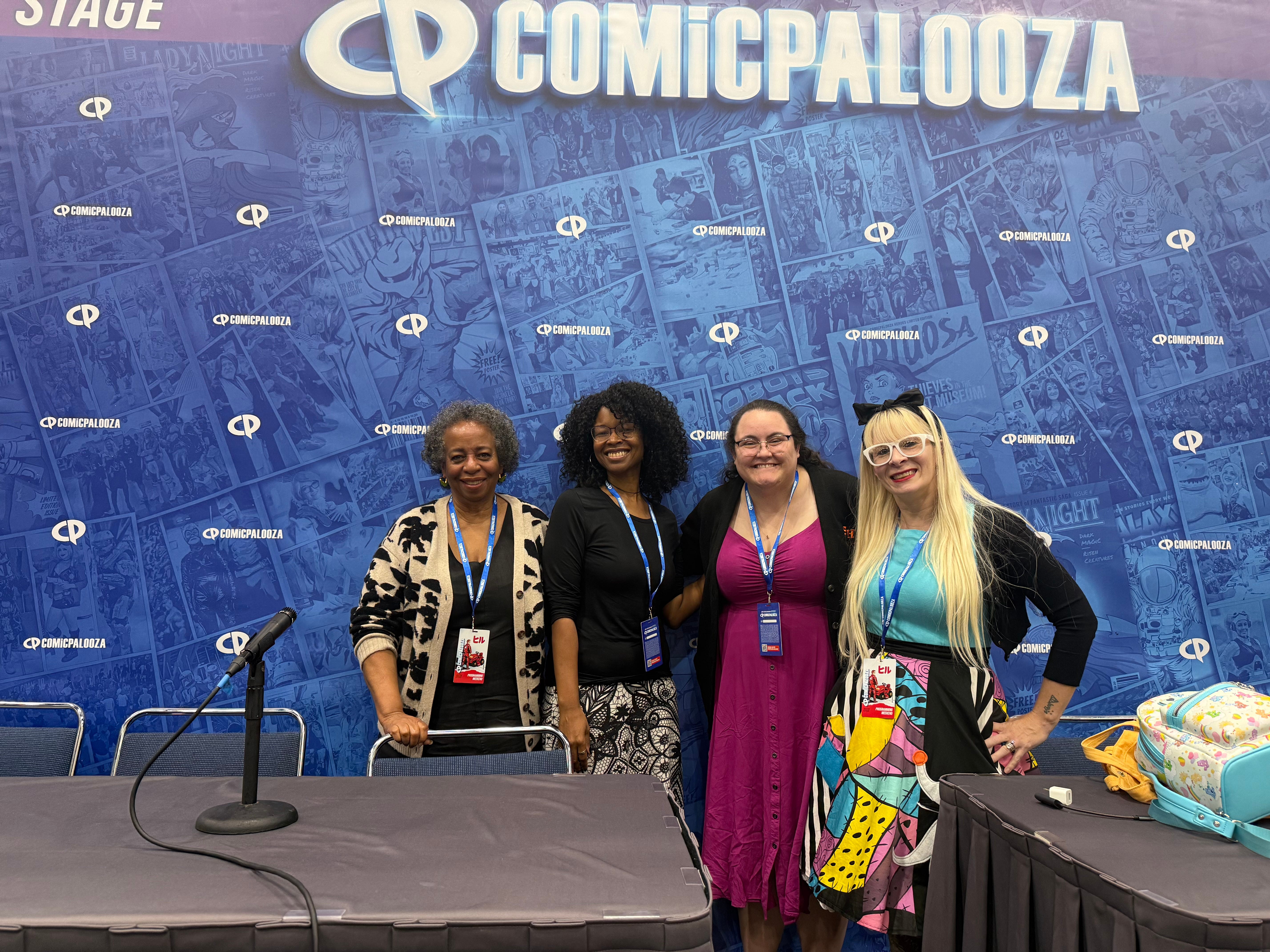
I recently participated in a panel on Nostalgia at the 2026 Comicpalooza in Houston. As always happens, more ideas surface during and after such discussions. I am sharing a description and some expanded ideas:
Nostalgia rests between memory and imagination. A common definition, which I use, is a longing for a past that did not happen. Nostalgia is often considered positive, a reworking of the past or our own pasts into a narrative that is happier, less troublesome than the past.
Nostalgia and healing
Shelly Clevenger and Kathleen Ratajczak, both professors of Victim Studies at Sam Houston State University, spoke of the role of nostalgia in the healing of traumatic memories of individuals. Ratajczak spoke of Disney adults who may have had traumatic childhoods. They are not remembering happy family trips to Disney World, they are enacting a childhood they never had but wished for, tending to the wounded child.
Julia Brown of the University of Houston spoke of a different psychological use, of old horror movies, less graphic than many being produced now, that were useful in the generalized anxiety she suffered as a child. The horror movies gave her something specific to fear, a focus and therefore a grounding of her anxiety.
Nostalgia and Erasure
At our planning meeting, I asked my fellow panelists if they were comfortable with my being disruptive. After listening, they agreed.
Their nostalgia was my erasure.
I was twelve years old, on an extracurricular school-sponsored trip from North Carolina to New York. We would climb the Washington Monument and the Statue of Liberty, see the Rocketts (although I never understood what the high kickers had to do with American history). We stopped at Colonial Williamsburg.
I looked around. I walked up to a White reenactor holding a farm tool. I asked him what he was. He said that he was a “servant.” A servant? I looked around again—no Black people other than me and a few of my classmates. “Who grows the crops around here?” I asked. “I do,” he said. I looked at him with steely incredulity. “Who?” I asked. He repeated himself. I raised my voice. What year is this? And are we still in Virginia? He answered me, that yes, we were in 18th century Virginia. So, I said again, “Who does the work around here?” He started to sweat. I remember watching a big bead of perspiration rolling from under his hat all the way down the side of his forehead to his cheek. I didn’t care. I was furious! “Who?” this time more of a demand than a question, I just wanted to hear him say the word. Slave. But Colonial Williamsburg did not have slave reenactors at the time. They built a whole colonial plantation and pretended that slavery did not exist. With the tenacity of a child, I intended to hold my ground and torture him until he said it out loud. Finally, we caught the attention of my teacher/chaperone, and the White woman came over and tried to gently nudge me away. She made several attempts before I came, but not without shooting him one more pointed look. I wanted him to remember me.
Younger listeners are stunned by this story, that a “historical” park would omit the fact of slavery, but Colonial Williamsburg opened in the 1930’s and focused only on the lives and achievements of wealthy White men. During the colonial period, more than 50% of Williamsburg was Black. Enslaved Africans did the hardest work. Maybe the park planners did not expect a young Black girls to show up; maybe they did not care.
Colonial Williamsburg introduced slave reenactors in 1979 and reconstructed a Slave Quarter in 1989 at nearby Carter’s Grove, at its original location. It was interesting that rather than inserting slavery more thoroughly into the original park site, they placed the main enslavement exhibit off site. It is historically accurate, which makes it more poignant, but also less disruptive of the main park narrative.
It was not an easy endeavor. They needed real Black people. They contacted the Theatre Department at the University of Maryland. Black students refused—too close to the bone—to spend their summer in the skins of their tortured ancestors was too much to ask. When the exhibit did open, some Black park patrons had panic attacks—really trauma attacks—and the park brought in counselors.
The Disneyfication of Slavery?
Michal Eisner of the Disney company noticed the same thing that 12-year-old me did and he intended to do something about it. After visiting Colonial Williamsburg, Eisner approached Virginia state administration and purchased 3000 acres in Prince William County to build a “fun” $650M historical park. Plans included a “gritty reality” ride simulating the Underground Railroad where tourists could pretend to be runaway slaves.
Bob Weis, senior vice president and the park’s creative director asked “How can you do a park on America and not talk about slavery?...We want to make you feel what it was like to be a slave, and what it was like to escape through the Underground Railroad.”
Disney may have wanted park patrons to know what it felt like to be a slave, but Eisner said that they did not plan to whip people or put them in chains. In other words, it would be Slavery Light, a trivialization of a horrific period, echoing proslavery propaganda that made slavery look bucolic, pleasant for everyone. Led by Courney Gallop-Johnson, African Americans and allies formed the Black History Action Coalition. Gallop-Johnson said that “No one will ever know the feelings—the absolute agony and despair of these people.” The Los Angeles Times reported that more than 3000 people, including activist Ralph Nader marched from the Washington Monument to the White House to the Capitol Building, chanting “Hey, Hey, Ho, Ho, Disney’s Got to Go.” Disney did go; the plans were canceled in 1994 due to the fierce opposition from historians, environmentalists and the general public. It is important to note that during the same period Disney was in production of its revisionist “family friendly” Pocahontas film in production. The historical figure we know as Pocahontas was 10 or 11 years old. According to the Indigenous Foundation, she was kidnapped and raped.
The issue is not that no one should speak of slavery or the rape of indigenous children —we should speak of them much more—but how we speak of them. Nostalgia is often playful. Historical events are often not well suited for playfulness, which is a contributing factor for their erasure. Nostalgia omits the hard the hard stuff. Nostalgia erases the marginalized people.
Regenerative Nostalgia
A “regenerative” process renews, restores and regrow a system, a tissue or an environment, seeking to actively heal and improve the underlying system.
Even if the dominant narratives ignore them, marginalized people were and are everywhere, in places and times where we have been led to not expect them. Restoring them to their rightful presence is regenerative. Knowledge of them changes the system. Despite what we may have heard, scholars and artists are still digging and the work of finding them, reclaiming them and depicting them is still going on. For example, Olivette Otele’s book African Europeans documents the presence of Africans in Europe throughout centuries.
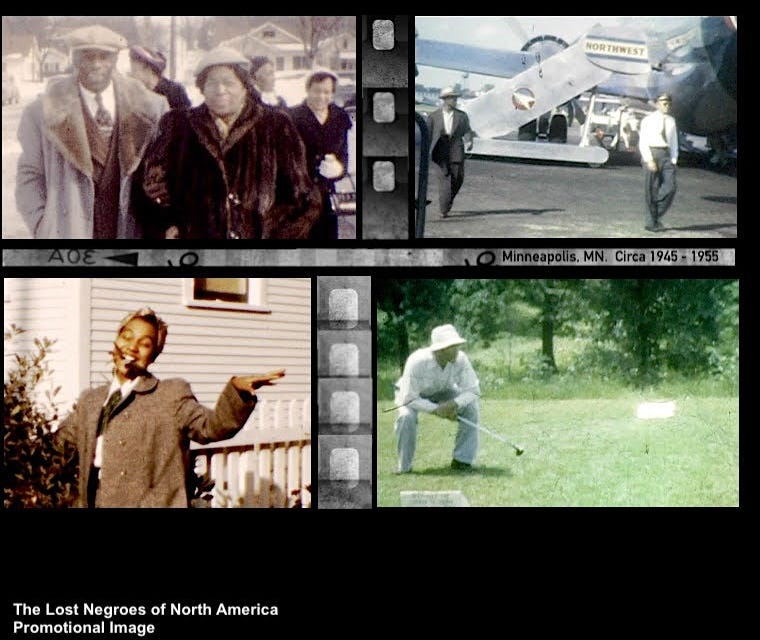
Amidst their troubles, marginalized people have always had love, laughter and humor. Filmmaker and “Collective Memory Artist” Ralph Crowder’s The Lost Negroes of North America uses found historical footage to document the day to day lives of middle and upper middle class African Americans in the Midwest of the 1940’s. They were well off enough to have home movies in the 1940’s. Those home movies show them as well dressed and coifed people doing things that affluent people do—riding in their cars, taking trips, strolling in their furs, going on leisurely picnics. The silent film premiered in New York in late 2025, when Crowder invited jazz musicians and singers to improvise accompaniment as they saw the film for the first time.
Entertainment media often takes history and expands upon it. Shonda Rimes’ production, Bridgerton, is a richly layered story of Regency era England, full on minorities. In the first season, a Black duke falls in love with a White woman. In season two, Indian royals join the community. Mixed Black Queen Charlotte and the Indian Sharma sisters are based on historical figures. They are joined by many more fictional people of color.
As publicly practiced in the US, nostalgia can be too easy, equating lack of diversity with lack of problems. If the point is an idealized, playful narrative, our joy and humor deserve a place. But when nostalgia parades as history, the erasure of people of color becomes yet another crime.
Comments
Nothing yet. Say the first thing.
Sign in to join the conversation.